Operations | Monitoring | ITSM | DevOps | Cloud

The Power of Distributed Tracing in Shifting Observability Left

This is the second post in a 3-part series about shifting Observability left. If you have not had a chance to read the first, you can find it here. In today’s complex microservices deployments, gaining visibility into deployments is vital for optimal system performance and scalability. This has become even more important as the tech industry has moved toward microservice architecture reliance. Navigating through logs has become increasingly complex as requirements have grown.
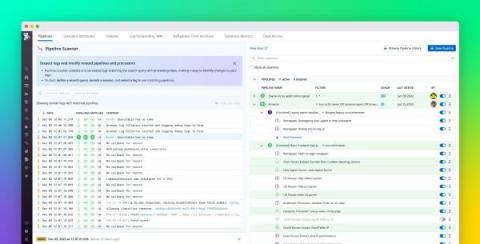
Investigate your log processing with the Datadog Log Pipeline Scanner

Large-scale organizations typically collect and manage millions of logs a day from various services. Within these orgs, many different teams may set up processing pipelines to modify and enrich logs for security monitoring, compliance audits, and DevOps. Datadog Log Pipeline let you ingest logs from your entire stack, parse and enrich them with contextual information, add tags for usage attribution, generate metrics, and quickly identify log anomalies.

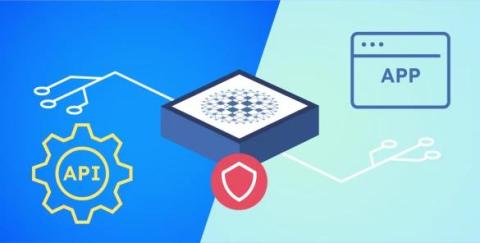
Web App Security vs. API Security: Unified Approaches Reign Supreme

Every day, organizations face external threats as a consequence of exposing their services over the internet. An estimated 2,200+ attacks occur in a 24-hour period—or one attack every 39 seconds. Add the fact that an average data breach (one of many potential consequences of poor security) costs companies $4.45 million, and the need for strong security is impossible to ignore. Web application and API security is key to protecting your infrastructure, data, and users.

Azure Cosmos DB Cost Optimization to avoid unforeseen expenses

Cost optimization is critical to managing any cloud-based service, including Azure Cosmos DB. Azure Cosmos DB is a globally distributed, multi-model database service that allows you to scale your storage and throughput across regions. Although it offers a highly scalable and flexible platform for creating applications, Azure Cosmos DB cost optimization is important to ensure efficient resource utilization, avoid unforeseen expenses, and estimate costs more accurately.

Unlock significant cost savings with Azure VM Reservations

Azure VM Reservations are the best solution for optimizing cloud expenses. Users can obtain discounted prices for virtual machines in Microsoft Azure by committing to a one- or three-year term. This strategic approach ensures predictable costs, enhances budget management, and is ideal for workloads with consistent resource requirements. Leveraging Azure VM Reservations empowers businesses to achieve significant cost savings while maintaining flexibility and scalability in the cloud infrastructure.

A Comprehensive guide to auto-shutdown idle Azure VMs to maximize cost savings

Virtual Machines (VMs) act as the foundation for the evolution of cloud computing. Business organizations utilizing virtualization for their applications will operate flawlessly only when the corresponding VM resources function without interruptions. A cloud enterprise’s expenditure on VM resources is frequently high, as pricing varies according to its service tier.

Introducing Cycle's Native Load Balancer

Over the last few months, you may have noticed that many of our changelog releases mentioned the release of, and improvements to, Cycle’s native load balancer. While this load balancer still officially remains in beta status, we wanted to begin diving into the details around it a bit more thoroughly: What is it? Why did we build it? How can you use it?

Time Series Data and Real World AI: A Fireside Chat

Recently, InfluxData CEO Evan Kaplan sat down with Developer Advocate Jay Clifford to discuss the role of time series data and AI in industry, how it’s evolving, and specifically, the role of time series data in AI. They also discussed the future of InfluxDB in terms of real-time analytics and its role in the AI landscape.

The concise guide to Grafana Loki: Everything you need to know about labels

Welcome to Part 2 of the “Concise guide to Loki,” a multi-part series where I cover some of the most important topics around our favorite logging database: Grafana Loki. As I reflect on the fifth anniversary of Loki, it felt like a good opportunity to summarize some of the important parts of how it works, how it’s built, how to run it, etc. And as the name of the series suggests, I’m doing it as concisely as I can.