So, you’ve ventured into the world of Site Reliability Engineering (SRE) and DevOps. Exciting, isn’t it? Yet, amidst the code, deployments, and system architectures, there’s a silent hero that often goes unnoticed — the humble status page. In this dynamic environment, it’s not just about keeping systems up but communicating effectively when they aren’t. That’s where Uptime.com steps in, like a superhero in a world of mortal website monitoring services.
You have so many options for frontend error monitoring today, and they all do slightly different things. We looked at everyone and did a breakdown of the most important features for frontend, the problems developers run into, end user reviews, and pricing structures to see how the best vendors stack up.
It’s 2023. In today’s world, every company and individual, regardless of their industry, relies on software to increase productivity. Our users expect our technology to be available and reliable at all times. If your software serves businesses within a single country during regular working hours, they expect it to be available throughout that time. Easy, right?
Today, most organizations rely on several different secure communication mediums — like email, real-time chat, video calls, and SMS — to transmit information, collaborate, and keep teams aligned. While modern communication tools help teams stay connected, the digital landscape is not without its challenges. For most organizations, it’s only a matter of time before network disruptions, security breaches, and system failures impact main lines of communication.
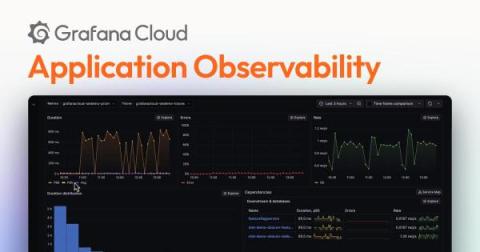
The Grafana LGTM Stack (Loki for logs, Grafana for visualization, Tempo for traces, and Mimir for metrics) offers the freedom and flexibility for monitoring application performance. But we’ve also heard from many of our users and customers that you need a solution that makes it easier and faster to get started with application monitoring.
At Grafana Labs, our mission has always been to help our users and customers understand the behavior of their applications and services. Over the past two years, the biggest needs we’ve heard from our customers have been to make it easier to understand their observability data, to extend observability into the application layer, and to get deeper, contextualized analytics.
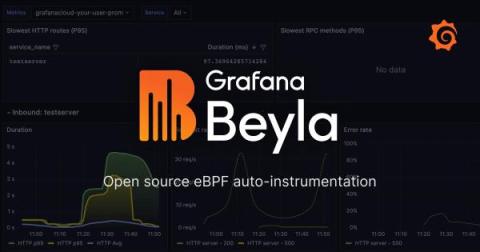
Just two months after introducing the public preview of Grafana Beyla, we are excited to announce the general availability of the open source project with the release of Grafana Beyla 1.0 at ObservabilityCON 2023 today. We’ve worked hard in the last two months to stabilize, stress test, and refine the features that were part of the public preview of this open source eBPF auto-instrumentation tool.
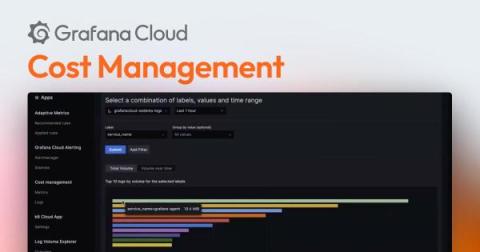
As more organizations adopt observability at massive scale, they have also been grappling with rising costs. Over the past 12 months, we have been working on different solutions to help our users better understand and manage their observability stack, not to mention the bills that come with scaling it.