Operations | Monitoring | ITSM | DevOps | Cloud

The Quixotic Expedition Into the Vastness of Edge Logs, Part 2: How to Use Cribl Search for Intrusion Detection

For today’s IT and security professionals, threats come in many forms – from external actors attempting to breach your network defenses, to internal threats like rogue employees or insecure configurations. These threats, if left undetected, can lead to serious consequences such as data loss, system downtime, and reputational damage. However, detecting these threats can be challenging, due to the sheer volume and complexity of data generated by today’s IT systems.

Upgrading to Azure Data Lake Gen2: A Seamless Transition

Microsoft’s Azure Data Lake Storage (ADLS) has been a vital component for organizations aiming to build scalable and secure data lakes. As technology evolves, transitioning from Azure Data Lake Storage Gen1 to Gen2 has become increasingly important. This article aims to guide readers through the essential considerations, detailed processes, and best practices involved in making this shift.

What is Docker Swarm and How Does it Work?

For most organizations, having a stable and reliable IT infrastructure is essential for success. But managing multiple servers, databases, and applications can often be difficult and time-consuming. Container orchestration is a standard solution for handling this complexity. Docker Swarm has gained popularity as a container orchestration solution because of its simplicity and scalability.

How using a database monitoring tool helps DBAs create value for the whole organization

As the size and complexity of database estates increases, with more workloads and data being hosted on more platforms, both on-premises and in the cloud, so the appeal of third-party database monitoring tools has also grown. Their ability to provide a holistic view of an entire estate and monitor multiple databases and platforms from a single dashboard has been shown to save DBAs and IT teams many hours of time when compared to home-grown solutions.

IoT Dashboards with Grafana and Prometheus

The Internet of Things (IoT) - is a number of physical devices connected to one network that enables the system to interact with the external world. A great deal of the work surrounding IoT is monitoring, as it’s impossible to react without knowing the situation. For example, we might build a greenhouse system for agriculture that can maintain optimal conditions for growing crops. For this purpose, we need to have sensors picking up information about the temperature and humidity.

Integrating BindPlane Into Your Splunk Environment Part 2

Often it can be a challenge to collect data into a monitoring environment that does not natively support that data source. Bindplane can help solve this problem. As the Bindplane Agent is based on OpenTelemetry (and is also as freeform as possible), one can bring in data from disparate sources that are not easily supported by the Splunk Universal Forwarder.

Don't Drown in Your Data - Why you don't need a Data Lake

As a leader in Security Analytics, we at Elastic are often asked for our recommendations for architectures for long-term data analysis. And more often than not, the concept of Limitless Data is a novel idea. Other security analytics vendors, struggling to support long-term data retention and analysis, are perpetuating a myth that organizations have no option but to deploy a slow and unwieldy data lake (or swamp) to store data for long periods of time. Let’s bust this myth.

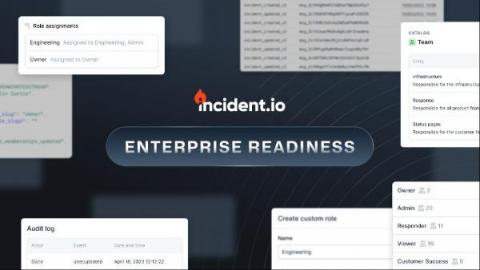
incident.io: A scalable incident management solution built for enterprises

For enterprise businesses, a lot is riding on the efficiency of their incident response. These organizations have large customer bases, complex products, and many incidents. They also have loads of incident responders across various roles, making it difficult to coordinate internally.

The Role of Technology in Streamlining Financial Management Processes

In a world where every business is struggling to stay on top of its finances, the role of technology in streamlining financial management processes has become increasingly important. With more organizations turning to automation and AI to ensure accuracy and timeliness in customer transactions, data analysis, budget planning, payment processing, and other critical finance-related tasks; it's no wonder that businesses are leveraging innovative technologies to drive increased efficiency and standardize processes.

How to Harness Technology for Effective Digital Marketing

In today's fast-paced digital world, businesses must harness the power of technology to thrive in the competitive landscape. Digital marketing has become a cornerstone of successful brand promotion and customer engagement. Leveraging advanced technologies can significantly enhance the effectiveness of digital marketing strategies, leading to better customer reach, improved conversion rates, and long-term business growth.