Operations | Monitoring | ITSM | DevOps | Cloud

Data Lakes Explored: Benefits, Challenges, and Best Practices

A data lake is a data repository for terabytes or petabytes of raw data stored in its original format. The data can originate from a variety of data sources: IoT and sensor data, a simple file, or a binary large object (BLOB) such as a video, audio, image or multimedia file. Any manipulation of the data — to put it into a data pipeline and make it usable — is done when the data is extracted from the data lake.

Discover what's driving the recognition behind BigPanda's AIOps innovations

Every day, BigPanda is transforming the way our customers operate. Our advanced AIOps technology redefines incident management, prevents service disruptions, and elevates customer satisfaction – and I couldn’t be more thrilled to see industry experts take notice. I’m particularly proud to see BigPanda mentioned in nine of the highly esteemed 2023 Gartner Hype Cycle reports.

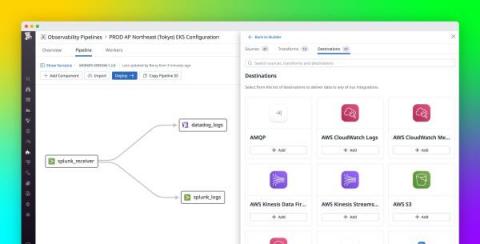
Send your logs to multiple destinations with Datadog's managed Log Pipelines and Observability Pipelines

As your infrastructure and applications scale, so does the volume of your observability data. Managing a growing suite of tooling while balancing the need to mitigate costs, avoid vendor lock-in, and maintain data quality across an organization is becoming increasingly complex. With a variety of installed agents, log forwarders, and storage tools, the mechanisms you use to collect, transform, and route data should be able to evolve and adjust to your growth and meet the unique needs of your team.

Integration roundup: Monitoring your AI stack

Integrating AI, including large language models (LLMs), into your applications enables you to build powerful tools for data analysis, intelligent search, and text and image generation. There are a number of tools you can use to leverage AI and scale it according to your business needs, with specialized technologies such as vector databases, development platforms, and discrete GPUs being necessary to run many models. As a result, optimizing your system for AI often leads to upgrading your entire stack.

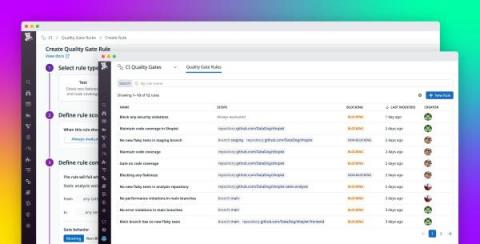
Enhance code reliability with Datadog Quality Gates

Maintaining the quality of your code becomes increasingly difficult as your organization grows. Engineering teams need to release code quickly while still finding a way to enforce best practices, catch security vulnerabilities, and prevent flaky tests. To address this challenge, Datadog is pleased to introduce Quality Gates, a feature that automatically halts code merges when they fail to satisfy your configured quality checks.

Easily test and monitor your mobile applications with Datadog Mobile Application Testing

Effective mobile application testing that meets all the requirements of modern quality assurance can be challenging. Not only do teams need to create tests that cover a range of different device types, operating system versions, and user interactions—including swipes, gestures, touches, and more—they also have to maintain the infrastructure and device fleets necessary to run these tests.

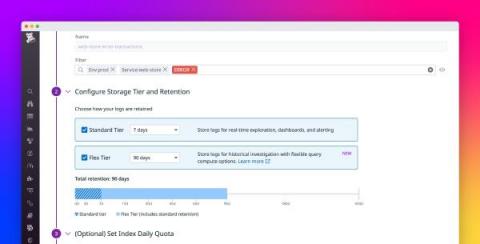
Store and analyze high-volume logs efficiently with Flex Logs

The volume of logs that organizations collect from all over their systems is growing exponentially. Sources range from distributed infrastructure to data pipelines and APIs, and different types of logs demand different treatment. As a result, logs have become increasingly difficult to manage. Organizations must reconcile conflicting needs for long-term retention, rapid access, and cost-effective storage.

DASH 2023: Guide to Datadog's newest announcements

This year at DASH, we announced new products and features that enable your teams to get complete visibility into their AI ecosystem, utilize LLM for efficient troubleshooting, take full control of petabytes of observability data, optimize cloud costs, and more. With Datadog’s new AI integrations, you can easily monitor every layer of your AI stack. And Bits AI, our new DevOps copilot, helps speed up the detection and resolution of issues across your environment.

Leveraging Git for Cribl Stream Config: A Backup and Tracking Solution

Having your Cribl Stream instance connected to a remote git repo is a great way to have a backup of the cribl config. It also allows for easy tracking and viewing of all Cribl Stream config changes for improved accountability and auditing. Our Goal: Get Cribl configured with a remote Git repo and also configured with git signed commits. Git signed commits are a way of using cryptography to digitally add a signature to git commits.