Operations | Monitoring | ITSM | DevOps | Cloud

SRE Redefines IT Operations as Architect of Sustainable Systems

Site Reliability Engineering (SRE) is a term that’s getting attention and gaining momentum – and for a good reason. SRE takes features of software engineering and applies them to various problems in infrastructures and operations. Organizations look to build SRE teams with a couple goals in mind, including to create and increase scalability and develop solid software systems.


Kubernetes Community Days Munich Recap

A couple of weeks ago I had the absolute joy of attending KCD Munich for the first time, with my friend and colleague Guy Menahem (whom some of you know simply as The Good Guy on Twitter and YouTube). Besides rooting for Guy and his co-speaker, Arsh Sharma of Okteto, during their session on Backstage.io and IDPs, I enjoyed being untethered from ‘booth duty’ and free to engage with all the beautiful human beings that gathered together for this Kubetastic event!

New in Grafana 10: Grafana Scenes for building dynamic dashboarding experiences

With Grafana 10, the latest major release of our data visualization platform, we wanted to explore new ways to empower our developer community. Case in point: Grafana Scenes, a new frontend library that enables developers to create dashboard-like experiences — such as querying and transformations, dynamic panel rendering, and time ranges — directly within their Grafana application plugins.

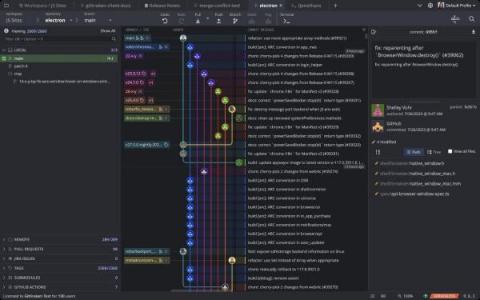
10 Best Git GUIs for Public Sector Developers

For developers working in the public sector, leveraging secure version control systems like Git is essential to manage code and web content efficiently and safely. Git simplifies collaborative projects between developers working in fields like government, healthcare, banking, and education, but hey, let’s face it – mastering Git via the command line can be like solving a Rubik’s Cube blindfolded. That’s where a Git GUI comes in handy.

7 OpenTelemetry Metrics to Track for Better Visibility

In today’s rapidly evolving software landscape, ensuring observability is crucial for building robust and reliable applications. One of the critical components of observability is metrics, which provide valuable insights into the performance and behavior of our systems. OpenTelemetry, an open-source observability framework, offers a standardized approach to capturing, exporting, and analyzing metrics. This blog post explores seven OpenTelemetry metrics for tracking better visibility.

Anything But Tech Debt

Tech debt is usually one of the most fraught topics on engineering teams. Engineers often feel they aren’t allowed enough time to address tech debt. Product partners wonder why engineers spend so much time working on it—or at least talking about it. “The business” always seems to insinuate that engineers should do less of it, instead focusing on shipping value to customers.

Automatic log level detection reduces your cognitive load to identify anomalies at 3 am

Let’s face it, when that alert goes off at 2:58am, abruptly shaking you out of a deep slumber because of a high-priority issue hitting the application, you’re not 100% “on”. You need to shake the fog out of your head to focus on the urgent task of fixing the problem. This is where having the best log analytics tool can take on some of that cognitive load. Sumo Logic recently released new features specific to our Log Search queries that automatically detect log levels.

Using UX and Observability to Track Application Health

UX (user experience) is a core factor that determines the success of an application or platform in a distributed system. Specifically, developers need to understand the infrastructure within an entire application stack to improve and refine the user experience to meet customer expectations without guesswork. System downtime remains a significant source of revenue and reputational losses for enterprises, employees, and customers.

What is Garbage Collection in Java: Detailed Guide

The Garbage Collection (GC) feature in the Java Virtual Machine (JVM) is truly remarkable. It automatically identifies and cleans up unused Java objects without burdening developers with manual allocation and deallocation of memory. As an SRE or Java Administrator you need a strong understanding of the Java Garbage Collection mechanism to ensure optimal performance and stability of your Java applications.