Operations | Monitoring | ITSM | DevOps | Cloud

Understand AIOps use cases to ensure maximum value

The complexity of modern IT environments and the volume of data they produce have increased by orders of magnitude. According to predictions from UBS, the data universe will grow by more than a factor of 10 — reaching 660 zettabytes — from 2020 to 2030. This explosive growth exceeds the abilities of legacy event-management tools and human operators. AIOps augments human activities within IT operations using AI, data, and machine learning.

Harness AI for financial services IT

IT operations teams in the financial services industry face serious challenges. Customers expect a seamless experience across a complex landscape including online platforms, mobile devices, and ATMs. Competition is fierce. Technology evolution continually disrupts the marketplace. These factors create obstacles for the teams tasked with ensuring near-perfect service availability while continuing to innovate.

The power of context in root-cause analysis

The ability to quickly and accurately identify the root cause of IT incidents is paramount. According to EMA Research, more than 80% of IT professionals said a solution that could generate an accurate summary of alerts and incidents, including the likely root cause, would be transformational or high value. Respondents noted that such a solution would reduce mean time to resolution (MTTR) by 10 to 30 minutes.

Ensuring Operational Resilience in Financial Services

Each year, financial services organizations handle billions of transactions, through which trillions of dollars of commerce flow. Customers expect key services, from online banking and cash transfers to payroll services, to be available around the clock, just as they expect their assets, data, and identities to be kept secure. Meanwhile, financial institutions themselves must be able to maintain ongoing communication with clearing houses, stock markets, payment processors, and other relevant parties.

Unleashing the Power of Generative AI (GenAI) in Procurement: Revolutionizing Spend Classification

In the ever-evolving landscape of business functions, GenAI (Generative Artificial Intelligence) has emerged as a transformative force. From streamlining operations to enhancing decision-making processes, GenAI is making waves across various sectors. Procurement, a critical aspect of business operations, is not immune to this wave of innovation.

Utilizing AIOps to Streamline Mobile App Performance and Monitoring

In today's fast-paced digital environment, mobile app performance and monitoring are critical. Leveraging AIOps (Artificial Intelligence for IT Operations) can significantly enhance these aspects. Discover how AIOps can revolutionize your mobile app management.

AIOps use cases: Technical, operational, and business

ITOps stands at a crossroads: Teams need help managing high volumes of alerts and coordinating between different tools and teams. They must balance the agility offered by cloud technologies and the stability provided by on-premises solutions. Success relies heavily on adaptability and clarity, requiring flexibility, with synchronized technology stacks for seamless IT operations. AIOps, a term coined by Gartner, provides a straightforward way to improve IT operations.

Understanding Event Correlation: A Key Component in Modern Observability Tools

Event correlation is a critical aspect of modern IT management, involving the analysis and correlation of events to filter out noise and isolate significant events requiring attention. This process helps quickly identify the root cause of issues, reducing the time it takes to resolve incidents and ensuring smoother operations. Key reasons for event correlation include reducing noise data and identifying root causes efficiently.

ScienceLogic CEO, Dave Link, Wins MeriTalk Cyber Defenders Award

Congratulations to Dave Link, CEO and founder of ScienceLogic for being named a 2024 MeriTalk Cyber Defender! Each year, MeriTalk celebrates outstanding leadership in cyber innovation within the federal government IT community. The prestigious Cyber Defenders Awards honor government and industry individuals who are at the forefront of safeguarding government systems from complex cyber-attacks, leading cyber modernization progress, and driving our nation’s cybersecurity.
Sponsored Post

How AI and ML Are Revolutionizing Incident Management in IT Ops

In today’s digital landscape, IT operations face unique challenges and pressures unlike those of the past. Currently, the cost of a service failure for medium and large enterprises is estimated to exceed $100,000 per hour. At present high incident management costs, coupled with the impact on customer satisfaction, present significant challenges for enterprises. To resolve this challenge AI and ML assists in enhancing the overall management of incidents and reducing response times.

Monitoring 101: Gaining Visibility into Your Hybrid Cloud Infrastructure

Savvy organizations are embarking on a journey toward Autonomic IT to better manage their IT environments, particularly as hybrid configurations grow in popularity and are accompanied by greater complexity. Driven by AI and automation, Autonomic IT can help organizations optimize resource allocation, improve the effectiveness of maintenance efforts, avoid downtime, and keep end users happy.

Selector Optimizes Performance of the Epic EMR Environment

Quality medical care today relies on “health systems” built from geographically distributed healthcare settings such as hospitals, urgent care clinics, imaging centers, nursing homes, pharmacies, and specialist offices, among many others. Each setting shares data within the broader health system through Electronic Medical Records (EMRs). EMR systems, which were purpose-built to manage patient records, help improve patient outcomes through the real-time sharing of patient data.

Unlocking the Power of Data: How a Data-Driven Approach Fuels the Path to Autonomic IT

As technology evolves and IT systems become too complex for humans alone to manage, enterprises need to work towards an autonomous business model. This state – known as “Autonomic IT” – unlocks the transformative potential of automation and generative AI to help businesses resolve issues faster, minimize customer interruptions, and drive innovation. However, achieving an Autonomic IT state is not a simple plug-and-play process. It is a gradual evolution, a journey.

Selector Named a 2024 Best Place to Work in the Bay Area

For the second consecutive year, Selector has been recognized as a Best Place to Work in the Bay Area. In 2023, the company was ranked among the top 10 companies with 25–49 employees. This year, the company ranked again in the top 10. This regional award is sponsored by the San Francisco Business Times and Silicon Valley Business Journal in collaboration with Quantum Workplace—an employee engagement data firm.

Reduce Downtime and Boost Efficiency with AI and Automation

IT service outages, while inconvenient, also carry widespread ramifications that affect productivity, revenue streams, business reputation, and customer satisfaction. These outages can also drive burnout and increased human error for the IT operations (ITOps) teams tasked with managing the stress that comes with urgent issues and escalations.

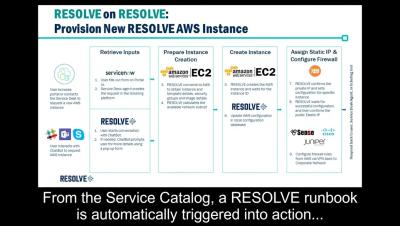
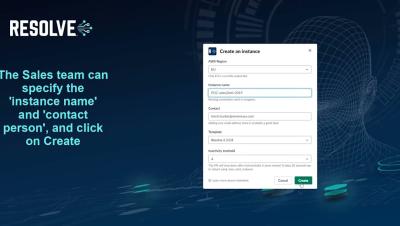
Resolve Actions - Compute: Create new AWS Instance (via Slack)

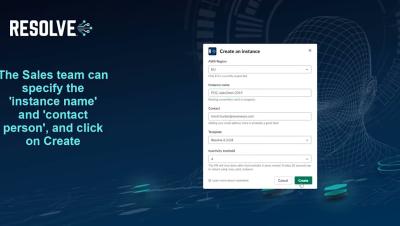
See how we use our the Resolve Actions automation platform internally to streamline the provisioning of new Resolve Actions Evaluation instances on AWS. Via a ChatBot integration with Slack, Resolve creates the new instance, configures the networking and firewall rules, and informs the Sales Team and Customer of the connection details.

Reducing MTTR and the Hidden Costs of Downtime Through AI & Automation

Of all the KPIs that gauge the health and operational fitness of an enterprise, Mean Time to Repair (MTTR) from an outage or downtime is one of the most crucial. Yet while MTTR is a universally recognized metric, many organizations still fail to consider the total cost of MTTR when deciding where and how to invest in their IT environments.

Building on Legacy: How Government Agencies Can Consolidate Tools with Automation

Tool sprawl, further compounded by the inflexibility of legacy tools, poses a major challenge for government IT teams. As agencies work to deliver the digital services their constituents demand, their digital ecosystems have grown to comprise numerous apps, systems and microservices, all specific to the individual IT components of the experience. With disparate tools and systems leading to siloed insights, higher costs, and increased complexity, it’s easy for technical debt to get out of hand.

Six key capabilities of an AIOps platform

Unplanned downtime can cost large enterprises almost $1.5 million per hour, according to a recent survey by Enterprise Management Associates. AIOps offers a solution. With an effective AIOps platform in place, you can decrease the frequency and cost of outages by 30% and reduce their duration to under an hour. AIOps platforms apply AI and machine learning to complex IT data to enhance and automate IT operations.

HPE Complete Care Service - ITOps Helps Control the Chaos of Your IT Environment

AI is transforming every aspect of our lives, and the world of IT operations is no exception. AIOps (artificial intelligence for IT operations) is no longer a luxury but a necessity in today’s increasingly complex IT environments. A recent OpsRamp survey found that 87% of respondents agree that AIOps tools are improving their data driven collaboration. Organizations today have complex hybrid cloud technology landscapes.

Journeying to Autonomic IT in the Face of IT Complexity: Challenges and Solutions for IT Leaders

Modern IT infrastructures are more than just a support system; they are the beating heart of business innovation and success. However, these environments are incredibly complex, which comes with information silos and a lack of visibility, posing a significant barrier to Autonomic IT. One of the main factors contributing to IT operations’ reaching this point of complexity is the growing use of cloud services.