Operations | Monitoring | ITSM | DevOps | Cloud

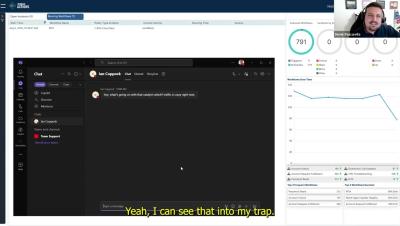
The Journey to Zero Ticket IT with Agentic Automation

See how RITA, Resolve’s intelligent AI agent, instantly resolves IT issues before they become tickets. In this live demo, you'll get a front-row seat to how RITA automates routine service desk requests, helps technicians troubleshoot faster, and brings the Zero Ticket IT vision to life. Hosted by Ian Coppock and demoed by Derek Pascarella, this is automation in action.


95% of AI Pilots Fail - Here's How to Be the 5%

When MIT released research showing that 95% of enterprise AI pilots fail to deliver measurable business impact, it made headlines for a reason. After years of heavy investment in artificial intelligence, the vast majority of organizations still haven’t moved beyond pilots that promise much but deliver little. This doesn’t mean AI itself is broken. In most cases, the technology performs as intended.

Built for Scale: Why Enterprises, GSIs, and MSPs Choose ScienceLogic for Intelligent Operations

As companies shift towards a digital first strategy and enterprise architectures become more complex to support it, the demands on IT operations platforms have evolved significantly. Today’s global enterprises, system integrators (GSIs), and managed service providers (MSPs) require more than traditional observability tools. They need scalable, intelligent platforms that can manage sprawling environments with consistency, speed, and precision.

AI That Knows Networking: Selector vs. Generic GPT Integrations

The hype around generative AI has led many IT teams to experiment with plugging generic GPT models into their workflows. On paper, this is the beginning of true AI networking, featuring conversational interfaces, instant summaries, and faster troubleshooting. However, as we discussed in the previous post, “Why Your IT Copilot Needs Context, Not Just Data,” copilots are only as effective as the intelligence behind them.

Why Your IT Copilot Needs Context, Not Just Data

In the rush to adopt AI in IT operations, many organizations focus on feeding copilots as much data as possible. But here’s the problem: data without context is just noise. An IT copilot that can’t distinguish what matters from what doesn’t won’t reduce alert fatigue or accelerate troubleshooting.

When Milliseconds become Make-or-Break, Fragile Ops are a Brand Liability

 A major studio drops its new episode at midnight. Millions are queued to watch. Push notifications hit, the app surges in traffic, and then timeout. Spinning wheels. Frozen screens. Social media lights up. Customers don’t just notice they remember. For today’s communications, media, and information (CMI) brands, digital reliability is the product. Viewers, subscribers, and enterprise users aren’t comparing your uptime to industry benchmarks.

How Much Time Could You Save with Network Config Automation?

If you’re a network admin reading this, you already know the feeling. You’ve probably lost track of how many hours you spend doing the same repetitive tasks week after week, month after month. Backing up configs manually. Rolling back failed changes at 2 AM. Hunting down that one switch that somehow lost its configuration. Compiling compliance reports that should take minutes but somehow eat up your entire afternoon. Yet all those “quick” tasks add up.

Part Two - Event Intelligence vs. AIOps: Key Differences, When to Use Each and Why

The IT environments of large enterprises have become so complex that operational teams have turned to two solution categories in particular to help them improve visibility and gain faster incident response, automate and enable more effective decision-making.

How ScienceLogic Supports Zero Trust and FedRAMP-Secure Operations

Cybersecurity leaders across the public sector are facing a moment of reckoning. Whether at the Department of Defense, a federal agency, or a public university, IT teams are under pressure to defend sprawling infrastructure, detect fast-moving threats, and prove compliance across multiple frameworks—all with fewer resources and tighter timelines. This challenge has accelerated interest in Zero Trust Architecture (ZTA), a paradigm shift in how we think about security.

How ScienceLogic Drives FedRAMP-Authorized Automated IT at Scale

As Government agencies modernize IT operations, many are adopting hybrid cloud and multi-tenant environments to drive agility and resilience. But as environments scale, so does complexity, especially when aligning with overlapping frameworks like FedRAMP, NIST, and CMMC. Today’s cybersecurity landscape—rising threats, shrinking budgets, and expanding compliance demands—requires more than manual oversight.

Real-World Use Cases for Natural Language Copilots

Natural language copilots are one of the most exciting developments in AI for network operations. They allow engineers and operators to query complex environments in plain language rather than memorizing obscure CLI commands or digging through multiple dashboards. But here’s the truth: a copilot is only as good as the AI behind it. Without a purpose-built network LLM, a copilot can’t deliver the accuracy, context, and speed that real-world IT operations demand.

AI Meets Mobile: How Companies Leverage Android and AIOps for Smarter User Experiences

Mobile devices are becoming smarter with every tap. Thanks to AI and AIOps, Android apps can now predict what users need, fix issues before they even notice them, and create seamless, personalized experiences. This isn't a distant tech dream but something that's happening right now, transforming the way companies design and deliver mobile services. From streamlining performance to enhancing customer engagement, AI is quietly rewriting the rules of mobile interaction.

Network Visualization: 4 Ways to Visualize Computer Networks

Network visualization is the process of visually representing networks of connected entities, like devices, data flows, or relationships, using nodes and links. This technique helps in understanding complex data, identifying patterns, and improving network management by providing a clear visual overview of the network’s structure and behavior.

Why AIOps Isn't Optional Anymore: The Metrics That Prove It

The CFO slides a single sheet of paper across the conference table, without saying a word. It’s not a budget approval or strategic roadmap—it’s a simple question written in red ink: “What’s our ROI on IT operations?” For too many IT leaders, this moment represents a reckoning. After years of investing in monitoring tools, staffing up operations teams, and implementing “best practices,” the measurable business impact remains frustratingly unclear.

Discover Agentic AI in Resolve: RITA, Jarvis & the Future of IT Automation

Unlock the next generation of IT automation with Resolve’s groundbreaking agentic AI features. In this video, we introduce powerful new capabilities designed to help IT teams accelerate resolutions, streamline workflow creation, and bring control to enterprise AI strategies within the Resolve platform.

How IT Leaders Can Successfully Adopt and Manage SaaS Solutions

In recent months, there has been growing discussion among business and IT leaders around the rapid expansion of SaaS solutions. McKinsey’s recent report on the current state of SaaS notes that while the industry has experienced a slowdown, largely driven by economic factors such as rising interest rates and reduced IT spending by enterprises, it has seen a decade of rapid growth, with the market being valued at approximately $3 trillion in 2022.

Enhance IT change management processes with BigPanda

Human-executed change is still the most significant contributor to IT outages, and traditional IT change management can’t keep up. One global enterprise processes over 30,000 changes per month, supported by more than 10 Change Advisory Board (CAB) meetings per week, and still sees 15–20% of major incidents caused by changes. Even more telling: 60% of those incidents are linked to changes previously assessed as “low risk.”

Powering What's Next: ScienceLogic's Vision for Intelligent, Outcome-Driven IT

The observability market is changing rapidly. The days of simply collecting logs, metrics, and traces are giving way to something bigger: delivering actionable intelligence that actually connects IT operations with business goals. Organizations don’t just want to know what’s happening anymore; they need to understand why it’s happening, what actions to take, and whether their systems can respond independently.

How to Automate Password Resets with Resolve #itautomation #ai #aiautomation #agenticai

Tired of password reset tickets? Meet RITA — Resolve’s AI IT agent. Understands natural language Verifies identity Resets passwords instantly No tickets. No delays. This is Zero Ticket IT in action. Watch Resolve’s Derek Pascarella show how it works.

3 Signs You've Outgrown Scripts and Spreadsheets for Network Configs

In the early days of any IT operation, pragmatism rules. Most network teams start with what’s readily available—custom scripts, Excel spreadsheets, shared network drives, and tribal knowledge. It’s cost-effective and familiar. But as your organization grows, so does the complexity of your network. Devices multiply, configurations diversify, and the operational risk of keeping everything “stitched together” with manual methods increases exponentially.

Network Visualization Tools: Key Features and Top 6 Tools in 2025

Network visualization tools are software applications that allow users to represent, explore, and analyze network structures graphically. These networks can include computer and telecommunication infrastructure, as well as social, biological, and organizational networks. Visualization is achieved by displaying nodes (entities) and edges (relationships), making complex datasets easier to interpret and manage.

Secure by Design: IT Modernization for Government

As government agencies modernize IT infrastructure, many are shifting to hybrid and multicloud environments. But this evolution brings heightened exposure to cyber threats. For the public sector, where data protection is tied to national security and public trust, compliance is more than a box to check—it’s the front line of defense. FedRAMP (Federal Risk and Authorization Management Program) provides a standardized framework for securing cloud services used by U.S. agencies.

The Outage You Can't Afford: Why CMI/CME Providers Need Autonomous Operations Now

Imagine if degrading network performance—not just bad code—disrupted your live stream during a high-profile event. Customers start flooding support lines. Social media lights up. Your NOC teams scramble to identify the root cause amid fragmented systems. The outage impacts not only your broadcast, but also subscriber logins, ad delivery, and mobile apps. Advertisers want refunds. Executives ask, “Why didn’t we see this coming?”

Selector MCP and the Future of Modular Automation

In the first two parts of this series, we explored why modern network operations demand intelligent automation and how AI agents can reason, act, and collaborate to solve complex problems. We examined the frameworks – such as ReACT, LangGraph, and Pydantic – that power these agents, and how the Model Context Protocol (MCP) facilitates seamless integration with tools and services. But theory alone doesn’t improve network uptime or reduce manual toil.

Why Monitoring Heartbeat Events with PagerDuty AIOps is the Future of System Health Tracking

Organizations migrating from Opsgenie and other legacy incident management platforms are discovering that basic connectivity monitoring isn’t enough for modern operations. While Opsgenie Heartbeats and similar traditional heartbeat features offer simple binary status checks of system availability, PagerDuty’s AIOps-powered approach transforms system health monitoring from reactive alerting into intelligent, automated operational intelligence.

PagerDuty Named a Leader and Outperformer in the 2025 GigaOm Radar for AIOps

There’s no shortage of hype around AI in operations, but recognition from a trusted source like GigaOm cuts through the noise. We are excited to share that PagerDuty earned a top spot as a Leader and Outperformer in the 2025 report. It’s recognition that reflects the progress we’ve made in delivering an AI-powered platform that actually helps teams move faster, reduce costs, and operate with confidence in complex environments.