
Operations | Monitoring | ITSM | DevOps | Cloud

An Open Source OpenTelemetry APM | SigNoz

OpenTelemetry is a Cloud Native Computing Foundation(CNCF) project aimed at standardizing the way we instrument applications for generating telemetry data(logs, metrics, and traces). However, OpenTelemetry does not provide storage and visualization for the collected telemetry data. APM stands for Application Performance Monitoring or Application Performance Management. APM tools help engineering teams effectively monitor their applications by monitoring key metrics for application performance.

OpenTelemetry UI - See What's Possible With OpenTelemetry data

OpenTelemetry is a Cloud Native Computing Foundation(CNCF) project aimed at standardizing the way we instrument applications for generating telemetry data(logs, metrics, and traces). However, OpenTelemetry does not provide storage and visualization for the collected telemetry data. For visualizing OpenTelemetry data, you need an OpenTelemetry UI. The data collected by OpenTelemetry can be sent to a backend of your choice, which can then be visualized.

11 Top MongoDB Monitoring Tools - Including Free & Open-Source [2024]

MongoDB has become a cornerstone in modern database architectures. Its flexibility and scalability make it a go-to choice for many organizations. But with great power comes great responsibility—and the need for robust monitoring. There are many monitoring tools out there, and choosing the right one can be confusing. This article lists the top MongoDB monitoring tools, from open-source ones to fully managed SaaS solutions.

Implementing OpenTelemetry with Nginx - Instrument and visualize traces

OpenTelemetry is an open-source standard for instrumenting cloud-native applications for generating different types of telemetry data. A robust observability framework set up using OpenTelemetry can help tremendously while troubleshooting software in production. Nginx is one of the most widely adopted web servers. Most often, nginx is used as a reverse proxy. It serves the frontend or backend applications behind the reverse proxy.

How to Integrate OpenTelemetry with Logit.io

When telemetry data (collected from system sources in observability) is analyzed collectively it provides insights into the relationships and dependencies within a distributed system. OpenTelemetry standardizes the collection and transmission of telemetry data to backend platforms, closing visibility gaps by offering a unified instrumentation format across all services.

Health Check Monitoring With OpenTelemetry | Complete Code Tutorial

Health check monitoring is a critical practice for maintaining reliable and high-performing systems. It allows you to proactively identify and address issues before they impact your users. This guide explores the fundamentals of health check monitoring, its importance in modern systems, and practical strategies for implementation. You will also learn how HTTP endpoints can be monitored with OpenTelemetry.

Observability and Tracing: How to Improve Your Debugging Workflow

Having the right tools to support debugging is crucial for improving application performance and delivering an enhanced user experience. Traditional observability tools provide insights into application health and with a shift towards actionability, they also directly aid in the debuggability of your system, helping you pinpoint the root cause of issues in real-time.

How the OpenTelemetry Collector Powers Data Tracing

OpenTelemetry, OTel, is an incredible open-source observability framework that helps you collect, process, and export trace data. It's super valuable for engineers who want to understand their systems better. At the heart of this framework lies the OpenTelemetry Collector, a pivotal component that turns raw traces into useful metrics. Let’s explore the importance of the OpenTelemetry Collector and show you how it makes it easier for engineers to make sense of data.

Getting started with OpenTelemetry in SigNoz was quick & easy

Cedana, a YCombinator-backed startup, offers an automated system for saving, migrating, and resuming compute workloads to ensure operational reliability during hardware failures. By enabling seamless recovery and continuity, Cedana optimizes real-time computational tasks across various environments. To ensure operational stability and continuous performance, Cedana uses SigNoz to monitor its infrastructure comprehensively.

Using ClickHouse Queries & exporting trace data for custom analysis

Cedana, a YCombinator-backed startup, offers an automated system for saving, migrating, and resuming compute workloads to ensure operational reliability during hardware failures. By enabling seamless recovery and continuity, Cedana optimizes real-time computational tasks across various environments. To ensure operational stability and continuous performance, Cedana uses SigNoz to monitor its infrastructure comprehensively.

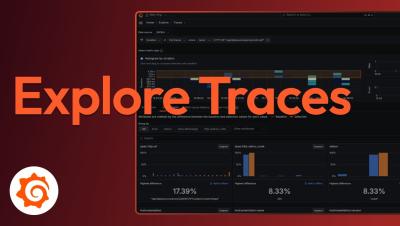
Explore Traces app now in public preview | Grafana

In this video, Mat Ryer, Senior Principal Engineer at Grafana Labs, provides an overview of the Explore Traces app for Grafana, which lets you automatically surface insights from your traces with an intuitive, point-and-click interface. Mat demonstrates how you can use the Comparison view to quickly identify the source of errors, and how to drill down to see a full trace in detail to gain a more comprehensive understanding of your system.

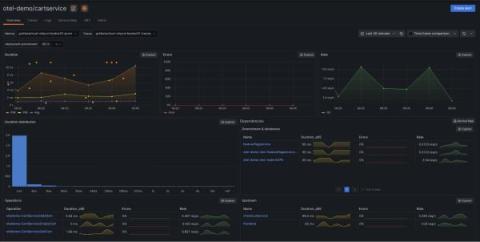
Grafana OpenTelemetry distributions: prioritizing simplicity, sticking to OSS values

The OpenTelemetry (OTel) project offers numerous components and instrumentations that support different languages and telemetry signals. However, this flexibility can be overwhelming, and new users often struggle to choose the right components and configure them properly for their specific use cases. To address this, OpenTelemetry defines the concept of a distribution, a tailored and customized version of OpenTelemetry components.

How OpenTelemetry is Transforming Observability

The OpenTelemetry project is changing how organizations approach observability. It aims to standardize monitoring across different systems. OpenTelemetry—commonly referred to as OTel—provides APIs, SDKs, exporters, and collectors. It is making data collection, analysis, and utilization more efficient, leading to better decision-making and technology adoption.

Is OpenTelemetry Open for Business? September 2024 Update

One of the things about OpenTelemetry that’s easy to miss if you’re not spending the whole day in the ins and outs of the project is just how much stuff it can do—but that’s what I’m here for! Today, I want to go through the project and give you a guide to the various parts of OpenTelemetry, how mature they are, and what you can expect over the next six months or so. I ranked these elements by relative maturity across the entire project.

Enhance Your AIOps Strategy by Utilizing Data Classification

Are you looking for a way to increase your AIOps signal to noise ratio and get more value from your data? In this article we will explore how one can utilize OpenTelemetry’s collectors, processors and data models to add or enhance classification attributes. These attributes can help you use your AIOps tools more efficiently and derive more value from your current data.

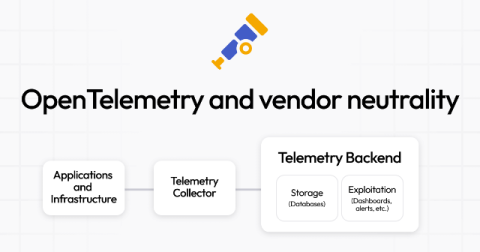
OpenTelemetry and vendor neutrality: how to build an observability strategy with maximum flexibility

One of the biggest advantages of the OpenTelemetry project is its vendor neutrality — something that many community members appreciate, especially if they’ve spent huge amounts of time migrating from one commercial vendor to another. Vendor neutrality also happens to be a core element of our big tent philosophy here at Grafana Labs. We realize, however, that this neutrality can have its limits when it comes to real-world use cases.

Managing a custom distribution OTel collector with BindPlane

Exciting news: it’s now possible to build a custom distribution of the OpenTelemetry Collector and remotely manage it with BindPlane. Though not all of BindPlane’s capabilities are available when managing a custom distribution (yet), it’s #prettycool, as it cracks open the door for teams looking to BYOF (bring your fleet), and manage them with our OTel-native telemetry pipeline.

Automatic Discovery and Instrumentation of PostgreSQL with Splunk OpenTelemetry Collector

In this video I’ll walk through the steps to instrument a PostgreSQL database using the Automatic discovery and configuration feature of the Splunk OpenTelemetry Collector. We’ll use an install script to install and run the Collector with discovery mode on a Linux machine where the database is running. I’ll then show you how to properly configure the PostgreSQL receiver properties so that the Collector is able to connect and authenticate to the database. Once the Collector is successfully configured, I’ll show you how to view those metrics in Splunk Observability Cloud.

Strategies For Reducing Observability Costs With OpenTelemetry

Keeping smooth and safe operations now relies entirely on observability. But as there's more and more data to keep track of, the costs are going up. This makes it hard for your companies to balance how well things are running and their budgets. OpenTelemetry can help by making a standard way to collect and process all the data. We're going to share how OpenTelemetry can save you money on observability and why having too much data can be costly.

The Importance of Securing Data in Traces

Trace spans are captured in the runtime after decrypting the request. This means that any sensitive data is available in plain text. This is also the case for logging; however, logging requires an explicit log statement to be coded by the engineer. Additionally, engineers can add arbitrary information to trace spans, which could expose sensitive information. Collecting sensitive information in trace spans or logging events could expose an organization to a number of risks.

Continuing Our OpenTelemetry Story With New Versions, Logs, Batching, and More Metrics

Last time we spoke, I told you about our (then) brand-spankin’-new OTel over HTTP implementation, in both our OpenTelemetry Source and Destination. That was a little over a year ago, also known as a lifetime in tech! I wanted to take another opportunity to speak to you and introduce some of our new OpenTelemetry features, and share how you can put them into practice!

Implementing OpenTelemetry in React Applications

OpenTelemetry can be used to trace React applications for performance issues and bugs. You can trace user requests from your frontend web application to your downstream services. OpenTelemetry is an open-source project under the Cloud Native Computing Foundation (CNCF) that aims to standardize the generation and collection of telemetry data. Using OpenTelemetry Web libraries, you can instrument your React apps to generate tracing data.

OpenTelemetry Filelog Receiver: Collecting Logs from Kubernetes

Master log collection in Kubernetes with OpenTelemetry's filelog receiver. Learn to configure, optimize, and troubleshoot log collection from various sources including syslog and application logs. Discover advanced parser operator techniques for robust observability.