
Operations | Monitoring | ITSM | DevOps | Cloud

Sponsored Post

DeepSeek: Revolutionizing AI Development Through Cost-Effective Innovation

In the rapidly evolving landscape of artificial intelligence, DeepSeek has emerged as a potentially transformative player, challenging conventional approaches to AI development with its innovative open-source model. This breakthrough raises important questions about the future of Agentic AI and AGI development, particularly in terms of accessibility and cost-effectiveness.

How a Global Banking Leader Tackled Memory Overload with HEAL Software

In the financial sector, where system reliability directly impacts customer trust and revenue, even minor IT inefficiencies can spiral into costly crises. For one of the world’s largest banks—supporting 25 million customers, 2,000 branches, and 3,000 ATMs—a hidden challenge threatened its reputation: unpredictable memory consumption in critical applications.

How a Global Banking Leader Tackled Memory Overload with HEAL Software

In the financial sector, where system reliability directly impacts customer trust and revenue, even minor IT inefficiencies can spiral into costly crises. For one of the world’s largest banks—supporting 25 million customers, 2,000 branches, and 3,000 ATMs—a hidden challenge threatened its reputation: unpredictable memory consumption in critical applications.

"Assurance" in IT Management, and How to Achieve It

In today’s modern era of fast-changing business and operational conditions, organizations need IT management resources that are resilient and can adapt to constant change. This objective is often summed up in one word: assurance. But the exact methodologies and IT investments to get there can vary. Regardless of how it’s approached, IT platform assurance is critical to navigating and managing the dynamic environments of modern enterprises operating at scale.

How to streamline ITIL processes for incident management

Are you facing challenges with incident routing, lengthy resolution times, or inconsistent team communication? If so, the IT Infrastructure Library (ITIL) can help. It’s a proven framework that goes beyond fundamental incident management to improve IT reliability, speed up issue resolution, and enhance overall IT service delivery. ITIL processes can help you save time, resources, and headaches.

Designing for Scale: How eG Enterprise Manages Millions of Metrics with AIOps-driven Self-Monitoring

Customers evaluate a modern observability and monitoring solution by the ROI they get, self-monitoring capabilities ultimately improve scalability and quality. The value of any observability solution lies in its ability to proactively detect and alert customers to issues before they cause a business-impacting outage. IT infrastructures and applications can fail in many different ways.

Accelerate incident triage with AI-Powered Event Management

IT Operations teams must detect and address incidents quickly to ensure efficient operations and reliable IT infrastructures. As organizations grow and scale their service offerings, their IT environments inevitably become more complex. Filtering through alerts becomes increasingly challenging due to excessive noise and a lack of end-to-end visibility. As a result, IT operations teams are forced to escalate issues more frequently.

Selector's Digital Twin: The DVR of Networking

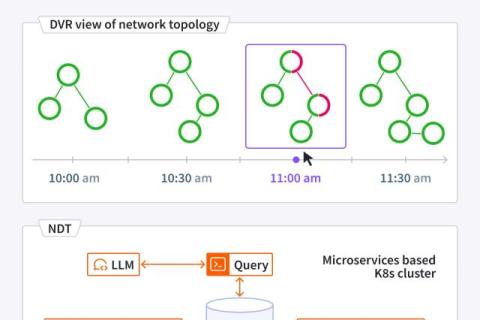
Network operations have become increasingly complex due to the distributed nature of modern applications which use data from private data centers, public clouds and the internet to provide end user services. With the adoption of these multi-cloud, multi-tier application architectures, network engineers must integrate new services (e.g AWS Direct Connect and Kubernetes clusters) from cloud providers into their existing services.

eG Innovations' AIOps-Powered Approach for Optimizing Digital Workspaces and ITOM

eG Innovations brings a unique AIOps-powered approach to IT Service Management (ITSM) and IT Operations Management (ITOM) cycles for managing digital workspaces. The eG Enterprise platform is equipped with capabilities for automated corrective actions, event-based triggers, and remote-control functionalities.

Keys to Success: Three AIOps Best Practices

When IT operations run smoothly, it’s more likely everything else in the organization will as well. Unfortunately, tech sprawl can make IT environments more prone to issues that hinder end users or, worse, customers. Recent research shows that up to 50% of organizations juggle multiple tools for observability. Too many disparate tools to monitor too many systems and applications create siloes, slowing incident response and resolution times.

How Overlooked Anomalies Can Lead to Enterprise Losses

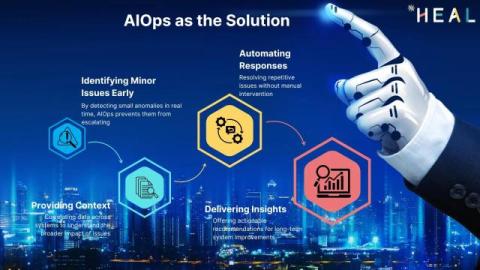
Organizations invest heavily in robust systems, talented personnel, and sophisticated tools to ensure smooth operations. Yet, small anomalies often escape attention—minor glitches in applications, occasional lags in processes, or subtle irregularities in performance metrics. These may appear insignificant, but when left unaddressed, they can cascade into significant disruptions, leading to operational inefficiencies, financial losses, and reputational damage.

Taming alert chaos: How alarm overload leads to IT fatigue and how AIOps can fix

Data complexity increases every year. The three Vs of data—volume (the amount of data streaming in and out), velocity (the speed of generation, processing, and streaming), and variety (different forms ranging from structured databases and semi-structured XMLs to completely unstructured data as media files)—are also increasing in complexity.

Managing IT operations during a crisis

As work environments for entire industries continue to evolve between on-site, remote, and hybrid models, the performance of IT operations (ITOps) teams is more critical than ever. If you need proof, just remember the global impact of the CloudStrike outage. Operations teams must monitor, triage, communicate, and manage incidents 24×7 across all services. SaaS, legacy on-premises, and homegrown tools and systems are all stretching to meet business demand. Customer expectations are ever-increasing.

ITOps and ITSM are ripe for CIOs looking to adopt GenAI

In a recent webinar, BigPanda CEO Assaf Resnick noted that for the last 15 years, CIOs staked their reputations on how effectively they could move their enterprises to the cloud. Assaf predicts CIOs will focus on integrating generative AI into their enterprises over the next 10 years to deliver tangible business value. IT operations (ITOps) and IT service management (ITSM) offer significant opportunities to incorporate AI to enhance and accelerate their processes.

Metric Watch - a real-time view of past, present, and future of metrics

Enterprise operations monitor various metrics associated with the stability, performance, availability, and other such aspects of business, application, and IT infrastructure. These could be business KPIs such as footfall, checkout time, and sales of the flagship stores. These could be performance metrics such as the response time of business-critical applications. These could be the queue length or enqueue rate of the backbone message queues.

When and How to Use Log-Based Metrics in DX Operational Observability

DX Operational Observability (DX O2), a next-generation AIOps and Observability solution from Broadcom, offers two powerful capabilities that generate valuable insights from complex log data. Since DX O2 supports ingestion of logs from a wide variety of sources, the solution offers an enormous opportunity to improve observability and power AIOps.

Beyond the hype: Is a 10x leap in efficiency possible with AIOps in IT observability?

Now that AI has revolutionized IT forever, what are its implication on IT observability? Typically, IT operations, SREs, and DevOps professionals use IT observability to gain a holistic view of their IT infrastructure. In that pursuit, they used AIOps in several ways. Now, AI has helped IT observability with better anomaly detection, faster root cause analysis, and proactively identifying opportunities to dynamically scale IT to ensure uptime, performance, and security.

The three pillars of observability

Do you feel you’re always playing catch-up with incidents? If so, you’re not alone. As IT environments become more complex, alerts keep piling up, and finding the root cause feels like searching for a needle in a haystack. And ITOps and incident responders are left scratching their heads and wondering: what went wrong? It can be frustrating when you don’t have end-to-end visibility into your systems. This is where observability comes in.

Accelerate Incident Investigation with Biggy AI

Meet BigPanda Biggy AI, the interactive AI that’s purpose-built for incident responders. Powered by BigPanda’s AI-powered ITOps and incident management platform, Biggy streamlines troubleshooting for incident management by aggregating data such as observability tools, service history, informal and institutional knowledge, and more.

Evaluating Enterprise Readiness for the Shift to Autonomous IT Operations

Autonomous IT operations play a crucial role in enhancing the effectiveness and resilience of IT teams. Automating routine tasks and monitoring systems in real-time enables teams to respond swiftly to operational disturbances, minimizing downtime and disruptions. This proactive approach helps address issues before they escalate, fosters a more agile IT environment, and facilitates the journey to Autonomic IT.

Ops Centric AI: The foundation of best-in-class incident management

Your ITOps and Incident Management teams face thousands of alerts daily. How can they find the “needle in the haystack” to prevent critical alerts from escalating into incidents that impact users and customers? This challenge plagues modern IT departments as alert noise, fragmented data, and chaotic workflows extend response times and undermine service reliability.

What is observability?

Modern IT environments are complex and interconnected, making observability essential for maintaining system and application performance. The challenge is not just about ensuring systems run smoothly; it’s about understanding the complicated web of data, services, and user interactions that drive your operations. This is where observability comes into play. Observability offers a deeper understanding of why issues arise in the first place.

The top three insights from Gartner IOCS 2024

BigPanda was honored to be a premier sponsor of Gartner’s IT Infrastructure, Operations & Cloud Strategies Conference (IOCS) in Las Vegas, Nevada. This event allowed us to showcase the latest BigPanda capabilities, connect with industry leaders, and gain valuable insights into the future of IT operations. For those who couldn’t attend, here are the three most impactful insights from my conversations with the customers, vendors, and analysts at IOCS 2024.

AI to Growth Interview with Shailesh Manjrekar, Chief Marketing Officer, CloudFabrix

0:54 - Introduce CloudFabrix

03:11 - What is AIOps

06:14 - Keys to Growth & Product/ Market Fit

08:40 - Know your customer intimately

10:31 - AI means to an end - business fundamental don’t change

14:37 - Inhibitors to Growth

16:35 - Buyer has changed

17:31 - Innovative product need sales & marketing

20:10 - Books

22:15 - 2024 Predictions

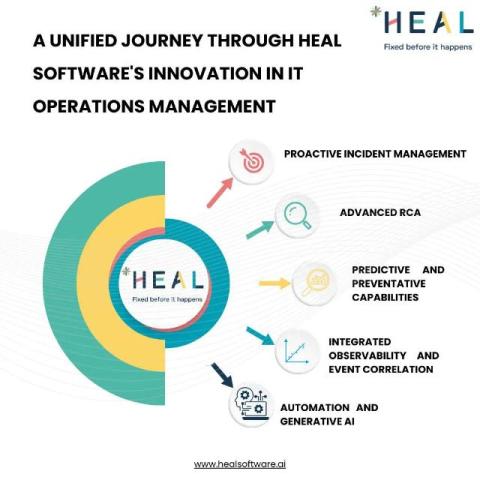
A unified journey through HEAL Software's innovation in IT operations management

Every year brings its own unique challenges and opportunities, and we’ve consistently embraced both resilience and innovation. Through our comprehensive platform, we’ve redefined how businesses approach root cause analysis, anomaly detection, automation, solution recommendations, and log monitoring, while also achieving significant improvements in Mean Time to Investigate (MTTI) and Mean Time to Repair (MTTR).

A step by step guide to AI maturity in IT operations

Artificial Intelligence (AI) has lots to offer to IT operations. AI capabilities vary from detecting anomalies to suppressing alert noise to predicting future incidents to even planning for growth and change. However, enterprises struggle in making the best use of AI. In this blog we present our views on how to go about systematic adoption of AI to accelerate and optimize AIOps.