Operations | Monitoring | ITSM | DevOps | Cloud

Telemetry Data Compliance Module

Telemetry data sent from applications often contains Personally Identifying Information (PII) like names, user IDs, phone numbers, and other information that must be obfuscated before the data is sent to storage or observability tools, in order to be in compliance with corporate or government policies such as HIPAA in the US or the GDPR in the EU.
My 3 Lessons About OpenTelemetry for Observability

As a fan of OpenTelemetry, I love to see Cribl meeting customers where they are and helping them get to where they want to be with a vendor-agnostic approach. Where it is not possible or practical to re-instrument a telemetry source, whether an application or infrastructure, the barrier to adopting OpenTelemetry Signals can be daunting.

Instrumenting your Codebase with OpenTelemetry

Ready to unlock the full potential of your applications through comprehensive instrumentation? Join us for a webinar focused on the essentials of instrumenting your codebase with OpenTelemetry. From tracing requests to capturing metrics and logs, we'll guide you through the process of integrating OpenTelemetry seamlessly into your development workflow. Gain the visibility you need to optimize performance, troubleshoot issues, and deliver exceptional user experiences.

How to Monitor Host Metrics with OpenTelemetry

Today's environments often present the challenge of collecting data from various sources, such as multi-cloud, hybrid on-premises/cloud, or both. Each cloud provider has its own tools that send data to their respective telemetry platforms. OpenTelemetry can monitor cloud VMs, on-premises VMs, and bare metal systems and send all data to a unified monitoring platform. This applies across multiple operating systems and vendors.

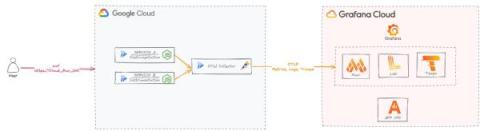
Serverless observability: How to monitor Google Cloud Run with OpenTelemetry and Grafana Cloud

OpenTelemetry has emerged as the go-to open source solution for collecting telemetry data, including traces, metrics, and logs. What’s especially unique about the project is its focus on breaking free from the reliance on proprietary code to offer users greater control and flexibility. As a senior solutions engineer here at Grafana Labs, I’ve spent a lot of time exploring OpenTelemetry, including in my spare time.

Spans - a key concept of distributed tracing

Spans are fundamental building blocks of distributed tracing. A single trace in distributed tracing consists of a series of tagged time intervals known as spans. Spans represent a logical unit of work in completing a user request or transaction. Distributed tracing is critical to application performance monitoring in microservice-based architecture. Before we deep dive into spans, let's have a brief overview of distributed tracing.

What is Fleet Management in OpenTelemetry

Fleet management in the broader sense is about managing, organizing, and coordinating assets within an organization to ensure efficiency, reduce costs, and maintain compliance. The term originates from the automotive industry. According to Forbes, Fleet management involves a slew of strategies and procedures required to operate a fleet of 5 or more vehicles punctually, cost-effectively, and at optimal efficiency.

Complete Handbook of OpenTelemetry Metrics

You have probably heard of OpenTelemetry in the context of traces. But did you know OpenTelemetry also supports metrics with a comprehensive, forward-looking data model and SDKs? When it comes to metrics, one thinks of Prometheus, but Otel metrics provide exciting ideas such as cumulative deltas, exponential histograms, and more! This talk will demystify everything about Otel Metrics, from the data model to APIs to how to get started. We will cover the differences between Otel Metrics and Prometheus and explain the reasons why people get excited about using Otel Metrics.

Choosing an OpenTelemetry backend - Things To Keep In Mind

OpenTelemetry is a Cloud Native Computing Foundation(CNCF) incubating project aimed at standardizing the way we instrument applications for generating telemetry data(logs, metrics, and traces). However, OpenTelemetry does not provide storage and visualization for the collected telemetry data. And that’s where an OpenTelemetry backend is needed. Cloud computing and containerization made deploying and scaling applications easier.

How Can OpenTelemetry Transform Your Cloud Native Observability Strategy? Insights from Sudhir Singh

Join Sudhir Singh, co-founder and COO of Cloud Builders, as he delves into the essentials of observability in the cloud-native landscape. In this session, Sudhir explores the advantages of implementing OpenTelemetry over traditional monitoring tools and vendor-specific solutions. Discover why OpenTelemetry is crucial for gaining comprehensive insights into your applications and infrastructure, learn about its role in enhancing system health monitoring, and understand its impact on mitigating potential incidents before they escalate.

OpenTelemetry: The Key To Unified Telemetry Data

OpenTelemetry (OTel) is an open-source framework designed to standardize and automate telemetry data collection, enabling you to collect, process, and distribute telemetry data from your system across vendors. Telemetry data is traditionally in disparate formats, and OTel serves as a universal standard to support data management and portability.

Centralized Logging with Open Source Tools - OpenTelemetry and SigNoz

Modern-day software systems emit millions of log lines per minute. Cloud computing and containerization have made it easy to have distributed systems. Distributed systems emit logs from multiple sources. While developers have always used logs to debug stand-alone applications, centralized logging solves the challenges of modern-day distributed software systems.

Introducing Elastic's OpenTelemetry Distribution for Node.js

We are delighted to announce the alpha release of the Elastic OpenTelemetry Distribution for Node.js. This distribution is a light wrapper around the OpenTelemetry Node.js SDK that makes it easier to get started using OpenTelemetry to observe your Node.js applications.

Managing High Volume with OpenTelemetry

As your systems grow, so do the challenges of managing high-volume telemetry data. From horizontal scalability strategies to efficient data aggregation and storage techniques, we'll cover everything you need to know to keep pace with your expanding infrastructure. Don't let scalability constraints hinder your observability efforts—learn how OpenTelemetry can empower you to manage high volumes of telemetry data effectively and efficiently.

The Art of Visibility: Constructing an OpenTelemetry Observability Pipeline

Craft an observability pipeline that offers unparalleled insights into your systems and applications. Watch as we explore the art of constructing an OpenTelemetry observability pipeline, from instrumenting your codebase to effectively analyzing and visualizing telemetry data. Whether you're aiming to enhance troubleshooting, optimize performance, or gain a deeper understanding of your environment, this video series will equip you with the knowledge and tools to elevate your observability game.

The OpenTelemetry Collector: A Deep Dive

Delve into the intricate workings of the OpenTelemetry Collector in this comprehensive webinar. Watch as we explore advanced features, optimization techniques, and best practices for maximizing the efficiency of your telemetry data collection. Whether you're a seasoned user or just getting started, this deep dive promises to unlock invaluable insights into harnessing the full potential of the OpenTelemetry Collector.

Building a Custom OTel Collector: A Step by Step Guide

Ready to tailor your telemetry data collection to fit your exact needs? Watch as we go step-by-step through constructing a custom OpenTelemetry Collector. From defining requirements to implementing custom processors and exporters, leave this feeling empowered to create a collector perfectly aligned with your infrastructure and observability goals.

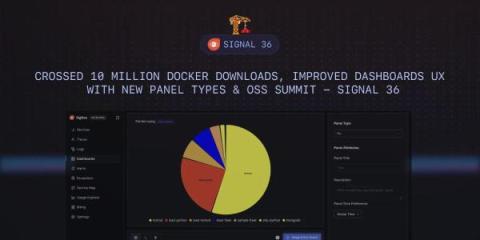
Crossed 10 Million Docker Downloads, Improved Dashboards UX with New Panel Types & OSS Summit - SigNal 36

Welcome to SigNal 36, the 36th edition of our monthly product newsletter! We crossed 10 Million Docker downloads for our open source project. We’ve enhanced our Dashboards UX and incorporated feedback from users in different areas of our product. Let’s see what humans of SigNoz were up to in the month of April 2024.