On release days, we wear teal, y'all! Check out the fun and exciting new features from Cribl releases on a monthly (:fingers-crossed:) basis. Here's what's new in Cribl 4.16.
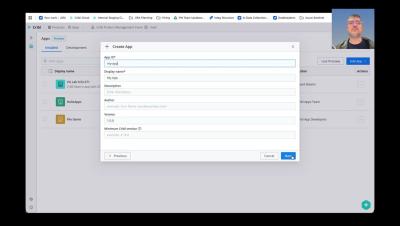
Get instant visibility into how data moves through your Cribl environment with Cribl Insights. In this demo, Product Manager Pavan Venkatesh walks through how Cribl Insights helps you understand system health, data flows, and how to set up alerts and notifications —so you can proactively troubleshoot faster and optimize resources to get max ROI.
In this demo, Product Manager David Cavuto walks through how Cribl Notebooks helps security and IT teams investigate faster by combining live data, historical context, and interactive analysis — all in one place.
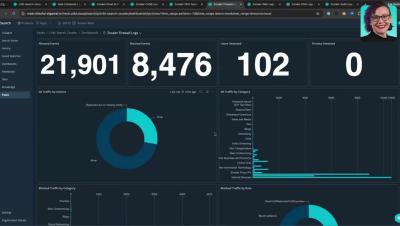
Email is still mission-critical, but most teams have very little visibility into what’s actually happening behind the scenes. In this video, I give a quick walkthrough of an inbox intelligence dashboard built on Cribl Search. It shows email volume, delivery health, and unusual activity at a glance, without digging through raw logs unless of course you like doing that.
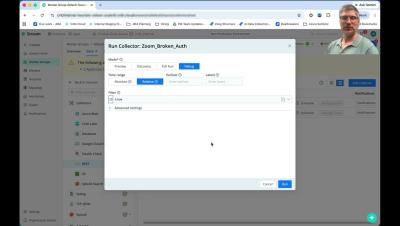
Big alert. Old data. No time for a replay. In this video, learn how to run Sigma detections directly against object storage—S3, Azure Blob, or GCS—using Cribl Search. No rehydration, no re-ingest, no SIEM bill shock. Just click, run, and hunt across months or years of data with ready-to-use Sigma Packs.
Ever run a SIEM search only to see nothing for your firewall logs? In this video, we show a smarter way to detect when log sources stop sending data using Cribl Lake, Cribl Search, and Cribl Stream. Learn how to track “last seen” times, build efficient aggregations, and get real-time alerts—without burning SIEM resources or storage.
Get instant visibility into Windows event logs, system_state, process events and AD logs. the Cribl Search pack for Windows highlights performance and security signals at a glance, helping teams quickly spot anomalies.
Clint Sharp demonstrates how Cribl Search leverages AI to streamline incident investigation. Starting from a Slack channel, the AI builds an interactive notebook, analyzes order processing logs, and identifies suspicious traffic spikes. It connects high CPU usage to a recent Jenkins deployment, hypothesizing a supply chain attack, and ultimately recommends a rollback. This isn't a far off concept. It is the future of operations arriving right now.
Clint Sharp explains why a common model like OCSF is critical for the future of AI. Agents need standardized data to analyze information effectively on your behalf. He contrasts the traditional manual workflow of checking Slack, tickets, and wikis while asking colleagues with a future where AI fuses this human context with machine data. Instead of just search results, AI agents will hand you examined hypotheses so you know exactly where to take your investigation.