Operations | Monitoring | ITSM | DevOps | Cloud

Agile Vs. DevOps: 7 Most Common Misconceptions

DevOps and Agile are some of the most prominent concepts in modern IT. Agile emerged at the turn of the century to help development teams become more efficient than with previous approaches. Several years later, around 2010, DevOps emerged as we know it today to enable development and operations teams to deliver better software products, more quickly, and together. These two approaches have a lot in common, including inflated expectations.

5 Ways To Find Immediate Cloud Cost Savings Opportunities

At CloudZero, we’re always talking about different ways you can save money and increase your cloud cost efficiency with our platform. From choosing the best provider discounts for your situation to spotting cost trends that have gone off the rails or boosting the metrics that are most important to investors, we’ve discussed numerous ways you can use CloudZero to your company’s financial advantage.

Maximizing ROI By Reducing Cost of Downstream Observability Platforms With BindPlane OP

When engaging with potential customers, we are often asked “how can we reduce spend on our observability platform like Splunk or Data Dog and simultaneously justify the cost of BindPlane OP?” Let’s dive in and see how the powerful capabilities of BindPlane OP can reduce your total ingest, and get a positive ROI on your BindPlane OP investment.

Snowflake Review: Why CloudZero Went With Snowflake

Every day, CloudZero helps SaaS companies understand their cloud environments and take consistent steps forward on the journey to cloud cost maturity. We discuss this a lot on our blog. What we talk about far less frequently is our own journey. One of the reasons CloudZero can help other businesses grow, change, and adapt is because we know what it’s like to shift strategies and try new things that are a little bit scary or unknown.

Avoid Azure migration cost overruns with Datadog Cloud Cost Management

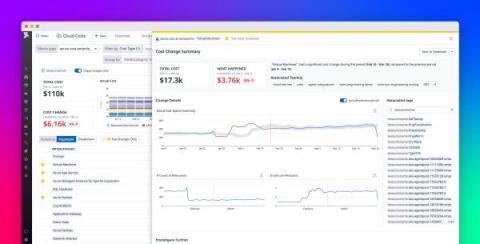
Migrating your on-prem applications to Azure can help you improve scalability, reliability, and security. It can also help reduce costs and free your engineering teams to focus on innovation and performance optimization. But it can be hard to understand Azure costs as they evolve during your migration and to see how they correlate with your resource utilization once you’re up and running in Azure.

Why Traditional Cloud Cost Optimization Isn't Enough

The cloud holds such promise. It’s the promise of near-infinite scalability, power, and growth potential. Companies switching to the cloud, especially in the early days of the 2010s, were seduced by the possibilities of what could happen if they just spent a little more, raced against their competitors a little faster, or achieved just a bit more product functionality. Could they be the next Twitter? The next Uber? Or something even bigger and better than what had come before?

Amazon S3 Cost Optimization: 12+ Ways To Optimize Your S3 Costs

The Amazon Simple Storage Service (Amazon S3) is a cloud storage platform that provides highly scalable, low-latency, and relatively affordable cloud storage. Plus, developers can use S3 to save, archive, and retrieve data anywhere on the web at any time with a user-friendly web interface. Amazon S3 is a simple key-based object store you can use to store any type of data, structured or unstructured.

Would You Notice If A Feature Was Costing Your SaaS Company Too Much?

It’s a fact of life within the SaaS world that some features will perform better or worse than others in terms of costs versus revenue. If it were possible to develop every single new release in a way that it would flawlessly maintain desired profit margins, everyone would be doing it. What separates the major players from companies that struggle year after year is how they monitor and respond to changing circumstances as they arise, and whether they learn from past mistakes.

Reducing the cost of cloud: Tips for reducing your spend at any cloud provider

Spiraling costs are causing organizations to look for ways to reduce their monthly spend – hidden charges and unexpected bills are surprises that CFOs can no longer afford. With current costs from hyperscaler cloud providers skyrocketing, many are now asking whether going cloud-native is the right move for them. There are, however, a number of tips and tricks that you can action today that will help you reduce your cloud bill at any provider.

Live Event - Cloud Costs Optimization

Qovery is a platform delivering Environments as a Service in your Cloud, where you can build, deploy and test in production-like environments. Qovery turns app deployment and environment provisioning on AWS a breeze. Developers can instantly spin up production-like environments and start shipping in seconds. Join Romaric (CEO at Qovery) to see how you can optimize your cloud costs with the help of Qovery and its partnerships.

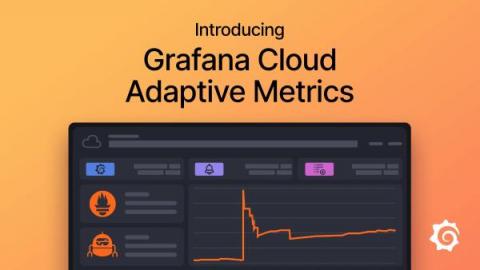
Introducing Adaptive Metrics: A new cost management feature in Grafana Cloud

You’ve convinced your organization that cloud native is the way forward. You’ve championed Kubernetes and sworn by Prometheus. You’ve onboarded multiple teams to your centralized observability platform. Then you open your latest bill and see a lot of commas in your invoice, and a sinking feeling sets in. Sound familiar? We’re keenly aware of the pain this can bring. As metric cardinality grows in cloud native environments, so does the cost to store and retrieve the data.

4 Low-Effort Tactics That Saved CloudZero Over $2M In 2023

Whether or not you take the oft-quoted statistic that 30% of companies’ cloud spend as gospel, one thing is for sure: Companies have been spending recklessly in the cloud ever since its inception. For (fairly) good reason — companies wanted to perfect their products and snatch up market share before an even more reckless spender did. But the chickens of overindulgence are finally coming home to roost.

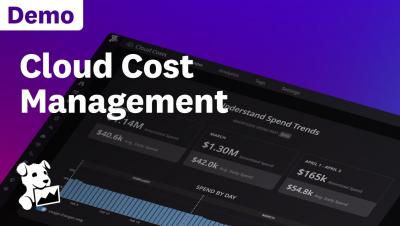
Cloud Cost Management Demo

Growing cloud costs are a new constraint and challenge for many DevOps, FinOps, and Cloud Platform teams. Cloud Cost Management delivers granular cost data, scoped to the services developers own, so that engineers can take action on cost data. By unifying cost and observability data, engineering teams can quickly understand the root cause of cost changes, identify wasteful spend in their environment, and empower everyone across their organization to become a cost owner.

Why Unit Economics Are The Key To Unlocking Forecasting

In SaaS companies, engineers are the biggest influencers to cloud costs. They choose the infrastructure, build the products, and produce the code. Unfortunately, having this power means engineering managers are often asked to predict cloud spend months or even years into the future. An executive or a head of finance might approach the engineering head and ask how much the company will spend on cloud costs next year, thinking he or she should naturally have the answer.