Operations | Monitoring | ITSM | DevOps | Cloud

Relational Fields: Query Even More Relationships in Your Traces

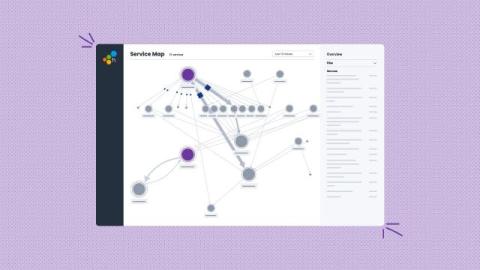
Earlier this year, we introduced relational fields. Relational fields enable you to query spans based on their relationship to one other within a trace, rather than only in isolation. We’ve now expanded this feature and introduced four new prefixes: child., none., any2., and any3.. Previously, you could use root., parent., and any. to query on the root span of your target span’s trace, the parent span of your target span, and any other span in the same trace as your target span.

The Ultimate Observability Experience at SolarWinds Day

SolarWinds Day has consistently been one of the most enlightening events of the IT year, offering rich insights into technology, cybersecurity, artificial intelligence (AI), and more. This quarter's event, SolarWinds Day: Observability Anywhere. Precision Everywhere, tackled the complexities of IT infrastructure observability. I was delighted to host the panel discussion; here’s my overview of the key talking points.

10 Best Zabbix Alternatives for Infrastructure Monitoring in 2024

Infrastructure monitoring has evolved into a critical component of modern distributed systems, driving organizations to explore robust Zabbix alternatives. While Zabbix has served as a cornerstone of traditional monitoring, today's microservices and cloud-native architectures demand different approaches. The landscape of Zabbix alternatives has matured considerably, offering specialized solutions for various monitoring scenarios.

Advanced Open edX Monitoring with AppSignal for Python

In the first part of this series, we explored how AppSignal can significantly enhance the robustness of Open edX platforms. We saw the challenges that Open edX faces as it scales and how AppSignal's features — including real-time performance monitoring and automated error tracking — provide essential tools for DevOps teams. Our walkthrough covered the initial setup and integration of AppSignal with Open edX, highlighting the immediate benefits of this powerful observability framework.

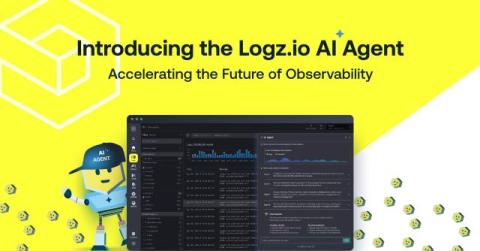
Introducing the Logz.io AI Agent, Accelerating the Future of Observability

Logz.io introduces its AI Agent in Beta, using GenAI to revolutionize observability. The AI Agent simplifies monitoring with automated data analysis and root cause detection, accelerating issue resolution by 3-5x for beta users—marking a critical step toward fully autonomous observability.

Observability vs. monitoring vs. telemetry: Uncovering the secrets to proactive IT management

In the world of modern IT operations, keeping your systems running smoothly requires measures beyond just basic monitoring. As infrastructures become more complex and dynamic, understanding how telemetry, monitoring, and observability work together is essential. These three concepts may seem similar, but each plays a distinct role in maintaining system health and performance.

Driving Multi-Region Observability Excellence at Lansweeper

Since its inception in 2004, Lansweeper has been at the forefront of helping businesses understand, manage, and protect their IT devices and networks through a powerful IT asset management platform. As the platform grew from an on-premises solution to a cloud-based SaaS offering, Lansweeper expanded its reach to a global, multi-region customer base.

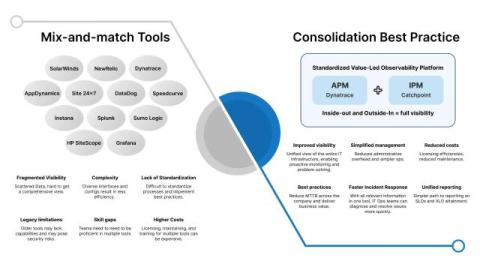
Consolidation and Modernization in Enterprise Observability

Organizations are seeing measurable benefits from investing in observability, including faster issue resolution, cost reduction, and improved business outcomes. However, challenges still remain, including rising costs, tool fragmentation, and the need for more comprehensive monitoring of internet dependencies and user experience. Let’s explore these challenges and the best practices organizations are adopting to address them.

Tame Your Telemetry: Introducing the Honeycomb Telemetry Pipeline

Observability means you know what’s happening in your software systems, because they tell you. They tell you with telemetry: data emitted just for the people developing and operating the software. You already have telemetry–every log is a data point about something that happened. Structured logs or trace spans are even better, containing many pieces of data correlated in the same record. But you want to start from what you have, then improve it as you improve the software.

The Path to Autonomous Observability

Autonomous observability for system monitoring and management aims to use GenAI and machine learning to automatically detect, diagnose and resolve issues. In conversations about cloud observability today, discussions often shift from “what’s possible” to “what’s practical.” Too often, these conversations highlight the shortcomings of current observability processes, tools and financial models.

How observability, AI and automation is leading the workload management evolution

Workload management is ubiquitous when it comes to automating critical business processes. With time, workload management as a technology is going through a gradual evolution, from ‘just automation’ to an orchestrator of intelligent automation. This necessitates a layer of observability and intelligence to facilitate the move from workload automation to workload management.
How to scale observability for AWS hybrid and multi-cloud environments

Managing observability across hybrid and multi-cloud environments is like flying a fleet of planes, each with different routes, altitudes, and destinations. You’re not just piloting a single aircraft; you’re coordinating across multiple clouds, on-premises systems, and services while ensuring performance, availability, and cost-efficiency. AWS customers, in particular, face challenges with workloads spanning multiple regions, data centers, and cloud providers.

Understanding Jaeger - From Basics to Advanced Distributed Tracing

Jaeger has emerged as a crucial tool in the modern distributed systems landscape, offering powerful tracing capabilities that help organizations understand and optimize their microservices architectures. This comprehensive guide explores everything from basic concepts to advanced implementations, providing you with the knowledge needed to effectively implement and utilize Jaeger in your environment.

Comprehensive Observability: Key User Experience Metrics to Monitor in Cloud Environments

As we conclude our three-part series on key observability metrics ScienceLogic monitors, this blog focuses on the analysis and impact of user experience (UX) metrics to shed light on their business impact. Whether it’s an internal business application or a customer-facing platform, a seamless and efficient user experience can significantly impact satisfaction, productivity, and loyalty.

Determining a CoPE's Efficacy-and Everything After

As discussed in the first article in this series, a Center of Production Excellence (CoPE) is a more or less formal, provisional subsystem within an organization. Its purpose is to act from within to change that organization so that it’s more capable of achieving production excellence. The series has, to date, focused mainly on how best to construct such a subsystem and what activities it should pursue.

Reduce Observability Costs with OpenTelemetry Setup

Maintaining and visualizing telemetry data efficiently is super important for DevOps and SecOps teams. OpenTelemetry, a fantastic open-source observability framework, can really help with this without being too costly. Picture having a simple process that improves your data and helps your team make smart decisions without spending too much money. Let's chat about some budget-friendly ways to set up OpenTelemetry agents.

State of Observability 2024 Reveals How Leaders Outpace Their Peers

In 2024, simply having an observability practice is a given. In this era of observability, a high-functioning team will set leaders apart from their peers. Leading observability practitioners don’t fix issues by putting hundreds of people into a virtual room, or frantically messaging in a temporary Slack channel to find root causes. Because leaders embed observability into their development practices early, a feature launch is a quiet non-event.

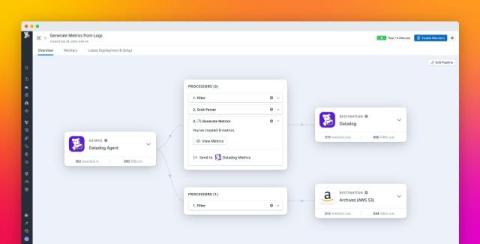
Generate metrics from your high-volume logs with Datadog Observability Pipelines

Logs are a rich source of information, providing you with the minute details you need to troubleshoot a specific issue or perform extensive historical analysis. But with billions of logs being generated from your infrastructure every day, it isn’t practical to sift through them all to derive actionable insights. Firewall, CDN, network activity, and load balancer logs are especially high volume, requiring storage solutions that can be expensive and difficult to scale.

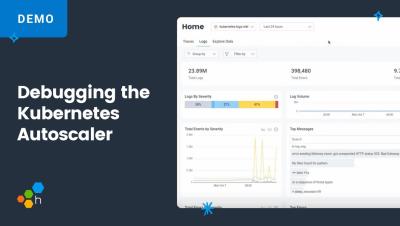
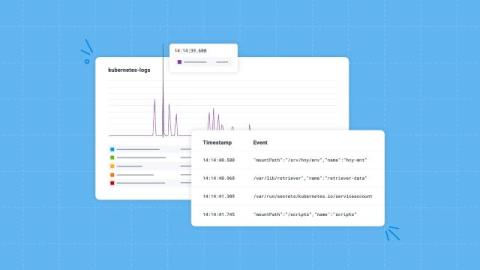
Debugging Kubernetes Autoscaling with Honeycomb Log Analytics

Let’s be real, we’ve never been huge fans of conventional unstructured logs at Honeycomb. From the very start, we’ve emitted from our own codestructured wide events and distributed traces with well-formed schemas. Fortunately (because it avoids reinventing the wheel) and unfortunately (because it doesn’t adhere to our standards for observability) for us, not all the software we run is written by us.

Monitor your generative AI app with the AI Observability solution in Grafana Cloud

Generative AI has emerged as a powerful force for synthesizing new content—text, images, even music—with astounding proficiency. However, monitoring, optimizing, and maintaining the health of these complex AI systems is challenging, and traditional observability tools are struggling to keep pace. At Grafana Labs, we believe that every data point tells a story, and every story needs a capable narrator.

Top 7 Dynatrace Competitors and Alternatives In 2024

Application Performance Monitoring (APM) tools play a critical role in ensuring seamless user experiences for businesses. While Dynatrace has established itself as a leader in this field, there exists a range of alternative solutions in the market that may align more closely with the specific needs of your organization. This comprehensive guide delves into the diverse competitors of Dynatrace, offering valuable insights to empower you in making a well-considered choice when procuring an APM solution.

Gaining End-to-End Network Observability in a Multi-Cloud World

In a relatively short period of time, networks have grown much bigger, much more complex, and much more critical to the ongoing operation of the business. Quite simply, while ensuring optimized network services has never been more critical, it’s also never been more difficult. In many large enterprises, network operations teams are seeing tens of thousands of endpoints added to already complex internal environments.

Leveraging AI for Predictive Analytics in Observability

Predictive analytics has become a key goal in observability. If teams can foresee potential system failures, performance bottlenecks, or resource constraints before they happen, they can act preemptively to mitigate issues. AI holds the promise of making this possible. In this post, we explore how AI can push observability toward predictive analytics, the industry’s current hurdles, and practical use cases for leveraging AI today.

Digitate's Flamingo release advances AI and unified observability to power the autonomous enterprise

Digitate announces the general availability of ignio™ Flamingo, featuring a robust suite of AI-driven capabilities across its award-winning products and solutions to further the vision of an autonomous enterprise.

How to Use FastAPI [Detailed Python Guide]

FastAPI Python combines modern Python features with high-performance web development capabilities. This framework stands out for its speed, ease of use, and built-in support for asynchronous programming. Whether you're building APIs, microservices, or full-stack applications, FastAPI offers tools to streamline your development process.

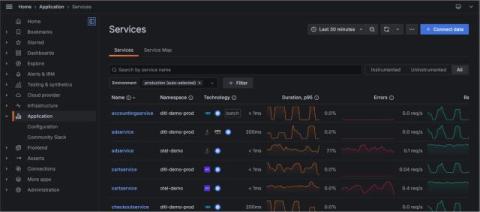
How to quickly configure Grafana Cloud Application Observability with Open Telemetry Operator

Monitoring application health is a lot like monitoring your personal health. Vital signs such as heart rate, blood pressure, and overall well-being can spot problems before they escalate, helping us maintain good health. Similarly, application health requires constant monitoring of performance indicators like CPU usage, memory consumption, and application response times.

Unlock the Real Value of Logs With Honeycomb Telemetry Pipeline and Honeycomb for Log Analytics

At Honeycomb, we know how important it is for organizations to have a unified observability platform. This is why we’re launching Honeycomb Telemetry Pipeline and Honeycomb for Log Analytics: to enable engineering teams to send and analyze data—including logs—into a single, unified platform. For too long, teams have had to wrangle large volumes of logs, their context scattered across multiple teams and tools, leading to knowledge silos.

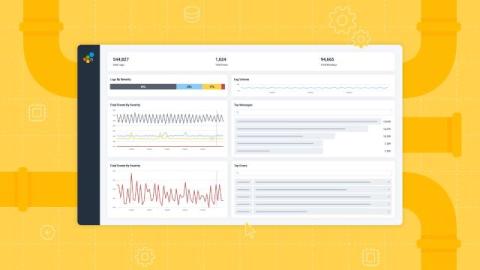
Real-time application monitoring and bottleneck detection l Blackfire

Blackfire's continuous observability solution empowers developers to monitor their applications' real-time behavior and proactively identify existing bottlenecks or the consequences of upcoming changes before they reach production. By speeding up the discovery process and allowing long-term performance optimization, Blackfire lets developers stay in control, even during crises, to build and grow their applications confidently.

How Generative AI Is Revolutionizing Debugging

In the rapidly evolving landscape of software development, the integration of generative AI has become a game-changer for organizations striving to deliver high-quality software at scale. Among its many transformative applications, autonomous debugging stands out as a critical advancement, offering the potential to revolutionize the way development teams tackle errors and maintain operational efficiency.

Comprehensive Observability: Key Performance Metrics to Monitor in Cloud Environments

Enterprises need strong observability to ensure system reliability, proactively detect and resolve issues, optimize performance, enhance security, and maintain seamless business operations across complex distributed environments.

Top 10 Prometheus Alternatives in 2024 [Includes Open-Source]

Effective monitoring is important for maintaining robust and reliable systems. While Prometheus has long been a go-to solution for many organizations, the growing complexity of modern infrastructure has led to an increased demand for prometheus alternatives. This comprehensive guide will explore various monitoring tools that can serve as viable prometheus alternatives, helping you make an informed decision for your specific needs.

What is Data Observability? Guide to Ensuring Data Health and Reliability

Data's critical role in business operations has intensified the need for reliable information management. As companies increasingly base their decisions and growth strategies on data-driven insights, maintaining high-quality datasets has become essential. Data observability offers a novel approach, transforming how organizations comprehend and maintain their information assets.

The 3 pillars of observability: Unified logs, metrics, and traces

Understanding telemetry signals for better decision-making, improved performance, and enhanced customer experiences Telemetry signals have evolved significantly over the years — if you blinked, you could have missed it. In fact, much of the common wisdom about observability needs a refresh. If your observability solution doesn’t consider the current state of telemetry, you might need an upgrade.

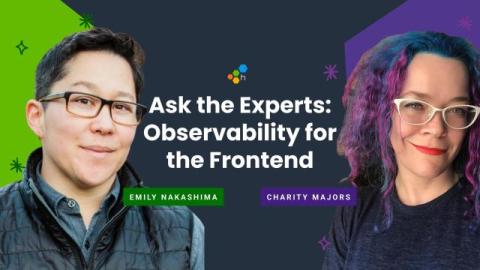
Frontend Observability: A Candid Conversation With Emily Nakashima and Charity Majors

Frontend development has evolved rapidly over the past decade, but one challenge remains constant: understanding what’s happening in real-time across diverse browsers, environments, and user interactions. This is where observability steps in—but how does it apply to the frontend world where user experience can break in countless, unexpected ways?

Is Datadog Worth the Price? An In-Depth Cost Analysis in 2024

Datadog has established itself as one of the leading solutions for monitoring, logging, and analytics. But with the increasing number of alternatives available, many businesses are asking, "Is Datadog worth the price?" This article breaks down Datadog's pricing structure, the value of its features, and compares it to competitive alternatives. By the end, you'll have a clear understanding of whether Datadog is the right fit for your business.

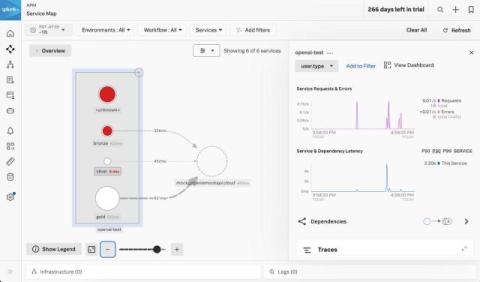
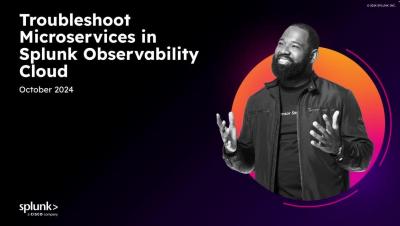
Troubleshooting Microservices with Splunk Observability Cloud and the AI Assistant for Observability

In this video, I’m going show you how to troubleshoot microservices in Splunk Observability Cloud using features like APM’s Service Map and Tag Spotlight to identify what’s causing our microservice to produce high error rates. We’ll then review Related Logs in Log Observer to determine why the error in our service is occurring.

The new era of observability: Why logs matter more than ever

20 years ago, software ate the world. The old ways of monitoring, failing over, or routinely rebooting quickly became inadequate and with a new focus on software excellence, how we monitor and maintain them had to be rethought. Even back then, when new software was released on an annual basis, it was clear that developers and futurists needed to build, inform, and optimize their approach, which required a deeper understanding of the application experience.

Shaping the Next Generation of AI-Powered Observability

Observability is crucial for maintaining complex systems’ health and performance. In its traditional form, observability involves monitoring key metrics, logging events, and tracing requests to ensure that applications and infrastructure run smoothly. The emergence of Artificial Intelligence (AI) promises to revolutionize the way organizations approach observability.

Introducing the Observability Center of Excellence: Taking Your Observability Game to the Next Level

Chasing false alerts — or worse, having your system go down with no alerts or telemetry to give you a heads-up — is the nightmare we all want to avoid. If you’ve experienced this, you’re not alone. Before joining Splunk, I spent 14 years as an observability practitioner and leader for several Fortune 500 companies and in my 2.5 years with Splunk I have had the opportunity to work with customers of all shapes and sizes.

Redefining RUM: A Comparative Gap Analysis of Existing Tools

Real user monitoring (RUM) began as a straightforward approach to tracking basic web performance metrics. Focused on things like page load times and response rates, RUM relied on server-side logging and simple browser timings. While these tools captured Core Web Vitals (CWVs), they offered limited insights into how users actually interacted with pages, focused mainly on server-side performance.

What Is Full Stack Observability and Why Is It Important?

The complexity of modern software systems has reached unprecedented levels. Comprehensive monitoring and observability have become paramount as organizations continue embracing cloud-native architectures, microservices, and distributed systems. Enter full stack observability - a game-changing approach that's revolutionizing how we understand and manage our IT environments.

Comprehensive Observability: Key Availability and Reliability Metrics to Monitor in Cloud Environments

Strong observability in cloud environments is essential for monitoring the health of interconnected systems. Unlike traditional monitoring, which is limited to specific cloud stacks or devices, observability provides comprehensive visibility across the entire hybrid IT infrastructure including applications, IT systems and services.

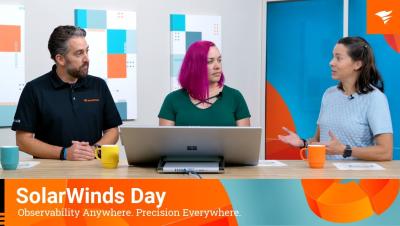
SolarWinds Day | Observability Anywhere. Precision Everywhere.

SolarWinds is expanding its cloud-monitoring capabilities across our self-hosted and SaaS observability offerings. In this video, we'll explore new and expanded capabilities for our observability solutions and learn how this increased functionality enables IT teams or organizations to decide for themselves how they monitor and manage their hybrid IT.

Retail ITOps: Boost Operational Resilience with Business Service Observability

david.arrowsmith • Oct 03, 2024 In today’s competitive and fast-paced retail environment, service availability is paramount to delivering exceptional customer experiences. As an ITOps Manager or Site Reliability Engineer in a large retail enterprise, you're tasked with managing complex, interdependent systems that support vital business functions such as supply chain operations, point-of-sale (POS) systems, and inventory management.

Splunking GenAI Applications for Observability Insights

Has your organization finally developed that game changing generative AI application? Is your CTO, CIO, or CEO banking on it being a success? I bet they are! Now, here’s the big question: Are you prepared to monitor and troubleshoot your new application once users get engaged? Fear not, my boy Derek Mitchell has you covered with two incredible Splunk Lantern articles which goes deep into how Splunk Observability Cloud allows you to instrument GenAI apps to gain critical observability insights.

SolarWinds closes the market's hybrid IT observability gap, accelerating transformations for customers

The next generation of SolarWinds Observability delivers innovative and comprehensive full-stack visibility across all IT environments-on-premises, cloud, or hybrid-with flexible self-hosted and SaaS deployment options.

Using Honeycomb for Frontend Observability to Improve Honeycomb

Recently, we announced the launch of Honeycomb for Frontend Observability, our new solution that helps frontend developers move from traditional monitoring to observability. What this means in practice is that frontend developers are no longer limited to a metrics view of their app that can only be disaggregated in a few dimensions. Now, they can enjoy the full power of observability, where their app collects a broad set of data as traces to enable much richer analysis of the state of a web service.

Elevating SolarWinds Observability for Hybrid IT Environments

Exciting times here at SolarWinds. We’re uniting our Self-Hosted and SaaS observability offerings under a single umbrella, SolarWinds Observability, and announcing a host of enhancements that will allow us to go even further to meet our customers' hybrid IT needs. Let’s take a look at what’s in store.

Infrastructure and Observability as Code | An Introduction

In this video I will introduce you to the concept of Observability as Code and what that looks like in Splunk Observability Cloud. I’ll first discuss the issues you might encounter managing infrastructure manually, and then define Infrastructure as Code so that you have a better understanding of the motivation behind Observability as Code. We’ll briefly introduce Terraform and then I’ll discuss the benefits of implementing Observability as Code using Splunk’s Terraform provider in Splunk Observability Cloud.

Unified observability Maximize visibility & control of multi cloud environments

In today’s multi-cloud world, gaining real-time visibility across complex infrastructure is vital for business resilience and IT efficiency. However, traditional observability tools often fall short, leaving gaps in data collection and actionable insights. This is where unified observability comes in. Unified observability is Digitate’s unique approach, enabling organizations to monitor and control their business, applications, and infrastructure layers from a single pane of glass.

Getting Started with OpenTelemetry Visualization - A Practical Guide

OpenTelemetry is a Cloud Native Computing Foundation(CNCF) project aimed at standardizing the way we instrument applications for generating telemetry data(logs, metrics, and traces). However, OpenTelemetry does not provide storage and visualization for the collected telemetry data. For OpenTelemetry visualization, you need to use a backend that can ingest the collected data and provide a web UI to visualize it.

Refinery and EMA Sampling

Refinery is Honeycomb’s sampling proxy, which our largest customers use to improve the value they get from their telemetry. It has a variety of interesting samplers to choose from. One category of these is called dynamic sampling. It’s basically a technique for adjusting sample rates to account for the volume of incoming data—but doing so in a way that rare events get more priority than common events. Honeycomb’s query engine can compensate for sampling rates on a per-event basis.