Operations | Monitoring | ITSM | DevOps | Cloud

Navigating the Signal Tsunami: Why Shared Observability Matters

Digital businesses today generate a flood of telemetry—metrics, logs, traces, and events—at a scale that grows exponentially with every new application, cloud service, and user interaction. In one recent IDC survey, every organization reported sharing observability data across teams, yet nearly half said poor collaboration still prevents them from identifying performance problems.

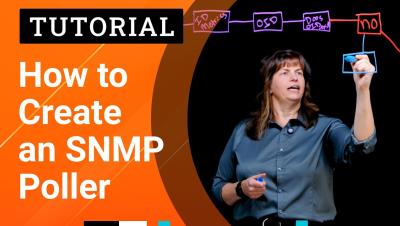
How to Create an SNMP Poller in SolarWinds Observability Self-Hosted

SolarWinds technical trainer Cheryl Nomanson presents a systematic approach to optimizing and building custom SNMP pollers. The tutorial walks through a step-by-step process starting with adding devices for SNMP monitoring using default pollers, then identifying missing metrics and checking if the required OIDs exist. If OIDs don't exist, she explains how to use alternative OIDs or data transformation tools.

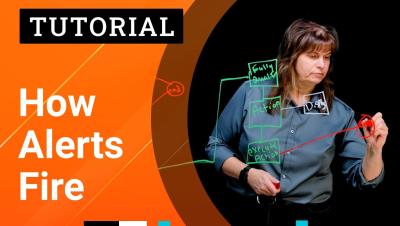
How Alerting Works in SolarWinds Observability Self-Hosted

This training video from SolarWinds Academy provides a high-level overview of how the alerting process works within SolarWinds software. Technical trainer Cheryl Nomanson explains the step-by-step workflow, starting with the alerting engine continuously scanning the database for conditions that meet alert trigger thresholds. She covers how triggered elements are evaluated for suppressions (like time-of-day restrictions and scoping), and explains that only fully qualified conditions become actual alerts. The video details how alerts always display in the web console and may trigger additional actions like emails or scripts.

Take Back Control of Your Observability Spend

As budgets reset for 2026, engineering leaders are making a resolution: no more vendor lock-in. Here’s how to keep that promise by building on the technical foundations of data reliability and simplified collection. It’s January 2026, and if you’re like most engineering leaders, you’re staring at your observability vendor contracts with a mix of frustration and resignation.

How Modern Network Analytics Drive Faster, More Reliable Applications

Your users face sluggish performance and spotty connections daily. Hybrid cloud paths, SaaS platforms, SD-WAN routes, and Wi-Fi networks all contribute to this frustration. Microsoft recently revealed they handled a 2.4 Tbps DDoS attack on Azure, proving how enormous network events quietly erode application quality without causing total blackouts.

How Observability Cuts IT Costs? [7 Proven Ways to Reduce Infra, Storage and Operational Spend for 2026]

IT budgets are getting squeezed, yet teams are expected to deliver faster releases, higher reliability and tighter security. Observability has become one of the few levers that directly influences IT cost reduction because it gives teams the ability to understand exactly what’s consuming resources, wasting storage, dragging performance, and inflating operational workload. In this guide, you’ll learn seven evidence-backed strategies that leading engineering teams use to cut expenditure.

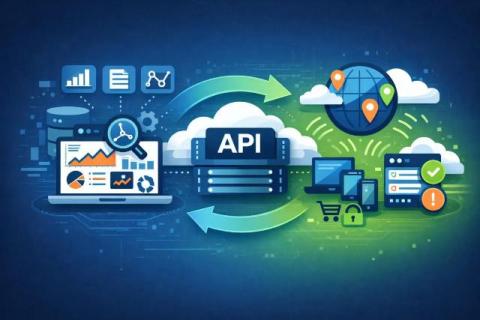
API Observability: Why Outside-In Signals Are Still Essential

API observability has become a go-to goal for modern engineering teams. As architectures shift to microservices and APIs become the backbone of products, teams need a reliable way to understand what’s happening across services, before issues turn into incidents. That’s where observability comes in: collect the right signals, connect the dots, and debug faster.

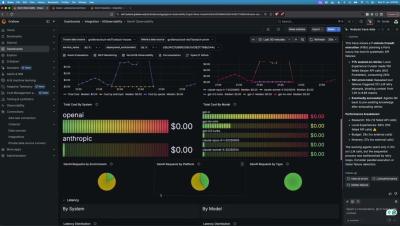
GenAI Observability in Grafana Cloud: End-to-End Agent Debugging (Demo)

From Observability for GenAI Applications (Grafana OpenTelemetry Community Call) We drill into traces to see which agents called which tools, where errors occurred, how long each LLM call took, and how costs and tokens are distributed. The walkthrough also covers using AI assistance to summarize long traces and identify optimization opportunities in real time..

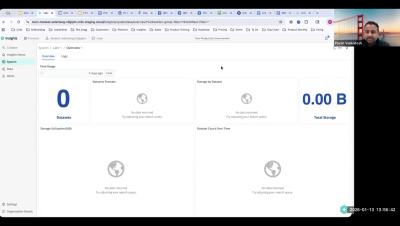
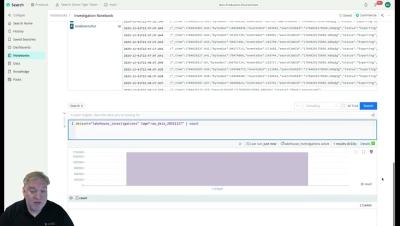
Introducing System Datasets: Observing the Observability Platform

Modern observability platforms are great at explaining what’s happening in your apps and your infrastructure. However, all too often the observability platform itself remains a black box. As observability data and usage grow, governance almost always lags behind, and teams struggle to answer basic operational questions like: This valuable data is typically fragmented across admin UIs, billing pages, support tickets, and tribal knowledge.

AI in Production Is Growing Faster Than We Can Trust it

Enterprise software has moved past the generative AI testing phase. Businesses with millions of daily users or workloads are no longer just prototyping LLMs in a vacuum. They’re directly wiring agentic efficiency into product interfaces and infrastructure to stay competitive. This wave is often compared to the spread of microservices in the past, but we aren’t just adding new dependencies and complexity.
Sponsored Post

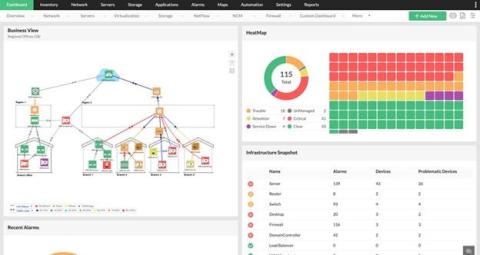
Breaking Down IT Silos with OpManager Plus's Full-stack observability

In today's complex and dynamic IT landscape, a single application relies on dozens of interconnected services, from physical servers to virtual machines, cloud instances, and third-party APIs. When something goes wrong, a traditional monitoring approach that focuses on individual components is no longer enough. This is where full-stack observability becomes critical. It's the ability to gain a holistic, real-time understanding of your entire technology stack, from the user experience all the way down to the underlying network infrastructure.

Observability That Works: Understand System Failures and Drive Better Business Outcomes

Modern systems don't fail because engineers lack skills; they fail because teams can't see why systems are failing at all or can’t see why they’re failing fast enough. Often, the problem isn't a lack of tools — it's a lack of clear, connected visibility across data, teams, and systems. This is where observability transforms how organizations operate. It's no longer just about keeping systems running.

From Monitoring Signals to Observability Maturity

Efficient monitoring delivers fast results: alerts fire within seconds, dashboards refresh continuously, and teams know the moment something changes. Understanding arrives later. An alert may show that a value shifted, but it does not explain why it shifted, how far the impact will spread, or which components truly matter. Teams see the signal, not the system behavior behind it. This gap defines the limit of traditional monitoring. Detection has improved, but explanation has not kept pace.

Measuring Claude Code ROI and Adoption in Honeycomb

At Honeycomb, we’ve been using Claude Code across our engineering team for a while. Anecdotally, I had a sense of who the power users were, and I had seen some examples of complex usage. But I wanted to be able to confidently answer questions, like: Claude Code supports OpenTelemetry out of the box, which means sending telemetry to Honeycomb takes just a few minutes of configuration.

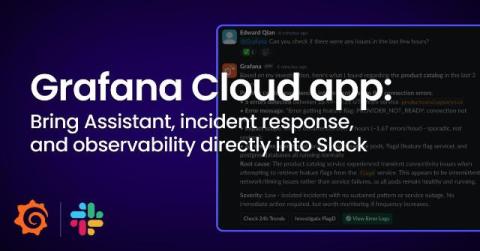
ChatOps that actually works: Grafana Cloud, Slack, and AI-powered observability

Context switching isn’t just inefficient—under pressure, it’s exhausting. It slows decision-making, increases the risk of mistakes, and makes even experienced engineers feel like they’re always a step behind the system they’re responsible for. At Grafana Labs, we want to build tools that meet you where you are. That's why we embedded Grafana Assistant, our context-aware AI assistant, directly in Grafana Cloud.

Observability for GenAI Applications (Grafana OpenTelemetry Community Call)

In this episode, we’re diving into observability for Generative AI apps. AI helps us write code and monitor applications in production - but how do we observe the AI itself? And how do we make sense of complex, non-deterministic AI systems? We’re joined by two great guests: Ishan Jain, working on GenAI observability and Luccas Quadros, working on Grafana Assistant. Together, they bring both platform-level insights and real-world perspectives.

Easily Map Logs to OCSF with Datadog Observability Pipelines

Normalizing security logs into the Open Cybersecurity Schema Framework (OCSF) is often complex, manual, and time-consuming. With Datadog Observability Pipelines, you can easily transform logs into OCSF format—right in your own environment—before routing them to destinations like Splunk, CrowdStrike, and AWS Security Lake. This video show how Security teams can use Observability Pipelines to: Collect, process, and transform logs into OCSF format automatically.

Moving Our Observability Data Collector from Sidecars to eBPF

For years, the Kubernetes sidecar pattern has been a practical way to capture observability data. Running a collector alongside each application pod gave us deep visibility into traffic, including full request and response payloads across supported protocols. However, as cloud-native environments have grown more complex, the limitations of sidecars—such as resource overhead, operational complexity, and scaling challenges—have become more apparent.

Why IT Leaders Are Consolidating Observability Tools in 2026

Consolidation unifies your observability stack, readies it for AI, and paves the path to autonomous IT. Many IT leaders consider consolidation because of cost pressure or rising vendor spend. But the real challenge goes deeper. IT environments have become more complex, distributed, and noisy, making it difficult for fragmented tools to keep up.

Try SolarWinds Observability Today

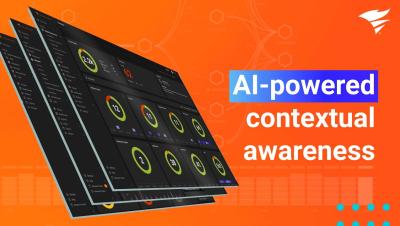
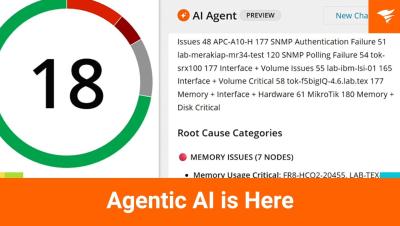
When every second counts, your IT systems can’t afford blind spots. SolarWinds Observability delivers AI-powered, contextual awareness to help IT teams keep critical services running no matter the complexity. Connect the dots across networks, applications, cloud environments, and physical infrastructure with one comprehensive observability platform. With intelligent insights and real-time visibility, SolarWinds helps you prevent downtime, troubleshoot faster, and resolve issues before they impact users even in the most demanding environments.

Observability with AI? Honeycomb with AI!

Since Honeycomb started, it has had a weakness: too many choices. Every field, custom or standard, hundreds of them, all are free to group, filter, and visualize in dozens of ways. Which ones are interesting? Honeycomb exists to help people understand custom software. It doesn’t pretend to know what matters in your application. That’s an interpretive task, not programmatic. Hey, computers can do interpretation now!

Building reliable dashboard agents with Datadog LLM Observability

This article is part of our series on how Datadog’s engineering teams use LLM Observability to iterate, evaluate, and ship AI-powered agents. In this first story, the Graphing AI team shares how they instrumented their widget- and dashboard-generation agents with LLM Observability to detect regressions and debug failures faster. Visibility into how large language model (LLM) applications behave in real time is essential for building reliable AI-driven systems at Datadog.

What is Runtime Context? A Practical Definition for the AI Era

TLDR: Runtime Context is live, execution-level access to a running production system. It lets engineers and AI agents ask precise questions of running code and get answers immediately, without redeploying or interrupting users. This is the new baseline for reliability.

"You Had One Job": Why Twenty Years of DevOps Has Failed to Do it

Let’s start with a question. What is DevOps all about? I’ll tell you my answer. In retrospect, I think the entire DevOps movement was a mighty, twenty year battle to achieve one thing: a single feedback loop connecting devs with prod. On those grounds, it failed. Not because software engineers weren’t good at their jobs, or didn’t care enough. It failed because the technology wasn’t good enough.

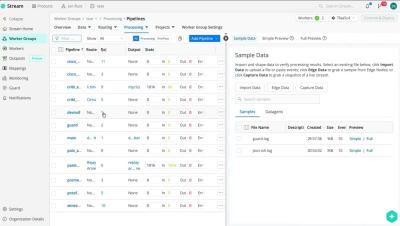
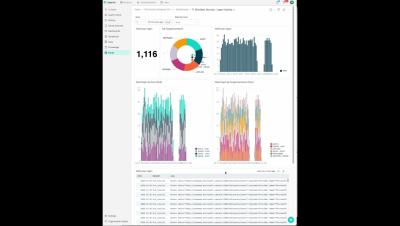
Cribl Search Pack for Outlook Email Activity

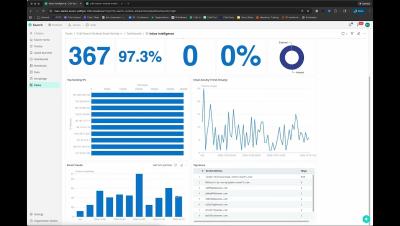
Email is still mission-critical, but most teams have very little visibility into what’s actually happening behind the scenes. In this video, I give a quick walkthrough of an inbox intelligence dashboard built on Cribl Search. It shows email volume, delivery health, and unusual activity at a glance, without digging through raw logs unless of course you like doing that.

OpAMP Explained: Why OpenTelemetry Needed an Agent Management Protocol (and How We Use It)

OpenTelemetry makes it easy to produce and transmit any type of telemetry. In production environments, this often means deploying the OpenTelemetry Collector as an intermediary to process, enrich, and route telemetry data. As systems scale, so does this infrastructure—sometimes to hundreds or thousands of Collectors spread across environments.

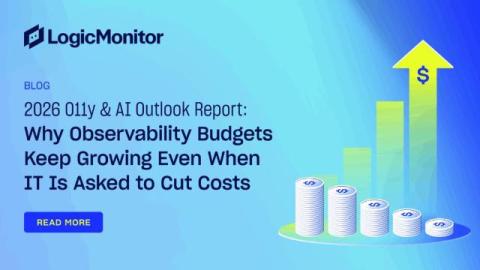
Why Observability Budgets Keep Growing Even When IT Is Asked to Cut Costs

Observability is the surprising budget line that isn’t shrinking. 96% of IT leaders expect observability budgets to hold steady or grow over the next 12 months. And 62% expect those budgets to increase regardless of broader IT budget cuts. Why? Because as infrastructure becomes more distributed and harder to manage, observability has shifted from a “nice to have” to a control point for cost, performance, and risk.

Getting the Right Signals: Mobile Observability with Embrace and SquaredUp

More than half of all connections to web services now originate from mobile devices. Mobile apps are no longer peripheral - they are central to how businesses engage customers, deliver services, and generate revenue. Despite this shift, many organizations still rely on observability tools that are fundamentally server-centric. These platforms are adept at monitoring backend health, but they often fail to capture what’s happening at the edge - on the mobile device itself.

Cribl Search Pack for Missing Logs

Ever run a SIEM search only to see nothing for your firewall logs? In this video, we show a smarter way to detect when log sources stop sending data using Cribl Lake, Cribl Search, and Cribl Stream. Learn how to track “last seen” times, build efficient aggregations, and get real-time alerts—without burning SIEM resources or storage.

How to Do Full-Text Search Across All Application Traffic with Speedscale

Modern DevOps observability tools are excellent for monitoring system health, tracking distributed traces, and aggregating metrics. However, they lack the fidelity needed for full-text search across application traffic. While observability platforms excel at showing what happened and when, they often fall short when you need to find where a specific piece of data (like an email address, user ID, or transaction token) appears as it flows through your entire application stack.

Vibe coding tools observability with VictoriaMetrics Stack and OpenTelemetry

AI-powered coding assistants have transformed how developers write software. Tools like Claude Code, OpenAI Codex, Gemini CLI, Qwen Code, and OpenCode have introduced what many call “vibe coding” — a new paradigm where users describe their intent and AI agents handle the implementation details. But as these tools become integral to development workflows, a critical question emerges: how do we understand what’s happening under the hood?

Why Synthetic Tracing Delivers Better Data, Not Just More Data

In modern observability practices, distributed tracing has become table stakes. Most application performance monitoring (APM) platforms encourage an “instrument everything” approach: Deploy an SDK or agent, hook into every service call and capture every user interaction at scale. On paper, this sounds like complete visibility. In practice, it can turn into a costly firehose of data with diminishing returns.

IT Observability in 2026: Lessons From the Past Year

As IT organizations enter 2026, many of the assumptions around monitoring and observability have already been tested. Throughout 2025, infrastructure teams made it clear that visibility alone is not enough. Alerts without context, short data retention, and fragmented tools limited teams’ ability to explain behavior, validate changes, and plan with confidence. This article looks at what emerged from those experiences and how observability expectations continue to shift.

How to Ensure AI-Generated Code is Reliable with Runtime Context

TLDR: AI coding assistants have sped up code delivery, but created a validation gap. Historic telemetry and static analysis cannot predict the behavior of unfamiliar, high-volume code. Lightrun’s Runtime Context MCP closes that gap, allowing AI assistants to verify behavior before it breaks, and resolve issues in real time.

5 Observability & AI Trends Making Way for an Autonomous IT Reality in 2026

IT operations are changing faster than most people realize, making autonomous IT a 2026 reality, not a distant vision. Your team monitors tens of thousands of metrics, ingests terabytes of logs, and generates thousands of alerts daily. And somehow, you still find out about outages from customers before you see them in your tools. That gap between having visibility and actually understanding what’s happening has become the central problem.

Fair usage limits: a safer way to scale observability

For the past several years, Coralogix customers have used the platform to ingest, process, and analyze large volumes of observability data without the presence of artificial barriers or unexpected constraints. This flexibility has enabled teams to experiment freely, evolve their architectures, and scale smoothly alongside their systems.

2026 observability trends and predictions from Grafana Labs: unified, intelligent, and open

After a decade of dashboards, alerts, and ever-expanding telemetry pipelines, observability is changing. No longer just the domain of engineering, the most innovative organizations are extending observability to all areas of the business to better understand system behavior, emerging risks, and customer impact. At the same time, rising cloud costs and increasing complexity are forcing organizations to be more intentional about what they observe and why.

From Observability to Visibility: Why Tech Teams Should Treat Photos Like Production Assets

Modern operations is obsessed with one word: visibility. We instrument services, centralize logs, trace requests, and tune alerts because what we cannot see, we cannot reliably improve. The same pattern shows up outside the stack, in a place most teams ignore until it hurts: how people show up online. If you work in DevOps, SRE, ITSM, platform engineering, or cloud, you already know the downstream cost of "good enough." A slightly messy dashboard becomes a slow incident response. A vague runbook becomes tribal knowledge. A weak alert strategy becomes pager fatigue.


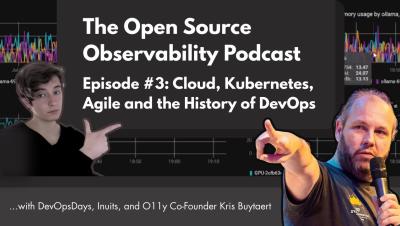
EP #3: Cloud, Kubernetes, and the Evolution of DevOps - The Open Source Observability Podcast

Kris Buytaert is the Co-founder of Inuits, O11y, and ‘DevOps Days,’ an internationally-attended series of DevOps events. He is a passionate advocate of Free and Open Source Software, and is accredited by the community as being a founding instigator of the DevOps movement. In this episode we trace the history of the DevOps movement from its intersection with open source and Agile, through the evolution of Cloud technologies and tools such Docker and Kubernetes, to present day best practices for CI/CD, monitoring, and observability.

HintApp: Where Astrology Meets Modern Observability Practices

Digital astrology has evolved far beyond static horoscopes. Today's users expect real-time personalization, reliability, and emotional relevance - all delivered seamlessly across devices. Meeting these expectations requires not only deep astrological logic but also a robust operational backbone. HintApp is an example of how a modern astrology platform can be built with the same operational discipline as high-scale SaaS products, combining astrology, natal charts, daily horoscopes, and soulmate discovery with a technology stack grounded in observability and reliability.
Online IQ Testing Through the Lens of Observability and Data Insight

In operations, monitoring, and distributed systems, one principle stands above the rest: you cannot improve what you cannot measure. The same logic increasingly applies beyond infrastructure and software performance-into human cognition itself. As data-driven thinking expands, online IQ testing has evolved from simple questionnaires into structured, insight-oriented tools designed for clarity, consistency, and analysis.

Online IQ Testing as a Digital Measurement System

Online cognitive testing has moved far beyond casual quizzes. Today, an online IQ test is a structured digital system that collects inputs, processes data, and produces a measurable output - a score intended to reflect cognitive ability. From an operations perspective, this makes IQ testing surprisingly similar to any modern measurement pipeline: inputs, validation, processing, monitoring, and reporting.