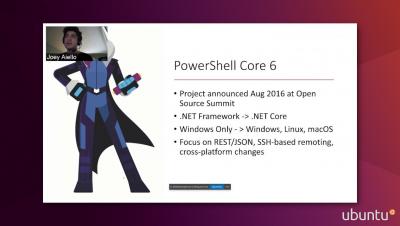
Powershell 7
Hear from Microsoft's Joey Aiello on the latest updates on Powershell 7 and how they can support your success in leveraging WSL.


Earlier this year, Canonical had the pleasure of hosting WSLConf, a virtual conference dedicated to the Windows Subsystem for Linux (WSL). We demonstrated what teamwork and community can achieve when we flipped the in-person conference to a virtual experience in less than a week. WSLConf united developers, security professionals, team leaders from Microsoft, and a passionate community from all around the world.
We’re back with part two of our three-part blog series on living-off-the-land attacks. If you missed part one, you can read it here. In a nutshell, living-off-the-land (LOTL) refers to a type of attack where the attacker uses the tools and features that already exist in the target environment to carry out malicious activities. The concept of LOTL is not new, but LOTL and file-less attacks have been gaining popularity over the last few months.
The cybersecurity threat landscape is quickly changing. Administrators have become more cautious when it comes to security and governing access, end users have become tech-savvy and security-aware, and attackers have also raised their game. Living-off-the-land attacks, or LOTL, is one clear trend today, with attackers exploiting preinstalled features and default tools built into system.
Approximately one year ago, Kubernetes 1.14 made support of Windows containers running on Microsoft Windows Server nodes generally available. This was a declaration that Windows node support was stable, well-tested, and ready for adoption, meaning the vast ecosystem of Windows-based applications could be deployed on the platform.
In our last release of the PowerShell security series, we talked about how PowerShell could be leveraged by malicious actors to gain unprecedented access to your organization’s critical assets. From enumerating sensitive domain information and carrying out credential-based attacks to running malicious executables in memory (file-less malware), we shined a light on the potential of PowerShell and why it’s an ideal weapon for cyber attackers today.