Operations | Monitoring | ITSM | DevOps | Cloud

Monitor Knative for Anthos with Datadog

Developed and released by Google in 2018 with contributions from IBM, VMWare, Red Hat, and other companies, the Knative project is designed to make it as simple as possible to build, deploy, and scale serverless containers across your existing Kubernetes infrastructure. By operating on top of Google Anthos, Knative for Anthos takes this even further by allowing developers to build and deploy applications across any hybrid environments that include both on-prem and cloud-hosted serverless clusters.

Best Tips to Get Most out of AWS Load Balancer

AWS ELB (Elastic load balancer) automatically distributes incoming application traffic across multiple targets and virtual appliances in one or more Availability Zones (AZs). That helps you achieve high availability and fault tolerance. In this article, we will share with you some tips that will help you best utilize AWS load balancer. We will also provide insights on the best use cases of ALB and NLB, which are the two most commonly used load balancers.

Troubleshooting in Kubernetes: The Shift-Left Approach

Kubernetes has become the de-facto container management solution of the last decade—and we have no doubt it will stay that way in the upcoming years. It provides a solid abstraction between the infrastructure layer and applications, so that developers can quickly develop, deploy, and operate their applications. Kubernetes is designed as a set of APIs that work together. If you deploy simple applications and make them run, Kubernetes will do it for you.

Deployment-time testing with Grafana k6 and Flagger

When it comes to building and deploying applications, one increasingly popular approach these days is to use microservices in Kubernetes. It provides an easy way to collaborate across organizational boundaries and is a great way to scale. However, it comes with many operational challenges. One big issue is that it’s difficult to test the microservices in real-life scenarios before letting production traffic reach them. But there are ways to get around it.

The Case for Owning Your Infrastructure

Early technical decisions can help make or break a product. The effort to make the right decisions can be a great unifier between standout engineers and top notch executives At Cycle we've been obsessing over the nuances of infrastructure automation for years. So far, it's landed us on the G2 grid as a high performer in a category dominated by the goliaths of the cloud world.

Kubernetes Incident Response Best Practices

Inevitably, organizations that use technology (regardless of the extent) will have something, somewhere, go wrong. The key to a successful organization is to have the tools and processes in place to handle these incidents and get systems restored in a repeatable and reliable way in as little time as possible.

Shipa Product Updates - 1.7.0 Release

We are really excited today to announce the Shipa 1.7.0 Release. Lots of great features and enhancements are packed in the latest release of Shipa. Several features coming from our customers and community, and you can now submit your ideas via the Idea Portal. Let’s take a look at what has been cooking at Shipa and upcoming events that you can catch us at.

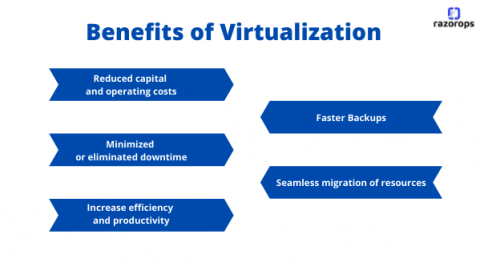
What is Virtualization & Top 5 Benefits of Virtualization

Virtualization uses software to create an abstract layer over the hardware. By doing this it creates a virtual computer system, known as the virtual machines (VMs). This will allow organizations to run multiple virtual computers, operating systems, and applications on a single physical server How Does Virtualization works: Virtual machine (VM) is a virtual representation of a physical computer.Virtual machines can’t interrelate directly with a physical computer, but.

Kubernetes vs Docker : A comprehensive comparison

If you’re new to the world of containers there are two words you would have certainly come across, but might not yet understand the difference between: Kubernetes and Docker. Although Kubernetes and Docker are somewhat different from each other, they also share some similarities. A container is a standard unit of software that packages the code along with the libraries and dependencies so that the application can run quickly, seamlessly and reliably from one environment to another.

We built the "Netlify for backend" that runs on your AWS account!

In 2020, my co-founders and I had this crazy idea of bringing a better Developer Experience on top of AWS. You know, the one that you can easily use with "the promise of the cloud" that any developer can take advantage of and deploy their next successful product in seconds. Somehow, the missing product of AWS 😅. This is where Netlify was an excellent source of inspiration. A nice Developer Experience, where deploying an application is as simple as pushing your code on Git.

GitOps your WordPress with ArgoCD, Crossplane, and Shipa

WordPress is a popular platform for editing and publishing content for the web. This tutorial will walk you through how to build out a WordPress deployment using Kubernetes, ArgoCD, Crossplane, and Shipa. WordPress consists of two major components: the WordPress PHP server and a database to store user information, posts, and site data. We will define these two components and store them in a Git repository.

Sponsored Post

Infrastructure monitoring using kube-prometheus operator

Prometheus has emerged as the de-facto open source standard for monitoring Kubernetes implementations. In this tutorial, Kristijan Mitevski shows how infrastructure monitoring can be done using kube-prometheus operator. The blog also covers how the Prometheus Alertmanager cluster can be used to route alerts to Slack using webhooks. In this tutorial by Squadcast, you will learn how to install and configure infrastructure monitoring for your Kubernetes cluster using the kube-prometheus operator, displaying metrics with Grafana, and configuring alerting with Alertmanager.

Gimlet launches new learning resources to build a developer platform on Civo

Hey Civo users, at Gimlet, we think that best practices in the Kubernetes ecosystem have solidified so much, that they can be packaged into tools, so that you don't have to make nuanced decisions every corner. This is what we have been doing with our CLI tools, and nowdays doing with the Gimlet Dashboard! We have been following Civo for over a year now and see how much the Gimlet team shares the Civo community's spirit.

Using Containers for Microservices: Benefits and Challenges for your Organization

Using containers for microservices has gained a lot of popularity in the last decade or so. Developing the application through microservices across multiple containers results in the best of both worlds. It provides resilience as well as agility through scaling and improvements. Before we dwell on how containers and microservices form an ideal combination, let’s start with a basic understanding of microservices and containers.

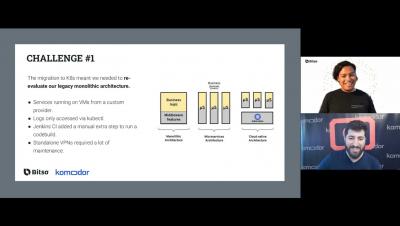
How Bitso Empowers Its Devs to Troubleshoot K8s Independently

More often than not, Kubernetes is behaving as it should: fast, agile and scalable. But what happens when K8s misbehaves? Do the responders have the right tools to deal with the situation? Or are they just part of an escalation chain that always leads to the same small group of experts? Meet Bitso, a billion-dollar company and the largest crypto platform in Latin America, which has mastered the shift-left approach and empowered its dev team to troubleshoot K8s independently.

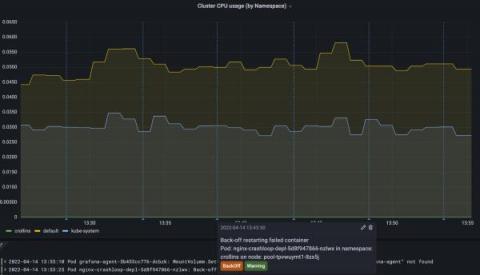
New in the Kubernetes integration for Grafana Cloud: Kubernetes events, Pod logs, and more

The Kubernetes integration for Grafana Cloud helps users easily monitor and alert on core Kubernetes metrics using the Grafana Agent, our lightweight observability data collector optimized for sending metric, log, and trace data to Grafana Cloud. It packages together a set of easy-to-deploy manifests for the Agent, along with prebuilt dashboards and alerts.

Docker - CMD vs ENTRYPOINT

Containers are great for developers, but containers are also an excellent way to create reproducible, secure, and portable applications. Applications can be deployed reliably and migrated to multiple computing environments quickly using containers. It could be the developer's laptop to the testing environment or staging to the production environment. To use Dockers, Kubernetes, etc., it has been necessary to build containers.

Bug Hunting and improvements week - what we improve on Qovery

During the past two weeks, our Frontend and Backend teams were busy bees 🐝 with a particular sprint dedicated to bug hunting �� and improvements! Yes, both of the two weeks sprints were dedicated to bugs and improvements ONLY: tracking them, then solving them; gotta catch ‘em all 🚀

Why is Kubernetes Difficult? - Solve All My Problems K8s!

Another post inspired by our weekly internal enablement office hours [should we open this up to the public?] and a few conversations at DevOps Days Atlanta, talking about the experience with Kubernetes can reverberate some sighs. Though in our weekly enablement office hours, the blunt question was asked “well why is Kubernetes so difficult?”. Industry thought leaders would state that Kubernetes is a platform to build other platforms.

Splunk Operator 1.1.0 Released: Monitoring Console Strikes Back!

The latest version of the Splunk Operator builds upon the release we made last year with a whole host of new features and fixes. We like Kubernetes for Splunk since it allows us to automate away a lot of the Splunk Administrative toil needed to set up and run distributed environments. It also brings a resiliency and ease of scale to our heavy-lifting components like Search Heads and Indexer Clusters.

How to Speed Up Amazon ECS Container Deployments

Amazon Elastic Container Service (Amazon ECS) is a fully managed container orchestration service that makes it easy for you to deploy, manage and scale containerized applications. Although ECS is a managed service and hides many complexities under the hood, there have been many cases where startups have not been able to take full advantage of ECS due to slow deployments. In this article, we will share some tips to improve deployment speed on ECS. We will try to cover both EC2 tasks and Fargate tasks.

Try Kubernetes 1.24 release candidate with MicroK8s

The latest Kubernetes release, 1.24, is about to be made generally available. Today, the community announced the availability of the 1.24 release candidate. Developers, DevOps and other cloud and open source enthusiasts who want to experiment with the latest cutting edge K8s features can already do so easily with MicroK8s.

MYCOM OSI supports Amazon Elastic Kubernetes Service (Amazon EKS) for its suite of Service Assurance applications

MYCOM OSI announced today that it has implemented support for Amazon Elastic Kubernetes Service (Amazon EKS) as the foundational service for its EAA (Experience Assurance and Analytics) suite of Service Assurance applications.

Stupid Simple Kubernetes: Everything You Need to Know to Start Using Kubernetes

In the era of Microservices, Cloud Computing and Serverless architecture, it’s useful to understand Kubernetes and learn how to use it. However, the official Kubernetes documentation can be hard to decipher, especially for newcomers. In this blog series, I will present a simplified view of Kubernetes and give examples of how to use it for deploying microservices using different cloud providers, including Azure, Amazon, Google Cloud and even IBM.

Understanding Kubernetes pod pending problems

Kubernetes pod pending is ubiquitous in every cluster, even in different levels of maturity. If you ask any random DevOps engineer using Kubernetes to identify the most common error that torments their nightmares, a deployment with pending pods is near the top of their list (maybe only second to CrashLoopBackOff). Trying to push an update and seeing it stuck can make DevOps nervous.

Kubernetes: Tips, Tricks, Pitfalls, and More

If you’re involved in IT, you’ve likely come across the word “Kubernetes.” It’s a Greek word that means “boat.” It’s one of the most exciting developments in cloud-native hosting in years. Kubernetes has unlocked a new universe of reliability, scalability, and observability, changing how organizations behave and redefining what’s possible. But what exactly is it?

The History of Cloud Native

Cloud native is a term that’s been around for many years but really started gaining traction in 2015 and 2016. This could be attributed to the rise of Docker, which was released a few years prior. Still, many organizations started becoming more aware of the benefits of running their workloads in the cloud. Whether because of cost savings or ease of operations, companies were increasingly looking into whether they should be getting on this “cloud native” trend.

Best Practices for Container Security on AWS

Containers are superior to Virtual Machines (VM) in many aspects, including the benefits of being lightweight, easily scalable, highly portable, etc. AWS provides two primary container services i.e., Amazon Elastic Container Service (Amazon ECS) and Amazon Elastic Kubernetes Service (EKS). Although both ECS and EKS are growing in popularity but achieving security while using these services is relatively a new topic.

Are Microservices Right for Me - Enabling Microservices or Monoliths - Shipa

Another conversation that was recently had during our weekly field enablement office hours here at Shipa was “what exactly is a microservice?”. Certainly, a term that has been used to describe a paradigm and architectural practice. One can argue that the breaking down or decomposing of applications has been going on for decades and is not a monumental shift in computing. There are several definitions of microservices from a purist definition to a definition resembling a movement.

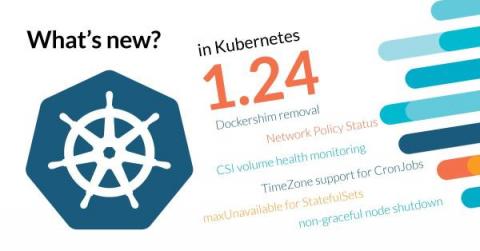
Kubernetes 1.24 - What's new?

Kubernetes 1.24 is about to be released, and it comes packed with novelties! Where do we begin? Update: Kubernetes 1.24 release date has been moved to May 3rd(from April 19th). This release brings 46 enhancements, on par with the 45 in Kubernetes 1.23, and the 56 in Kubernetes 1.22. Of those 46 enhancements, 13 are graduating to Stable, 14 are existing features that keep improving, 13 are completely new, and 6 are deprecated features.

Civo Update - April 2022

In March, the Cloud Native Computing Foundation (CNCF) released its Annual Survey 2021. Civo featured alongside the likes of Amazon and Azure when CNCF asked developers "Does your organization use any certified Kubernetes installers?". Saiyam, Director of Technical Evangelism at Civo, also released an update on the new advancements so far for our 2022 Roadmap.

Sponsored Post

Kubernetes Load Test Tutorial

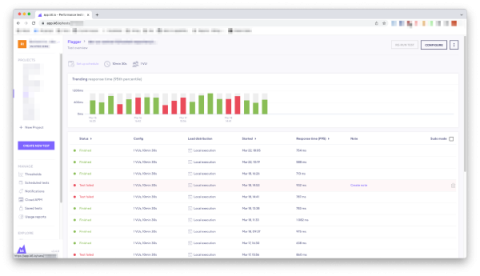
In this blog post we use podtato-head to demonstrate how to load test kubernetes microservices and how Speedscale can help understand the relationships between them. No, that's not a typo, podtato-head is an example microservices app from the CNCF Technical Advisory Group for Application Delivery, along with instructions on how to deploy it in numerous different ways. There are more than 10 delivery examples, you will surely learn something by going through the project. We liked it so much we forked the repo to contribute our improvements.

Heroku Vs. AWS: Data Security Comparison

Heroku and AWS are two of the common choices available for cloud hosting. Heroku is a Platform as Service (PaaS) provider that helps startups develop business applications with simplicity and without needing DevOps expertise in the team. Not only does it provide resources automatically, but you can deploy your applications with just a single click. Heroku has been a top choice for developers for years as it speeds up development cycles by providing fully managed infrastructure and application deployment.
Everything You Need to Know about K3s: Lightweight Kubernetes for IoT, Edge Computing, Embedded Systems & More

If you are a vivid traveler of the tech universe, you’ve likely come across this term: Kubernetes. Scratching your head? Let me make it clear: In simple terms, we know Kubernetes — or K8s — as a portable and extensible platform for managing containerized workloads and services. It can facilitate both declarative configurations as well as automation.

A practical guide to container networking

An important part of any Kubernetes cluster is the underlying containers. Containers are the workloads that your business relies on, what your customers engage with, and what shapes your networking infrastructure. Long story short, containers are arguably the soul of any containerized environment. One of the most popular open-source container orchestration systems, Kubernetes, has a modular architecture.

Getting Started with SUSE Rancher Fleet and Shipa Cloud

As the GitOps paradigm continues to evolve, different interpretations and implementations will continue to appear. SUSE Rancher Fleet is a project creating a powerful, lightweight, and scalable GitOps engine. Recently, we showed the art of the possible between Shipa and SUSE Rancher Fleet. Make sure to check out our joint solution brief where the intersection of the SUSE Rancher and Shipa stacks come together.

What is Cloud-Native Monitoring?

Cloud and cloud-based technologies are at their peak today. More and more organizations are turning to intelligent architectures and systems to deploy their apps. And they are not wrong—the cloud has proven to be a great way of performance optimization and cost-cutting. However, there are issues to address with this growing trend. One of those is monitoring. Monitoring is a vital part of application maintenance.

What to Watch on EKS - a Guide to Kubernetes Monitoring on AWS

It’s impossible to ignore AWS as a major player in the public cloud space. With $13.5billion in revenue in the first quarter of 2021 alone, Amazon’s biggest earner is ubiquitous in the technology world. Its success can be attributed to the wide variety of services available, which are rapidly developed to match industry trends and requirements.

The 10 Biggest Mistakes Startups Make on AWS

Adopting AWS as your cloud infrastructure seems to be a common choice for most growing companies, but it is not as easy as it looks. Choosing the right services, configuration, and management of these services needs skills and experience. At Qovery, we've heard hundreds of stories about the mistakes made by startups on AWS, and here are the biggest ones. Make sure you take care of these pitfalls when you start your journey on AWS, which will help you successfully migrate and set up on AWS.

Q1 2022 product retrospective - Last quarter's top features

The first quarter of the year has now come to an end, and many exciting things happened here: new features, the start of our V3, new team members, and an exciting team retreat! Today, I will highlight the most exciting features that were shipped from the first of January until the thirty-first of March, so fasten your seatbelt and get ready for the ride! 💜

What is Environment as a Service (EaaS) and How is it Impacting Productivity?

Over the last few years, business needs for new applications and services have increased tremendously, resulting in a need to accelerate the application development process. Moreover, the process of development has changed radically. Development is fast-paced and needs continuous application updates, patching, enhancements, etc. These changes require development environments, quality assurance, continuous deployment, infrastructure, etc. That’s where EaaS comes in.

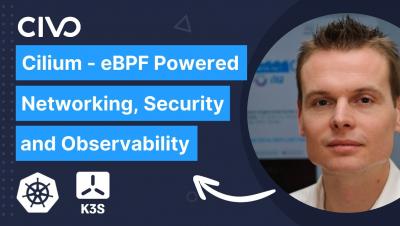
Cilium - eBPF Powered Networking, Security & Observability

In this session by Raymond de Jong, Senior Solutions Architect at Isovalent, you'll discover how Cilium with eBPF increases networking performance while providing identity and application-aware security and visibility for your cloud-native workloads. We will also look at Hubble; Cilium's fully distributed networking and security observability platform, and how eBPF enables deep visibility into the communication and behavior of services and networking infrastructure in a completely transparent manner.

Shipa Product Updates - April 2022

Depending if you are in the Northern Hemisphere, Spring is upon us. We have been busy at Shipa democratizing developer experience for all and making Kubernetes an afterthought. Grateful for all the community and customer feedback helping us make Shipa better. If you have an idea, check out our new Idea Portal where you can your own ideas. Let’s take a look at what we have delivered in the last pair of sprints.