Operations | Monitoring | ITSM | DevOps | Cloud

Introducing the InfluxDB Template UI: Monitoring Made Simple

At InfluxData, we’re obsessed with time to awesome — how quickly can you start working productively with time series data? What can we do to make things better? InfluxDB Templates are a great example of this mindset. Back in April, we announced Templates as a way to package up everything you need to monitor a particular technology — Telegraf configurations and InfluxDB Dashboards, Tasks, Alerts, and related artifacts — into a single configuration file.
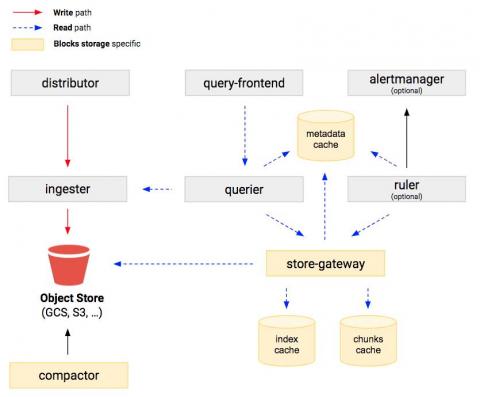

Now GA: Cortex blocks storage for running Prometheus at scale with reduced operational complexity

We’ve just launched Cortex 1.4.0, one of the most significant releases of 2020. The big headline: The new blocks storage engine has exited the experimental phase and is now marked as Generally Available. Blocks storage aims to reduce the operational complexity and costs of running a Cortex cluster at scale. In particular, it removes the dependency from a NoSQL database to store series indexes.

Rancher 2.5 Delivers On "Computing Everywhere" Strategy

Despite the lockdown restrictions of the last six months, I'm delighted to announce that we've released Rancher 2.5 on schedule today. This latest release represents another major milestone of Rancher's "Computing Everywhere" strategy by delivering management capabilities that match the extraordinary popularity of Amazon EKS and our lightweight Kubernetes distribution, K3s.

Introducing RancherD: A Simpler Tool for Deploying Rancher

As part of Rancher 2.5, we are excited to introduce a new, simpler way to install Rancher called RancherD. RancherD is a single binary you can launch on a host to bring up a Kubernetes cluster bundled with a deployment of Rancher itself. This means you just have one thing to manage: RancherD. Configuration and upgrading are no longer two-step processes where you first have to deal with the underlying Kubernetes cluster and then deal with the Rancher deployment.

Detect Ransomware in Your Data with the Machine Learning Cloud Service

While working with customers over the years, I've noticed a pattern with questions they have around operationalizing machine learning: “How can I use Machine Learning (ML) for threat detection with my data?”, “What are the best practices around model re-training and updates?”, and “Am I going to need to hire a data scientist to support this workflow in my security operations center (SOC)?” Well, we are excited to announce that the SplunkWorks team launched a new add-

ServiceNow Named a Leader in the 2020 Gartner Magic Quadrant for Enterprise Low-Code Application Platforms

We are thrilled to be named a Leader in the Gartner Magic Quadrant for Enterprise Low-Code Application Platforms, based on Gartner’s evaluation of ServiceNow Now Platform App Engine (Orlando release). We believe this recognition validates our industry position and investment in the low-code application development space.

Going Broad & Deep to Optimize Experience With The Newest Nexthink Release

The latest Nexthink release has rolled out, and we couldn’t be more excited to help you go broader and deeper to solve even more digital experience challenges. What exactly do we mean? End-user computing involves an enormous array of technologies that interact to deliver services to employees—from devices and the operating systems that run on them, to virtual desktops, applications (local and SaaS), and the networks that enable these services.

AlertOps Unveils Heartbeat Monitoring Allowing Digital Infrastructure & Operations Teams to Easily Verify Signals from External Tools

Chicago, Illinois – October 1, 2020 – AlertOps has introduced Heartbeat Monitoring for its incident alerting, on-call management, and response platform. IT teams can use Heartbeat Monitoring to verify their monitoring tools are working properly, providing an added layer of redundancy and visibility. Signals, or “heartbeats,” from external sources verify whether systems connected to the AlertOps platform are working properly.

Deployment Pipeline Launch

Deploying a stack into AWS is at the core of what Stackery helps you do. So much so that Stackery users deployed over 10,000 times last month! For the most part, this has been a manually executed process in our Web UI or command-line client. As teams grow and take on more work, fast and consistent deployments are key to scaling effectively. That’s why we’ve been working this year on continuous integration and deployment (CI/CD) features, tailor-built for serverless applications.