Puppet's Latest Services Extend the Value of Infrastructure as Code to the Windows Admin
Company continues to see growth in the Windows sector with 10,000+ active users of the Puppet VS Code Extension alone.


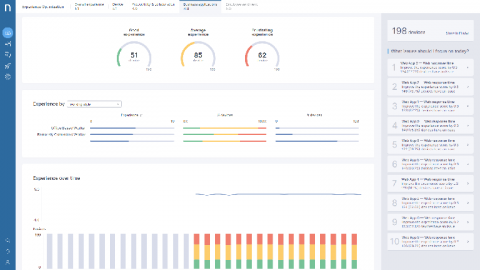
In February 2020, Nexthink introduced its new design system, Apollo. While it unveiled some great new accessibility and design features, its true raison d’être was everything happening on the back-end, a powerful new design engine to scale and accelerate the roll-out of new features. Well, 6 months later and here we are. As promised, this latest round of enhancements offers several intuitive modifications to make IT’s life easier when supporting the Digital Employee Experience.
Even before the COVID-19 pandemic, increasingly complex and often distributed technology environments posed a challenge for software-driven enterprises. Now, the global health catastrophe has accelerated digital transformation timelines and forced a complete shift to digital interactions between enterprises and customers, as well as internally between teams and coworkers. What IT professionals have accomplished in the past 6 months is nothing short of astounding.
We are simplifying our pricing plans to provide you, our customers, with more value and to help you more easily choose the right package for your team and organization. Whether your team is just getting started with on-call or you’re ready to take a more proactive approach to digital operations, PagerDuty has a plan that is right for you. Read on to learn more about our new plan options, find out what’s best for your team’s needs, and see how PagerDuty can grow with you.
Today is a great day for PagerDuty customers, practitioners, partners, and employees as we’ve entered into a definitive agreement to acquire Rundeck, a Californian start-up that’s a leader and innovator in DevOps automation. Before I get into the technicalities of what our solutions can do together, let me first set the scene on why we decided to do this, now.
We’re excited to share that we’ve revamped our Shipping Tokens feature! If you’re a Logz.io user, you’re familiar with the key role tokens play in shipping and protecting your data. As a form of virtual identification, tokens help us properly attribute data to the right account. They are required in a variety use cases such as log shipping, API access, and read access. And in addition, they are also mandatory for compliance.
I am thrilled to announce that we have raised a $1M pre-seed round with top notch investors. Among them are top entrepreneurs and Cloud experts like Alexis Lê-Quôc, co-founder and CTO at Datadog, and Sebastien Pahl, Co-founder of Docker. Qovery will use the funds to strengthen its research and development team and extend their offer to technology companies in Europe and in the US.
Linear is an issue tracking tool that helps streamline software projects, sprints, tasks, and bug tracking. Linear’s new Sentry integration helps developers automate issue tracking and sync issues between both services. Teams can create and assign Linear Issues directly from any Sentry Issue or link Sentry Issues to existing Linear Issues. Linear’s automation will close your Sentry Issue once the Linear Issue has been resolved and update the assignee in Sentry if it changes in Linear.
Welcome to our monthly update on what’s new from Sysdig! This month is a little eclipsed by last month’s big launch of Essentials and our new SaaS regions, KubeCon EU, and many of us finishing off the summer holidays and getting the kids packed off back to school. Our teams are busy working on some big feature releases which we don’t want to reveal just yet, but I think you’re all going to really love them in the coming months!
Today, we announced the launch of a new Grafana Labs product: Grafana Metrics Enterprise, a scalable Prometheus-compatible service designed for large organizations that is seamless to use and simple to maintain. Over the past few years, Prometheus has risen in popularity to become the de facto monitoring system for the cloud native ecosystem around Kubernetes — and for good reason.