Operations | Monitoring | ITSM | DevOps | Cloud

Lead Times and Psychological Safety within the Five Ideals - Gene Kim

The biggest challenges engineering organizations face are not technical. They’re fundamental problems with how we think and go about doing work, and the environments that we work in. In this talk, Gene Kim will share the Five Ideals and how they relate to Chaos Engineering. He’ll also show how the Five Ideals help build stronger, better performing, and ultimately more reliable companies.

Breaking Serverless Things on Purpose: Chaos Engineering in Stateless Environments - Emrah Samdan

Serverless enabled us to build highly distributed applications that led to more granular functions and ultimate scalability. However, it also brought the risk of failure from a single microservice to many serverless functions and resources. You might be able to predict and design for certain troublesome issues but there are many, many more that you probably will not be able to easily plan for. How do you build a resilient system under these highly distributed circumstances? The answer is Chaos Engineering: Breaking things on purpose just to experience how the whole system will react.

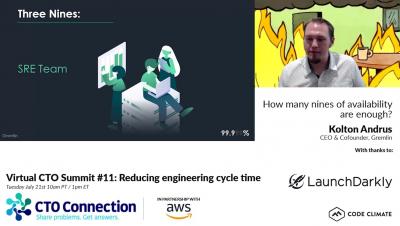
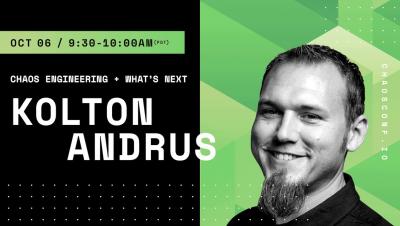
How many 9's are enough? Kolton Andrus  CTO Connection: Reducing engineering cycle time

How many nines of availability are enough? In this talk, Gremlin CEO Kolton Andrus shares insights from years at Amazon, Netflix, and now working with a wide array of customers across various disciplines and industries. He’ll describe what each level of availability looks like, the challenges faced at each stage, and the trade-offs required to achieve the next nine of uptime.

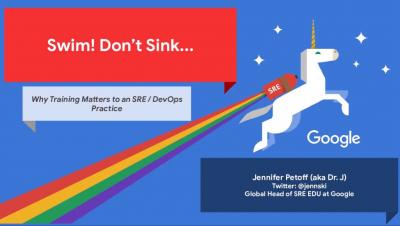
Swim Don't Sink: Why Training Matters to a Site Reliability Engineering Practice  Jennifer Petoff

Do you offer training to the engineers in your organization or do you throw them off the deep end to “sink or swim”? Providing training and education is universally important to set team members up for success in your organization and is critical for establishing a thriving Site Reliability Engineering (SRE) or DevOps practice and culture in the first place.

Fight, Flight, or Freeze - Releasing Organizational Trauma Matt Stratton Failover Conf 2020

When humans are faced with a traumatic experience, our brains kick in with survival mechanisms. These mechanisms are the familiar fight or flight response, but can also include the freeze response - which occurs when we are terrified or feel that there is no chance of escape.

Y2K and Other Disappointing Disasters: Risk Reduction and Harm Mitigation  Heidi Waterhouse

Every disaster is a concatenation of smaller failures. How can we design software and processes to accept that we live in an imperfect world? Explore the concepts of resiliency, harm reduction, over-engineering, and planning for failure with real examples.

How to fail with Serverless  Jeremy Daly Failover Conf 2020

Everything fails all the time. Knowing how to deal with these failures in serverless applications becomes essential to building resilient, highly-available systems. In traditional monolithic applications, catching errors and handling retries is relatively straightforward. But as our systems become more distributed, we now have multiple (often asynchronous) components processing events from several sources, all with vastly different retry behaviors and failure mechanisms. Utilizing old patterns can cause errors to get swallowed, creating brittle, unreliable systems that are difficult to debug and hard to maintain.