Operations | Monitoring | ITSM | DevOps | Cloud

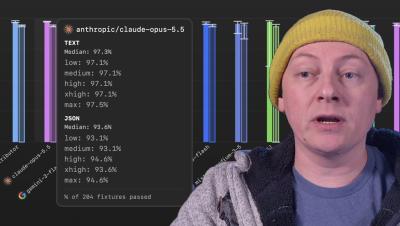
Block AI Agent Regressions Before They Ship | SAO Pre-Push Eval Gate Demo

Every engineering team has unit tests. They tell you the code still works. They tell you nothing about what the model started saying. This demo wires a single eval gate script into a git pre-push hook, so Splunk Agent Observability scores every agent's output before the push is allowed through. Luna, an on-premise small language model, runs as a synchronous judge against fixed thresholds. Fail one, and the push is blocked.

Turn Production Failures Into Test Datasets | SAO Dataset Curation

Your agent breaks in production. You fix it and move on. But the input that actually broke it is gone and two months later the same failure quietly comes back, because there was never anything to test against. That's not a debugging problem. It's a missing dataset. This demo turns low-scoring production traces into a regression suite you can run against every prompt and model change, without writing a single test case by hand.

Steer, Block and Audit Agent Behavior from One Place | SAO Agent Control Demo Cisco Agent Control

Most teams keep an agent from regressing by hardcoding checks into its logic, an if-statement here, a regex there. Every new rule then becomes a code change, a review, and a deploy, and the person who spots the problem in production is rarely the person who can ship the fix. Agent Control moves those rules out of the code and into one hub. Steer, block, and validate agent behavior in real time, with rules any team member can update without touching the codebase.

Prove Your SLAs: How Yext Ties Synthetic Monitoring to SLOs with Checkly (Live-Webinar)

Yext uses synthetic monitoring to prove and meet SLAs, by tying Checkly checks directly to SLOs and user-facing SLIs. Stefan (Developer Relations), Braxton (Solutions), and Shikhar (Engineering Productivity at Yext) cover the SLA/SLO/SLI basics, the math behind "all these nines", and how Yext turns those targets into concrete checks with monitoring as code.

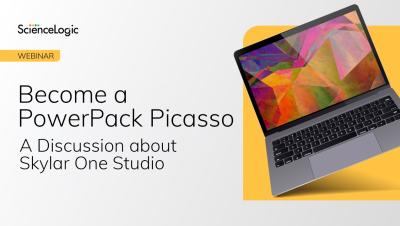
Become a PowerPack Picasso: A Discussion About Skylar One Studio

If Sklyar One is your canvas, then Skylar One Studio is where you develop your art. In this session, we’ll dive into the latest tools that allow you to quickly and easily build new PowerPacks. You’ll learn how to build beautiful PowerPacks, without having deep Python knowledge, which work quickly, have great performance, are secure, and easy to support; all thanks to the extensibility of ScienceLogic tools using the latest and greatest innovations in content development. Your next masterpiece is at your fingertips!

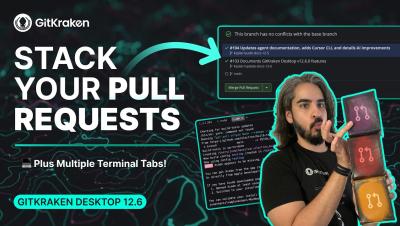
GitKraken Desktop 12.6 Release: Stacked GitHub PRs, Multiple Terminal Tabs

Ready to interact with the stack? GitKraken Desktop 12.6 makes it easier than ever to ship large features and manage multi-task terminal workflows without context switching or losing track of your work. What's new in 12.6: Stacked GitHub Pull Requests: Start a pull request stack against a branch that already has an open PR to break large feature branches into smaller pieces. Stack Visibility Everywhere: View stack position, status, and sequence numbers across the Left Panel PR list, the Pull Request view, and the Commit Graph.

Take Support Mobile Without Losing the Record

IT issues never wait until you're back at your desk. They hit during a client visit, a coffee run, or halfway across a parking lot — and being stuck without your laptop turns a five-minute fix into a fire drill. Meanwhile, back at the console, proving what happened during a remote session — for an audit, a compliance check, or a "wait, what did the tech actually do" conversation — is its own headache. And technicians and end-users sharing one login experience but needing two completely different views adds friction nobody asked for. What you'll learn.

Your code says one thing. Your cloud says another. Meet EZ Control. #platformengineering

EZ Control brings env zero and CloudQuery together in one product. It discovers nearly 2,300 resource types across AWS, Azure, Google Cloud and Kubernetes, links each one to its code, owner, cost and policies, and closes the gap when what's running drifts from what you intended: drift, security, cost and availability, all under your policies. You choose how much it does, from observe-only to autonomous, with a full audit trail. The same guardrails govern AI agents.