Operations | Monitoring | ITSM | DevOps | Cloud

Migrate your app to Upsun Cloud without a rewrite

Application migrations stall for a predictable reason: the demanding part is rarely the application code itself. It is the infrastructure around it: the deployment logic, pipeline, and environment configuration that has to be rebuilt. That surrounding work is what turns a migration into a multi-month project, and it is why teams stay on infrastructure that no longer serves them. Upsun Cloud reduces migration to a much smaller task.

Turn every branch into a production-like environment, automatically

You push a branch. If your team is like most, that branch now waits: for the shared staging server to free up, for someone to remember to refresh the seed data, for whoever broke staging last to fix it. By the time you actually test your change, you're testing it in an environment that's drifted from production in ways nobody fully tracked. The alternative isn't a better staging server. It doesn't need one.

How task containers give AI agents real infrastructure without idle cost

Infrastructure for AI agents usually forces a choice between two bad options. A sandbox is safe but blind, cut off from the data and services that would make the agent's output useful. Full access means paying to keep a container idle between runs, waiting on a prompt that might not arrive for hours. Task containers, which Upsun released on August 12, 2026, are built to avoid that choice. A task container is a single-purpose container defined in a project's.upsun/config.yaml file.

Trust you can verify: security assurance for the AI era

When you choose a cloud platform, you're entrusting a provider with sensitive business information, customer data, critical applications, and a growing share of your operational resilience. Increasingly, you are also entrusting it with AI. And that changes the questions you should be asking. Marketing claims cannot answer these questions. Independent evidence can. Here is what that evidence looks like at Upsun and why it matters to your next supplier review.

The infrastructure work you should not have to touch just to ship a feature

You wrote the feature. It works locally. Then you spend the next two hours on things that have nothing to do with the feature: a Terraform plan that wants to replace a database you didn't touch, a Kubernetes manifest that needs a new ingress rule, an IAM policy that's one permission short of what the deploy needs. None of this is the job. All of it is the job today. Here's what that list actually looks like, and why none of it should be sitting on your plate.

What build-versus-buy actually looks like in agentic engineering

Most build-versus-buy debates assume you're choosing once, at the start, and living with it. Agentic engineering doesn't work that way. The decision shows up at every layer of the stack, and the teams getting it right aren't the ones who picked "build" or "buy" as a philosophy. They're the ones who know which layer is which.

Migration feasibility checklist for IT leaders

Feasibility is a prioritization question that comes before strategy. The five-question check produces a "now, later, or fix blockers first", before anyone touches a target architecture. Strategy earns its place once feasibility returns "now." Feasibility comes before strategy. Before anyone designs a target architecture, builds a runbook, or commits to a multicloud operating model, the question is whether the migration is the right move now, and what would make it fail.

Shared context for AI coding agents beats better tooling

The instinct when adopting AI coding agents is to optimize the agent. Compare models, tune prompts, argue about which editor has the better completion, and treat the agent as the thing that determines how fast the team moves. Then the commits go up and the product does not. The team building Upsun Dispatch took a different route, and the result is worth copying. They did not find a better agent.

Don't build the autonomous AI factory first

Here's a scene playing out in engineering teams right now. An engineer spends the weekend running four or five coding agents in parallel. Monday morning, a teammate opens their laptop to 53 changed files with 2000+ diffs and a message that says, more or less, "should be good to merge." Nobody asked for this much output. Nobody has time to review it properly. The team doesn't feel faster. It feels ambushed.

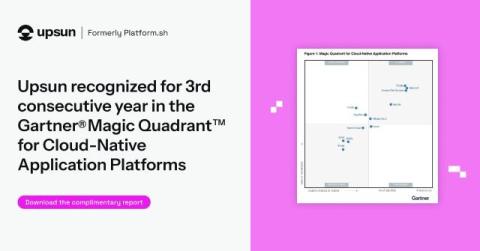
Upsun recognized for third consecutive year in the Gartner Magic Quadrant for Cloud-Native Application Platforms

Upsun acknowledged for its Ability to Execute and Completeness of Vision. Upsun is proud to be recognized for a third year in the 2026 Gartner Magic Quadrant for Cloud-Native Application Platforms alongside other evaluated CNAP platforms. Upsun empowers development teams to ship better software, faster, not just by simplifying infrastructure management, but by rethinking how the entire software development lifecycle works in an era of AI-powered development.

Agent security starts with where the agent runs, not how it behaves

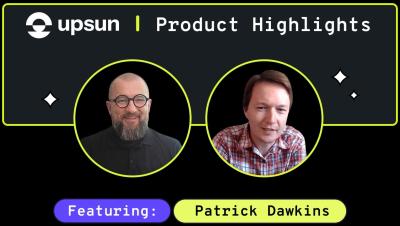
When engineering teams evaluate AI agents, the first questions are usually about capability. Which model performs best? How much faster can it write code? What's the return on investment? Security, if it enters the conversation at all, tends to come later. Patrick Dawkins, Principal Software Engineer at Upsun, thinks that's backward. Over the past year, he's been building the infrastructure that enables AI agents to operate safely within engineering teams.

Migration playbook: escaping lock-in without disruption

Migration projects fail in a predictable sequence. The technical work gets scoped. The timeline gets set. The engineering team starts moving workloads. Somewhere in the middle, dependencies surface that weren't in the original assessment, the double-run period extends beyond the budget allocated for it, and the project either stalls or completes at significantly higher cost than planned.