How to sign up for Elastic Cloud on the AWS Marketplace
This video shows how you can sign up for Elastic Cloud on the AWS Marketplace. Once you have signed up, you can create new deployments using the Elastic Cloud console.


DynamoDB, the primary NoSQL database service offered by AWS, is a versatile tool. It’s fast, scales without much effort, and best of all, it’s billed on-demand! These things make DynamoDB the first choice when a datastore is needed for a new project. But as with all technology, it’s not all roses. You can feel a little lost if you’re coming from years of working with relational databases. You’re SQL and normalization know-how doesn’t bring you much gain.
For security teams, properly managing which users can access resources and governing the level of access those users have is about as basic as locking the door at night. Understandably then, there are thousands of options available to fine-tune or revoke access, and it’s likely that issues come up daily for most companies—if not hourly.
Nowadays, microservice architecture is a pattern that helps to innovate quicker by enabling easier scalability, giving language flexibility, improving fault isolation, etc. Systems built this way also bring some downsides. Moving parts, concurrent invocations, and different retries policies can make operating and troubleshooting such systems challenging. Without proper tools, correlating logs with metrics may be difficult. To overcome these challenges, you need observability.
Migrating your DNS to a cloud provider like Amazon’s Route53 service can be a daunting task. Thankfully, with dns-tools you can test your DNS records before and after the migration to ensure that everything made it across in one-piece. This is the three steps we follow when migrating to Route 53: Follow along below and in just 10 minutes you’ll know if everything will migrate smoothly for you.
We have created a simple Rails 7 application to showcase how easy it is to deploy to Hetzner Cloud with Cloud 66.
When you are dealing with a situation that fires a bevy of alerts, do you instinctively know which alerts are the most pressing? Severity levels are an important concept in alerting to aid you and your team in properly assessing which notifications should be prioritized. You can use these levels to focus on the issues deemed most critical for your operations and triage through the noise.
For businesses utilising public clouds, choosing an open source platform offers considerable advantages. Open source solutions can help reduce costs, provide access to the most leading-edge enterprise-grade features, and eliminate risks such as vendor lock-in, lack of support, or long-term security maintenance.
Speedscale is delighted to join the Google Cloud Partner Advantage program as a technology partner giving GCP customers the ability to stress test their GKE clusters under production-like workload conditions.
A multicloud strategy is a necessity for modern businesses, as the recent AWS outages made clear, but managing this infrastructure remains a huge challenge. Infrastructure management teams have long struggled to juggle diverse technology solutions, policies and services to get access to a point-in-time view of their resources. The result is either waste through overprovisioning or huge overheads for nitpicking manual management and repetitive tasks.
Every Lambda function comes with 512MB of ephemeral storage in the shape of a /tmp directory. This storage space can be reused across multiple invocations for the same instance of a Lambda function. Each instance of a function has its own /tmp directory and data is not shared amongst different instances of a function.
The key challenge with modern visibility on clouds like AWS is that data originates from various sources across every layer of the application stack, is varied in format, frequency, and importance and all of it needs to be monitored in real-time by the appropriate roles in an organization. An AWS centralized logging solution, therefore, becomes essential when scaling a product and organization.
Any new technological breakthrough tends to be greeted by two opposing factions. On one hand, you have promoters, for whom this technology is a panacea, the cure for every ailment plaguing the current environment.
We’ve got some outstanding news to share in the arena of security partnerships: Logz.io® Cloud-based SIEM has officially achieved Amazon Web Services (AWS) Security Competency! This designation within the Logging, Monitoring, SIEM, Threat Detection, and Analytics category further demonstrates Logz.io’s proven commitment to delivering best-in-class security.
Rightsizing is about finding the optimal cloud configuration options to ensure that you get the performance you need—within any given constraints you are operating under—at the lowest possible cost. This is a simple proposition, but deceptively so. For one thing, business requirements are constantly changing, meaning that your workloads must adapt to support them, which in turn changes their operating parameters.
As we push more data to the cloud, avoidable mistakes are hampering migration. The biggest culprit: messy data with inadequate security and integration.Data transfers seem to be the easiest part of cloud migration. After all, migrating applications is the biggest pain in the neck. Data replication and migration should be simple, something that’s done during the last step of the application and data migration process. Right?
If you have worked in any part of the application delivery lifecycle long enough, there’s a very good chance you have directly used or been a consumer of Nagios. For a period of time in the early 2000s, it was the go-to solution for basic server monitoring and alerts. Fast forward 20 years and you might be surprised how many organizations still rely on Nagios for mission critical workloads — although not without a fair amount of duct tape and super glue challenges.
Heroku is a platform for deploying, running, and managing applications, which is written in a variety of programming languages, including Python, Java, C#, JavaScript, PHP, and others. Heroku's goal is to free you up to focus on your applications rather than infrastructure management. Logging is usually included in infrastructure management. Heroku provides a high-level log maintenance tool. In this Heroku logging article, we'll learn how to get the most out of Heroku logs.
InfluxDB is increasingly being used in IoT solutions to store data from connected devices. Now it can also be used on IoT edge gateways as a data historian to analyze, visualize and eventually transmit aggregated IoT data up to a centralized server. In this article we’re going to look at three simple ways you can connect an instance of InfluxDB on your IoT Edge device to another instance of InfluxDB in the cloud.
“It’s in the cloud!” Whether you’re talking about workplace technology or struggling to explain file-sharing to a technologically-challenged relative, we’ve all been trying to learn the ins and outs of cloud computing over recent years. It’s no easy task, as cloud computing has been changing rapidly – which brings us to the latest evolution: the distributed cloud.
One of the benefits of deploying software on the cloud is allocating a variable amount of resources to your platform as needed. To do this, your platform must be built in a scalable way. The platform must be able to detect when more resources are required and assign them. One method of doing this is the Elastic Load Balancer provided by AWS. Elastic load balancing will distribute traffic in your platform to multiple, healthy targets. It can automatically scale according to changes in your traffic.
As more and more businesses and individuals choose to store their data online, ensuring the safety of information is becoming exceptionally crucial. According to recent statistics from the Hosting Tribunal, over 95% of IT professionals use cloud storage. This number is expected to grow steadily.
Put simply, cloud adjacent storage is just a privately owned and operated storage system, within network reach of a cloud provider’s region, but without the pay-as-you-grow and access charges found in public clouds.
On December 7, 2021, Amazon’s cloud services recently suffered a major outage that not only affected Amazon services, but also many third-party services we use day-to-day, including Netflix, Disney+, Amazon Alexa, Amazon deliveries and Amazon Ring. Causes for the outage, which began at 7:30 am PST and lasted nearly seven hours, were detailed in a Root Cause Analysis report published by AWS that shed light on factors that may have contributed to the extended length of the disruption.
Source: APM in the new normal, survey by eG Innovations and DevOps Institute Cloud adoption is increasing at a rapid pace. The eG Innovations & DevOps Institute APM survey indicates that 88% of organizations are using at least one form of cloud technology. Organizations move to the cloud for agility – they can deploy and have applications running in the cloud in minutes. Cloud computing also offers options for high availability, automated backups, and such.
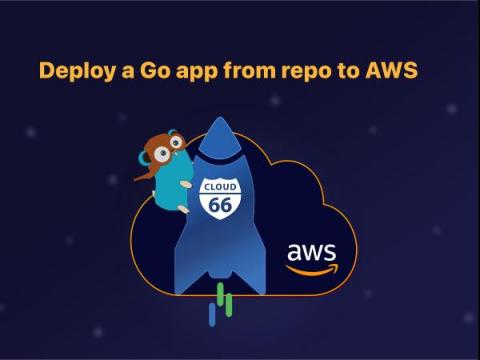
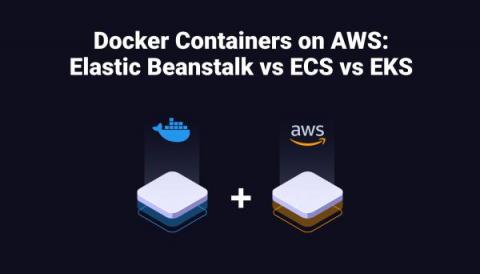
We are going to deploy a Go application directly from your repo to AWS with Cloud 66. Any application using any language on any framework can be deployed with Cloud 66 as long as it has a Dockerfile. Note: Rails applications are exceptions as we deploy them natively. If your application does not have a Dockerfile, we will suggest one for you based on your code. However, we would recommend reviewing what we have suggested and making sure the Dockerfile meets your requirements.
In this blog post, I follow on from my previous blog on AWS CloudWatch Part 1 of 2 to explore how you can go beyond basic agentless CloudWatch monitoring by deploying the CloudWatch agent and some of the key information and planning you need to do this. I’ll also cover how eG Enterprise offers out-of-the-box functionality to avoid complex JSON scripting or tooling to implement monitoring.
This blog post discusses some of the best practices for balancing the costs of cloud traffic monitoring while maintaining a reasonable level of visibility. Progress Flowmon 12 has introduced the processing of native flow logs from Google Cloud and Microsoft Azure, plus it has enhanced support for Amazon Web Services (AWS) flow logs.
Today, cloud native technologies empower a number of organizations to build and run scalable applications in public, private and hybrid cloud environments. Developer and operation teams can build and deploy applications, APIs and microservices architectures with the speed and immutability of containers. Gartner predicts that by 2024, more than 75% of large enterprises in mature economies will be using containers in production.
Big Data Platform (BDP) Replacement Through Splunk: https://conf.splunk.com/watch/conf-online.html
## Follow Cribl
Monitoring and gaining additional insights about usage of your Splunk Cloud Platform deployment is essential for effective management as a Splunk admin. Your Splunk Cloud comes with the Cloud Monitoring Console (CMC) app, which displays relevant information about the status of your Splunk Cloud environment using pre-built dashboards.
SaaS (software as a service) is the common model for many businesses today. Even longstanding behemoths such as Cisco and Microsoft have been strategically shifting their software products to SaaS and recurring revenue models (just think Office365 shift from licensed Office). These SaaS businesses need agility to move fast and remain competitive. This means agility in the IT stack, but also agility in the business models to support bottom-up GTM and product-led growth (PLG).
Internxt is a little different than your average cloud service. Our secure storage was designed from the ground up with the user and their privacy in mind. To do this, we’ve built our service for Web3, which means the information we encrypt and store is decentralized and our business model has nothing to do with selling data.
We are often asked what’s the difference between Anodot and CloudHealth. Since both platforms offer cloud cost management solutions, the differentiation might be unclear. In this article, we’ll quickly clarify what each platform is built for, and why — despite some overlaps in features — these are two fundamentally different creatures.
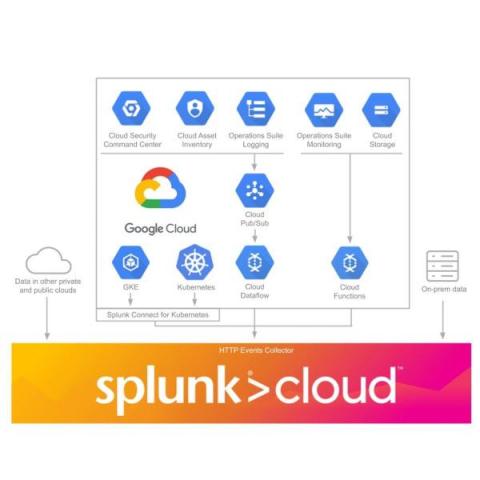
In April 2021, Splunk launched Splunk Cloud on Google Cloud. Since then, a large and growing number of integrations, applications, tools, and solutions have been created to enable or enhance use cases across data protection, productivity, safer remote working and other security visibility needs. We’ve highlighted a few of the more noteworthy additions below for any current or prospective users of Splunk Cloud on Google Cloud.
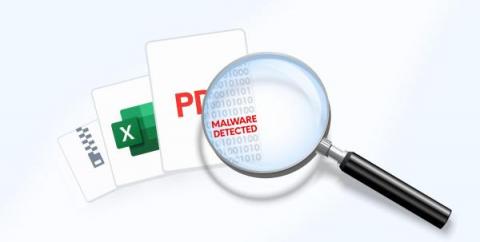
Do you remember when viruses used to be funny and not such a big deal? Maybe a cat would constantly pop up on your desktop or you’d get spammed with hundreds of ads for male enhancement pills? Well, the early 2000s are over (yes, it’s depressing) and malware has advanced far beyond its somewhat quirky origins. Today, viruses have become extremely sophisticated and it’s difficult to know for sure if your files have been infected or not. So what is malware exactly?
Today it is even easier to capture logs in your Java applications. Developers can get more data with their application logs using a new version of the Cloud Logging client library for Java. The library populates the current executing context implicitly with every ingested log entry. Read this if you want to learn how to get HTTP requests and tracing information and additional metadata in your logs without writing a single line of code.
Talk to anyone in the tech space and you’ll likely hear horror stories of how home lab setups can grow out of control or about long lists of VMs used to test various software systems. As a Criblanian, I’m no exception – I have at least a half dozen instances of Cribl LogStream deployed everywhere from my local machine, on docker containers, or on a few EC2 instances in AWS.
Since our latest update, Dashbird also gives you insights into HTTP API Gateway. Let’s look at the differences between REST vs. HTTP; HTTP API Gateway pricing, integrations and monitoring.
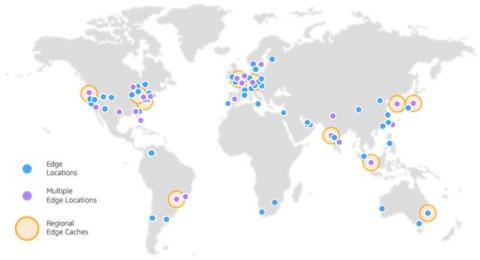
CloudFront Functions allow you to deploy serverless JavaScript functions to AWS' network of edge locations to be executed as close as possible to end-users. This article will get you started.
If you’re working with microservices in a large distributed environment, you’ve probably got your monitoring and logging on lock, and you may even be lucky enough to have properly instrumented APM (distributed tracing) for consumer calls. But, did you know you’re likely still facing an observability gap? How many incidents have you worked that required hours of sleuthing only to end with a single team needing to roll back a deployment? It’s more common than you may think!
The cloud is a solution that allows you to access data and documents from anywhere and from any medium whether it is a computer, a tablet or a phone. But is your data really secure? A secure cloud ensures the privacy, security and compliance of all stored data. All these aspects must be taken into account when using a cloud solution to ensure the security of your information.
Our ongoing love affair with the cloud doesn’t show any signs of slowing. In 2021, end-user spending on public cloud services alone is predicted to reach $332 billion — or, to put it another way, more than the GDP of Chile, Finland or Vietnam. This affection is understandable. The cloud lets organizations build or adopt new services, expand to new regions and scale their offerings faster, more simply and — if used correctly — at lower cost than ever before.
Before we jump into this, it’s important to note that older names, and still in use in some areas of AWS, are often referred to SSM which stands for Simple Systems Manager. AWS Systems Manager is designed to be a control panel for your AWS resources so you can manage them externally without having to SSH into the resources individually. What is important to remember with AWS Systems Manager is that features contained within the tool may occur additional pricing.
Winners make good decisions fast, execute them quickly, and see higher growth rates and/or overall returns from their decisions. That’s according to a McKinsey study, ‘Decision-Making In The Age Of Urgency’. But the same study also pointed out that ineffective decision-making has significant implications for company productivity today. On average, survey respondents said they spent 37 percent of their time making decisions.
Crowdsourcing is becoming an essential part of many enterprises, from big companies to startups. This is because it is an incredible way of creating an ecosystem to facilitate different processes within a business. Leveraging the Exoprise platform, companies can benchmark their slow proxies, detect, and fix slow network experiences. Crowdsourcing entails getting information, goods, or services from disparate people worldwide. Often, crowdsourcing is made possible through the magic of cloud-based applications and platforms because of the way the Internet connects people and organizations. Exoprise specializes in crowdsourced monitoring of cloud and SaaS services. We call it crowd-powered.
Shipa Cloud is how we run the Shipa control plane on behalf of users in order to give them the fastest path possible to implementing Application as Code within their clusters. You can try out Shipa Cloud for free today by going to shipa.io. Besides being the fastest way possible to get started with Shipa, it also takes away the responsibility of upgrades, maintenance, and uptime of the control plane for our users, but that responsibility doesn’t just disappear.
We are excited to announce that Google Cloud Managed Service for Prometheus is now generally available! Now you can get all the benefits of open source-compatible monitoring with the ease of use of Google-scale managed services.
A common denominator that Mattermost and most corporate applications share is the challenge users can face in successfully setting up a self-hosted instance in their own cloud account. Even with cloud-specific documentation, there’s almost always a hard requirement of understanding said documentation, resolving any errors encountered along the way, and maintaining the application.
Every company exerts some level of effort to manage costs, performance, and risk in their hybrid cloud environment. But to ensure that those activities are performed consistently and efficiently across the board, you need a framework of policies, processes, controls, and tracking. In other words, you need cloud governance.