Like death and taxes, IT incidents are inevitable. Issues like server outages and broken code are common—and costly. A single hour of downtime costs businesses more than $300,000 on average, according to Gartner. That’s why a solid incident management strategy is a must for any organization. “People solve incidents, but we can’t do it alone,” says Ali Rayl, Slack’s vice president of customer experience.
With the pandemic forcing businesses worldwide to reboot, many have no choice but to exact drastic cost-cutting measures to keep the lights on. Cloud computing is an expense incurred by every digital business that, unlike many other operating costs, is largely variable.
If you are still handing over a shared on-call duty phone or pager (sometimes called ‘operations phone’), it is time to rethink your process. The Covid19-induced new normal has a dramatic impact on our work live and social behavior. We work from home and that is especially true for the IT workforce. We meet with less people and limit our social network to relatives and close friends.
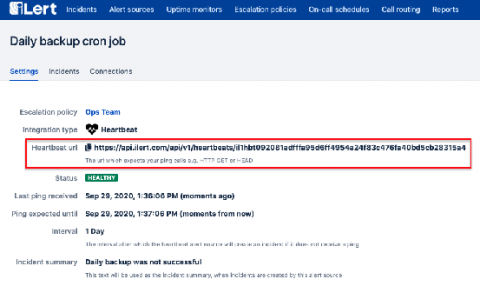
You might have noticed that we’ve added a new type of alert source a few months ago - Heartbeat alert sources: A Heartbeat alert source expects a signal (the “heartbeat” ping) at regular intervals and alerts you, if it doesn’t receive a ping within the specified interval.
Chicago, Illinois – October 1, 2020 – AlertOps has introduced Heartbeat Monitoring for its incident alerting, on-call management, and response platform. IT teams can use Heartbeat Monitoring to verify their monitoring tools are working properly, providing an added layer of redundancy and visibility. Signals, or “heartbeats,” from external sources verify whether systems connected to the AlertOps platform are working properly.
In the following years, U.S. industries are poised to experience a changing of the guard. The majority of baby boomers will retire in the next decade. Their roles will be taken over by millennials (Generation Y), a digitally native generation that is familiar with modern technology. Generation Y must develop empathy and prepare for the challenge of bringing tech disruption to the workplace. Millennials must introduce new technologies, without intensifying the anxiety of skeptical care providers.
The ability to detect and alert performance issues quickly is key to reducing the Mean Time to Resolve (MTTR). Proactive monitoring will catch incidents early on but triggering the right alerts and notifying the relevant incident management team is just as critical. Enterprises rely on multiple disparate tools to monitor different systems so there is a lot of data and noise generated which can render incident management inefficient.