AWS, Azure & GCP: Leveraging Their Full Instance Catalog To The Max
Leverage the best technology available from your favourite Public Cloud vendor(s).


The latest News and Information on Containers, Kubernetes, Docker and related technologies.
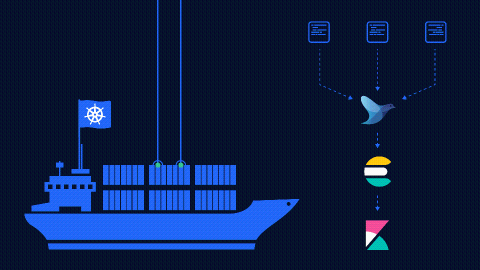
Kubernetes, a Greek word meaning pilot, has found its way into the center stage of modern software engineering. Its in-built observability, monitoring, metrics, and self-healing make it an outstanding toolset out of the box, but its core offering has a glaring problem. The Kubernetes logging challenge is its ephemeral resources disappearing into the ether, and without some 2005-style SSHing into the correct server to find the rolled over log files, you’ll never see the log data again.
For an application developer, there is certainly a long road between an idea/feature and getting deployed into production with Kubernetes. From a development perspective, having a low barrier of entry and the ability to iterate is key. From a platform engineering/DevOps perspective, creating gains in engineering efficiency all while creating and enforcing policies that do not stifle innovation is key.
Prometheus 2.35 was released last month, focusing on a better integration with cloud providers. It also improved the service discovery, performance, and resources usage. One key change was the migration to Go v1.18. It has brought some changes in the support for TLS 1.0, 1.1, and certificates signed with the SHA1 hash function. Welcome to this first edition of What’s new in Prometheus. We love Prometheus, the de-facto open source standard monitoring tool!
With recent releases, the Kubewarden stack supports verifying the integrity and authenticity of content using the Sigstore project. In this post, we focus on Kubewarden Policies and how to create a Secure Supply Chain for them.