So you’ve heard of Kubernetes, and you’ve decided it’s time to dive into what everyone’s talking about. Or maybe you’ve worked with it a little, but you’d like to level up.
Traditionally, provisioning an infrastructure meant a team of field engineers, system admins, storage admins, backup admins, and an application team would all provision and maintain an on-premises data center. Although this system works, it has a few flaws—slow deployment, high cost of setup and maintenance, limited automation, human error, inconsistency, and the underutilization of resources during off-peak periods.
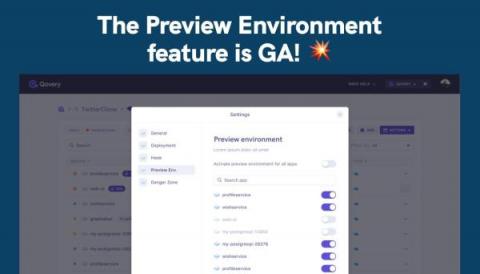
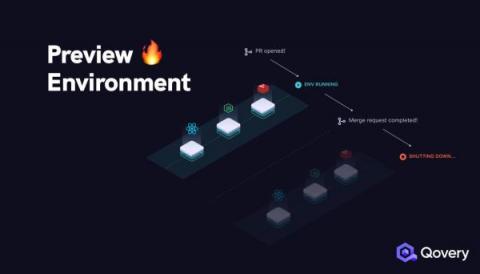
I am super excited to announce that our Preview Environment feature is GA (Globally Available) for everyone 🥳.
Yesterday was my worst day for a very long time. We spent so much time promoting our Qovery Engine to the open-source community and getting those ~3800 stars. I woke up and discovered that we had lost all the stars and forks from our repository. But what happened?
Since we launched Qovery in January 2020, we offered free hosting ("Community" plan) for every developer. Providing free hosting was the perfect way to get product feedback and iterate with our users without the cost constraint. As our hosting infrastructure costs have drastically grown within the last 18 months, we had to reinvent our free offer. In a nutshell, we will continue to offer free hosting to involved community members only. Keep reading to know more 👇
This is the most exciting feature we launched since Qovery v2 has been released - the Preview Environment feature!
Making an Open Source Software with sensitive data and dozens of external integrations is a real challenge, here are feedbacks and tradeoffs we've made.
So you’ve just created a new project and want to start distributing it, but you still don’t know how to manage its deployment. Then there’s the monitoring, network request, and a lot of other problems related to modern apps. At the same time, you want to avoid working directly with AWS due to its intricacy.