Operations | Monitoring | ITSM | DevOps | Cloud

Find Every Public EC2 Instance in 10 Minutes

"Show me all EC2 instances that are public." One question. About 10 minutes. Manually, the same answer is a 10-day job. In this clip, the CloudQuery AI assistant works it out live: it finds the EC2 instances table, reads the schema, identifies public_ip_address as the field that signals public exposure, and queries for every instance that has one. It comes back with 2 running public EC2 instances — instance type, public IP and DNS, private IP, VPC, subnet and tags for each — and flags that both are reachable from the internet, subject to security group rules.

Multi-Cloud Asset Inventory in 1 Minute

How many resources do you actually have across every cloud provider? Manually, that's a ~2 hour job. With CloudQuery, it's one question. In this clip we ask the CloudQuery AI assistant a single question —"Show count of all resources across all cloud providers" — and get a full multi-cloud asset inventory back in about a minute: Wiz 9,225 · GCP 6,485 · AWS 2,297 · Azure 1,153 · Entra ID 1,109 · Kubernetes 1,066 · Backstage 75 → 21,410 total resources.

Terraform Modules vs. Resources: When to Promote a Pattern

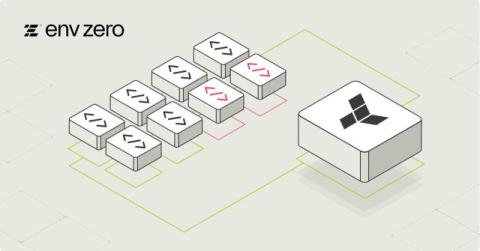
Terraform gives you two ways to express the same infrastructure. You can declare resources directly, or you can wrap them in a module and call that module with inputs. Both produce identical cloud objects. The choice is not about capability, it is about where you want the complexity to live and who you want to be responsible for it. Most teams get this decision wrong in one of two directions.

Terraform Strings: Interpolation, Heredoc & Built-In Functions

A Terraform string is just a sequence of characters, but almost everything you write in HCL touches one: resource names, tags, file paths, generated policies, connection strings. Knowing how Terraform builds, combines, and templates strings will save you from some of the more confusing errors you'll hit in a growing configuration.

How to Migrate Terraform State Between Backends

Terraform state doesn't stay put forever. Teams outgrow local state files, consolidate multiple backends into one, switch cloud providers, or decide it's time to move off a platform that's no longer working for them - HCP Terraform's free tier ending and its resource-based pricing is a common trigger these days. Whatever the reason, the state file itself is the part everyone's afraid to touch, because it's the only record of what Terraform thinks your infrastructure actually is.

Ansible Conditionals: Complete Guide to when Statements [2026]

Last updated: April 2026 Playbooks that run every task every time aren't really automation. They're scripts. Real playbooks make decisions: only restart a service when its config changed, only install a package on Debian hosts, only send an alert when a prior task failed. That decision-making comes from Ansible conditionals.

"Deployment Visibility for Platform Teams | ENV Zero Topic Talk"

Welcome to another ENV Zero Topic Talk! Today, we discuss the importance of deployment visibility for platform teams. In today's fast-paced development environment, real-time insights into the deployment pipeline are crucial to ensure smooth operations, manage risks, and maintain control. ENV Zero provides comprehensive deployment visibility, allowing teams to track every stage from code commit to post-deployment monitoring. With our intuitive dashboard, platform teams can identify bottlenecks, resolve issues faster, and optimize resource management for quicker, more stable deployments.

Understanding Environment Drift in Enterprise Delivery | ENV Zero Topic Talk

Welcome to another ENV Zero Topic Talk! In today’s episode, we explore the concept of environment drift in enterprise delivery and why it’s crucial to manage it. Over time, configurations across your environments can deviate, leading to errors and inconsistencies. ENV Zero helps detect and automatically correct these discrepancies, ensuring that your environments stay in sync. Discover how proactive drift management can improve stability, reliability, and predictability in your delivery process.