K3s vs K8s - Civo DevOps Bootcamp 2021
For this week's Civo DevOps bootcamp, we'll be discussing how K3s by Rancher Labs differs from regular Kubernetes (k8s).


Embracing any new technology stack can certainly be a journey. No matter if this is your first time using Kubernetes or you have been on the Google Borg Team, getting up and started with Shipa Cloud is a breeze. You can bring your own Kubernetes Cluster and sign up for a Shipa Cloud account and you are well on your way to Application as Code excellence. Leveraging minikube is a free way to take a look at Shipa Cloud.
I am thrilled to announce that we have raised a $4M seed round with top notch investors. Join us in building the future of the Cloud - we are hiring! ----- The round is led by Crane and joined by Speedinvest, with participation from Techstars and angels including Alexis Le-Quoc (CTO and co-founder at Datadog) and Ott Kaukver (CTO at Checkout, ex CTO at Twilio).
Welcome to another monthly update on what’s new from Sysdig! Happy Janmashtami! Shanah Tovah! 中秋快乐! With lockdown lifting by varying degrees across the world, we hope you had a safe but pleasant holiday! It has certainly been long overdue. Here at Sysdig, we celebrated Labor Day in the USA with an extended weekend and a well being day for the team.
Public cloud infrastructures and microservices are pushing the limits of resources and service delivery beyond what was imaginable until very recently. In order to keep up with the demand, network infrastructures and network technologies had to evolve as well. Software-defined networking (SDN) is the pinnacle of advancement in cloud networking; by using SDN, developers can now deliver an optimized, flexible networking experience that can adapt to the growing demands of their clients.
In today's digital age, the internet and computer technologies have become a part of our lives. Organizations are moving their applications to the cloud to gain benefits of flexibility and lower costs. Heroku and AWS are two popular cloud service providers. AWS is a cloud services platform offering computing power, database storage, content delivery, and many other functionalities. Users can choose individual features and services as required.
The life of a developer these days is more complicated than ever, as they are increasingly required to expand their knowledge across the stack, understand abstract concepts, and own their code end-to-end. A major (and very frustrating) part of a developer’s day is dedicated to fixing what they’ve built – scouring logs and code lines in search of a bug. This search becomes even harder in a distributed Kubernetes environment, where the number of daily changes can be in the hundreds.
The rise of containerization has been a revolutionary development for many organizations. Being able to deploy applications of any kind on a standardized platform with robust tooling and low overhead is a clear advantage over many of the alternatives. Viewing container images as a packaging format also allows users to take advantage of pre-built images, shared and audited publicly, to reduce development time and rapidly deploy new software.
Giving developers a portal they can use to understand application dependencies, ownership, and more has never been more critical. As you scale your Kubernetes adoption, you want to make sure you avoid service sprawl, and if not done early, application support will become a nightmare.
Welcome to the Civo update for September 2021. In case you missed the big news... this week we successfully launched our first region in Frankfurt, Germany. Plus we announced our new strategic partner, THG Ingenuity, who invested $2 million into the company. This will allow us to quickly invest in our infrastructure, including more regions across the globe throughout the next 12 months.
In this blog, we will cover the various requirements you need to meet to achieve NIST 800-53 compliance, as well as how Sysdig Secure can help you continuously validate NIST 800-53 requirements for containers and Kubernetes. NIST 800-53 rev4 is deprecated since 23 September 2021 Read about the differences between versions down below →
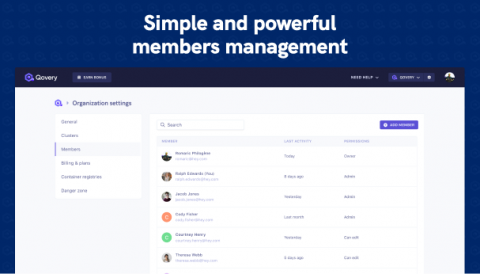
It is a super exciting day! Finally, you can invite your friends/team/colleagues (pick one) via the web console.
Internet-facing applications are some of the most targeted workloads by threat actors. Securing this type of application is a must in order to protect your network, but this task is more complex in Kubernetes than in traditional environments, and it poses some challenges. Not only are threats magnified in a Kubernetes environment, but internet-facing applications in Kubernetes are also more vulnerable than their counterparts in traditional environments.
We’re happy to announce that our new mainland Europe datacenter region in Frankfurt, Germany is now live and ready for use by all Civo customers. This will sit alongside our existing New York City and London regions, with a location in India planned by the end of this year, and more in 2022.
As you scale microservices adoption in your organization, the chances are high that you are managing multiple clusters, different environments, teams, providers, and different applications, each with its own set of requirements. As complexity increases, the question is: How do you scale policies without scaling complexity and the risk of your applications getting exposed?
In this article, we’ll discuss the potential pitfalls that we came across when configuring ECS task definitions. While considering this AWS-specific container management platform, we’ll also examine some general best practices for working with containers in production.
I’m hugely excited to announce that THG Ingenuity, the technology division of ecommerce giant THG, has invested $2 million to take a minority stake in Civo. We’re proud to be THG Ingenuity’s first strategic investment since it announced earlier this year that Softbank Group had invested $730 million in THG with an option for a further $1.6 billion investment in the THG Ingenuity platform.
Terraform is probably the most used tool to deploy cloud services. It's a fantastic tool, easily usable, with descriptive language (DSL) called HCL, team-oriented, supporting tons of cloud providers, etc. On paper, it's an attractive solution. And it's easy to start delegating more and more responsibilities to Terraform, as it's like a swiss knife; it knows how to perform several kinds of actions against several varieties of technologies.
This post will highlight and explain the importance of a pluggable data plane. But in order to do so, we first need an analogy. It’s time to talk about a brick garden wall! Imagine you have been asked to repair a brick garden wall, because one brick has cracked through in the summer sun. You have the equipment you need, so the size of the job will depend to a great extent on how easily the brick can be removed from the wall without interfering with all the ones around it. Good luck.
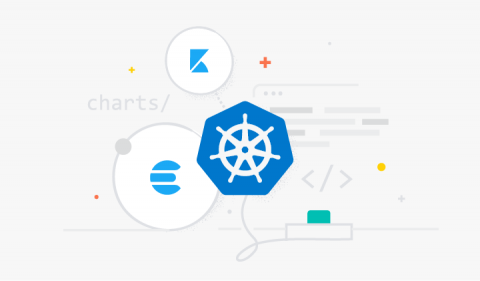
To monitor your Elastic Stack with Elastic Cloud on Kubernetes (ECK), you can deploy Metricbeat and Filebeat to collect metrics and logs and send them to the monitoring cluster, as mentioned in this blog. However, this requires understanding and managing the complexity of Beats configuration and Kubernetes role-based access control (RBAC). Now, in ECK 1.7, the Elasticsearch and Kibana resources have been enhanced to let us specify a reference to a monitoring cluster.
Terraform is a popular choice among DevOps and Platform Engineering teams as engineers can use the tool to quickly spin up environments directly from their CI/CD pipelines.
As the demands placed on technology have grown, so has the size and complexity of our applications. Today’s developers often face the difficult task of managing huge applications. Further complicating matters is the underlying infrastructure, which can often be as expansive, diverse, and complicated as its applications. The complexity of modern applications introduces many challenges.
Picking the right performance testing tool can be a challenge. What should you look for and what is important? Performance testing is a phrase many developers have come across at some point, but what is it exactly? In simple terms, performance testing is a software testing practice used to determine stability, responsiveness, scalability, and most important, speed of the application under a given workload.
Containers, along with containerization technology like Docker and Kubernetes, have become increasingly common components in many developers’ toolkits. The goal of containerization, at its core, is to offer a better way to create, package, and deploy software across different environments in a predictable and easy-to-manage way.
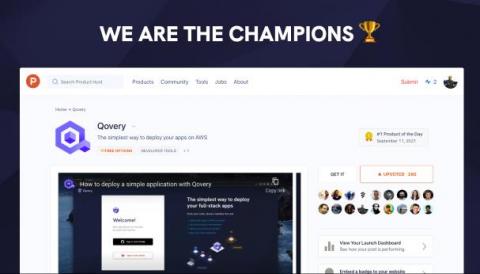
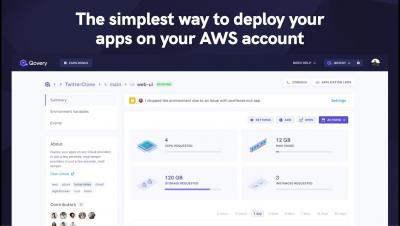
Josh Fetcher: “Product Hunt is a community where founders, product enthusiasts, and geeks go to check out the best new products and get attention for tech products that they've built.” If there is one sentence to define me it would be “done is better than perfect”. Saturday morning, after spent the last night released a new major version of our product while fixing bugs I came up with an idea: “Oh! It would be great time to make Qovery featured on Producthunt”.
Data application developers using Snowflake as the data warehouse and who are new to Kubernetes, spinning up a single cluster on their laptop and deploying their first application can seem deceptively simple. As they start deploying data-driven applications using microservices and Kubernetes in production, the difficulty increases exponentially. It quickly throws the developer into a kind of configuration hellscape that drives productivity down for many data engineering teams.
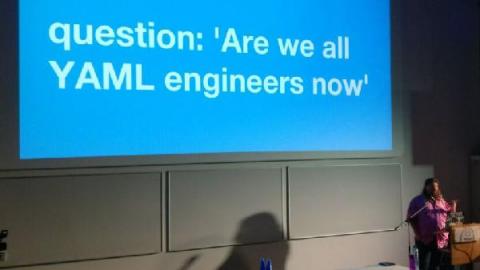
There is no doubt that YAML has developed a reputation for being a painful way to define and deploy applications on Kubernetes. The combination of semantics and empty spaces can drive some developers crazy. As Kubernetes advances, is it time for us to explore different options that can support both DevOps and Developers in deploying and managing applications on Kubernetes?
Arm-based Kubernetes clusters have been in use for a while, albeit mostly for niche uses, by enthusiasts, and DIY hobbyists. But that is changing. Arm architecture offers an efficiency and scalability that other architectures do not, and that makes it appealing to businesses.
Let’s build a smart gardening system with Prometheus and a Raspberry pi. Having plants at home can reduce your stress levels and make your home look more delightful. Seeing your indoor oasis growing gives us a sense of accomplishment and makes us feel proud… until you see that first brown leaf. That’s when you start doubting your green fingers.
Last June, we released Qovery v2 - a brand new version of Qovery. Since then, we have worked on delivering the features you were waiting for AND made dozens of improvements based on your feedback. Thanks to our lovely dev community and customers.
Amazon Elastic Kubernetes Service (EKS) is a cloud-based compute platform that includes a fully managed Kubernetes control plane in order to simplify cluster operations. AWS introduced EKS Anywhere to bring the operational ease of EKS to organizations that manage on-premise environments (e.g., to meet data sovereignty requirements).
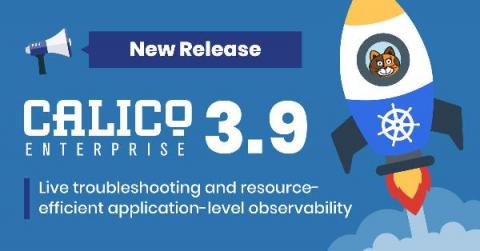
We are excited to announce Calico Enterprise 3.9, which provides faster and simpler live troubleshooting using Dynamic Packet Capture for organizations while meeting regulatory and compliance requirements to access the underlying data. The release makes application-level observability resource-efficient, less security intrusive, and easier to manage. It also includes pod-to-pod encryption with Microsoft AKS and AWS EKS with AWS CNI.
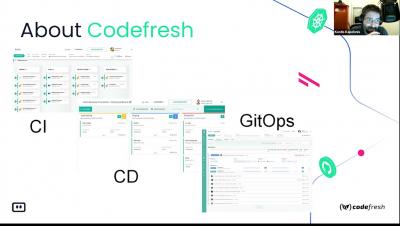
This blog can provide you with useful information on how to set up a Kubernetes CI/CD workflow using state-of-the-art of open source DevOps tools, whether you are.
GitOps is one method used by teams to deploy microservices, but challenges usually arise when deploying applications across multiple clusters and environments. For your GitOps initiative to be successful, you should consider implementing an application operating model. In this second workshop we covered.
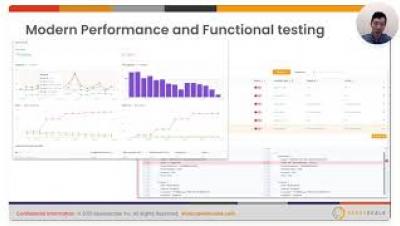
Speedscale is seeking to cut time and errors out of the Kubernetes and container delivery pipeline with their ability to discover API connections, automatically generate tests and data, replay traffic, and spin up realistic lab environments and reports within the tight time windows of cloud-native development.
On August 4th 2021, Kubernetes (K8s) upstream announced the general availability of Kubernetes 1.22, the latest version of the most popular container orchestration platform. At Canonical, we actively track upstream releases to ensure our Kubernetes distributions align with the latest innovations that developers and businesses need for their cloud native use cases.
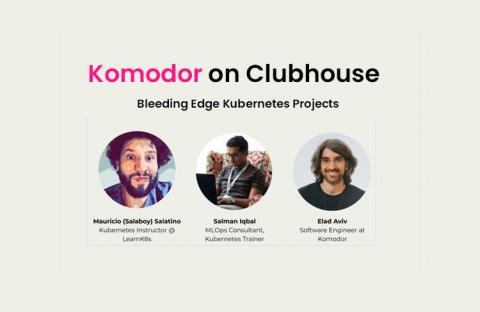
Below are main highlights from a recent Clubhouse talk featuring Elad Aviv, a software engineer at Komodor. The session was hosted by Kubernetes heavy-hitters; Mauricio Salatino, Staff Engineer at VMware, and Salman Iqbal, Co-founder of Cloud NativeWal.
The idea to fully manage applications, in addition to infrastructure, using a Git-based workflow, or GitOps, is gaining a lot of traction recently. We are seeing an increasing number of users connecting their Shipa account with tools such as ArgoCD and FluxCD. Based on that, we conducted multiple user interviews to understand some of the challenges teams face when implementing GitOps, especially those introduced or faced by their developers.