Operations | Monitoring | ITSM | DevOps | Cloud

Android development shouldn't start with a physical device

How on-demand Android environments lay the foundation for Android engineering Software engineering has evolved dramatically over the last decade. Development environments that once depended on dedicated hardware have become resources that can be provisioned, configured, and removed on demand. Infrastructure is now expected to be reproducible, automated, and integrated into continuous development workflows. However, Android has largely remained an exception.
Beyond the 10-year mark: Extending Ubuntu Pro 16.04 LTS security coverage

A decade ago, Canonical launched Ubuntu 16.04 LTS (codenamed “Xenial Xerus”). As a Long-Term Support (LTS) release, it comes with 5 years of standard security coverage, which is doubled to a total of 10 years through Expanded Security Maintenance (ESM) for users with an Ubuntu Pro subscription. As of April 30, 2026, the 10-year ESM coverage for Ubuntu 16.04 LTS, under Ubuntu Pro, has officially reached its end of support.

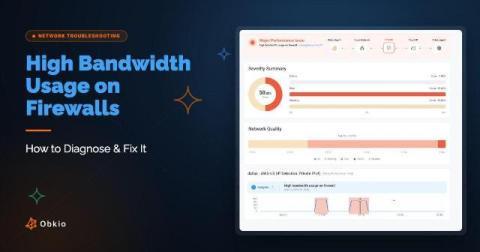
High Bandwidth Usage on Firewalls: How to Diagnose & Fix It

If your network has been feeling sluggish, connections keep dropping, or you're getting alerts that don't point to an obvious cause, high bandwidth usage is one of the most common culprits and one of the hardest to pin down without the right visibility. The tricky part is that "slow network" can mean a dozen different things depending on where the congestion is actually happening.

Why Security and Observability Must Work Together in 2026

Modern IT environments generate more data than ever. Every application request, user login, network connection, cloud workload and endpoint action produces signals that can help teams understand what is happening across the business. Yet having more data has not necessarily made organizations more secure, more reliable, or easier to operate.

Why Autonomous Endpoint Management Depends on Trusted Data

Back to Basics: AEM Fundamentals | Part 1 of 5 The market is rushing toward autonomous endpoint management. But most of the conversation skips past the infrastructure and jumps straight to the outcomes. The market is loud, the promises are bold, and the buyers who got burned before are now the ones asking the hardest questions. They don't need another feature list. They need to know what's actually underneath the claims. IT teams have heard this story before.

Platform engineering in the age of AI

94% of engineering leaders say their AI metrics are missing. Here's how platform engineering is changing to close that gap. Based on the InfoQ webinar "Platform Engineering in the Age of AI," featuring panelists from Harness, DKB, and Shine, August 18, 2026. 94% of engineering leaders say the AI metrics that matter most to them are missing.

Governance is the platform problem worth solving

Based on the LeadDev panel discussion "Governance Is the Platform Problem Worth Solving," hosted in partnership with Harness, August 5, 2026. AI agents are no longer waiting for a human to approve their next move. They open pull requests, adjust configurations, and act on behalf of the people who deployed them — often faster than any review cycle can keep up.

How to build a Language Server Protocol (LSP) plugin for Claude Code

Language servers give editors structured, real-time feedback: diagnostics, hover docs, autocomplete, and other guidance that would otherwise surface later. Language servers already exist for many of the languages and tools developers use every day, but Claude Code doesn’t automatically receive their feedback.

Log Analysis with Machine Learning: An Automated Approach to Analyzing Logs Using ML/AI

AI log analysis helps IT teams turn massive volumes of operational data into actionable insight. By applying statistical methods, machine learning (ML), semantic analysis, and generative AI, organizations can identify unusual behavior, connect related signals, and investigate probable root causes faster. But AI-generated answers should not be mistaken for proof.

How to Reduce Vendor Sprawl: A Practical Guide for IT Teams

To reduce vendor sprawl, start with inventorying what your tools do, who depends on them, and where their capabilities overlap. Then decide which tools to retain, connect, or replace. When going away from tool sprawl, you need to aim for a smaller toolset that your team can manage while still supporting the work your organization needs. This guide walks through spotting unnecessary fragmentation, assessing whether consolidating makes sense or not, and transitioning to it.