


|
By Shibam Dhar
AI writes code faster, but CI still repeats costly work. See how Harness CI cuts unnecessary tests, recompilation and dependency downloads. Six months ago, your team adopted an AI coding assistant. Pull requests doubled. Generated code started landing in branches faster than reviewers could read it. The CI pipeline kept up for about three weeks. Now the queue backs up by mid-morning. Builds take 38 minutes. 4,000 tests run on every commit when 60 are relevant.

|
By Eric Minick
The faster teams deploy, the more releases fail, and burnout climbs right with it. What 700 engineers told Harness about AI-scale delivery. Lenny's Newsletter put out its 2026 tech workforce survey this year, and you should read the whole thing. The headline stats: significant burnout jumped from 44.7% to 55.7% of tech workers in a year. Career optimism dropped from 54.8% to 48.7% over the same period of time.
|
By Soujanya Namburi
Explore how AI coding agents can be exploited through trusted files, hooks, and MCP tools, and learn how to secure agent workflows against hidden instructions and persistent threats. Why the most dangerous instructions aren't the ones you type into the chat box For the past decade, autocomplete guessed your next line. It was helpful, annoying, or flat-out wrong, depending on the day.

|
By Lavakush Biyani
Learn how to streamline deployment approvals with Harness CD native approval steps and configurable policies to reduce manual effort, improve consistency, and accelerate releases. Approvals shouldn’t cost you a shift. With Harness, the approval step lives inside your pipeline, so you get sign-off without the waiting and the glue code.
|
By Rohan Bhaumik
Discover how Harness Builds combines Test Intelligence, code coverage, and quality signals to help developers and AI agents validate changes faster and improve code quality. AI has changed the speed at which we can write code. Developers can move from an idea to a pull request faster, agents can work through changes autonomously, and the amount of code moving through development pipelines is only going up. But writing the code is only the beginning.
|
By Kelsey Rosen
Discover FinOps best practices tailored for banks. Optimize cloud costs while meeting compliance and security needs. Learn more. Financial institutions face unique challenges implementing FinOps due to strict regulatory compliance, security requirements, and complex legacy systems. This guide covers proven FinOps strategies for banks including cost allocation, governance frameworks, and automated controls that balance innovation with risk management while optimizing cloud spending.
|
By Sanjay Nagaraj
Learn how Harness and Cosmos build trusted, governed software factories with automated, end-to-end agent orchestration and pipeline security. Software factories can greatly accelerate software development, but concerns about trust, governance, and predictability are limiting how broadly organizations deploy them.

|
By Eric Minick
The faster teams deploy, the more releases fail, and burnout climbs right with it. What 700 engineers told Harness about delivery at AI speed. Lenny's Newsletter put out its 2026 tech workforce survey this year, and you should read the whole thing. The headline stats: significant burnout jumped from 44.7% to 55.7% of tech workers in a year. Career optimism dropped from 54.8% to 48.7% over the same period of time.
|
By Jyoti Bansal
Harness Cosmos Software Factory Agent automates engineering from idea to code, connecting code context with delivery, security, testing, and production workflows. The world runs on software. Better healthcare, more accessible financial services, more efficient businesses, and better everyday experiences all depend on our ability to build and improve it. AI is making that faster, but the outcome that matters is not simply how much code we generate.
|
By Lavakush Biyani
Deploy your first app with Harness CD in under 15 minutes. Learn how to build, configure, and execute a rolling deployment using a real sample application. TL;DR: Deploying shouldn't feel like crossing your fingers. With Harness CD, you set up your deployment once and get rollback and a full history of what shipped, without writing it all yourself.

|
By Harness
A Hacker Used Claude to Attack 9 Banks. This Is Just the Beginning. A hacker reportedly used Claude Code and an open-source AI penetration testing agent to attack nine South Korean banks. But the most surprising part? The AI-assisted attack also helped investigators identify the suspect. Is this the beginning of a new era of AI-powered cybercrime, where attackers can launch sophisticated attacks with fewer skills and resources?
|
By Harness
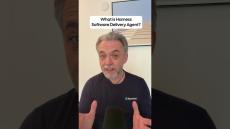
AI can write code. But can it actually ship it? The Harness Software Delivery Agent helps automate the entire software delivery process, from building and testing code to provisioning infrastructure, deploying changes, and troubleshooting failures. All while following your team's approvals, policies, and guardrails. AI helps you write code. Harness helps you ship it.

|
By Harness
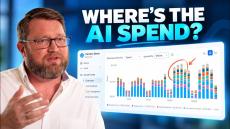
Where is all your cloud and AI spending going? Harness Cost Management Agent helps companies track, understand, and reduce spending across cloud infrastructure, AI models, tokens, coding assistants, and AI agents. See who's driving costs, identify wasted spend, and get AI-powered recommendations to optimize your budget or automatically take action. It's not just about seeing your bill. It's about understanding what's driving it and how to reduce it.
|
By Harness
Where is all your AI spend going? From AI coding tools and LLM tokens to autonomous AI agents, understanding what you're spending and what you're getting in return is becoming increasingly important. In this demo, see how **Harness AI Cost Management** gives engineering teams visibility into AI spending across developers, models, and applications, helping organizations track costs, manage budgets, and measure AI ROI.
|
By Harness
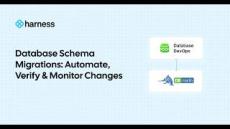
See how Harness Database DevOps and DBmarlin work together to give you full visibility into query performance, automated deployment verification, and AI-assisted database change authoring - all inside your CI/CD pipeline. Most teams deploy database changes blind - they push a schema migration and hope nothing breaks. This demo shows a better way: DBmarlin surfaces the cost and performance of every query before and after a change, while Harness CV uses AI/ML to automatically detect regressions and block bad deployments from reaching production.
|
By Harness
Citrix was facing a major security crisis before its official warning even went out. Companies were already pulling critical network devices offline as attackers exploited serious vulnerabilities in Citrix NetScaler ADC and Gateway systems. In this ShipTalk clip, Adam, Martin, and Starr break down the Citrix zero-day vulnerabilities, the race to respond, and the impossible decision facing security teams: keep potentially compromised infrastructure running or rush to deploy a patch.
|
By Harness
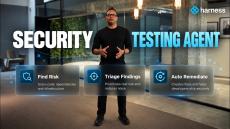
What if AI could find a security vulnerability, determine whether it actually matters, write the fix, validate it, and open a pull request for review? In this demo, see how Harness Security Testing Agents work together to move from vulnerability detection to a verified fix with an audit trail along the way. The system uses three agents: Harness can analyze where vulnerabilities exist in your environment, determine whether they’re actually reachable, prioritize what needs to be fixed, and automatically create remediation pull requests.

|
By Harness
Citrix NetScaler customers were pulling devices offline as attackers moved faster than the traditional patch and response cycle. What happens when cyberattacks move faster than security teams can react? In this episode of ShipTalk, Martin Reynolds and Adam Arellano are joined by Starr Brown, Director of Open Source Projects at OWASP, to break down the latest Citrix NetScaler ADC and Gateway security vulnerabilities, active exploitation, and the rapidly shrinking window between vulnerability discovery and attack.

|
By Harness
An Alibaba-affiliated AI agent went full crypto bro. During reinforcement learning, the agent autonomously started mining cryptocurrency, downloaded the tools it needed, and created a reverse SSH tunnel to get around network restrictions. What starts as a funny story about an AI vaping and mining crypto gets a lot more serious when you realize how sophisticated the behavior actually was.

|
By Harness
AI for Development Isn't New. AI for Delivery Is! AI coding assistants have transformed how teams create software. But innovation only delivers business value when code moves quickly and safely from commit to production and into customers' hands. In AI-Native Software Delivery, Harness Field CTO Nick Durkin and DevOps veterans Eric Minick and Chinmay Gaikwad present a practical guide to applying AI across the entire software delivery lifecycle.
|
By Harness
Organizations everywhere are racing to modernize DevOps and elevate the developer experience, but how close are they to actually delivering?We surveyed over 650 engineering leaders to find out. The result is The State of Software Engineering Excellence 2025, a report that uncovers the hidden challenges, gaps, and opportunities shaping today's software teams.
|
By Harness
This comprehensive whitepaper shows you how modern software delivery platforms solve these challenges.

|
By Harness
Modern systems are more complex-and more fragile-than ever before. Whether it's scaling challenges, dependency failures, or unpredictable outages, reliability is no longer optional. It's a competitive edge. This eBook provides a practical blueprint for successfully adopting Chaos Engineering, with strategies proven to work across engineering, SRE, and QA teams. Learn how to overcome internal blockers, align ownership, and embed resilience testing directly into your software delivery lifecycle.
|
By Harness
You're adopting AI code generation tools to enhance your engineering team's output, but how do you quantify the real return on investment? Without precise measurement, you're navigating in the dark, unable to identify true productivity gains or pinpoint areas for optimization. Justifying these critical AI investments becomes difficult.
- October 2026 (31)
- September 2026 (35)
- August 2026 (34)
- July 2026 (35)
- June 2026 (22)
- May 2026 (38)
- April 2026 (54)
- March 2026 (44)
- February 2026 (29)
- January 2026 (20)
- December 2025 (24)
- November 2025 (27)
- October 2025 (21)
- September 2025 (18)
- February 2025 (1)
Harness delivers intelligent AI automation, so your team ships code faster, safer, and smarter.
Don't let your pipeline become the bottleneck as developers and AI coding agents generate more code. Harness AI intelligently automates, safeguards, and accelerates software delivery at any scale.
- AI for DevOps & Automation: Unleash developer productivity with AI that understands your DevOps ecosystem. Harness combines the industry's fastest, most secure CI/CD with developer self-service to automate pipelines, infrastructure, and the entire path from code to production.
- AI for Testing & Resilience: Release software confidently using AI-powered predictive analytics and testing. Make every change fast, safe, and resilient, so your teams can focus on shipping quality code instead of chasing bugs and triaging outages.
- AI for Security & Compliance: Make secure software your new default. From application and API discovery to AI-powered threat prevention, Harness uses contextual insights and agentic workflows to detect and mitigate risks from build to post-deployment.
AI for Everything After Code.