Operations | Monitoring | ITSM | DevOps | Cloud

Automating Common Diagnostics for Kubernetes, Linux, and other Common Components

This is the second piece in a series about automated diagnostics, a common use case for the PagerDuty Process Automation portfolio. In the last piece, we talked about the basics around automated diagnostics and how teams can use the solution to reduce escalations to specialists and empower responders to take action faster. In this blog, we’re going to talk about some basic diagnostics examples for components that are most relevant to our users.

More Powerful than Ever: PagerDuty's Revamped Mobile App is Primed for Even Better Incident Response

2020 revolutionized how we work. Many went from full-time office work to 100% remote overnight. And now that in-office is once again on the horizon, companies are thinking of ways to continue to work flexibly. However, this comes with increased challenges, and a need for tools that match this working style. The PagerDuty mobile application is well recognized, with a 4.8 stars rating on the App Store and Google Play.

Why Operational Maturity Helps Businesses Reduce the Great Resignation Trend

The past few years have led to fundamental business and cultural shifts for both companies and employees. Covid-19 has brought opportunities for companies who invested early in digital operations, while others struggled to maintain the status quo. The latter gave rise to record employee burnout, and what is now commonly referred to as the Great Resignation.

Better Data for Public Health: How Nexleaf and PagerDuty are Monitoring Healthcare

Having a reliable power source is something many of us take for granted. It is particularly important for healthcare facilities to have a consistent, reliable power source to ensure that vulnerable patients – specifically those who rely on electricity to sustain their lives – are not disrupted. In rural Sub-Saharan Africa, however, it’s estimated that only about 28% of hospitals have reliable electricity.

What is Live Call Routing?

If there’s one essential thing we’ve learned from being in the business of digital operations for more than 13 years, it’s that every business has a unique approach to building resilience with its bespoke tech stacks and processes. Many PagerDuty customers around the world are starting to provide direct access to their on-call teams with Live Call Routing (LCR).

How to Standardize Service Ownership at Scale for Improved Incident Response

Service ownership is a DevOps best practice where team members take responsibility for supporting the software they deliver at every stage of the development lifecycle. This level of ownership brings development teams much closer to their customers, the business, and the value being delivered. Service owners are the subject matter experts (SMEs) for their services – and in a service ownership model, they are also responsible for responding to any production issues.

Summit Recap: How to adapt to a "Digital Everything" World

Every interaction with our customers, partners, and employees is special – but this year’s PagerDuty Summit went far beyond my wildest dreams. Together we committed to helping you learn and grow in how you manage business critical operations – in other words, getting you ready for anything in a world of Digital Everything.

Ready for Anything with the PagerDuty Operations Cloud

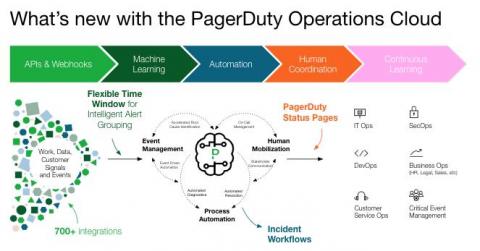
In a world of digital everything, teams face increasing complexity. Ever-growing dependencies across systems and processes put customer and employee experience, not to mention revenue, at risk. There is simply too much data to sift through and correlate for humans to understand what is important and know when something is going wrong.

A "Single Source of Truth": New Tools for Fast, Efficient Customer Service

Customer-facing teams have their hands full doing whatever they can to address customer issues quickly. At PagerDuty, our goal is to ease the burden of these teams by giving them the tools and access they need to deliver excellent customer experiences. Over the last year, we have deepened our integration with Salesforce Service Cloud, allowing users to work directly within the platform, reducing the need to context switch.