Operations | Monitoring | ITSM | DevOps | Cloud

Top tips to make Round Robin Scheduling successful for your team

You may have heard of Round Robin Scheduling before and thought to yourself, is this right for my team? Understanding how Round Robin Scheduling can be used and what teams it works best for is important when considering this method of on-call. Additionally, it comes with some pitfalls you’ll want to avoid, as well as best practices to adopt. In this blog post, we’ll share everything you need to know about Round Robin Scheduling within PagerDuty and how to get started.

What's New: Updates to Event Intelligence, On-Call Management, Automation, Mobile, and More!

We’re excited to announce a new set of updates and enhancements to the PagerDuty platform. Recent updates from the product team include On-Call Management, Event Intelligence, and Mobile Products, to PagerDuty Community & Advocacy Events.

Intelligent Service Design

Hello and welcome to the fourth post in our EI Architecture series focusing on Intelligent Alert Grouping. Previously we have talked about how to train Intelligent Alert Grouping using incident merges (here) and how to configure your alert titles to improve default matching. In this post, we’re going to cover how service design can also impact your experience with Intelligent Alert Grouping as well as the PagerDuty app in general.

Training Intelligent Alert Grouping

We’re continuing on with our third piece about how to utilize and improve your Intelligent Alert Grouping (IAG)! In case you missed it, the first two blog posts describe the feature (here) and explain how it uses merging to group alerts (here). We alluded to today’s post at the end of last: today we’ll be discussing how to use alert titles to improve IAG matches.

Using Event Orchestration to reduce noise and trigger next best action

We often hear from customers that they’re dealing with unmanageable levels of noise and complexity, which makes it harder to pinpoint root cause and get to resolution quickly. All this effort spent on sifting through noise, processing events, and gathering context results in a lot of wasted time. That’s why we’ve launched Event Orchestration, which became generally available to our Event Intelligence and Digital Operations customers on Monday.

Improve Incident Response by Getting Control of Your (Unintelligent) Swarm

Incidents happen. Things go wrong. Systems fail. Sometimes they fail in unexpected and dramatic ways that create Major Incidents. PagerDuty makes a very specific distinction between an incident and an Incident. Your organization may also make such a distinction. Determining if an incident is major or not can come down to a number of factors, or a specific combination of factors, like the number of services affected, the customer impact, and the duration of the incident.

Want to accelerate your organization's digital innovation in 2022? Here's three ways to do it.

After two years of sky-high spending on cloud and related technologies, 2022 is the crunch point for corporate IT and digital leaders. Investments in technology helped facilitate the rapid shift to mass hybrid working and supported businesses to embrace the digital-first models of the new normal. But beyond merely investments to support new working styles, leaders also must ensure their organization continues to innovate.

PagerDuty Named a Leader in the Latest G2 Grid for AIOps Platforms

At PagerDuty, we are committed to championing the customer — it’s a core company value. Our product has to provide great value, we have to provide excellent service, and we need to make it simple to do business with us. The Winter 2022 G2 Grid for AIOps Platforms Relationship Index showcases these values and highlights PagerDuty as a leading player in the AIOps space.

Equitably distribute on-call responsibility and streamline incident response with Round Robin Scheduling

PagerDuty is excited to introduce Round Robin Scheduling. Round Robin Scheduling allows teams to equitably distribute on-call shift responsibilities amongst team members. Automatically assigning new incidents across different users or on-call schedules on an escalation level ensures that teams are resolving incidents as efficiently as possible. And, by balancing the workload across multiple users, there’s less risk of burnout.

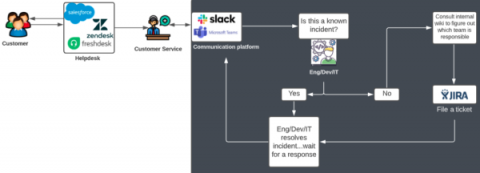
Intelligent Swarming vs. Tiered Support: How Customer Service Teams can use PagerDuty to Swarm Critical Issues

Most support organizations today adopt some form of the traditional tiered support model. It is one that is based on a process of escalations and customer handoffs. Under this model, customer issues get escalated through multiple levels of a support hierarchy, with three tiers being a common workflow.