Operations | Monitoring | ITSM | DevOps | Cloud

Data Warehouse vs. Database: Differences Explained

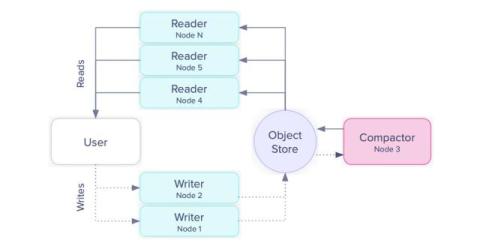
If you're new to working with data, you might have heard of databases and data warehouses. But do you know what sets them apart? Knowing the differences between data warehouses and databases can clear up a lot of confusion for many people, especially with the volume of data we have these days. In this blog post, I'll discuss the differences between these two types of data systems. I'll also provide some examples to help illustrate the points made.

Spark or Hadoop: the best choice for big data teams?

I always find the Olympics to be an unusual experience. I’m hardly an athletics fanatic, yet I can’t help but get swept up in the spirit of the competition. When the Olympics took place in Paris last summer, I suddenly began rooting for my country in sports I barely knew existed. I would spend random Thursday nights glued to the TV, cheering on athletes as they skillfully let fly arrows, disks, hammers and so on.

Complete Guide to Azure IoT Hub: Pricing, Features & More

Azure IoT Hub enables you to monitor on-prem devices down to the smallest temperature change and react accordingly from cloud device commands. But how does it work? What other features does Azure IoT have? And, most importantly, how much does it cost? Learn all you need to know about Azure IoT Hub from our expert guide.

How InfluxData Enhances Performance and Reliability in the Aerospace Industry

The stakes are high in Aerospace manufacturing and operations. Aerospace systems are highly complex and require extremely precise engineering—every part of an aircraft or spacecraft must work together flawlessly, and error tolerance is minuscule. Ensuring that all components work perfectly under various conditions (pressure, temperature, vibration) is vital. The cost of building and operating aerospace systems is enormous.

Step by Step Guide to Monitoring Apache Spark with MetricFire

Apache Spark is a powerful tool for processing and analyzing large datasets quickly, whether you're cleaning data for a report, running machine learning models, or analyzing real-time data streams. It's widely used for everything from building big data pipelines to crunching numbers for advanced analytics, thanks to its speed and ability to scale across clusters.

MySQL HeatWave: Real-Time Analytics and High-Performance Data Processing

MySQL is one of the world’s most favored database management systems, as it is powerful, open-source, and easy to configure. It is one of the common choices for startups as well as small and medium-sized business projects. However, as workloads grow and become more complex, the need for more robust solutions arises. Here, MySQL HeatWave stands out as a promising managed database platform for evolving challenges. This article will examine MySQL HeatWave, its features, capabilities, and use cases.

How Data Stack Modernization is Helping Kroo Bank Secure its Challenger Status

From the beginning, Kroo’s architecture was designed with future scalability in mind, using PostgreSQL as its database and Apache Kafka as the mechanism for message distribution. By embracing an asynchronous infrastructure, Kroo can also independently scale different parts of its system, improving efficiency and responsiveness. After securing its full UK banking license in 2022, Kroo launched its current account. In the next 12 months alone, it secured an impressive 150,000 customers.

Go Client Library for InfluxDB 3.0

In a world driven by data, efficient time series data management is a growing concern. APIs play a significant role in automating tasks, especially in cloud-based environments. Go, with its high performance and concurrency, is quickly becoming one of the standard languages for writing cloud infrastructure and utilities for managing streams of data.

The Growing Role of Data Science in Technology

Have you ever wondered how your favorite apps predict what you want to watch or buy? In today's world, data drives much of what we experience in technology. From smartphones to smart cities, data science shapes how tools, systems, and services are built and improved. As technology advances, data becomes even more critical in solving problems, improving efficiency, and enhancing user experiences. In this blog, we will share how data science plays a key role in shaping the technology of today and the future.