Operations | Monitoring | ITSM | DevOps | Cloud

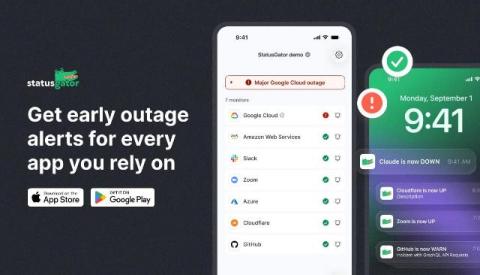
The StatusGator mobile app is here

We’re excited to launch the StatusGator mobile app for iOS and Android, designed to put outage alerts right in the palm of your hand. Your StatusGator status page is the central hub for your entire organization to view and understand the status of all your services. These pages have always been accessible on mobile. Now, with the dedicated app, end users of your status page can take the services they depend on with them and receive updates directly on their phones.

Top tips: Find the right answer in a sea of search results

Top tips is a weekly column where we highlight what's trending in the tech world and list practical ways to explore these trends. This week, we're looking at how to search the web more effectively and find the information you need faster. Searching the web can feel a little like playing hide-and-seek. You know what you're looking for is somewhere out there, but the internet has an impressive number of places to hide it.

Free vs. paid website monitoring: When should you upgrade?

Every growing business hits a moment of truth somewhere between "we just launched" and "we just lost a customer because our site was down for 40 minutes." It's then that you realize the free monitoring tool you set up six months ago—the one that felt more than adequate at the time—is no longer pulling its weight.

Why Autonomous Endpoint Management Depends on Trusted Data

Back to Basics: AEM Fundamentals | Part 1 of 5 The market is rushing toward autonomous endpoint management. But most of the conversation skips past the infrastructure and jumps straight to the outcomes. The market is loud, the promises are bold, and the buyers who got burned before are now the ones asking the hardest questions. They don't need another feature list. They need to know what's actually underneath the claims. IT teams have heard this story before.

PostgreSQL Schema Comparison & Sync With dbForge Studio for PostgreSQL

Compare PostgreSQL database schemas, review differences, and synchronize changes with dbForge Studio for PostgreSQL. See how Schema Compare helps you select source and target databases, configure comparison options, map schemas and tables, review object differences, generate a deployment script, and synchronize PostgreSQL environments. The workflow also supports PostgreSQL-related cloud databases and services such as Supabase and Amazon Redshift.

Building an AI-Powered Time Series Dashboard for Data Center Ops

AI demand is pushing data centers to get bigger, denser, and more distributed, while the data that runs them still often sits in different systems, slowing down operations and hampering efficiency. By leveraging a time series database like InfluxDB to create a single, unified telemetry layer, you can simplify your data stack, comfortably handle the high volume of data, and solve problems faster and more efficiently, helping to minimize waste and maximize efficiency, saving time, electricity, equipment, and money.

Why Security and Observability Must Work Together in 2026

Modern IT environments generate more data than ever. Every application request, user login, network connection, cloud workload and endpoint action produces signals that can help teams understand what is happening across the business. Yet having more data has not necessarily made organizations more secure, more reliable, or easier to operate.