Operations | Monitoring | ITSM | DevOps | Cloud

The latest News and Information on Cloud monitoring, security and related technologies.

The Cloud Monitoring Journey

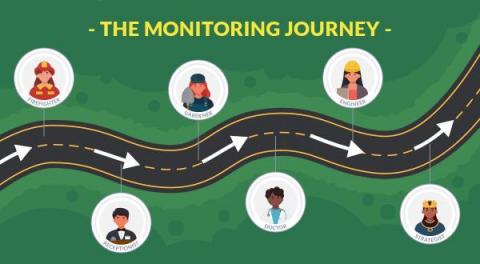
Monitoring is not a goal, but a path. Depending on the maturity of your project, it can be labeled in one of these six steps of the cloud monitoring journey. You will find best practices for all of them and examine what companies get from each one. From classic virtual machines to large Kubernetes clusters or even serverless architectures, companies have adopted the cloud as a mainstream way to provide their online services.

Deploy autoscaling self-hosted runners using AWS CDK

You can use CircleCI’s cloud resources to run your CI/CD jobs, but there may be times you want to run them on your infrastructure. If your team imposes privileged access and control requirements, a self-hosted infrastructure might be best for running your jobs. CircleCI’s self-hosted runners lets you do exactly that. It is easy to get started and start using self-hosted runners.

Simplify management across cloud platforms with OpenCP

Managing your clusters has become a complex and confusing task. With scattered tools and the requirement to learn specific tools from cloud providers, many companies have trouble making the most of the cloud. That's where OpenCP comes in. Join us as we explore the benefits of simplifying management across cloud platforms with OpenCP. We’ll dive into the benefits of using OpenCP, how it works, and how it is built on the best practices of kubectl and kubeapi.

Maximizing Uptime and Security: Best Practices for AWS and Azure IAAS

Cloud computing has become an essential tool for businesses looking to increase efficiency, reduce costs, and improve reliability. Among the most popular cloud providers, Amazon Web Services (AWS) and Microsoft Azure are two of the leading players in the industry. Both AWS and Azure offer Infrastructure as a Service (IaaS) solutions that allow businesses to host and manage virtual machines in the cloud.

Adopt open source securely from bare metal to cloud

It’s no secret that developers prefer to use open-source software in their projects. However, the Log4Shell attack or the more recent PyPl crypto miner packages have taught us that there are questions around how it should be managed. At Canonical we have been dealing with open-source security issues since the very first release of Ubuntu and way before the topic became number 1 on every CISO priority list. In this video, our team discusses how your company can manage these challenges and lay the software foundation of a successful cybersecurity program.

The Storage Supply Chain and Its Effect on Infrastructure Teams

For the past couple of years, no one has been able to escape the effects of supply chain problems throughout their personal and professional lives. According to our recent State of Hybrid Cloud Storage survey, storage and the IT equipment that supports storage systems were no exception, and disruptions created extra work and headaches for those teams.

4 Azure Load Balancer Metrics to Monitor

An Azure Load Balancer is a Layer-4 (TCP, UDP) load balancer that provides high availability by distributing incoming traffic among healthy VMs. A load balancer health probe monitors a given port on each VM and only distributes traffic to an operational VM. Azure Load Balancers are frequently used in Azure Virtual Desktop (AVD) deployments. From our work with Azure Load Balancer, we think there are 4 key metrics and events you should proactively monitor and alert on.

Why Unit Economics Helps You Commit To Discounting Programs

Is your enterprise still paying the sticker price for cloud services? If so, you’re probably leaving a significant amount of money on the table. Once your company surpasses the level of “large business” and begins growing into a full-fledged enterprise, it likely qualifies for enterprise discounts offered by each of the major cloud providers. The most well-known of these would be the Enterprise Discount Program (EDP) offered by Amazon Web Services (AWS).