Operations | Monitoring | ITSM | DevOps | Cloud

The latest News and Information on Containers, Kubernetes, Docker and related technologies.

AppOps - Defining a new category

Virtualization and cloud have forced the need for automation. In the “old” days, it would take weeks for a new physical server to arrive. There was little pressure to install and configure the operating system on it rapidly. We would insert a disc into the drive and then follow our checklist. A few days later, it would be ready to use. But the ability to spin up new virtual machines (VMs) in minutes required us to get better at automating this process.
Getting Started with Docker: A Tutorial

Docker containers have taken the software industry by storm. Ever since its launch in 2013, Docker’s usage and popularity have grown at a rapid pace. Docker has saved organizations from the challenges of managing dependency and version conflicts across multiple environments by providing a portable, secure, and (most importantly) reliable container technology for shipping applications.

Integrating Speedscale with Jenkins

Minimizing and automating the path from development and production is necessary in order to stay competitive and keep customers happy. As engineering teams strive to solve this by quickly and efficiently rolling out new features, updates, and bug fixes, continuous integration and deployment (CI/CD) has come to be regarded as an industry best practice. One of the most popular CI/CD solutions is Jenkins, an open-source job execution system.

Logging, Monitoring, and Debugging in Kubernetes

No matter what you’re using Kubernetes for, visibility into your applications’ performance and activity is a beneficial and often essential undertaking – essential, but colossal, requiring entire teams dedicated to nothing but maintaining deployments, auditing, debugging, and keeping up with compliance. Kubernetes has robust support documentation dedicated exclusively to assisting customers with Monitoring, Logging, and Debugging.

Hyperconverged Infrastructure and Harvester

Virtual machines (VMs) have transformed infrastructure deployment and management. VMs are so ubiquitous that I can’t think of a single instance where I deployed production code to a bare metal server in my many years as a professional software engineer. VMs provide secure, isolated environments hosting your choice of operating system while sharing the resources of the underlying server. This allows resources to be allocated more efficiently, reducing the cost of over-provisioned hardware.

How to Maximize the Performance of Your Kubernetes Deployment

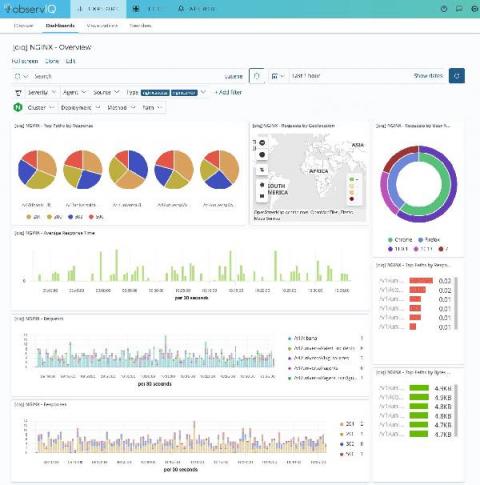
With Kubernetes emerging as a strong choice for container orchestration for many organizations, monitoring in Kubernetes environments is essential to application performance. Poor application/infrastructure performance impact in the era of cloud computing, as-a-service delivery models is more significant than ever. How many of us today have more than two rideshare apps or more than three food delivery apps?

GitOps with Argo and Crossplane - Civo Online Meetup #10

Join Viktor Farcic and Anais Urlichs in this meetup as we will explore Crossplane through the Civo Crossplane Provider. We will showcase how to create Civo Kubernetes clusters through the Civo Crossplane Provider, we will look at GitOps best practices to manage all of your resources in Kubernetes, and lastly we will provide an overview on how you can take GitOps deployments to the next level with ArgoCD.

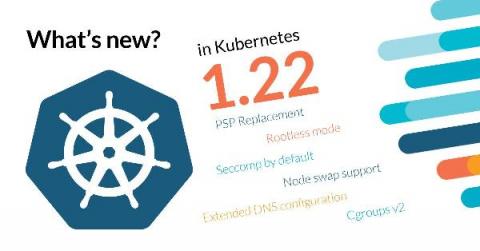
Kubernetes 1.22 - What's new?

This release brings 56 enhancements, an increase from 50 in Kubernetes 1.21 and 43 in Kubernetes 1.20. Of those 56 enhancements, 13 are graduating to Stable, a whopping 24 are existing features that keep improving, and 16 are completely new. It’s great to see so many new features focusing on security, like the replacement for the Pod Security Policies, a rootless mode, and enabling Seccomp by default. Also, watch out for all the deprecations and removals in this version!