Operations | Monitoring | ITSM | DevOps | Cloud

Multi-Agent Architectures - What we shipped, what broke, and what we'd do differently

At LLMday Lisbon, our Software Engineer, Viktor Vasylkovskyi, highlights the realities of building production AI agents with LangGraph - sometimes getting it right, often learning the hard way. This talk is about what was actually shipped, including a distributed multi-agent setup at PagerDuty. Viktor breaks down the real tradeoffs between LLM-driven and deterministic orchestration, what broke, and how he’d approach it differently now.

Why you should use Language Server Protocol (LSP) with Claude Code

Agentic coding tools like Claude Code can write, refactor, and debug across an entire codebase, but by default they read code as plain text, the way grep does. The Language Server Protocol (LSP) changes that: it’s the same code-intelligence layer an IDE uses, and wiring it into an agent lets it read code by meaning instead of by string match. The bigger the codebase, the more a wrong guess about a symbol costs, and the more that structural view pays off.

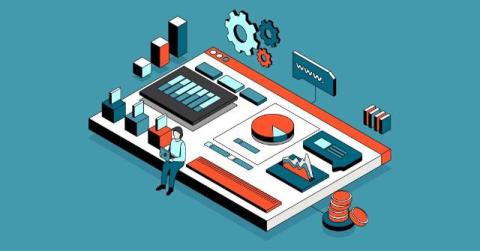
CloudZero Dimension Studio: A drag-and-drop UI at the foundation of AI ROI

The core of ROI is visibility. If you can clearly see … 1. What it costs to produce the thing you make, and 2. How much money it makes you … then calculating ROI is easy. But with AI, as with the cloud before it, getting that visibility is extremely challenging. Why? Because the cost data associated with each is inherently chaotic.

6 use cases for agentic AI in major IT incident management

Enterprise IT operations leaders are realizing that legacy incident management processes cannot keep pace with today’s sprawling, hybrid-cloud enterprise environments. Enterprise IT doesn’t look anything like it did even five years ago. Hybrid cloud architectures, distributed microservices, and increasingly rapid CI/CD cycles have increased the speed and complexity of IT operations by orders of magnitude, leaving ITOps teams struggling to keep up.

What Is an MCP Server for Infrastructure? How AI Agents Deploy Safely

An MCP server is the standardized bridge that lets AI agents like Claude Code and Cursor operate real infrastructure - deploy apps, provision databases, manage environments - through one governed API. Here's how MCP servers work for infrastructure, why they matter, and how to give agents production access without losing control. Romaric founded Qovery to make Kubernetes accessible to every engineering team. He writes about platform strategy, developer experience, and the future of cloud infrastructure.

How AI Shopping Assistants Are Turning E-Commerce Search Into an Operational Advantage

Conversational AI in retail crossed into production faster than most technology adoption cycles typically allow. What started as a novelty chat widget is now treated by operations and product teams as a core piece of the customer-facing stack, the case for that reclassification rests entirely on operational outcomes rather than interface aesthetics.

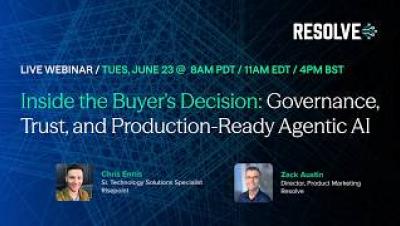
Inside the Buyer's Decision: Governance, Trust, and Production-Ready Agentic AI

Why do so many AI pilots succeed in testing but fail to reach production? In this webinar, Resolve and IT leaders from RisePoint explore one of the biggest challenges facing enterprise AI adoption today: trust. While organizations are investing heavily in AI agents and automation, many initiatives stall before deployment due to governance concerns, compliance requirements, risk management, and lack of operational visibility.

What is an AI software factory?

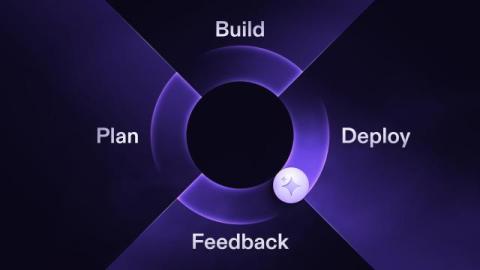
Ask a software engineer what they do and the answer, for years, has been some version of "I write code." That assumption is unwinding fast. AI agents can now write code, review pull requests, run tests, and ship to production, and they're taking on a fast-growing share of that work. As agents absorb more of the execution, the human role shifts.