Operations | Monitoring | ITSM | DevOps | Cloud

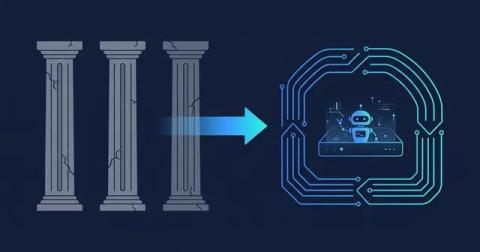
The Three Pillars Were Built for Humans

It was 2am and I was paying for the privilege. Something was on fire in production, and I’d done the modern thing: I pointed an AI agent at it. It ingested the dashboards. It read the logs. It walked the traces. Then it handed me back a beautifully formatted paragraph that said, in effect, “latency is elevated on the checkout path.” I knew that. The page told me that.

From a $28,000 AI Bill to $0.60 Per Ticket

Engineering teams are burning through AI budgets with nothing to show for it — $100M across 10,000 engineers and no cost per run, no cost per outcome, just a number that keeps climbing. When it runs dry, your infrastructure upgrade gets cut. Harness ties every AI token to the outcome it created: cost per run, cost per resolved ticket, and anomaly detection before the invoice hits. One customer went from a $28,000 black box bill to $0.60 per ticket.

The hard part of AI root cause analysis is no longer the model

Every few weeks someone tells me root cause analysis is a solved problem now: pipe your telemetry into an LLM, let it tell you what broke. I wish it were that easy. After years on this, I think "can AI do RCA?" is the wrong question, because doing RCA with an LLM is really two separate jobs, and the answer is different for each. They break in completely different ways, so it's worth pulling them apart.

Transform Endpoint Management with AIDriven Automation

In just two minutes, learn how our AI-powered platform unifies control across Windows, Mac, Linux, Mobile, and even VR/XR headsets. Discover how to eliminate tedious tasks with automated patching, zero-touch onboarding, and self-healing capabilities—allowing your team to focus on strategy instead of firefighting. What you’ll see in this video.

Autonomous Worker Agents: AI Agents in Your Pipelines | Harness Blog

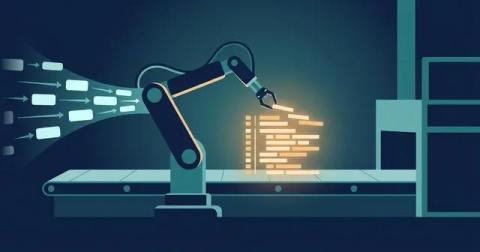
AI is writing more of the code. Software delivery, the work between writing code and running it in production, is where most of the day still goes. Building, testing, scanning, deploying, remediating, and operating still require the same, if not more, effort as before AI. Today, we're introducing Autonomous Worker Agents for software delivery: the platform for enterprises to build and safely run AI agents that handle the work between writing code and shipping it to production.

6 Ways to Use the Hyperping MCP Server

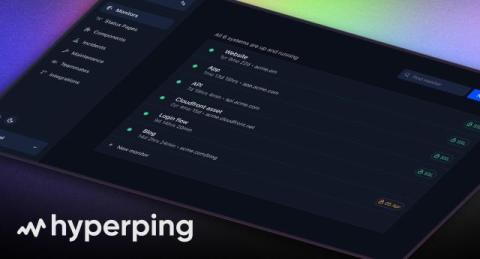
When something goes down, the last thing you want is to alt-tab between a monitoring dashboard, your on-call tool, and three Slack threads to figure out what is happening and who owns it. That context is usually all there. It is just scattered. The Hyperping MCP server fixes that by putting your monitoring data inside the AI tools you already work in. Your agent can read monitor state, outage timelines, SLAs, and on-call schedules, and answer the questions you would normally chase across tabs.

How IT Teams Can Cut AI Token Costs with Deterministic Workflows

In our previous post on AI tokenomics, we looked at the rising cost challenge behind token-based AI systems. When enterprise IT teams rely on AI to reason through the same repeatable work over and over again, the costs to resolve those tasks may increase to an unreasonable level. That is where a deterministic IT automation platform becomes essential. A deterministic workflow follows predefined logic, meaning that given the same inputs and conditions, it produces the same expected result.

Introducing Atatus MCP Server: Connect AI Agents to Your Observability Data

AI coding assistants like Claude, Cursor, Codex, GitHub Copilot have become standard tools in the modern engineering workflow. Developers use them to write code, generate tests, and review pull requests. But when something breaks in production, these assistants hit a wall: they have no access to your actual system state. They can reason about logs, traces, and metrics. They just can't see yours.

AI ROI Dispatches: How a non-engineer solved a $300K problem for under $1K

A year ago, the sentence “I just deployed an app on GitHub” wouldn’t have made sense coming from me. I’m the VP of People at CloudZero; code deployments and I were not close friends. That’s changed. In this AI era, non-engineers are building, and I think that’s a genuinely good thing. But only if it’s tied to something that matters.

Shipped: LiteLLM is probably under-counting your Claude spend

If you run Claude through LiteLLM, some of that spend is probably going uncounted – and you can’t see it, precisely because the data isn’t there. Routing through a gateway is messier than it looks: LiteLLM alone can carry Claude several ways – the OpenAI-compatible endpoint, and the Anthropic pass-through proxy that the native SDK and Claude Code use – and each path describes the same call differently.

What Customers Are Doing With AI and Honeycomb

At O11yCon, we talked to engineering teams across the industry, and the numbers are starting to get genuinely wild: Mixpanel DevOps Engineer Eddie Bracho told us their engineering team is generating 50% more PRs than before AI came into the mix (sorry). That kind of velocity is exciting, but it's also a pressure test for every part of your stack that isn't writing code, including your observability practice. Here's what we're hearing from customers about how that's playing out.

5 pitfalls to avoid when measuring DevEx in the AI era

Developer experience, commonly known as DevEx, describes how an organization’s systems, workflows, tools, and culture affect developer productivity. A positive DevEx leads to tangible organizational benefits, including faster releases, increased innovation, and reduced technical debt. Measuring DevEx enables engineering management to quantify their team’s impact and understand where to direct improvement efforts.

Debug and evaluate your AI app from your coding agent with Datadog Agent Observability

Coding agents like Claude Code, Cursor, and Codex CLI handle the coding parts of building an AI application well. The harder work comes after: understanding why a response went wrong, building eval sets that reflect real production behavior, and keeping up with an application that changes faster than any one-off script can. Teams spend 60–80% of their time on evaluation and error analysis, and much of that work needs to be redone every time the stack shifts.

Building an AI Ready Data Backbone: Dima Kan at AICamp 2026

The Aiven Platform is more than a collection of open source services for streaming, storing and analyzing data. The platform ensures that all services run reliably and securely in the clouds of your choice, are observable, and can easily be integrated with each other and with external 3rd party tools.

The Journey to Achieving Hyperscale Availability with AI-Driven Prediction

At hyperscale, a regional cloud outage is not merely a technical disruption—for Samsung Account, which serves 2.1 billion users across three global regions, it is an immediate global service crisis. Fragmented, region-siloed monitoring creates blind spots that make early detection nearly impossible, leaving SRE teams perpetually reactive rather than predictive. The path to proactive reliability requires both a philosophical shift and a foundational change in how observability data is collected, unified, and reasoned over.
Sponsored Post

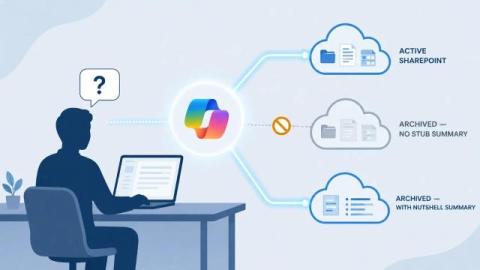
From Dashboards to Conversational AI: The Evolution of UI in IT Products

The way IT teams interact with technology has changed dramatically over the years. From early text-based interfaces to today's dashboards and now conversational AI, each stage has reshaped how we monitor, diagnose, and understand complex IT environments. But while dashboards gave us visibility, they often led to more questions than answers. In this post, we briefly explore the evolution of UI in IT products and how conversational AI is bridging the gap between data and understanding.

Which Bugs AI Agents Fix Better With Traffic

In the first experiment, I wanted a baseline: if an AI coding agent gets the same production signal a human would get, can it fix bugs in a codebase it has never seen? Yes, but only when I gave it better context. With only an alert, the agent passed 51% of the runtime tests. When I added captured traffic, the actual request and response for the failing call, it climbed to 77%. This post is the second pass.

Instrumenting AI Agents for the Agent Timeline: A Practical OpenTelemetry Guide

AI agents are nondeterministic, multi-step, and opaque. When one fails in production, "the model said something weird" is the cheapest, most useless line in your incident postmortem. To debug agents the way they actually run, you need telemetry that captures all of it, in order, with enough context to reconstruct what happened. The OpenTelemetry GenAI Semantic Conventions give you a vendor-neutral way to do exactly that.

Why Observability Isn't Enough for AI Coding Agents

Observability platforms collect pre-instrumented logs, metrics, and distributed traces to monitor production systems and surface failures to human engineers. The adoption of AI into engineering has led observability providers to offer those same signals to agents. This is often packaged as AI observability, but the signals themselves were designed around a human investigation loop. AI coding agents work faster, consume data differently, and need feedback as they work rather than after deployment.

AI Is Not a Switch: The Real Path to AI-First Operations

Organizations are no longer asking whether to adopt AI; that question is settled. The focus now is on reaching a point where AI is doing meaningful operational work—or as the industry calls it, being “AI-first.” But being “AI-first” isn’t binary. You don’t go from zero AI to meaningful autonomy by flipping a switch. In reality, getting there means moving through distinct stages.

CI Can't Keep Up With AI | Blacksmith CEO & Co-Founder Aditya Jayaprakash

AI coding agents are writing software faster than ever. But what happens when the systems responsible for testing and validating that code can't keep up? In this episode of Uplink, Michael Reid sits down with Aditya "JP" Jayaprakash, Co-founder & CEO of Blacksmith, to explore why continuous integration (CI) has become one of the biggest bottlenecks in modern software development.

Sentry + Github Copilot Agents

Seer, Sentry's AI debugger, analyzes your issues and finds the root cause. Now you can pass that analysis directly to a GitHub Copilot agent which picks up the context, generates a fix, and opens a pull request. The agent session and PR both live on GitHub, with a link back in Sentry for easy access. This video walks through how the integration works and how to set it up in just a couple steps.

What Is Agentic Observability? The Complete Guide for Enterprise Engineering Teams

TL;DR Agentic observability uses AI agents to autonomously investigate incidents, identify root causes, and take action in production environments. Unlike traditional monitoring (which alerts and waits) or AIOps (which assists human analysis), agentic platforms conduct the investigation themselves. Key capabilities include autonomous incident triage, evidence-backed root cause analysis, alert noise reduction, and governed remediation.

The Return on Your Databricks Investment Lives in What You Run on It

Databricks built the most capable AI platform the enterprise has ever seen at Data and AI Summit 2026. The data on who actually earns a return from it tells a more sobering story. Here is what changed at the summit, and what it means for leaders already on the platform. Ten minutes into the Data + AI Summit 2026 keynote, Ali Ghodsi, CEO of Databricks, said something most enterprise leaders were not prepared to hear: AGI is already here.

Mission-Critical Data Orchestration with Agentic AI | Automated SFTP, DataOps & Workflow Automation

How do you automate mission-critical data pipelines without risking downtime? In this Resolve Reels episode, see how Resolve's Agentic Automation Platform enables DataOps teams to build resilient, end-to-end workflows that automate secure SFTP transfers, preflight system validation, database operations, exception handling, intelligent retries, and self-healing remediation.

Never Touch Another IT Ticket Again | AI That Resolves IT Issues Automatically

What if your IT team never had to touch another password reset, VPN issue, or software request? This hilarious commercial imagines a world where IT tickets resolve themselves. See how agentic AI automates password resets, access requests, VPN troubleshooting, software installs, and more, so your service desk can focus on higher-value work instead of repetitive tickets. Resolve's AI-powered platform helps enterprises reduce ticket volume, improve first contact resolution, lower ITSM costs, and move toward Zero Ticket IT with autonomous resolution.

What if AI could resolve your IT tickets before they're ever created?

Watch how agentic AI automates password resets, VPN troubleshooting, access requests, software installations, and other repetitive IT service desk tasks without human intervention. Resolve helps enterprises reduce ticket volume, lower ITSM costs, improve employee experience, and move toward Zero Ticket IT. If you're researching AI for IT support, ServiceNow automation, ITSM automation, autonomous IT operations, or AI service desk solutions, this Short shows what's possible.

How Agentic AI Enables Autonomous Threat Response at Machine Speed

Why do 40% of alerts received by security teams today go completely uninvestigated? It’s not due to a lack of concern but instead caused by shortening attack windows and compounded by overwhelming tech sprawl. Today’s security teams are operating in a threat landscape defined by escalating attacks, tighter budgets and mounting alert fatigue. Organizations process an average of 960 security alerts per day, and large enterprises handle more than 3,000 daily alerts across roughly 30 tools.

Your AI isn't underperforming. Your data foundation is.

New research reveals why Australian businesses are entering the new financial year with bigger AI budgets and the same unsolved problem. One in three Australian businesses exceeded their AI budget last year. Yet, half of them plan to increase AI spending again this year. Yet the behaviour that caused those budget overruns remains largely unaddressed.

Bus Lanes and Loading Zones in US Cities: A Continuity Problem, Not Just an Enforcement One

Most bus lanes and loading zones stay blocked not because enforcement is too lenient, but because it only exists in the moments someone happens to be watching. Councils tend to read this as a compliance problem that more citations will eventually fix. Recent enforcement data points to something else. The curb is not ignored. It is watched intermittently, and violations cluster in exactly the hours nobody is looking.

Best AI Store Builders for Shopify in 2026

Most entrepreneurs underestimate how fast AI Store Builders have changed what's possible for first-time store owners. You no longer need a developer, a designer, or weeks of setup time to launch something that looks professional. The challenge now is picking the right platform, because not all of them handle product descriptions, niche targeting, or Shopify-specific setup with the same depth. After reviewing the top options across features, merchant feedback, and real-world results, this guide breaks down the five best picks for 2026.

Teach Your AI Coding Agent to Answer Production Questions | Lightrun Ask Prod AI Skill

Lightrun's Gidi Freud demonstrates Ask Prod, the latest Lightrun AI Skill that teaches AI coding agents how to use Lightrun to answer production questions with live runtime evidence. Watch Codex use the skill to discover runtime sources, collect focused runtime data, adapt its investigation, and return an evidence-backed answer. Compatible with Claude Code, Cursor, GitHub Copilot, and other AI coding agents through the Lightrun MCP.

Language AI to physical AI explained

What is physical AI? Physical AI embeds machine learning directly into hardware, enabling algorithms to interact, move, and perform autonomous tasks in the physical world. Traditionally, robots relied on precise, hardcoded coordinates; if an object shifted by a single millimeter, the entire system failed. Today, robotics is moving past rigid automation toward truly adaptive architecture. Neural networks help machines process raw sensor data in real time. Consequently, machines can dynamically reason through the unpredictable physical world.

Ship Reliable AI Faster: How to Operate AI Agents with Control and Confidence

Replace "AI shipped on hope" with an operating model that holds up once real users depend on it. AI quality is multi-dimensional, covering accuracy, tone, safety, and faithfulness to user data, and can't be debugged from outputs alone. Without visibility into what their AI actually did in production, teams miss regressions, reverse-engineer chains by hand, and watch a single bad answer erode trust built over hundreds of right ones.

The AI vendors just started watching the meter. CFOs need to watch the return.

On June 18, OpenAI gave ChatGPT Enterprise admins new credit usage analytics and spend controls. It’s a single view of credit consumption broken down by user, product, and model, default workspace budgets, per-group limits, and a Cost API for pulling the data into their own systems. Two days earlier, Microsoft shipped Copilot Cowork with spending limits, budget allocation, usage alerts, and user-level caps. This is a step in the right direction.

Ivanti Agentic AI for ITSM

Meet your digital teammate. Persona-based AI agent designed for critical ITSM workflows. Transform IT operations with AI agents that plan, coordinate, and execute autonomously, delivering measurable business impact through intelligent automation. Your conversational front door to IT that replaces forms with natural language, cutting ticket load and improving data quality through guided capture.

The AI Engineering Playbook: How to Evaluate & Iterate at Every Phase of Development

AI coding tools are accelerating development velocity, creating a release challenge most teams aren’t equipped for. Without controlled rollout, higher change velocity makes it harder to know which specific release drove the results you’re seeing in production. And when teams use AI, to build AI – LLM apps and AI agents– complexity multiplies. Traditional observability can’t ensure AI agent quality, performance, and cost-efficiency at production scale.

Seedance 2.5: Cinematic AI Storytelling

In the rapidly expanding digital economy, the ability to produce high-quality video content at scale has become the primary competitive advantage for e-commerce brands, self-media creators, and digital production studios. As audience attention spans continue to shrink, the necessity for high-fidelity, emotionally resonant, and visually consistent video content has reached an all-time high. This is where Seedance 2.5 enters the picture, representing a significant leap forward in generative AI video technology.

How AI is changing platform engineering

AI is changing software development fast. But what does that actually mean for platform engineering teams? In this conversation, Civo's John Dietz and M R Rishi dig into what they're seeing on the ground, the 10x effect of AI on app count, what it means for platform team workloads, the debugging skills that are quietly being lost, and whether Kubernetes itself might eventually become just another abstraction.

Where did all my Claude Code tokens go?

Most teams judge their AI coding agent on two things: the monthly bill and a feeling. The bill tells you what you spent and the feeling tells you whether it seems to be helping, but neither one tells you what the agent actually did. As these tools move into the critical path of how software ships, that gap is starting to matter. I wanted to replace the feeling with something I could measure and understand what shapes of work affects this bill, so I decided to run an experiment on myself.

The debugging crisis nobody's talking about: AI, abstraction, and the skills gap

Here's a scenario that's playing out in engineering teams across the industry right now. A developer uses AI to rapidly prototype a microservice. The code works. They deploy it to production. Six months later, something breaks. The system is under load, a database connection pools, and the service starts failing in subtle ways. The engineer pulls up the code, but here's the problem, they didn't write it. An AI assistant did. They don't understand the flow deeply. They don't know where to look first.

Overview of AI Evaluation (The Context Window #05)

Can you actually trust an AI agent? In this pre-recorded episode of The Context Window, Nicole van der Hoeven sits down with Yas Ekinci, an engineer on the Grafana AI team, to talk about evals — how Grafana measures the quality and reliability of the AI it ships. They get into the difference between online and offline evals, why reviewing AI-generated code has become the real bottleneck, the "final answer problem" of plausible-but-wrong outputs, and o11y-bench, Grafana's open benchmark for observability agents. Along the way.

How AI-First Operations Unlocks Compounding Engineering Productivity

Engineering teams have plenty of ideas, but they’re often short on time to act on them. As software systems grow more complex, an increasing share of engineering capacity is consumed by non-building activities: investigating alerts, coordinating fixes, and managing operational incidents. Every hour spent diagnosing failures is an hour not spent shipping features or experimenting with new product ideas. Over time, that lost capacity compounds.

Creating an agentic feedback loop with reliability guardrails

Reliability guardrails help make sure that your applications stay reliable without slowing down. In an earlier blog, we went into why agentic AI development needs reliability guardrails. It went over how the increased speed of AI development demands automated guardrails to verify resilience and what kinds of tests these guardrails should cover. But that’s only the beginning. By themselves, guardrails act as a gate to ensure resilience mechanisms hold under rapid changes.

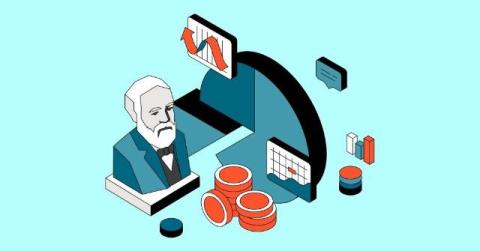
The secret behind Carnegie's fortune and the lesson for the AI era

Point A: 1835. Andrew Carnegie is born in a weaver’s cottage in Dunfermline, Scotland. The cottage has one main room, which the Carnegies share with another family. Point B: 1901. Andrew Carnegie becomes the richest man in the world when Carnegie Steel Company wins the Iron vs. Steel industrialists’ war, and he sells the company to J.P. Morgan for the modern equivalent of $450 billion.

Azure FinOps with AI: What's New in Turbo360 v5.2

Turbo360 v5.2 is the biggest AI update we've shipped. Every module now has AI built in - not just to surface data, but to explain it, guide you through it, and help non-experts take action without needing to call in a specialist. In this video, Mike Stephenson walks through every new feature in v5.2, from AI agents that explain cost drivers and rightsizing recommendations, to a brand new Savings Tracker that gives you a better way to prove FinOps impact to management.

How AI Scribe Medical Tools Improve Healthcare Efficiency

Healthcare workers spend a huge part of their day on paperwork instead of patients. Doctors often joke that they trained for years to practice medicine, only to spend half their time typing notes into a computer. This is exactly the problem that AI scribe medical tools are designed to solve.

Achieving sovereign and secure AIOps with Ollama and OpManager

Enterprise IT networks power business operations across the world. As businesses scale to catch up with an increasingly-demanding user base, networks also grow more complex. IT teams managing these networks have to monitor more data than before, under more stringent SLA terms, with little room for failure. Trying to do this manually across thousands of devices can take a lot of time and effort, and are prone to errors.

New in Kubex: KAI Scheduler Integration for Shared GPU Inference

Today, we’re launching Kubex support for the KAI Scheduler and automated GPU sharing for inference workloads. As AI inference moves into production, platform teams are being asked to serve more models, support more teams, and control GPU costs at the same time. But many inference workloads do not need an entire GPU all the time. When teams reserve full GPUs or oversized GPU fractions to stay safe, expensive capacity can sit idle across the cluster.

Multi-Agent Architectures - What we shipped, what broke, and what we'd do differently

At LLMday Lisbon, our Software Engineer, Viktor Vasylkovskyi, highlights the realities of building production AI agents with LangGraph - sometimes getting it right, often learning the hard way. This talk is about what was actually shipped, including a distributed multi-agent setup at PagerDuty. Viktor breaks down the real tradeoffs between LLM-driven and deterministic orchestration, what broke, and how he’d approach it differently now.

Why you should use Language Server Protocol (LSP) with Claude Code

Agentic coding tools like Claude Code can write, refactor, and debug across an entire codebase, but by default they read code as plain text, the way grep does. The Language Server Protocol (LSP) changes that: it’s the same code-intelligence layer an IDE uses, and wiring it into an agent lets it read code by meaning instead of by string match. The bigger the codebase, the more a wrong guess about a symbol costs, and the more that structural view pays off.

CloudZero Dimension Studio: A drag-and-drop UI at the foundation of AI ROI

The core of ROI is visibility. If you can clearly see … 1. What it costs to produce the thing you make, and 2. How much money it makes you … then calculating ROI is easy. But with AI, as with the cloud before it, getting that visibility is extremely challenging. Why? Because the cost data associated with each is inherently chaotic.

6 use cases for agentic AI in major IT incident management

Enterprise IT operations leaders are realizing that legacy incident management processes cannot keep pace with today’s sprawling, hybrid-cloud enterprise environments. Enterprise IT doesn’t look anything like it did even five years ago. Hybrid cloud architectures, distributed microservices, and increasingly rapid CI/CD cycles have increased the speed and complexity of IT operations by orders of magnitude, leaving ITOps teams struggling to keep up.

How AI Shopping Assistants Are Turning E-Commerce Search Into an Operational Advantage

Conversational AI in retail crossed into production faster than most technology adoption cycles typically allow. What started as a novelty chat widget is now treated by operations and product teams as a core piece of the customer-facing stack, the case for that reclassification rests entirely on operational outcomes rather than interface aesthetics.

Inside the Buyer's Decision: Governance, Trust, and Production-Ready Agentic AI

Why do so many AI pilots succeed in testing but fail to reach production? In this webinar, Resolve and IT leaders from RisePoint explore one of the biggest challenges facing enterprise AI adoption today: trust. While organizations are investing heavily in AI agents and automation, many initiatives stall before deployment due to governance concerns, compliance requirements, risk management, and lack of operational visibility.

What is an AI software factory?

Ask a software engineer what they do and the answer, for years, has been some version of "I write code." That assumption is unwinding fast. AI agents can now write code, review pull requests, run tests, and ship to production, and they're taking on a fast-growing share of that work. As agents absorb more of the execution, the human role shifts.

The New Software Creator: Why AI Changes the Governance Problem, Not Just the Speed Problem

The conversation about AI and software development has mostly been about velocity. Developers write code faster. Pull requests ship sooner. Backlogs shrink. That part is real, and it matters. But there's a bigger shift happening underneath it, and most engineering leaders I talk to are only just starting to feel its weight. AI hasn't just made developers faster. It has fundamentally expanded who can create and ship software. That changes things in ways that velocity metrics don't capture.

Why we built relaxAI, and where your AI data actually goes

Sandboxing your AI agent is only half the story. The other half is where your data goes when it hits your LLM provider's API. In this clip from our secure execution agents webinar, Ben Norris, founding engineer at relaxAI, explains why the sovereignty of your AI provider matters just as much as the security of your agent's environment and why relaxAI was built on a sovereignty-first principle, with inference running exclusively in the UK and no foreign data transfer.

Escaping the AI Tokenomics Trap in Enterprise IT

AI adoption has accelerated faster than most organizations expected. What started with chatbots has quickly evolved into AI systems capable of making decisions across enterprise environments, with the promise of faster service and more efficient teams. But many organizations are discovering an unexpected challenge: as AI usage expands, costs become harder to predict. Most AI platforms operate on token-based pricing models.

Introducing Upsun Dispatch

AI has made writing code fast, and you can feel it. Commits are up, pull requests are up, new repos spin up over a weekend, and your engineers swear they are faster. But where are all the new products? If every team really got faster, the software you use every day should be getting visibly better. AI helped your engineers ship more code. It didn't help your team ship more products.

Stop Treating Coding Agent Plugins Like Settings: Introducing Agent Plugins Repositories

Your developers install agent plugins every day: pulling from unmanaged GitHub repos, copying Cursor commands out of Slack, pointing Codex at a personal Git fork. Each of those is a new, uncontrolled distribution channel inside your software development lifecycle, and your platform team has zero visibility into any of it. A plugin is not a preference file. It is executable software, and right now it’s arriving on developer machines with no versioning, no provenance, and no audit trail.

Stop Token Maxing The Future of Al Budget Management

The era of token maxing is over. When Claude Fable 5 launched last week at $10/$50 per million tokens - double the price of Opus 4.8 - it was a clear reminder that the most powerful model isn't always the right model. Not every task needs the Ferrari. The fastest way to burn your Al budget is sending every request to the most expensive model by default. The real question for the next phase of Al cost management isn't "can this model do the job?" — it's "is it the right model for the job?".

Anthropic Holds Safety Talks With U.S. Officials Following Mythos Launch

Advanced AI systems now present a new threat for governments seeking to protect their national security interests, and Claude Mythos, Anthropic's latest high-capability model, has reportedly drawn increased attention from U.S. officials. The White House is currently working to establish a safety agreement with the company, which would help address technology-related safety risks, according to reports from Reuters, Axios, and other news outlets.

Who's in Charge? The 4 Key Pillars of AI Governance in 2026

You hire an astute, hard-working, fresh graduate to run things for you. You hand them the keys to everything in your company; that includes every system, every endpoint, every file, and every password, all of it. Your only instruction to them? "Go ahead and improve things!" Then, trusting in their competence, you leave them to it. Doesn't that sound like a recipe for disaster? Yet that's precisely what's happening in IT departments across the world.

An introduction to Zebra's AI for the Frontline | Zebra

Zebra Technologies is at the forefront of AI innovation for frontline workers. In this video Daniel Park discusses how Zebra is integrating AI across devices and tools to guide employees to the "next best action" within their workflows, improving real-time efficiency and decision-making on the frontline. We explore how our brand-new fleet of mobile computers—including the TC501 and TC701—are designed from the ground up for on-device AI. Equipped with advanced memory and dedicated Neural Processing Units (NPUs), these devices process data locally at lightning-fast speeds.

Zebra AI for the Frontline: Core Components | Zebra

Zebra Technologies is at the forefront of edge artificial intelligence, built specifically to empower those on the frontline. In this video, we break down the three core components of Zebra's Frontline AI solution and explore how they accelerate development, streamline specific workflows, and assist workers in real time. We examine the three pillars of our AI architecture.

Governing AI Agents at Runtime: Open Source Zero-Trust with AGT | Ubuntu Summit 26.04

AI agents are moving from demos to production – but who governs what they do at runtime? The Agent Governance Toolkit (AGT) is an open source, MIT-licensed framework from Microsoft that enforces deterministic policy before every tool call, message, and action an agent takes. In this talk, Imran walks through how AGT brings zero-trust identity, policy-as-code, tamper-evident Merkle audit chains, and a Kubernetes sidecar model to any AI agent, regardless of framework.

The AI bill arrived. Now what?

There was a time when “Opus” meant a classical composition and “Sonnet” was fourteen lines of Shakespeare you definitely did not read before the test. Now they’re model tiers, and every new release rewrites the economics of your engineering org whether you’re ready or not. Currently, your monthly total hides the crucial information you need to control and justify AI spend.

How Coding Agents are Changing the Traditional Software Development Lifecycle

AI coding assistants are rapidly evolving from passive copilots into active, agentic collaborators capable of planning, executing, and iterating on complex software tasks. This shift has huge ramifications onthe software development lifecycle (SDLC), developer productivity, and even the structure of engineering teams.

Progressing AI Beyond Scaling and Into Deep Reasoning

The breakthroughs in AI today aren’t just coming from bigger datasets and more compute; Reinforcement Learning (RL) has quietly become one of the most powerful forces in modern AI development. RL is teaching models to reason and self-correct, enabling capabilities that make AGI feel less like science fiction and more like an inevitable future.

How to track business expenses in 2026: methods, tools, and AI spend

How to track expenses for a business: categorize expense types (operating, software, cloud, travel, capital), choose a tracking method (spreadsheet, accounting software, expense management tool, or cost intelligence platform), connect data sources (bank feeds, cloud billing APIs, SaaS invoices), assign ownership per cost center, set a reporting schedule, and audit quarterly.

How AI Is Transforming Production Issue Investigation for Modern DevOps Teams?

Production failures don't announce themselves cleanly. They arrive at 2 AM, buried inside 40 million log lines, spread across a dozen microservices, and disguised as something that looks entirely unrelated to the actual root cause. For years, engineering teams absorbed this pain through process: runbooks, on-call rotations, dashboards, and a deep institutional knowledge that lived in the heads of their most senior engineers.

AI Coding Security Risks Demand Dependency Firewalls | Harness Blog

AI coding assistants accelerate development but can rapidly introduce vulnerable, malicious, or non-compliant open-source dependencies into your codebase. Harness Artifact Registry's Dependency Firewall acts as a registry-level control point, evaluating and blocking risky external packages before they enter your CI/CD pipeline—essential protection against modern npm-style supply chain attacks.

7 Ways Digital Protection Services Are Safeguarding High-Risk Individuals in 2026

In today's hyper-connected world, personal security no longer begins and ends with physical protection. For executives, entrepreneurs, public figures, journalists, activists, and other high-risk individuals, digital threats have become just as significant as real-world risks. A single exposed piece of personal information can open the door to identity theft, financial fraud, online harassment, reputational damage, or even physical safety concerns.

Which AI-Powered Observability Tools Accelerate Root Cause Analysis (RCA)?

TL;DR Choosing the right AI-powered observability platform isn’t about who has the most AI features. It’s about which platform helps your team identify root causes faster and spend less time investigating incidents. Here’s the short version: Logz.io + OrionIQ: Autonomous AI agents investigate incidents, perform root cause analysis, and surface next steps. Open standards, Kubernetes-ready, and deploys in as little as a week.

How to build sustainable AI infrastructure on GPU cloud

AI's environmental cost is real, and it's growing. Training a large language model can consume the electricity of hundreds of households for weeks. Inference at production scale runs continuously, with GPU clusters drawing power around the clock. The data centers that house all of this are some of the most concentrated energy consumers in the modern technology stack.

Stop Managing Endpoints: The Power of AI Automation

In just two minutes, learn how our AI-powered platform unifies control across Windows, Mac, Linux, Mobile, and even VR/XR headsets. Discover how to eliminate tedious tasks with automated patching, zero-touch onboarding, and self-healing capabilities—allowing your team to focus on strategy instead of firefighting. What you’ll see in this video.

How AI-Powered Monitoring is Transforming IT Operations

Every monitoring vendor on the market now has an AI story. AIOps has moved from category buzzword to standard line-item in IT operations strategy, and the reasoning is sound: as infrastructure spreads across cloud, hybrid, microservices, and virtualized platforms, the volume and velocity of operational data has outrun what human teams can process. AI-powered monitoring is the obvious answer.

How to build a secure AI agent sandbox with relaxAI and Claude Code

AI agents are powerful. They're also unpredictable, non-deterministic, and capable of doing things you didn't ask them to do, as the Rome Alibaba and Claude Mythos case studies make very clear. The answer isn't to avoid agentic AI. It's to run it properly. In this demo, Ben Norris, founding engineer at relaxAI, shows how to build a fully sandboxed AI agent environment from scratch, an ephemeral Civo VM provisioned via Terraform and GitHub Actions, locked down with egress policies, an unprivileged Linux user, and hard resource caps, running a Claude Code session pointed at the relaxAI API.

Observability for a Privacy-first AI Wearable | Grafana Everywhere

Trust is everything when AI gets personal. Golden Grot Award winner and NeoSapien co-founder and CEO Dhananjay Yadav shares how his team uses Grafana Assistant to ensure the privacy-first AI wearable delivers a seamless, reliable experience without compromising its mission. Because when AI moves closer to our everyday lives, teams need to know what’s happening — and users need to trust that it’s working as intended.

Klaudia Under the Hood: How We Built an AI SRE That Actually Earns Trust

In reliability engineering, being ‘mostly right’ is a liability. An AI SRE that sometimes misses the root cause or gives a confident, wrong answer at 2:17 AM has no place in an enterprise cloud environment. In this context, silence is better than noise. That’s the bar Klaudia is built to clear: genuine reliability that you can trust in production. The kind of reliability that earns a place alongside your best engineers. Getting there requires more than just a capable model.

Working as a remote engineer at Cribl | Building the AI Platform for Telemetry

Learn what it’s like to work as an engineer at Cribl, a remote-first company building the AI platform for IT and security data. In this recruiting video, Cribl’s engineering and support leaders share how fully distributed teams collaborate, solve hard data problems, and grow their careers while working from around the world. You’ll hear from managers and leaders in site reliability engineering, security incubation, and technical support about.

Chunk sidecars: Inner Loop Validation for AI Coding Agents

Your agent writes code fast, but you shouldn't have to see it until it's right. Chunk sidecars are lightweight microVMs that work inside the agent loop, requiring agents to pass pre-push validation in a CI-like environment before they declare they're "done." That means no massive CI pile-ups, no long round-trips that risk resetting your agent's context. You're sending code you already know is good.

IT Insider: Solving AI Accountability Crisis

This episode of Ivanti's "IT Insider" series that explores the critical challenges organizations face when moving from AI experimentation to full-scale deployment. The discussion centers on three main themes: The AI Governance Gap: Guests Brooke Johnson and Sterling Parker discuss the "governance gap" where organizations deploy AI faster than they can establish policies. They highlight the risks of Shadow AI (unsupervised AI use) and the importance of having an AI Governance Council to ensure responsible use.

The Invisible IT Department: How to Deliver Friction-Free Experiences with Agentic AI

Every enterprise has bought AI, but many are still waiting for their investment to pay off. Ivanti’s 2026 AI Maturity Report found that only 2% of organizations say they currently have no AI use at all. As the majority of organizations move beyond the AI experimentation stage, the real competitive differentiator is if that AI is providing continuous, business value at scale.

Why Custom Route Optimization Software Outperforms Generic TMS Logic

Most logistics companies running fleet routing and scheduling software already know, at some level, that the routing output is not quite right. Not wrong in ways that cause obvious failures - just consistently suboptimal in ways that dispatchers compensate for manually, shift after shift. A fleet with mixed vehicle classes that the engine treats as equivalent. Delivery windows that get re-optimised at dispatch and then fall apart when a customer calls at 10 a.m. to reschedule. Hazmat constraints encoded as exclusion zones rather than permit-specific corridor logic. These are not edge cases.

Top AI Agent Development Companies for Enterprise Automation in 2026

The era of chatbots has come to an end. In 2026, the era of Artificial Intelligence (AI) agents has arrived. Enterprise companies look for AI automation agents. The AI agent market is projected to rise from $11.7 billion in 2026 to $236 billion by 2034. AI agents for automation are tools that can help companies automate their workflows. They can automate repetitive actions within the company's structure, so the team can focus more on strategic planning.

7 Best AI Search Tools Across Slack, Google Drive, and GitHub That Flag Stale Docs

An authoritative-looking snippet can be poisonous if it's two versions behind. A Gartner CX survey found that 56 percent of users complain about outdated documentation, and a 2026 Support Ops study attributes nearly 40 percent of tickets to articles that are stale or unclear. If a deployment script changes yet the old README still ranks first in Slack, you can lose an afternoon chasing errors. Multiply that across every lapsed policy, pricing deck, or support macro, and productivity shrinks-along with audit scores and customer trust.

From Alerts to Action: How Agentic AI Will Transform ITOps

What if your IT systems could go beyond detecting issues to resolving them autonomously? This white paper explains how Agentic AI enables IT operations to shift from reactive monitoring to intelligent, self-driven execution. Explore use cases, challenges, and how observability data powers AI-driven actions.

Why Multi-Agent AI Workflows Need a Control Plane

AI is transforming how infrastructure and platform teams design, deploy, and operate systems. As organizations move from experimentation to production, a clear pattern is emerging. AI can decide what should change, but it cannot safely control how those changes are executed. This creates a gap in modern architectures. That gap is filled by a control plane. That control plane already exists in Puppet Enterprise Advanced.

How one PM scaled customer discovery with AI

Customer interviews are one of the most powerful ways to build better products — but they’re also time-consuming. In this video, Avinoam “Avi” Zelenko, Principal Product Manager at Atlassian, shares how he transformed the way he runs customer interviews using AI automation and Rovo agents. What used to take hours of coordination, note-taking, and manual summaries now happens automatically. By stitching together the Teamwork Collection and Slack, Avi built a workflow that captures conversations, summarizes insights, and shares them across teams in real time.

Why AI observability is a critical ITOps priority

AI Observability is a Critical Priority for ITOps Teams See how LogicMonitor helps ITOps teams monitor AI workloads, reduce blind spots, and move toward Autonomous IT. Schedule a meeting AI has shifted from experimental pilots to everyday business operations. Customers are interacting with AI-powered applications. Engineering teams are building with LLMs, GPUs, APIs, and automation at a much faster pace. That adds to the visibility strain on already overburdened ITOps teams.

Scout MCP Server: Example Prompts, Use Cases, and What's New

The Scout MCP server connects your AI assistant directly to your Scout Monitoring data. Instead of switching between your editor, Scout, and a chat window, your assistant can pull traces, errors, N+1 insights, and endpoint metrics on its own and use that context to suggest or make fixes right in your codebase. This covers how to connect it, what to ask it, how other teams are using it, and what we shipped recently.

Resilience for an AI-Powered Future: PagerDuty's FY26 Impact Report

The impact vision for PagerDuty.org is to enable mission-driven teams to build a resilient world and a sustainable future for all. As a leader in modern, AI-first operations, we know that operational excellence supercharges social impact. As artificial intelligence rapidly reshapes the social sector, this commitment to resilience and efficiency has never been more vital.

Are AI Tools Actually Improving Developer Experience? (Experts Cut Through the Hype)

AI tools are spreading across the entire software development lifecycle - but are they actually making developers more productive, or just adding noise? In this panel from Context Conference, Najla Elmachtoub (Squadformers) moderates a sharp, no-fluff conversation with Nathen Harvey (Google, DORA program), Bill Harding (GitClear), and Jeremy Castile (GitKraken) on what's really working when it comes to AI and developer experience.

Telemetry Talks ep. 5 - OpenTelemetry in the AI agents era

Telemetry Talks explores how OpenTelemetry’s CNCF graduation arrives at a pivotal moment for AI-powered development. Together with Alex Marshalov, we dive into vibe coding, AI agents, and the growing need for observability in GenAI systems — from prompts and token usage to reasoning chains and distributed traces — using the VictoriaMetrics stack and OpenTelemetry as the foundation for understanding the next generation of autonomous software.

Why We Built Lynx: Bringing Control to the Age of AI Agents

For a decade, one idea has guided everything we’ve built at Tigera: How do you secure a dynamic system with a lot of moving parts that is changing rapidly, with a programmatic approach? Calico has applied that idea for Global 2000 companies running the largest Kubernetes platforms in the world, securing tens of millions of mission-critical transactions every day. Today I’m excited to announce the next chapter of that work: Lynx, a unified control plane for Kubernetes-native AI agents.

AI Agents Are the New Employees: The Identity & Security Crisis Enterprise IT Must Solve

As AI agents become more autonomous, enterprises face a new challenge: How do you secure a workforce that isn't human? In this episode of Agents of IT, Fran Fernandez, Zach Austin, and Ian Coppock explore the growing identity and security challenges surrounding Agentic AI. From permissions and governance to digital identities and access controls, the team breaks down what enterprise leaders need to know before deploying AI agents at scale.

How AI Is Being Used to Fast-Track Patients in Healthcare

Healthcare systems are under growing pressure due to rising patient demand and limited clinical staff. To manage this, hospitals and clinics are increasingly using artificial intelligence to speed up patient flow and reduce waiting times. AI helps by automating triage, improving scheduling, and supporting clinicians with faster decision-making. The result is a more efficient system where patients can be assessed and treated sooner.

From Telemetry to Shared Understanding: Why Operations Teams Need Better Visual Incident Notes

Modern operations teams are rarely short on data. A production incident can generate thousands of log lines, multiple dashboards, traces across several services, deployment events, alerts, chat messages, and customer reports. The harder problem is turning that data into shared understanding quickly enough for people to act.

Best AI Video Generators in 2026

The AI video space has matured into a handful of serious contenders, each with distinct strengths. If you're trying to pick one - or understand how they stack up - this guide ranks and compares the seven best AI video generators of 2026, with clear guidance on which fits which use case. No single tool wins everything, so the right choice depends on what you're making. Throughout, we'll reference Grok Imagine as a strong all-rounder you can test free, alongside the other major options.

Why Cloud Spending Keeps Rising Across the Financial Sector

Financial institutions have spent years modernizing their technology infrastructure, but cloud adoption continues to accelerate. From global banks to fintech startups, organizations across the financial sector are increasing their cloud budgets as they look for greater flexibility, efficiency, and access to advanced technologies.

Introducing Kepler | GitKraken's Agentic Development Environment (ADE)

Kepler is GitKraken's agentic development environment: mission control for running parallel coding agents at scale. Running one agent is easy. Running five of them across three repos is where things break: scattered terminals, no shared view, no idea what's done or stuck. Kepler puts every agent session on one surface so you can plan work, write code, and review what ships without losing track of anything.

Analysing Claude Code telemetry with SquaredUp - diving deeper

In our previous article we looked at the basics of: In this article, we are going to take a deeper dive into some of the complexities of configuration as well as some of the nuances of analysing Claude telemetry. Before we dive into the code, let us just remind ourselves that our telemetry pipeline looks like this: That is, we are emitting Claude Code telemetry to an OpenTelemetry Collector. The telemetry is then exported to an Application Insights endpoint and stored in Log Analytics tables.

Deep AI Investigation for ITOps: What It Is and Why It Matters

Investigation is the most time-consuming and cognitively demanding phase of incident response, and it’s the phase least served by existing tooling. Modern ITOps teams have spent years investing in better detection and alerting. The tools are faster, the dashboards are richer, and anomaly detection keeps improving.

Un-observable AI is Un-trustworthy AI

Recently, someone talked Chipotle’s customer support agent into reversing a linked list – a task completely unrelated to burritos in any way. Screenshots circulated, people laughed, but underneath the joke sat a sharper question. If a production support agent will do that on a public channel, what else will it do that nobody is screenshotting? The bug is funny. The trust gap behind it is not.

Measuring engineering organizations in the age of AI

Engineering leadership is in the middle of a real transition, and most of the leaders I talk to know it. AI has reshaped how software gets built quickly enough that the operating models many of us spent a decade refining no longer fit cleanly, and there is a great deal of serious work happening across the industry to figure out how these models should evolve. The teams I find most impressive right now are the ones treating their operating model as an open question rather than a settled one.

Beyond Mythos: responding to a new threat landscape

Canonical’s security philosophy has always been built on the premise that vulnerabilities exist and will be discovered. Our response relies on defense-in-depth architecture, rapid patch deployment, and strict adherence to Coordinated Vulnerability Disclosure (CVD). AI changes vulnerability discovery volume and speed. We have a robust vulnerability management process that is backed by rigorous compliance certifications.

AI pricing explained: what AI actually costs and how providers charge for it in 2026

AI pricing covers the cost structures and billing models providers use to charge for AI products: per-token APIs (GPT-4o at $2.50/1M input tokens), per-seat subscriptions (Copilot at $30/user/month), per-conversation billing (Agentforce at $2/conversation), and consumption-based GPU compute (H100 instances at $55.04/hour). There is no standard. The total AI cost is almost always higher than the sticker price.

The bottleneck has moved. AI is rewriting the Software Development Lifecycle

If you've read our previous piece on the 8 stages of AI engineering maturity, you know where your team sits. Turns out adopting AI is the easy part; adapting to its consequences is where most organizations struggle. For more than a decade, software organizations optimized around a single assumption: implementation capacity was scarce.

The Godfather of AI Ready Data Centers | OCOLO CEO & Founder Tony Rossabi

AI is reshaping digital infrastructure, but the biggest challenge isn't always building bigger data centers, it's finding the power to run them. In this episode of Uplink, Michael Reid sits down with Tony Rossabi, Founder & CEO of OCOLO, to discuss how AI is changing the data center industry and what it takes to deliver the next generation of infrastructure.

AI is only one of four things driving the data center boom

Tony Rossabi, aka the Godfather, has spent 30 years in this industry. Car washes to Telx to building data centers. He sat down with our CEO Michael Reid to break down what’s actually happening underneath the AI headlines, from where the real demand is coming from, to why a single megawatt of power is so hard to find, and how a team of eight is building 19 ten-megawatt facilities across two continents in 24 months.

Inside the AI Team Weekly: AI Observability workflows and Prometheus exemplars (May 19th, 2026)

The Grafana AI team (Engineers Ivana Huckova and Sonia Aguilar) share what's new in AI Observability this week: a new way to instrument and visualize agent workflows, plus a neat trick for jumping straight from a metric spike to the exact conversation that caused it using Prometheus exemplars. In this episode: We're showing parts of our team meetings to build in public in some small way and give you a sneak preview of what's to come. But not all features we show may make it to production! You've been warned. :)

Without Governance, AI Is Just Faster Failure

Kellyn Gorman is a Database and AI Advocate and Engineer at Redgate She's the previous director of Data and AI at Silk, and the Oracle SME in Azure at Microsoft. With a robust background in cloud technology and a passion for promoting its merits and potential, I am thrilled to spearhead conversations and actions that help shape the future of this industry. Kellyn has authored numerous technical books, white papers and solution repositories in GitHub on database, AI and engineering topics.

Anthropic Fable 5 & Mythos 5 Suspended AI Risk Revealed!

Your entire AI stack ran on a model that disappeared in three days. The US government issued a directive suspending all access — a few hours' notice, no deprecation window, no roadmap. Launched Tuesday. Gone by Friday. And every enterprise that had built workflows on top of it just found out what the real risk was: not the model itself, but the absence of a governance layer underneath it.

Shadow IT and Discovery AI Blind Spots: What Legacy Tools Miss

Ask three teams what assets exist in your environment, and you’ll get three different answers. Most organizations don’t lack tools. They lack agreement on what actually exists in their environment. Asset, endpoint and cloud data exist — but it’s fragmented, stale and trusted differently by teams across every department and function.

How Real-Time Lending Decisions Are Improving Through AI

Lending companies are changing fast because of artificial intelligence. In the past, loan decisions could take days or even weeks. Now, many lenders can approve or reject applications in seconds. This shift is mainly driven by better data access, automation, and smarter decision systems. AI helps lenders understand risk more clearly and make decisions in real time. It also improves customer experience by making borrowing faster and simpler.

Shipped: You're emitting AI telemetry. Point it at an engine that turns it into allocated spend.

Your AI calls already emit OpenTelemetry: your LLM gateway exports it, and it’s the open standard your own services can speak. But you don’t have anywhere to turn those spans into spend you can allocate to an outcome. Now you can. CloudZero exposes an OpenTelemetry endpoint that doesn’t care what’s on the other end.

Why Your Agentic Workflow Succeeds and Still Gets It Wrong

Agentic workflows are reshaping how engineering teams operate, fetching context, synthesizing decisions, and shipping results across systems without human intervention. But the same design that makes them powerful adds risk in production. Agents do not crash when they hit bad data; they synthesize around it, substituting a stale value, an empty page, or a missing field for the result they were supposed to capture.

Context is King #5 - Ontologies as Executable Context for AI Agents

Can a knowledge graph do more than store facts — can it actually run your agent? In this talk from Context is King in London, Teodoro Baldazzi (Principal AI Engineer at Prometheux) makes the case for ontologies as executable context: structured knowledge that doesn't just inform AI agents, but actively shapes how they reason and act. Context is King is a meetup series co-organized by Flow AI and Aiven for engineers shipping AI agents in production. No pitches — just real implementation stories.

Context is King #5 - A Semantic Layer for the Agentic Era

Agents are only as good as the queries they can run. In this talk from Context is King in London, Egor Kraev (Co-Founder & CTO of Motley) breaks down how a well-designed semantic layer becomes the connective tissue between natural language intent and reliable data retrieval. Context is King is a meetup series co-organized by Flow AI and Aiven for engineers shipping AI agents in production. No pitches — just real implementation stories.

Context is King #5 - Building Safe AI Agents

As AI agents gain more autonomy, safety can't be an afterthought. In this talk from Context is King in London, Jonatan von Martens (AI Safety Engineer at ElevenLabs) shares what it actually takes to build agents that behave reliably in production. Context is King is a meetup series co-organized by Flow AI and Aiven for engineers shipping AI agents in production. No pitches — just real implementation stories.

AI Found 18 OpenSSL Vulnerabilities. Now Your Team Has to Patch Them.

On June 9, 2026, the OpenSSL project released patches covering 18 vulnerabilities across its supported releases. The headline flaw, CVE-2026-45447, is rated high severity and has the potential for remote code execution. Not too long ago, a security advisory with 18 vulnerabilities would have been routine. Microsoft’s Patch Tuesday provided a predictable cycle, and organizations operated with the expectation of a meaningful remediation window. That model is under pressure.

Avantra 26 Overview: AI-powered SAP operations across your entire hybrid estate.

Avantra 26 brings AI root cause analysis, SAP Cloud ALM integration, expanded BTP visibility, and next gen automation together in one platform. Avantra AIR investigates incidents the moment they're detected and surfaces a structured diagnosis with next steps, cutting resolution times by 60% and turning hours of expert triage into seconds. As an SAP Cloud ALM Silver Partner, Avantra delivers production-ready, two-way synchronisation of systems and alerts across multiple Cloud ALM tenants.

Avantra 26 next-gen automation: self-service SAP workflows with full guardrails

Avantra 26's next-gen automation experience puts SAP automations in the hands of your users — through guided wizards with scoped permissions, lifecycle notifications, and a full audit trail. Watch this demo of SAP client settings (SCC4) change on a RISE with SAP S/4HANA system: configured in five steps, executed automatically, documented end to end. Avantra customers reduce manual operational effort by up to 70%. Now you're really running.

dbForge: AI-Powered Multi-Database Tools for SQL Development & Management

dbForge is an AI-powered multi-database ecosystem for SQL development, database design, data management, testing, administration, reporting, and automation. In this video, you will see how dbForge helps database developers, DBAs, and technical teams reduce tool switching and work across SQL Server, MySQL, MariaDB, PostgreSQL, Oracle, cloud databases, and on-premises environments from one connected ecosystem.

dbForge - AI-Powered Database Ecosystem for Developers & DBAs

Managing different databases, tools, and environments can slow down your workflow… but dbForge brings everything together. Work with SQL Server, MySQL, MariaDB, PostgreSQL, Oracle, and cloud databases Use AI to generate, explain, fix, and optimize SQL queries Design, develop, test, manage, and automate databases Choose from dbForge Edge, dedicated Studios, standalone tools, and SSMS/Visual Studio add-ins.

How AI is Reshaping IT Operations Management

AI is transforming IT operations through automated incident response, intelligent event correlation, predictive analytics, and agentic AI. But while technology is evolving rapidly, human judgment and strategic decision-making remain essential. In this video, explore what's changing in IT operations, what isn't, and how IT leaders can prepare for an AI-driven future with AIOps, observability, and automation. Learn how Motadata helps organizations build smarter, more proactive IT operations.

PagerDuty Report Finds Two-Thirds (66%) of Office Professionals Have Used Unauthorized AI Tools at Work

Three-quarters of office professionals (75%) say they would be likely to look for a new job that offered better AI skills development, a figure that climbs to 80% at companies with $1 billion or more in revenue.

How Skylar MCP Gives Agentic Workflows the Operational Context to Act With Confidence

AI models can reason over language, summarize findings, and explain patterns. What they cannot do on their own is see the real-time operational state of your environment. Ask a model about a critical incident and it will answer from whatever context it is given, which means the answer is only as trustworthy as the input. In operations and compliance workflows, an answer is only useful if it is grounded in current service context and governed access to the systems that define reality.

Shadow AI Is Happening Within Your Organization

A majority of office professionals (72%) believe they understand how to use AI for their job better than the team responsible for managing AI at their company. While it’s encouraging to see employees embrace AI with such confidence, organizations will want to ensure they are providing the tools, guidance, and safeguards needed to help employees use AI safely.

AI at the edge: simplifying infrastructure with Cisco and Canonical

Legacy infrastructure was not designed for the requirements of the AI era. While large-scale model training remains centralized in data centers, test-time inference is rapidly shifting to the edge to reduce latency and bandwidth consumption. This shift creates a new frontier for enterprise AI, but deploying at the edge introduces significant manual complexity, interoperability issues, and security vulnerabilities.

How Agentic AI is Transforming Infrastructure and Operations

Infrastructure and Operations (I&O) teams have long operated under a familiar paradox: the faster the business scales, the more pressure I&O absorbs. Every new application deployment, every endpoint added, and every cloud workload spun up generates more complexity, more risk and more tickets. The traditional responses to this pressure — more headcount, more tooling, more scripts, more APIs — have delivered incremental relief at best.

Introducing the Rootly Agent

During an incident, ask the Rootly Agent anything and it'll respond (and act) based on context and your data. Use the Rootly Agent to: The Rootly Agent performs actions on your behalf, so it is bound by the permissions assigned to your user. It will also ask for confirmation before taking significant actions. Rootly admins can turn it on for their workplaces and start running incidents even more efficiently.

Atlassian's HR team leads AI transformation

AI transformation doesn’t succeed without people at the center. At Atlassian, HR is leading the way. Our People team believes that the best AI culture isn’t mandated from the top. It’s built by meeting employees where they are, partnering with leaders across the business, and making AI part of how work gets done from day one. See how Atlassian’s HR team is building a culture of experimentation where everyone builds, and what that looks like in practice.

AI Made Infrastructure Weird Again | Ubuntu Summit 26.04

For years, we were told we were escaping hardware. Virtualization, containers, and Kubernetes made the underlying servers practically invisible to the average application developer. Then came the AI boom and infrastructure got incredibly weird again. In this fast-paced lightning talk, Billy Olson from Canonical breaks down why the modern AI server is no longer just a machine, but a volatile distributed system packed inside a single chassis.

Tokenmaxxing: The AI Productivity Lie

Your best engineer spent 500,000 tokens last week. Nothing shipped. There's a name for it now: tokenmaxxing. Failed prompts, dead PRs, code that never reaches production — it looks like productivity, but it isn't. Most engineering leaders can't tell you what percentage of AI-generated code actually ships, or where the budget went. You should be able to say "that bug cost me $2,700 in tokens to fix.".

How to run self-hosted AI on your own infrastructure with Konstruct

Civo Platform Engineer M R Rishi demonstrates how to go from zero to self-hosted AI in minutes using Konstruct. While most teams are stuck managing thousands of configuration values across multiple models and tools, Rishi shows how Konstruct eliminates that complexity with GPU cluster provisioning, GitOps catalog deployments, and production-ready infrastructure on day zero.

Aiven MCP: Build on Aiven from Your AI Agent

You've felt it. You're deep in a flow state with Claude or Cursor, building the next great thing, and then you hit the wall. Time to leave your editor, open a browser, click through a console, copy a connection string, paste it back, and pray you didn't fumble a character. The vibe is gone. What if your AI agent could just... do it? Deploy the database. Create the Kafka topic. Ship the app. All without you ever leaving the conversation. Today, that's real.

Visualising Claude Code telemetry in SquaredUp

Engineering teams are shipping more AI-generated code than ever, but at what cost? Learn how to build a telemetry pipeline to monitor Claude Code usage and costs directly in SquaredUp. It is estimated that 85-90% of engineering teams are now using AI coding assistants such as Claude, Codex and Cursor. This is not just for small-scale pilot projects— around 40% of all code now being shipped is AI-generated, and in start-ups the figure is around 95%. This can result in incredible productivity gains.

Why AI-Powered Asset Audits Are Replacing Manual Physical Verification (And How to Switch)

Picture this. It's the end of the financial year. Your audit team is clipboard in hand, walking floor to floor, cross-referencing serial numbers against a spreadsheet that was last updated six months ago. Three days in, two people are still checking warehouses, and someone has already found a printer that the system says was disposed of in 2022. This is how most enterprises still run their physical asset audits in 2026.

OpenAI's o1-preview Highlights a New Phase in AI Infrastructure Economics, Says iFrame®

OpenAI's release of the o1-preview reasoning model in September 2024 sparked widespread discussion about advances in artificial intelligence performance. While many observers focused on benchmark results and reasoning capabilities, iFrame founder Vlad Panin examined the launch from a different perspective, emphasizing its implications for the economics and architecture of AI delivery.

Top AI App Makers Transforming Software Development in 2026

Software development has never moved faster than it does today. Just a few years ago, building a functional app required a team of engineers, months of planning, and a significant budget. Now, thanks to the rise of the AI app maker, that process has been compressed into days or even hours. These tools are reshaping how developers, entrepreneurs, and businesses think about creating software, and the shift is happening across industries at a pace that is hard to ignore.

How Teams Work Faster with Puppet AI

Can AI actually improve infrastructure operations? Without sacrificing control? In this webinar, see how teams use Puppet AI to understand infrastructure with natural language, reduce operational effort, and move from insight to action faster—all within trusted automation workflows. Watch a live demo of detecting and mitigating a real-world vulnerability, and learn how context-aware AI helps teams scale safely with built-in governance.

The Inference Paradox: How Split-Brain LLMs Are Killing Your GPU ROI

During the Toronto KCD (Kubernetes Community Days), I attended an insightful talk on AI resource optimization that highlighted a staggering Gartner study: “AI infrastructure is adding $401 billion in new spending this year alone. Yet, real-world audits tell a much darker story, revealing that average GPU utilization in the enterprise is stuck at a dismal 5%”. While many people in the audience were shocked by that number, the data didn’t come as a surprise to us.

Balance AI innovation and governance with Sumo Logic AI and ML apps

AI is changing how teams work. Developers are generating code faster, security teams are automating investigations, and employees across the business are using AI tools to accelerate research, content creation, and decision-making. But this adoption comes with a catch. As usage explodes, it introduces a new set of security risks: a rapidly expanding attack surface, faster attack timelines, potential data exposure, and an alarming lack of visibility into how these tools are being used.

A field guide to the agents in your cluster

You know every service in your cluster by name. You know which team owns each one, what it talks to, how it scales, where its logs go. The agents are a different story. That’s not a criticism, it’s an observation, and it’s one we keep running into. Every company we talk to is shipping agents of some kind, from scales of 10s to 1000s. Customer service bots that field tier-one tickets. Internal copilots that draft emails and summarise meetings and write the boring half of every PR.

Five Principles of an Accountable AI Agent Network: How to Evaluate Any Governance Platform

The first post in this series argued that AI agent governance hasn’t kept pace with deployment. The second laid out the five pillars of accountability, and what is required. The third walked through why network policies, API gateways, MCP/A2A protocols, DIY security patterns, and Role-based Access Control (RBAC) each leave critical accountability gaps. So what does good look like? The five pillars define what AI agent accountability requires.

Agent Hooks + Chunk sidecars: Stop Broken AI Code Before It Hits CI

AI agents write code fast, but the feedback loop usually can't keep up. In this tutorial, you'll see how to wire Chunk sidecars into your agent's hooks so basic failures get caught before they ever reach your CI pipeline. We'll walk through the two hooks that chunk init writes automatically: Both hooks return exit 2 on failure, blocking the commit or keeping the turn open so the agent can fix its own mistakes with no manual prompting required.

Claude Mythos pricing in 2026: Fable 5 costs, Mythos 5 costs, and what every model actually runs

Claude Mythos is now available to the public through Claude Fable 5, released June 9, 2026. Claude Fable 5 pricing is $10 per million input tokens and $50 per million output tokens, exactly 2x Claude Opus 4.8 ($5/$25). Claude Mythos 5 (the restricted Project Glasswing version) has identical pricing. Prompt caching cuts input spend by 90%. Batch API pricing is $5/$25 (50% off). In April 2026, Anthropic announced a model it said was too dangerous to release.

Stop Building AI Agents That Can't Be Audited

AI agents have moved beyond experimentation. Today, they schedule meetings, process invoices, respond to customers, analyze contracts, update records, and make decisions that directly affect business operations. As organizations race to automate more workflows, one critical question is often overlooked: Can you explain exactly what your AI agent did, why it did it, and how it reached that decision?

7 Best AI-Powered Virtual Labs Software for 2026

Virtual labs have been part of technical training programs for years, but the role of artificial intelligence inside these environments is changing how organizations build, manage, and scale hands-on learning experiences. While many discussions around AI focus on content generation or chat-based assistance, some of the most significant developments are happening behind the scenes.

A Practical Guide to Deploying LMM-Powered Apps with CLIP and pgvector

In this article we’ll show how we built an image search demo in Aiven Apps. The demo uses the CLIP Large Multimodal Model (LMM) to turn a user’s text prompts into a vector that can be compared with the precomputed vectors for a corpus of images, allowing the user to find images based on their text. While in this example the LMM input (the text prompt) is coming from the user, the principle is the same as for an internally generated query.

Get reliable answers to business questions with Bits Data Analysis

Teams are wiring AI coding agents straight to their warehouse over MCP and asking things like “What was our revenue by channel in Q2?” The agent finds a revenue table, runs a query, and returns a number in seconds, with no waiting on the data team. While the answer initially looks right, the problem is that the number is often wrong.

Autonomously monitor for impactful degradations with Bits Detection

Monitoring is built around the system a team understands at a point in time. Engineers add endpoints, move dependencies, and change user flows every day. Over time, that creates coverage drift as monitors keep reflecting the system as it used to behave, while changing paths introduce failure modes that teams didn’t yet know to watch for. Bits Detection automatically creates, tunes, and maintains monitors for your services.

Coding Agents Write the Code. Who Verifies It Works? We Built the Answer.

Coding agents are good at reading a spec and producing code. But producing code is one step in a longer process. The real loop is Spec -> Code -> Deploy -> Test -> Verify -> Ship. Agents stop at step two. Romaric founded Qovery to make Kubernetes accessible to every engineering team. He writes about platform strategy, developer experience, and the future of cloud infrastructure.

Building Enterprise Momentum Across APAC: A Conversation with Dave Patnaik

There’s a lot happening across Asia Pacific right now. Enterprises are moving quickly to modernize operations, adopt AI, and manage growing complexity across increasingly distributed environments, and the opportunity ahead for LogicMonitor in the region continues to grow alongside it. That’s why I’m especially excited to welcome Dave Patnaik to LogicMonitor as our new Vice President of APAC.

Turn Datadog findings into automated code fixes with Bits Code

Engineering teams lose hours in the gap between detecting a problem and getting a fix into review. An on-call engineer sees an error spike in Datadog, pivots to traces and logs to isolate the failure, opens the relevant repository, reproduces the issue, writes a fix, adds tests, waits on CI, and finally opens a pull request. Even when the problem is familiar, the workflow pulls engineers across several tools and stretches remediation from minutes into hours or days.

From API to live dashboard - building a SquaredUp plugin with AI

No matter how fast we build, we'll never integrate with every tool. There are too many, new ones appear constantly, and some are too niche to ever reach the top of our roadmap. So if the tool you care about isn't supported yet, your options have been to wait for us to get to it, or build it yourself with our Web API plugin — a powerful, flexible option, though one that asks you to map out the endpoints, authentication and paging yourself.

Optimize Your IT with Ivanti's Autonomous Endpoint Management

Ivanti empowers you to transform your IT operations. With Ivanti's Autonomous Endpoint Management, we deliver complete visibility, a clear financial view to maximize your ROI, and the AI-driven insights you need to operate with absolute confidence. Data is only as good as your ability to act on it. In this video, we dive into the Ivanti AEM Dashboard to show you how a true system of record—powered by AI and Model Context Protocol (MCP)—transforms raw data into actionable IT strategy.

From Commit to Approval, Without Leaving VS Code | Harness Blog

The Harness VS Code Extension is now on the Marketplace. Monitor pipelines, debug logs, approve deployments, and query failures with Claude Code, Copilot, or Cursor, without leaving VS Code. Your Harness pipelines, logs, and deployment approvals are now a sidebar panel away inside VS Code. The Harness VS Code Extension is live on the VS Code Marketplace today, no.vsix download, no manual install.

Agentic AI Governance: 5 Controls Enterprises Need for Safe Automation

The promise of agentic AI is dead simple to understand. Instead of waiting for a human to draft every instruction, an AI agent can interpret a goal, take action, and work across systems until the task is done. For IT teams, that motion sounds like the next logical phase of automation. That promise is real... but it’s also where the risk starts. Traditional automation followed instructions. Agentic AI, by contrast, pursues outcomes. That difference turns the entire governance model on its head.

The 8 stages of AI engineering maturity: a framework for teams

A few months ago, Steve Yegge published his 8 levels of AI-assisted development, and it clicked the moment I read it, because I had lived that exact progression myself, moving from autocomplete to running agents one step at a time. Framed as an AI trust gradient, it finally gave the industry a vocabulary for something most of us were already going through without a name for it. If you haven’t read it, save it for later.

How to land on the right side of the AI divide

AI changed how code gets written before it changed how code gets operated. Generation accelerated; the downstream controls that turn that output into reliable, secure software at a reasonable cost did not keep pace. The result is elevated risk, distributed unevenly across engineering organizations. A recent survey explains why the distribution is so uneven.

AI Economics Pulse: Your AI line item is winning, but is it working?

This edition of the Pulse is shifting lanes. We’re calling it the AI Economics Pulse now, because the question on every finance leader’s mind is whether AI spend and the returns on it can be made to pair at all. That question came to a head over the last few weeks. The bills came due, and they came due in public. Uber burned through its entire 2026 AI budget in four months and capped employee spending on Claude Code and Cursor at $1,500 a month.

Shipped: The AI spend on your team's laptops is the part you can't see.

Your engineers run Claude Code. Your designers are in Cowork. Half the company has Claude open in a browser tab, and a few are on Cursor. It’s on their laptops, each person authenticated a different way, and none of it touches your gateway. The only record you get is one lump-sum bill at the end of the month. Now you can capture it where it happens – on the laptop.

Claude Code alternatives in 2026: 10 AI coding tools compared on cost, features, and AI ROI

Something unusual happened in the first half of 2026: the most productive AI coding tool on the market became the most financially dangerous. And the companies that discovered this the hard way read like a Fortune 50 roll call.

The AI Bottleneck: Why Your Modern Models Are Choking on Legacy and Streaming Data Architecture

Enterprise AI struggles not from inadequate models, but from fragmented data architecture. Critical business data remains trapped in legacy systems or lost in streaming complexity. Success requires bridging the gap between modern intelligence layers and underlying systems of record.

AI Cost Savings Unlocking Hidden Engineering Value

Bain says AI cost savings aren't arriving. But the value isn't missing, it's invisible. Most engineering teams can see token spend. They can see AI usage. What they can't see is whether any of it shipped, and whether it moved the needle on delivery. That's the measurement gap. And until it closes, AI ROI will keep looking worse than it should.

Where AI automation actually earns its place in IT operations

The promise attached to AI in operations has outrun the evidence. The pitch, repeated across keynote stages and vendor decks, is that AI will run your operations: detect, decide, remediate, and close the loop while the on-call engineer sleeps. It is a tidy story. It is also not the one that holds up at three in the morning when a cascading failure is halfway through your fleet.

AI: Future of IT Service Management Automation (Italian)

How does your IT team cope with increasing IT tickets, higher user expectations and an increasingly complex landscape? With limited resources at your fingertips, powering smarter work is more important than ever. Once future ambitions, AI and automation are critical today to deliver efficient, resilient IT services. In fact, 65% of IT pros predict that AI and automation will improve overall IT service quality.

Top 10 Prompts for Your Monitoring Tool

You open a monitoring tool, and the data is all there: errors, traces, anomalies, incidents, and countless intricacies. If you want to get the right slice of that data, you need to know exactly which dashboard to open and what filters to apply. But when the poor UI gets in the way, this can take longer than it should. Luckily, this is not the case with AppSignal. MCP (Model Context Protocol) changes the interface entirely.

Works on my machine: how we use AI to reproduce reported bugs

Sentry’s SDK teams maintain and support SDKs for a vast ecosystem of languages and frameworks. See our release registry for a source of truth. We’re currently at 159 published packages across the entire ecosystem. If you use it, we probably support it. All of these SDKs are open source and have their own GitHub repositories that we maintain on a daily basis. And like any other open source project, we get tons of bug reports and issues on these.

Search and act across Datadog to resolve issues faster with Bits Chat

Finding the right information across dashboards, monitors, and telemetry sources takes time, even for experienced engineers. When something breaks, it often means figuring out where to start, rebuilding queries, and jumping between metrics, logs, and traces before you can take action. The challenge isn’t a lack of data but the effort required to surface the right information at the right moment.

AI Automation in Telegram: How Neuro Commenting Changes Community Engagement

In recent years, artificial intelligence has significantly transformed digital communication and social media management. One of the fastest-growing platforms benefiting from this evolution is Telegram. As communities scale and content volume increases, manual engagement becomes inefficient. This is where AI-driven solutions such as neuro commenting and automation tools play a crucial role in maintaining active, responsive, and engaging communities.

MiniMax M2 vs M3: What's Actually Different and Which One Should You Use?

If you've been following open-source AI in 2026, MiniMax has probably crossed your radar at least once. The Shanghai-based lab has been quietly releasing models that punch well above their weight - and now, with M3 dropping on June 1, 2026, the question everyone's asking is: does it replace M2, or do they serve different purposes? Let's break it down clearly, without the hype.

Develop a Web App with AI: Tools, Workflow, and Best Practices

AI is transforming how people approach and build web applications. What once took weeks or even months of writing code can now be done in a matter of hours using AI-powered tools. These tools can do everything from generating wireframes to identifying bugs and automating documentation. However, developing a web app with AI isn't just about prompts and copying and pasting code. Developers must understand how to integrate AI into their workflows, validate AI-generated outputs, and follow best practices.

GPU cloud for AI inference in production: How infrastructure requirements change after training

Training a model is a project with an end date. Inference is what happens for the rest of the model's working life. The two workloads share GPUs, frameworks, and a lot of vocabulary, but the infrastructure decisions that make sense during training are usually the wrong ones in production. Teams that treat inference as "training, but smaller" tend to discover the gap somewhere around their first traffic spike.

MCP Servers Are Becoming a Core Interface Layer in Data Observability and Data Quality

Data observability has traditionally been built around human workflows. When data breaks, engineers are alerted, open dashboards, inspect lineage graphs, and manually trace the issue across pipelines. The system is designed for human investigation and interpretation. That model is now being challenged by the rise of AI agents in data operations. As organizations begin embedding AI into analytics, engineering, and decision-making workflows, observability is no longer just about explaining what happened - it must also enable systems to understand and act on it.

Checklist: how to reduce environment drift without slowing devs or AI agents

Environment drift persists when teams standardize code but leave infrastructure, data, and access decisions to individual teams and manual setup. Most teams know their environments are not identical. What they underestimate is how quietly the gap widens. A database version is out of sync between production and staging; an environment variable is added manually to one server but never tracked; a cron job runs in production but was never captured in the dev config.

Bridging AI and Infrastructure: Introducing the Megaport MCP Server for Agentic Networking

Discover the Megaport MCP Server and how it enables AI-powered, agentic networking through natural language access to network infrastructure. By Miwa Fujii, Community Manager - Terraform and Ryan Tucker, Solutions Architect In the cloud networking era, we’ve moved from manual configurations in the Portal to Infrastructure as Code (IaC), Terraform. But the next frontier isn’t just code, it’s intelligence. We are pleased to announce the release of the Megaport MCP Server (Open Beta).

Beyond tokens per watt - using Ubuntu 26.04 LTS for AI

Tokens per watt (TpW) – the measure of useful AI work produced per watt of energy consumed – is the metric at top of mind for CEOs, heads of AI, and infrastructure teams alike. With the tremendous cost of GPU clusters, extracting as much value as possible from the expense is critical. But in the pursuit of tokens, it’s important to remember that hardware efficiency isn’t the only factor influencing data center operating costs, or the output of useful, revenue-generating AI work.

AI Agent Governance: The Missing Piece of Autonomous IT

AI agents are making decisions, accessing systems, and resolving issues autonomously. But as organizations deploy more agents, one challenge becomes impossible to ignore: governance. Who has access? What changed? Who is accountable? The future of Autonomous IT requires autonomy with accountability.

A package manager for AI assets (and why the lock file is per-user)

Sometime in the last two years your repos quietly filled up with a new category of file. Not code, not config exactly: prompts. A.claude/skills/ directory here. A.cursor/rules/ folder there. A CLAUDE.md at the root, an AGENTS.md next to it, a.mcp.json listing the servers your agent is allowed to call. These are the things that make a coding agent useful on your codebase, and they're sprawling.

Asimov's Zeroth Law of Robotics: testing and observing AI (ExpoQA 2026)

Asimov's Three Laws of Robotics are missing one — and when it comes to testing and observing AI, Nicole van der Hoeven argues that missing rule changes everything: before a robot can avoid harm, obey orders, or protect itself, there has to be a Zeroth Law: a robot must be observable. Because if you can't see what a system is doing, you have no way of knowing whether it's following any rule at all.

Why Engineers Don't Trust Autonomous AI - 4th Annual Observability Survey | Grafana Labs

The 2026 Observability Survey from Grafana Labs heard from over 1,300 engineers and leaders across 76 countries on the real-world role of AI in observability. The data reveals a sharp distinction between intelligence and autonomy — and a critical blind spot most teams have.

The AI Code Explosion: Why Your Mocking Strategy is Breaking Down

The rise of AI-assisted coding has transformed how software is built. With tools generating entire features in seconds, the bottleneck is no longer writing code—it’s verifying it. Because AI can generate boilerplate and handle API integrations instantly, more service changes are being pushed into authentication logic, API calls, and configurations. Teams desperately need a way to verify these changes before merging, especially when the code touches external dependencies.

AI inference vs. training: What they are and how they differ

AI inference and training are terms you'd run into if you have been around software engineering or even just scrolled through the news. Both are integral to delivering the AI-powered experiences we have come to expect from many of the applications we use daily. According to McKinsey, by 2030 inference will overtake training as the dominant workload in AI data centers, making up more than half of all AI compute and roughly 30-40% of total data center demand.

Autonomous IT Is Here. Are You Prepared?

Enterprise IT was built for a more predictable workplace, where support began when an employee reported a problem and IT worked backward from the details they could provide. That model made sense when devices, applications, and ways of working were easier to control. Today, the digital workplace moves too quickly for IT to rely on reported issues alone. By the time a ticket appears, employees may have already lost time, worked around the problem, abandoned the tool, or turned to an unmanaged alternative.

Introducing Bits Agent Builder: Build agentic workflows for alert response and remediation

Building automated workflows that adapt to real-world complexity can be a challenge. As systems scale and scenarios multiply, teams often end up hardcoding endless logic branches just to handle every potential outcome. That’s why we’re introducing Bits Agent Builder, a powerful new tool that lets you create custom AI agents that are fully hosted by Datadog.

AI Observability Deep Dive Demo | Grafana Cloud

Grafana AI Observability is our new database and platform for observing AI Agents. Over the past year at Grafana Labs, we built Agents and we needed a way to understand how they are performing, what are the costs associated with them, what's the error rate or time to the first token as well as how they are behaving. Grafana Staff Engineer, Ivana Hučková provides a deep dive demo on how Grafana AI Observability connects our experience building Agents with our experience building observability systems.

Grafana Assistant Context Offloading

Context Offloading is a pipeline solution for managing Observability with AI Agents. If you are building AI Agents that work with real data, the context window can very easily get filled with bloated context that the Agent does not really need. Sven demonstrates "Context Offloading", a solution that stores the JSON result and sends only the summary of the JSON blob, making the LLM loop performance much quicker and keeping your context window small.

Testing AI Code is a Security Nightmare? #Speedscale #DevOps #Kubernetes #AICoding #SoftwareTesting

AI can write a feature in seconds, but where are you testing it? Sending production traffic, API payloads, and auth headers to a third-party SaaS is a massive security risk. In this video, we break down why the Bring Your Own Cloud (BYOC) model is the ultimate fix for DevSecOps. Learn how to safely test AI-generated code against real production traffic entirely within your own VPC or Kubernetes cluster. No data leaks, no massive DLP pipelines, and no endless masking rules.

Claude Code Observability at Scale: How We Did It With Bindplane

At Bindplane, we iterate fast. One of the most important tools we've adopted across our organization is Claude Code. It helps every team here build solutions to complex problems with both speed and precision. But speed without visibility is a liability. We needed a reliable way to monitor and audit how Claude Code was being used across our team. Luckily, we build the best platform on the market for data in motion.

GitHub Copilot Price Hike Developers Outraged! V2

What used to be $50 a month is now $3,000 — overnight. Microsoft just moved GitHub Copilot to token-based billing, and devs are split between calling it a "rug pull" and admitting someone always had to pay the bill. Here's the part that should worry every engineering leader: most can't tell you what percentage of their AI-generated code actually ships, or where the tokens went. When the meter is running on every prompt, "it feels productive" isn't good enough — you need to know that bug cost you $2,700 in tokens to fix.

Automating Device and OS Compliance in Air-Gapped Networks with Agentic AI

For network operations and security teams, maintaining compliance across device hardware and operating systems is a complex and time-consuming task. At any given moment, your network contains thousands of devices from dozens of different vendors. To keep this infrastructure secure, you must constantly know which devices are approaching end-of-life (EOL) milestones, and which platforms are vulnerable to active common vulnerabilities and exposures (CVEs).

Speed with Confidence: Managing Delivery Risk in an AI-driven Development World

In the modern development landscape, we are seeing a shift in how work is managed. The rise of AI-assisted development and highly distributed teams means that work is moving faster than ever before. However, this increased velocity often comes with a hidden tax: complexity. We are seeing more parallel work streams, more intricate dependencies, and a constant stream of shifting priorities. In this environment, simply moving fast is not enough to guarantee success.

AI Governance: Closing the Policy Gap feat. Brooke Johnson, Ivanti

AI governance isn't optional — it's the difference between scaling AI confidently and exposing your organization to serious risk. Watch Brooke Johnson, Ivanti's Chief Legal Counsel, SVP HR and Security, break down why AI policy alone isn't enough and what it actually takes to close the governance gap.

How Fragmented Data Breaks AI Strategy feat. Sterling Parker, Ivanti

Your AI is only as good as the data it sits on — and fragmented IT data isn't just inefficient; it's dangerous. Watch Ivanti's Sterling Parker, SVP of Global Solutions and Services at Ivanti, explain why a unified IT platform and a clean system of record are the true foundation of secure, scalable AI.

iFrame Expands AI Infrastructure Offering With Hosted Inference Service for Open-Weight Models

Organizations looking to reduce AI operating costs while maintaining performance are increasingly turning to open-weight models. This trend accelerated throughout 2024 as businesses sought alternatives to expensive proprietary systems and greater control over their AI infrastructure.

Why AI Evaluation Is Becoming a Business Priority, Not Just a Technical Task

Artificial intelligence products are evolving at a pace that challenges traditional quality assurance and validation processes. As organizations race to release new AI-powered features, many product teams face the same question: how do they know a system is ready for real-world use? As reported by AI Journal, conversations with product leaders across different sectors reveal a growing focus on AI evaluation as a critical part of product development. Their experiences highlight the challenges of balancing innovation, risk management, customer expectations, and future regulatory requirements.

21 AI concepts every beginner should know before their first interview

If you’re prepping for your first AI or MLOps interview, the hardest part usually isn’t always the hands-on element. For me, it’s the vocabulary. Interviewers sometimes lob single-word concepts at you (“what’s quantization?”) and watch how far you can carry the thread. The questions sound clear-cut, but each one is really a doorway into a bigger topic, and the interviewer is judging how cleanly you walk through it.

CloudZero AI Hub: The nexus of autonomous AI cost control

CloudZero originated as a way to make sense of your cloud costs. Costs spread across bills with billions of line items belonging to resources that might or might not have been tagged (or taggable), spun up by engineers working across teams, on different microservices, features, and products, that served a wide range of customers. Kubernetes. Multi-cloud. Check, check, check.

AI ROI: How to measure and provide the return on AI investments in 2026

Every quarter, the same scene plays out in boardrooms across the Fortune 500. The CEO asks: “What is the return on everything the company is spending on AI?” The CTO talks about productivity gains and developer velocity. The CFO points at a cloud bill that doubled but cannot isolate which line items are AI. The board nods politely and tables the discussion until next quarter, when the same question will produce the same non-answer. (If this sounds familiar, you are not alone. Keep reading.)

How IT Teams Can Start Their AI Automation Journey | Agentic AI, ITSM & Zero Ticket IT

How should IT leaders approach automation and AI? Where should they start, and how can they drive measurable results without getting caught up in the hype? In this episode of Agents of IT, Fran Fernandez and Zach Austin sit down with Chris Ellis, Senior Technology Solutions Specialist at RICOne, to discuss practical IT automation strategies, agentic AI, service desk transformation, and the journey toward autonomous operations.

DNS Spy Now Has an MCP Server. Ask Your AI About Any Domain.

DNS monitoring should be simple. You want to know if something changed. You want to know if a record propagated. You want to know if a phishing site just went live with your brand name in the domain. But in practice it takes work. You log in to a dashboard. You click through menus. You run a check, copy the output, paste it somewhere else. You repeat that process every time someone on the team asks a question. AI assistants like Claude and ChatGPT could help.

How to ship a POC in an afternoon: a Claude Code and Upsun walkthrough for product and product marketing

I have an Upsun project that's nothing but proofs of concept. It's a dashboard, basically. Each POC gets its own tile. Click in, and you land on a page with three tabs. The first tab is a written explanation of what the POC argues. The second tab is the POC itself, with a built-in demo that automates a walkthrough of the feature so the recipient can watch it run without me on the call.

Scribe Agent updates: no more manual note-taking or lost context

This blog post is part of PagerDuty’s ongoing series on how we’re helping customers navigate their journey towards autonomous operations. Read on to learn about how PagerDuty Advance Scribe Agent updates (Generally Available) build towards this vision. When a major operational issue hits, there’s always someone drawing the short straw to take on the most thankless job in incident response: scribing the call. Chances are you were already that someone.

What Enterprise AI Gets Wrong About Usage

AI is moving out of the experimental phase and into the everyday rhythm of work. Teams are no longer using it occasionally for novelty or quick wins, but instead are exploring more robust use cases to investigate issues, answer questions faster, surface context, and help them move through complex workflows with more confidence. That’s the shift that most organizations’ leadership teams have been asking for.

Running AI at Enterprise Scale w/ Anthropic, Descope, Port, Rootly and Twingate

The debate about whether AI can write production code is over. Companies are handing work to fleets of agents, and for many, they write most of the code that ships to production. The next challenge is everything that happens once an entire engineering organization runs this way, at full speed. Teams that generate code 10x faster still review it at human speed, and that mismatch is now the constraint. Code ownership is also becoming an issue, as developers learn to trust agentic processes a little too much. When an agent breaks production, who is responsible?

AI Dev Tools: What 100K Engineers at Google Really Taught Us

AI developer productivity, agentic workflows, and the lessons learned running engineering tools for 100,000+ software engineers at Google. John Montgomery, CCO at GitKraken, sits down with Asim Hussain, co-founder of Alterion AI and former Google VP of Engineering Productivity, to get real about what AI actually changes for engineering teams in 2025.

Autonomous Error Remediation in Cursor with Lightrun MCP

Lightrun's Gidi Freud demonstrates how your AI coding agent can now investigate and fix production errors, autonomously. Watch how Cursor, guided by Lightrun's Error Remediation skill, picks up a Sentry error, instruments the live service with a runtime snapshot, captures real evidence, and opens a validated PR for approval.

How AI Improves Service Desk Automation and Client Experience

Artificial intelligence is reshaping the IT service desk, moving it from a reactive cost center to a proactive, value-driven business partner. By automating repetitive tasks and providing deep analytical insights, AI helps IT teams resolve issues faster and deliver a superior client experience. This shift allows support staff to focus on more complex challenges, improving both efficiency and employee morale. The result is a more agile and responsive IT support system that directly contributes to organizational success.

Top UK AI Companies Leading Innovation in 2026

The UK AI market continues to grow at an impressive pace, cementing its position as one of the most influential technology ecosystems in the world. The UK artificial intelligence industry generated £23.9 billion in revenue during 2024, while investment in UK AI companies rebounded to £2.9 billion. Organisations looking to capitalise on this growth often work with experienced artificial intelligence consultants to identify opportunities, implement AI technology and align innovation with business goals.

How Krisp Built an AI Note Taker That Actually Improves the Meeting Experience

Every AI note taker on the market starts recording after you click "Join." By then, the problems have already begun. The mic is picking up traffic from an open window. Two people on the call can't understand each other through competing accents. Someone's connection keeps cutting out. The note taker captures all of it faithfully, noise and confusion included, and produces a summary that looks polished but was built on bad audio.

IBM Think 2026 Infrastructure Insights for IT Leaders

IBM Think 2026 made one thing clear: infrastructure leaders are being asked to support more AI, more automation, and faster decision-making without adding unnecessary complexity or risk. Held earlier this month in Boston, IBM Think 2026 focused heavily on enterprise AI, hybrid cloud, automation, governance, and operational transformation.

AI Spend Hit $297B. Nobody Knows Where It Goes.

AI spend doubled to $297B in two years — and most companies can't tell you what any of it shipped. Token spend is disconnected from outcomes on the dev side. Agents in production? The invoice is the only signal. Harness Cloud & AI Cost Management (CACM) gives teams unit economics at the inference level, cross-provider visibility across OpenAI, Anthropic, Bedrock, and Vertex AI, and request-level attribution to the agent, session, or workflow that triggered the spend.

Claude Opus 4.8: Pricing, benchmarks, and which model to actually run

Anthropic shipped Claude Opus 4.8 on May 28, 2026, exactly 41 days after Opus 4.7. The SERP was empty for two days after launch. Not because nobody cared. Because engineering managers and finance teams were doing the math on whether the bill changes.

The AI ROI Company's new groove: CloudZero's new UI, and what it means for customers

Customizability. Feature velocity. Performance. Capabilities that are critically important to all B2B software users. And capabilities in which CloudZero’s brand-new platform specializes. Pitching a total frontend overhaul didn’t necessarily make me CloudZero’s most popular new PM. But it’s made CloudZero faster, more customizable for a wider range of personas, and easier to update with the new features that matter most to our customers. And, if I may say, it also looks beautiful.

Splunk Observability at Cisco Live: Agentic Observability for the AI Era

Observability has always been about seeing clearly under pressure. But the pressure has changed. Applications are more distributed. Kubernetes environments keep expanding. Digital experiences depend on services, APIs, networks, third-party providers, and now AI models and agents that can make decisions faster than a human team can review every signal.

You don't need a paid plan to use AI Root Cause Analysis

When an error appears in production, the hardest part often isn’t seeing what broke. It’s understanding why. That’s why we built Root Cause Analysis (RCA). It helps connect the dots between an error and its likely cause, so you can spend less time investigating and more time moving forward. Until now, RCA was only available through plans that included AI credits. Starting today, free plan users can purchase an AI credit subscription and use RCA without changing plans.

Atlassian Transforms Product Development with AI

What used to take months now takes weeks, and it’s changing what it means to build great products. At Atlassian, product managers and designers are using Rovo and Jira Product Discovery to move faster at every stage of the development lifecycle. From running deep research across all their tools and documents, to capturing ideas, surfacing insights, and prioritizing what to build next. AI is transforming how product decisions get made.

Why Modern Executives Are Treating Online Reputation Like Business Insurance

Executives have always understood the importance of protecting valuable business assets. Buildings are insured against damage, data is protected through cybersecurity systems, and legal safeguards exist to minimize operational risk. Yet in today's digital economy, one of the most valuable corporate assets is no longer physical at all. It is reputation.

Your AI agent is fixing the wrong service

Everyone wants an AI agent factory in 2026. Autonomous agents fixing bugs and shipping features while you sleep. I’ve been building toward that myself. But the error rates don’t support the fantasy. The best AI coding agents in the world fix about 50% of real bugs on SWE-bench verified. Half the time they fail. And AI-generated code produces 1.7x more issues than human-written code.

Shifting Streams and AI Surges: What Our Data Reveals About the OTT Landscape

OTT data from early 2026 shows streaming hierarchies holding steady while AI platforms reshuffled rapidly. Claude has substantially increased traffic since January, overtaking Gemini, and is on pace to challenge ChatGPT by fall. Doug Madory digs into the data in this new analysis.

Inside the Grafana AI Team Weekly: AI Observability for the OTel demo and LLMSpec (May 12, 2026)

This is an excerpt from a real AI team weekly meeting where we talk about the stuff we build and occasionally also demo them! In this one, Principal Software Engineer Sven Großmann demos how he integrated AI Observability into the OTel demo, complete with the guards feature he introduced last week, and Principal Software Engineer Yas Ekinci gives a rare glimpse of LLMSpec, the internal counterpart of the o11ybench benchmark that we use to evaluate Assistant.

How we cut Spark compute costs by 44% with agentic AI and Datadog Jobs Monitoring

Spark jobs only get more expensive and harder to debug as they scale. It’s a problem we’ve run into ourselves. Our Referential Data Platform team builds and maintains the knowledge graph that maps relationships between customers’ observability entities. ServiceQueryEdge is at the center of that graph, mapping service entities to their associated metric and log queries.

AI ROI is an allocation problem

AI spend is going parabolic, and the labels on the bill (OpenAI, Anthropic, Gemini) are about all a CXO gets to work with. The hard part of tying that spend to outcomes is structural. A major portion of AI spend isn’t COGS. It’s the spend on coding agents producing the software, the spend on building marketing content, the spend on custom sales tooling, the spend on Intercom agents and Sybill analysis.

From Cleanup to Animation in One Workspace: Redefining the Editing Loop

For the past several months, I have been watching a pattern emerge in how people actually use AI image tools. The pattern is not about any single feature. It is about how often a task that starts as a simple cleanup request evolves into something entirely different. A user uploads a product shot to remove a stray reflection. Then they wonder what the same image would look like with a different background. Then they think about turning it into a short social video. Each step is logical, but traditional workflows treat each step as a separate job requiring a separate tool.