Operations | Monitoring | ITSM | DevOps | Cloud

Anthropic's Mythos, Glasswing, and how the industry must move forward | Harness Blog

When Anthropic broke the news of Mythos and Project Glasswing, the security community did what it always does. It published a flurry of papers asking "What does this mean for security?" It's a reasonable instinct, but it's the wrong question. The real question is who actually owns the problem?

Monitor LLM routing with the Kubernetes Inference Extension

If you serve LLMs on Kubernetes without inference-aware routing, your load balancer is likely wasting inference capacity. Generic HTTP traffic management blindly routes requests, assuming the backends in your cluster are interchangeable. But your model-serving backends are stateful and unevenly prepared to handle any given request. As a result, requests are often routed to the backend that’s not the one best suited to respond.

Uber blew its annual AI budget in 4 months

Uber burned through its entire annual AI budget in under 4 months. Here's what went wrong — and what every engineering org should be doing instead. The data: 80% more code is getting pushed with AI… but only 18% of AI-written code actually ships to production. That's not a productivity story. That's a spend problem. If you're scaling AI tooling without real-time monitoring and guardrails, you're Uber.

Konstruct product updates: Global resources, MCP support, and smarter permissions

May has been one of our busiest months yet for Konstruct. Across three releases, 0.5, 0.5.1, and 0.5.2, we've shipped some of the most requested platform-level changes since we launched: a unified model for sharing resources across organizations, native support for AI-driven workflows via MCP, a completely redesigned API keys experience, and a cleanup to how permissions actually work in multi-org environments. Let's walk through what shipped and why it matters.

Why Flexible Online Artificial Intelligence Courses Are Growing in Popularity

Artificial intelligence is expanding rapidly, and so are learning methods. Flexible online courses have revolutionized education, making it easier to gain new skills outside traditional classrooms. This shift signals the future of education-accessible to everyone, anywhere. An online AI course can be your entry point into this dynamic field.

Operational Efficiency in Recruitment: How AI Is Cutting Manual Work

Recruitment teams are usually measured by placements, not by operations. The dashboards track candidates submitted, time-to-hire, and revenue per recruiter. What almost never gets measured is the operational overhead behind each placement, the quiet hours spent reformatting CVs, copying data between systems, sending follow-up emails, and chasing internal approvals.

Picsart Flow Gives Enterprise Creative Teams a Single AI Hub - From Brief to Final Asset

Enterprise creative teams are expected to move faster than ever. A single campaign can require paid ads, product visuals, landing page graphics, email banners, internal presentations, sales materials, short-form videos, and localized versions for different markets. Each asset needs to be professional, on-brand, and ready for the right platform.

Top Tips: How to stop doing everything yourself and delegate to AI before you burn out

Top Tips is a weekly column where we highlight what’s trending in the tech world today and list ways to explore these trends. This week, we’re looking at which tasks you can delegate to AI. We've all struggled to delegate tasks. Whether you're a junior struggling to prioritize your tasks on a daily basis or a manager unsure of assigning responsibilities, you know how messy task delegation can get. Some people just improvise while others have a method to this madness.

Instrument LangGraph agents with Datadog: a practical guide

AI agents tend to function as black boxes, and it can be difficult to trace and understand agent workflows end-to-end in order to characterize performance. Particularly, you need visibility into the following: By tracing full agent runs with LLM Observability, Datadog AI Agent Monitoring enables you to visualize workflows with flame graphs and quickly spot sources of failures and latency.

Introducing AI DLC Insights to Prove the ROI of Your AI Engineering Investment | Harness Blog

AI coding tools made code generation faster. Measuring what actually ships is the hard part. Over the last eighteen months, tools like Cursor, Claude Code, Copilot, and Windsurf have fundamentally changed how software gets built. AI-generated pull requests are increasing, developers are producing more code than ever before, and workflows that once took hours now happen in minutes. But most organizations struggle to clearly explain what that investment is actually producing.

Harness Launches Two Products to Give Enterprise Teams Full Visibility into ROI of AI Spend | Harness Blog

Gartner expects worldwide AI software spending to hit $2.59 trillion in 2026, 47% more than organizations spent last year. The dollars are real and growing fast. But most organizations still can't measure the ROI of that spend. The problem has two sides: developers and infrastructure. On the developer side, engineers are using AI to write nearly every line of new code, and leaders have no way to tell whether that spend is producing software that ships.

Cost Per Outcome: AI Cost Management in Harness | Harness Blog

Companies are shipping AI features at a pace cloud teams have rarely seen. New agents, new copilots, new flows powered by language models, all moving from prototype to production in weeks. The spend that comes with it is real and accelerating, and most teams are seeing it on the invoice before they see it anywhere else. The question is no longer how much you're spending on AI. It's whether each dollar is producing a real outcome, and whether you can govern that spend before the next invoice arrives.

We're releasing the financial control plane for AI spend

Gartner forecasts $2.6 trillion in global AI spend this year. Most of it lands in invoices that don’t connect dollars to the developers who spent them, the customers they served, or the features they shipped. AI billing is a mess. CloudZero is the financial control plane for AI spend. Three capabilities, available today, reveal the by-customer, feature, and developer ROI of AI: 1. Real-time Spend: Capture every dollar spent on AI, at the source. 2.

AI spend is exploding. Most companies cannot prove ROI.

Only 14% of CFOs can prove AI ROI. OpenAI’s gross margin fell from 40% to 33% in 2025, well below its 46% target. Even the AI providers cannot reliably predict what AI will cost. Companies are scaling AI faster than they can measure it: more tokens, more agents, more model calls, more spend moving through systems finance cannot yet see. Every board is asking the same question: What is this AI investment returning? Most companies cannot answer it. The ones that can will compound their advantage.

Are AI Tools Actually Improving Developer Experience? (Experts Cut Through the Hype)

AI tools are spreading across the entire software development lifecycle - but are they actually making developers more productive, or just adding noise? In this panel from Context Conference, Najla Elmachtoub (Squadformers) moderates a sharp, no-fluff conversation with Nathen Harvey (Google, DORA program), Bill Harding (GitClear), and Jeremy Castile (GitKraken) on what's really working when it comes to AI and developer experience.

Secure execution: Agents in sandboxes with relaxAI

The hard part of deploying AI agents isn't the agent. It's the environment around it. As organisations move from AI experimentation into production, the question isn't just what agents can do; it's whether you can trust the environment they run in. Sandboxed execution gives you both the autonomy and the guardrails, keeping agents isolated, auditable, and under your control.

The Hybrid Shift: Where Workloads Are Headed and How to Move Them

Businesses migrating from a single, public cloud provider has been the direction of travel of UK digital infrastructure for years. As far back as 2020, Barclays found that 43% of enterprise CIOs were already planning to bring workloads back from the public cloud to on-premises or private cloud infrastructure. Since then, IDC, Gartner and a host of vendor surveys have tracked an increase in this intention.

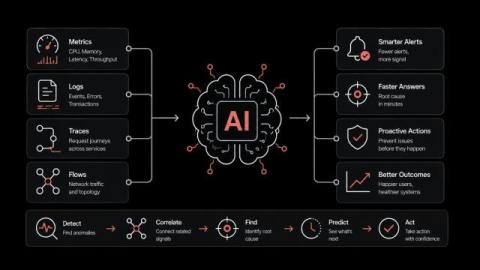
What is AI-Powered Observability? A Complete Guide for IT Teams in 2026

Is your monitoring stack really giving you clarity, or just more alerts? Your monitoring stack is probably working exactly as designed. That is the problem. As systems grow, most IT and platform teams start to see the same patterns: At this point, traditional monitoring starts to feel limited. This is where teams begin exploring AI in observability. In this guide, we will explain what AI-powered observability actually means, how it works, and when it is useful.

Episode 31: Who really governs artificial intelligence? ft. Luqman Kondeth

In Episode 31 of Server Room, we sit down with Luqman Kondeth, AI Governance & Cybersecurity Strategist and Director at NYU, for a conversation that goes far beyond technology. From personal growth and global experiences to AI governance, cybersecurity, and leadership, this episode explores how mindset shapes the way we build careers, communities, and the future of technology itself. In this episode, we discuss.

AI SRE Agent: How Autonomous Incident Investigation Is Eliminating Manual Root Cause Analysis

A critical production alert wakes you up: p99 latency just hit 4 seconds. You drag yourself to a terminal, open five dashboards, start correlating log timestamps with trace IDs, dig through 47,000 log lines across eight services, and 90 minutes later, you finally find the culprit: an N+1 database query introduced in a deployment that shipped four minutes before the spike started. An Atatus AI SRE Agent would have identified that root cause and drafted a remediation plan in 28 seconds. Not approximation.

Spend less time on repetitive tasks with the new automation feature in Grafana Assistant

The ability to schedule regular tasks, such as cron jobs, has been around for decades. So why are we still running the same AI prompts by hand every day? As you use Grafana Assistant, our AI-powered observability agent, to stay on top of the state of your system, you likely find yourself asking the same questions. Maybe you want to know what changed overnight, or whether yesterday's deployment hurt latency, or which dashboards or skills are drifting out of date.

Bridging Bedrock Skills with AI: A Conversation with Jeremy Bradberry

What happens when decades of operational experience meet modern AI-driven networking? In the latest episode of Next-Gen Network Heroes, Bob Slevin sits down with Jeremy Bradberry, Senior Network Engineer at Delaware North, to explore how network engineers can modernize infrastructure without losing sight of the operational realities behind the technology. Jeremy shares lessons learned from working on legacy manufacturing systems, how AI is helping engineers analyze data and automate workflows faster than ever before, and why strong standards still matter in today’s AI era.

Bring Your Playwright Suite to Harness: No Rewrites, No Infrastructure, AI-Powered Triage Built In | Harness Blog

Key Takeaway: Harness AI Test Automation now runs existing Playwright suites without code changes, adds AI-powered failure triage, and integrates test results directly into build and deployment pipelines. ‍

The AI Agent Accountability Gap: Why Network Policies, API Gateways, And RBAC Are Not Enough

In The Five Pillars of AI Agent Accountability: A Diagnostic Framework for Engineering Leaders, we walked through each pillar of AI agent accountability (traceability, authorization provenance, identity and ownership, policy at scale, and human oversight) and argued that most enterprises today sit at Level 0 or Level 1 of the Accountability Maturity Model. The most common reaction we get when we share that framework is some version of: “We’re already covered. We have network policies.

Let AI Run Your Cloud Infra? Ex-VMware & SAP Architects Weigh In. (ft. TechWorld with Nana)

Can you trust AI to run your platform? AI can now spin up production infrastructure in minutes — but speed cuts both ways. In this episode, Nana(TechWorld with Nana) sits down with Doron Grinstein and Dan Wilson, two architects who built, broke, and fixed platforms at VMware and SAP, for a no-hype look at platform engineering in the age of AI.

AI in Insurance Claims Operations: Where Automation Delivers Real ROI

Traditional insurance claims operations are under immense pressure to change. What has shifted now is the margin for delayed results. Today's customers demand faster updates on claims, while insurers need more robust ways to detect sophisticated fraud patterns. The problem is, simply adding more people isn't a sustainable solution when teams are already dealing with complex documentation. Where most insurers rely on legacy systems that involve endless manual handoffs and document-heavy processes, the modern pace requires a change.

Top 5 AI-Powered Database Query Tools for Data Analysts

Data analysts spend a large part of their workday translating business questions into database logic. A stakeholder asks why revenue changed. A product manager wants to compare cohorts. A finance team needs a variance explained. The question may sound simple, but the path to the answer often involves finding the right tables, understanding how fields are defined, writing SQL, validating joins, checking filters, and making sure the result matches the intended business meaning.

AI-Powered Quality Control Is Changing Sustainability Reporting in Construction

Sustainability reporting is becoming a critical requirement across the construction industry as regulators, developers, and procurement teams demand more accurate environmental data from manufacturers. Environmental Product Declarations (EPDs), once considered optional documentation, are increasingly being used as a deciding factor in major construction tenders and compliance evaluations.

Run your first microbuild in 5 minutes

AI coding agents produce code faster than most teams can validate it. Without a validation step between the agent and CI, every problem gets caught after the push, and feedback arrives long after the agent has lost context. Agents need consistent feedback while they’re working so that small failures get fixed locally and CI stays focused on moving code into production.

Building a Defensible AI Compliance Framework

Organizations have moved past theoretical conversations about AI adoption. Models, agents, and autonomous workflows are entering production environments. Business leaders are optimistic about potential gains in efficiency, decision support, and operational scale. Yet beneath this momentum, compliance and risk teams feel a different pressure.

AI Might Break Open Source Differently Than You Think

AI coding agents may not replace open source libraries overnight. But Adam Arellano, Field CTO at Harness, thinks models like Mythos could expose a bigger problem: finding bugs, vulnerabilities, and edge cases faster than maintainers can keep up. That might be the real threat to tools and libraries.

Ameet Talwalkar on Building the AI Research Lab

"We're doing cutting-edge AI, focused on real translational impact: getting our research over the wall and into production." Ameet Talwalkar, Datadog's Chief Scientist, shares what it took to build the AI Research Lab from the ground up — and what makes DAIR different from traditional research teams. At Datadog, research ships. Recent work from the lab includes Toto 2.0, open-weights time series forecasting models ranked on leading benchmarks, and ARFBench, a new benchmark for evaluating AI on real incident data.

Your developers are using AI agents, your data exposure just multiplied

Your developers are already using AI agents. GitHub Copilot, Cursor, Claude Code. Not just for autocomplete, but to generate features, run test suites, and iterate across branches. Each agent needs a database to work against. And in most organizations, nobody has checked what's actually in that database, or whether it should be there.

Preview launch: the Agent Impact Leaderboard and the Business Impact & ROI Dashboard

The Agent Impact Leaderboard and the Business Impact & ROI Dashboard are live in preview inside GitKraken Insights today. We built them because the questions engineering leaders are getting asked about AI shifted faster than the tools to answer them. Here’s what shipped and how to get access.

Your agent can't fix what it can't see

Agents are getting better and better at fixing bugs. They’re even getting better at testing their work, thanks to headless browsers, sandboxes, simulators, etc. But what about the bugs that only show up once you bring in different browsers, languages, extensions, internet speeds, and all the other variables that get mixed in the second you ship to prod? Or all the bugs that only show up when you account for… well, humans being humans and doing weird stuff you didn’t expect them to do?

Measure the real impact of AI coding tools on software delivery with Datadog AI Impact

Engineering teams have rapidly adopted AI coding tools, but organizations still struggle to understand their impact. Existing dashboards focus on activity, such as daily active users, acceptance rates, or lines of generated code, but these metrics don’t answer a more important question: Are teams actually shipping more, faster, and with fewer issues?

How Online Plant Identification Tools Work

Online plant identification tools work in a simple way: a user uploads a photo of a plant, the tool analyzes visible features such as leaves, stems, flowers, shape, color, and growth pattern, then compares those features with a plant database. After that, it shows the most common name and, in many cases, adds basic care recommendations.

Observability Expanding Beyond Infrastructure and Into AI Systems

Observability revolves essentially around understanding infrastructure health. This means that operations teams monitor applications, netwo0rks, database and cloud environments using familiar signals. They use logs, metrics, latency, uptime measurements, and traces. If systems remain available and the performance stays within expected thresholds, the teams have enough visibility to understand whether applications are functioning properly.

Inside the Grafana AI Team Weekly: Guards for AI Observability (May 5, 2026)

This is an excerpt from a real AI team weekly meeting where we talk about the stuff we build and occasionally also demo them! In this one, Principal Software Engineer Sven Großmann shows a new feature he's working on for AI Observability, called "guards". We're showing parts of our team meetings to build in public in some small way and give you a sneak preview of what's to come. But not all features we show may make it to production! You've been warned. :)

AI Agent Orchestration in IT Operations: The Complete Developer's Guide

If you've spent any time in IT operations, you know the drill - alerts firing at 2 a.m., cascading failures, runbooks nobody follows correctly, and a team stretched too thin. That's the environment where AI agent development starts making real sense. Not as a buzzword, but as an actual engineering answer to an operational problem that's been compounding for years. From our team's point of view, orchestrating multiple AI agents in IT isn't just automation. It's about building systems that coordinate and act the way a competent ops team would - minus the fatigue.

Top Business Process Automation Trends Shaping 2026 Workflows

Businesses in Australia are operating in a very different environment than they were even five years ago. Service-based companies are handling higher client expectations, tighter compliance requirements, growing admin loads and increasingly complex operations - often without expanding their teams at the same pace.

Your Company Has 10x More Developers Than You Think

The low-code promise failed for 15 years. AI builders delivered in 15 months. Here's what actually changed, why the engineer in me resisted it, and what it means for every CTO. Romaric founded Qovery to make Kubernetes accessible to every engineering team. He writes about platform strategy, developer experience, and the future of cloud infrastructure.

Don't Ban the Builders - Govern Them

AI tools turned everyone into a builder. Your sales team, your finance team, your CEO - they're all shipping apps now. The answer isn't to ban them. It's to give them a governed platform they actually want to use. Romaric founded Qovery to make Kubernetes accessible to every engineering team. He writes about platform strategy, developer experience, and the future of cloud infrastructure.

Episode 11 - Human Choices in an AI Future (Part 1)

What if the biggest risk in the AI era isn't the technology, but waiting for someone else to tell you what to do with it? In this episode of The Intelligent Enterprise, host Tom Stoneman sits down with Karthik Ravindran, General Manager of Enterprise Data and AI at Microsoft, to unpack what it really takes to thrive alongside AI, not in spite of it.
Zero to Dashboard with Grafana Assistant and the Infinity datasource plugin

Senior Developer Advocate Nicole van der Hoeven demonstrates how to go from zero to dashboard in a few minutes without using any queries, with the help of Grafana Assistant and the infinity datasource plugin for Grafana. Nicole is using the rawg.io video game database API to visualize games and get recommendations for what to play next!

How to measure developer experience (DevEx) in the AI era

As AI coding assistants dramatically inflate PR counts, commit frequency, and lines of code, the limitations of individual output metrics have never been more apparent. A developer can now produce significantly more lines per session, but higher volume doesn’t guarantee that the code is stable, maintainable, or successfully running in production. GitClear analyzed over 200 million lines of code and found that code churn nearly doubled following widespread AI adoption.

Anthropic Monitoring & Observability with OpenTelemetry and SigNoz

Learn how to implement end-to-end monitoring and observability for Anthropic (Claude) API-based applications using OpenTelemetry and SigNoz. In this video, we walk through instrumenting your Anthropic API calls, collecting traces, metrics, and logs, and visualizing everything in SigNoz to gain real-time visibility into performance, failures, and bottlenecks. You'll see how to move from basic logging to production-grade observability, so you can debug faster, optimize latency, and confidently run Claude-powered AI systems at scale.

The New Agentic AI Job Roles IT Leaders Need

CIOs are under pressure from every direction. Budgets remain tight, geopolitical uncertainty is forcing organizations to rethink resilience, and workforce expectations continue to evolve. At the same time, AI is accelerating a broader shift across enterprise IT – changing not only how organizations operate, but also the skills and roles they will increasingly depend on. The question is not whether AI will reshape IT teams, but how quickly organizations can adapt to these new ways of working.

AI Won't Replace You. Someone Using It Will.

AI isn’t about replacing engineers. It’s about leverage. The teams that win will be the ones that: Triage incidents faster Correlate signals automatically Reduce manual investigation Automate repetitive operational work In observability, that means asking: AI won’t eliminate expertise, it amplifies it. The real risk isn’t AI taking your job. It’s competitors using AI to operate at a speed and efficiency you can’t match.

The Five Pillars of AI Agent Accountability: A Diagnostic Framework for Engineering Leaders

You’re in a board meeting. The CISO is presenting on AI risk. The CFO asks a simple question: “When that finance agent we deployed last quarter accessed a customer payment record, can we tell who authorized it, what policy permitted it, and produce the full audit trail?” The CISO looks at the head of the platform. The head of the platform looks at security. Nobody answers. If you can picture that meeting happening at your company, you’re not alone.

How Copilot integration services redefines corporate workflow

The common situation of most businesses today is to be drowning in data, yet starved for efficiency. Underutilization of data, where valuable corporate information is locked within disconnected applications, has led employees to act as bridges between the software systems. Microsoft Copilot is often touted as one answer to this, and with its current ecosystem, it may just be the best one. It can use AI, not as a passive chat, but as an active, intelligent agent that unifies corporate data and helps automate cross-platform workflows.

Devart Brings AI Agents Closer to Enterprise Data with New MCP Server Product Line

We are excited to announce the release of the brand new line of MCP Servers (Model Context Protocol), designed to connect AI assistants, AI agents, and large language models directly to enterprise databases and cloud business platforms. The release includes 19 specialized MCP Servers and the flagship Universal MCP Server, which enables AI access to virtually any data source through the ODBC standard.

Meet the new Mobot: Your log analysis partner

Every single day, the Sumo Logic Platform analyzes more than four exabytes of log data. The good news? The answers to your application performance, infrastructure health, and security incidents are hidden in those logs. The challenge? Historically, uncovering those answers required query language fluency. That’s why we built Mobot, our conversational interface that connects users to advanced AI capabilities using natural language.

Why AI economics needs a financial control plane

Runtime guardrails and control towers govern AI activity — but without a financial control plane connecting spend to outcomes, enterprises can't tell which AI bets are worth it. Most enterprises can answer exactly one question about their AI rollout: what did we spend?

The "Single Pane of Glass" Is Dead - What Network Teams Actually Need Is Intelligence

The infrastructure industry spent two decades chasing a single pane of glass. The future looks different: domain-expert AI platforms that reason deeply within their own data, connected through tool chaining when problems cross boundaries.

Civo AI: Strategy over complexity

Most cloud providers think AI is just a hardware problem. They focus on the GPUs, the racks, and the raw compute, but they leave the strategy up to you. At Civo, we do AI differently. We don't just provide the hardware; we guide you through the full life cycle of AI adoption, from initial planning to scaling production workloads. By leveraging best-in-class NVIDIA models and GPUs, we give you the performance to unlock AI at scale without the fear of being bogged down by complexity. It's more than infrastructure, it’s cloud freedom with AI built-in.

Self-host AI on Kubernetes: GPU clusters, private models, and the GitOps Catalog

Spin up a GPU workload cluster using Konstruct's new GPU cluster templates, deploy a self-hosted LLM, and use it in your organization — all live on stream. This hands-on session shows how shipping AI workloads to GPU clusters is just as easy as deploying to Konstruct physical or virtual clusters, and how open source apps in the GitOps Catalog make it even faster. Walk away knowing how to cut your token spend by running models privately on your own infrastructure.

Inside the Grafana AI Team Weekly: Workspaces and Investigations (April 28, 2026)

This is an excerpt from a real AI team weekly meeting where we talk about the stuff we build and occasionally also demo them! In this one, Staff Product Design Engineer Ben Darlow demos improvements to Workspace Home. Staff Software Engineer Sonia Aguilar and Principal Software Engineer Sven Großmann also demo a new dependency graph view for Investigations. We're showing parts of our team meetings to build in public in some small way and give you a sneak preview of what's to come. But not all features we show may make it to production! You've been warned. :)

From Watching AI Search to Engineering for It: What Q1 2026 Taught Us About Real Digital Demand

Last year, I wrote about how AI-driven search trends reshaped my digital marketing strategy in ways I hadn’t seen in two decades. At the time, the story was mostly observational: traffic patterns were changing, conversions were holding, and AI-generated search answers were clearly influencing buyer behavior. Fast-forward to the first quarter of 2026, and one thing is clear — this shift didn’t slow down; it accelerated.

Inside the Anthropic + Claude Code Hype at AWS Summit London: Live Laugh Logs ep. 2

Are companies blowing through their entire 2026 AI budget in a matter of months? Welcome to Episode 2 of Live Laugh Logs, the podcast from Annie, Lewis, and Andre from the Coralogix Developer Relations team, where we get together and recap everything going on in our worlds!

Canonical announces fully Managed Kubeflow AI operations platform on the Microsoft Azure Marketplace

Canonical, the publisher of Ubuntu, today announced the general availability (GA) of Managed Kubeflow on the Microsoft Azure Marketplace. This solution enables AI teams to get a fully managed, production-ready MLOps platform in their own tenant. Upstream Kubeflow is a powerful tool for machine learning, but it remains notoriously challenging to deploy and maintain.

Developing web apps with local LLM inference

I’ve yet to meet a developer that enjoys working with metered AI APIs. The need to pay for every API call in development works in direct opposition to the ethos of rapid iteration, and it’s easy for the costs to get out of hand. That’s why Canonical has created a different approach to building AI-powered applications; one where the model lives inside your app, not behind a pay-per-token HTTP call.

Using AI to Instrument Applications with OpenTelemetry

OpenTelemetry is one of the best things that’s happened to observability in the last decade. It’s open. It has SDKs for every language that matters. It’s vendor neutral. The OTel community has been doing the hard work of standardizing how applications emit telemetry, so that you, the engineer, don’t have to learn five different agent formats to monitor five different services.

From AI Sprawl to Orchestration: Delivering Intelligence as a Service

Most enterprise AI deployments were never designed to coexist. They were designed to prove a point, respond to a board directive, or secure a budget. The result, two years into the generative AI cycle, is an expanding estate of disconnected models, fragmented pilots, and overlapping capabilities that collectively deliver far less value than the sum of their parts. HFS Research calls it "death by a thousand POCs". The more precise description is architectural negligence at an enterprise scale.

Why Nearby Search Optimization Matters for Modern Dental Clinics

Picture this: it's Saturday night, someone cracks a tooth on a piece of hard candy, and the absolute last thing they're doing is flipping through a phonebook. They're on their phone within seconds, searching for help. If your practice doesn't appear in those results, someone else's does, and that's a patient you just lost without ever knowing it. According to recent data, 98% of consumers search online for nearby companies, which means showing up digitally isn't a nice-to-have anymore. It's your front door.
How we made a SQL query optimization agent 59% more accurate using autoresearch and LLM Observability

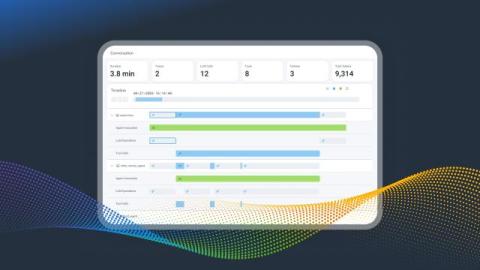
Without experiment infrastructure to help you test your LLM applications, every research session starts with the same questions: What have we tried previously? What were the numbers? Which prompt version produced that result? Why did we discard that approach? The answers live in scattered notes, terminal history, and half-remembered conversations. Each handoff between sessions loses context. In practice, iteration can slow down as teams get bogged down in testing and analysis.

Honeycomb Canvas: The Multiplayer Workspace for the Agentic Era

Last week, we launched a major update to Canvas, our investigation workspace. The new Canvas has evolved from an AI co-pilot you chat with to a place where your whole team, human and agent, can work the same problem on the same surface. Auto-investigations begin the moment a trigger, SLO, or anomaly fires. Custom skills encode your team's runbooks so every agent investigates with your team's expertise built in.

NVIDIA Vera Rubin: What is it, what's new, and when you can get it

NVIDIA's infrastructure roadmap moves fast, and the next major milestone is already here. The NVIDIA Vera Rubin platform is the company's next-generation AI compute architecture, the successor to Blackwell, and it's shaping up to be one of the most significant leaps forward in AI infrastructure NVIDIA has ever shipped. Whether you're planning your next training cluster, scaling inference pipelines, or building the infrastructure to power autonomous agents, Vera Rubin is worth understanding now.

Teach Your AI Coding Agent to Instrument, Monitor, and Troubleshoot Infrastructure with netdata/skills

There’s a growing ecosystem of AI coding agents: Claude Code, Cursor, Copilot, Codex, Gemini CLI, Windsurf, and others. They’re good at writing code, but they don’t inherently know how to instrument that code for observability, configure monitoring infrastructure, or troubleshoot production systems using real telemetry data. That knowledge lives in documentation, runbooks, and the heads of your senior SREs.

AI Powered IT Operations & Autonomous Resilience | Full SolarWinds Day Q2 2026 Event Replay

Watch the full SolarWinds Day 2026 event on-demand and discover how AI is transforming IT operations, observability, and incident response. In this exclusive event, SolarWinds CEO Sudhakar Ramakrishna and product leaders unveil the company’s vision for Autonomous Operational Resilience—powered by AI, automation, and unified visibility across hybrid and multi-cloud environments.

Why Digital Business Platforms Are Becoming Essential for Modern Professionals

The business world moves faster today than ever before. Market trends shift overnight, industries evolve rapidly, and professionals are expected to stay informed in real time. In this environment, relying solely on traditional business news sources is no longer enough. Modern professionals now depend heavily on digital platforms that provide instant updates, market analysis, and accessible insights they can use immediately.

AI Governance: Why Businesses Need Control Over AI Systems and Data

As artificial intelligence becomes embedded in everyday business operations, the conversation is shifting from adoption to control. Companies are no longer asking whether to use AI-they are asking how to use it safely. This is where ai governance becomes critical. Organizations looking to protect sensitive data and ensure responsible AI usage are turning to advanced ai security solutions like iDox.ai, which help monitor, manage, and secure how data interacts with AI systems.

The $600 billion wake-up call: New Splunk research reveals downtime is a systemic business crisis

600 billion annual impact: Aggregate downtime costs for the Global 2000 have soared 50% in two years. $15,000 per minute: The average cost of downtime for organisations, highlighting the immediate financial impact of service disruptions. 3.4% stock price drop: The average decline in shareholder value following a single downtime incident.

Claude Mythos: Sorting Fact from Fiction and What It Means for Cyber Defense in 2026

Claude Mythos may be wrapped in hype, but the core signal is real: AI is making vulnerability discovery much faster, which means defenders have less time than ever to patch and enforce secure configurations. The real risk isn’t just smarter models, it’s that security teams will face a flood of new findings while the window between disclosure and exploitation keeps shrinking.

AI Observability In 2026: What It Is, The Five Pillars, And Why Cost Is The One Everyone Skips

AI observability covers performance, quality, reliability, safety, and cost. Most tools handle the first four. Here's what each pillar means, which tools cover which, and why cost is the dimension enterprises keep missing.

Transform IT with Agentic AI: the Dawn of Accelerated, Autonomous Service

The IT service management (ITSM) industry stands at a real inflection point. For decades, service desks have operated on a fundamentally reactive model — employees face problems, submit tickets and wait for human analysts to diagnose, triage and resolve their issues. Automation improved throughput within that model, but it never challenged the model itself.

Agentic Pipelines now supports Claude Code

Last month, we introduced Agentic Pipelines, a new way to orchestrate AI agents to automatically, and routinely, handle the repetitive engineering chores so you can get back to solving the fun, cool problems. When we launched, Agentic Pipelines supported Atlassian’s developer AI agent, Rovo Dev. Today, we’re opening up Agentic Pipelines to even more teams: You can now run agentic steps in your pipeline with Claude as the provider.

Media Monitoring Evolved: How AI Makes Website Tracking Tools Essential

The average person would need 180 million years to read everything published online in a single day. For organizations trying to track what people say about their brand, manual monitoring stopped being viable somewhere around 2015. AI-powered media monitoring tools now process this impossible volume automatically, detecting brand mentions, analyzing sentiment, and flagging potential crises before they spiral.

Agent Timeline: The Flight Recorder for Your AI Agents

Last week, we introduced Agent Timeline, a powerful new observability experience purpose-built for debugging AI agent workflows in production. Agent Timeline uniquely connects AI-layer visibility to full-stack observability by organizing telemetry around an agentic conversation. A conversation contains one or more agent executions, each of which may contain LLM calls, tool invocations, handoffs, retries, human escalations, and downstream system calls.

Keep your Agents Under Control with agent-belt

You’re shipping a product with an AI-facing interface, or embedding AI-facing interfaces across your existing product line – skills your customers trigger, MCP servers their agent reaches for. Indie author or enterprise, your code runs in someone else’s agent runtime, against a model that updates every other day and a CLI that updates every other week. Cursor 2026.05.05-84a231c rolls out. Claude Code 2.1.132 lands the same week. OpenAI bumps gpt-5.5.

AI Dev Tools: What 100K Engineers at Google Really Taught Us

AI developer productivity, agentic workflows, and the lessons learned running engineering tools for 100,000+ software engineers at Google. John Montgomery, CCO at GitKraken, sits down with Asim Hussain, co-founder of Alterion AI and former Google VP of Engineering Productivity, to get real about what AI actually changes for engineering teams in 2025.

The New Compliance Crisis: AI Is Outrunning Its Controls

Enterprises have spent decades refining compliance frameworks around workflows that were linear, predictable, and well-documented. These frameworks were built for systems that executed actions deterministically and for human operators who made decisions slowly enough for oversight to keep up. In that environment, compliance could function as a retrospective discipline because the evidence required to validate behavior generally existed in complete, stable form.

Storage For The AI Tidal Wave | VAST Data CEO Renen Hallak

AI infrastructure is entering a new phase – one where the biggest challenge may no longer be building better models, but building systems capable of feeding them. In this episode of Uplink, Michael Reid sits down with Renen Hallak, Founder and CEO of VAST Data, to explore the infrastructure realities behind the AI boom. From software-defined storage and GPU-scale architectures to neoclouds and agentic AI, this conversation dives deep into the systems powering the future of artificial intelligence.

Enhanced Predictive AI suite, Google AI Studio integration, and more!

������ �������������� ������������ ���� ��������! We're a month into the year, and it’s already been an exciting start for ServiceDesk Plus. From expanding our AI provider integrations—which now include Google AI Studio alongside OpenAI, Azure OpenAI, and our own hosted LLM—to enhancing our Predictive AI suite, we’re excited to share some exciting updates to the cloud version of ServiceDesk Plus.

Building Automated Document-to-Video Workflows for Enterprise Operations

In enterprise environments, the volume of documentation is staggering. An average Fortune 500 company maintains hundreds of thousands of documents across HR policies, engineering specifications, sales playbooks, compliance guidelines, and customer support knowledge bases. This content represents a massive investment in institutional knowledge, but its impact is limited by a persistent delivery problem: people do not read documents.

Commercial Trucking Technology for Better Driver Awareness

Modern highways demand constant focus from professional drivers. New tools help fleets stay safe on long trips across the country. Fleet operators can monitor road hazards much better than in past decades. New onboard systems protect both the driver and the cargo from unexpected road events. High highway speeds mean split-second decisions dictate safety margins. Stay aware of your surroundings to prevent severe accidents before they happen. New updates give teams better visibility than ever. Drivers feel more secure when they have technology backing them up on dark roads.

Cracking the AI Detector Code: How to Keep Your Writing Authentic, Human, and Undetectable

Let's be completely real for a moment: artificial intelligence has completely transformed the way we write. Whether you are drafting a comprehensive research paper, putting together a weekly newsletter, or scaling a blog to reach thousands of readers, tools like ChatGPT and Claude have become the ultimate brainstorming sidekicks. They are fast, incredibly smart, and always ready to pull a structured outline out of thin air.

Anatomy of the AI Software Factory: The Context Layer

This is Part 2 of the AI Software Factory series. In Part 1, we established that the Agile methodology is buckling under the weight of “elastic code.” When AI agents can generate functionality in seconds, two-week sprints and manual task management become organizational bottlenecks. We introduced the concept of the AI Software Factory: a shift from managing human tasks to managing business intent through a “Funnel of Increasing Trust.” But a factory requires infrastructure.

AI Productivity Metrics Dashboard for Engineering Managers (2026)

Measuring AI’s impact on your engineering team is harder than it sounds. Headlines claim AI writes 30% of code and doubles productivity, but those numbers rarely match what you see on the ground. Without a dedicated dashboard that blends leading indicators, anti-gaming safeguards, and ROI reporting, you cannot answer the question that matters most: is AI helping your team ship better software faster?

Get Lightrun AI Skills: Expert Workflows for AI Agents

Today we’re launching Lightrun AI Skills, structured, repeatable investigation workflows built for AI coding agents. With Lightrun MCP, agents like Claude Code, Codex, and Cursor can already instrument live production services and reason over live runtime evidence without a redeployment. But AI agents remain non-deterministic by design, using the same tool differently every session.

What Vera Rubin means for AI infrastructure in 2027

Every so often, NVIDIA releases something that quietly changes the direction of the industry. CUDA did it. DGX did it. NVLink did it. Vera Rubin feels like one of those moments again. At first glance, Rubin looks like the natural successor to Blackwell. Faster GPUs, larger memory pools, and eye watering performance numbers. But the more you dig into the architecture, the clearer it becomes that NVIDIA is not simply shipping another accelerator generation.
DORA Metrics in the AI Era: Why Deployment Isn't Faster

DORA metrics in the AI era reveal a paradox: PR volume is climbing, but deployment frequency is staying flat. In this talk, GitKraken's Director of Product Jeff Schinella breaks down why AI-accelerated code generation is creating a review bottleneck that your DORA metrics can't fully explain on their own. Jeff walks through how PR metrics (cycle time, first response time, code churn, and PR size) serve as the leading indicators behind your DORA data. If your deployment frequency is flat while PR counts go up, the bottleneck isn't your devs. It's your review capacity.

AI, Platforms, and the Future of Value Delivery: A Conversation with ServiceNow

How do enterprises turn AI from experimental potential into real-world software delivery value — without slowing down, breaking security, or sacrificing reliability? At {unscripted} 2025, Amit Zavery — President, Chief Product Officer, and COO of ServiceNow — joined Harness CEO and Founder Jyoti Bansal for a candid fireside chat on the future of AI in the enterprise, the role of platforms in unlocking developer productivity, and why"AI-native" only works when speed, security, and reliability move together.

Why Network Operations Needs Data-Centric AI

The discussion around AI in infrastructure and operations has become increasingly model-centric. Teams want to know what model a platform uses, how current it is, how much reasoning capacity it has, and how quickly it can be updated as the model landscape shifts. Those are reasonable questions, but they tend to arrive too early. In production operations, the more consequential question is what happens to the data before any model is asked to interpret it.

Action trails: The missing link between AI and human trust

When people talk about trusting AI, they usually focus on the interface. It summarizes and uses confident language with a level of clarity that feels reliable. But that’s all window dressing. None of it builds trust. Trust doesn’t come from what the AI says. A verifiable record of what the AI did makes it trustworthy.

The "Free" AI Tool That Will Ruin Your Code#speedscale #aiagents #aicoding #devops #softwareengineer

Relying on AI and interns to build custom traffic replay tools is a scalability nightmare that introduces security risks, brittle code, and massive maintenance costs...use Speedscale instead. Learn more: speedscale.com.

When your agents hallucinate at 2 am, it is not a model problem

The first time an AI assistant suggests "restart the service" during a live incident and nobody on the bridge can tell whether that suggestion came from a current runbook, a stale wiki page, or thin air, you stop caring about model benchmarks. You start caring about what the agent actually knew, where that knowledge came from, and whether you can trust the chain of reasoning behind it.

There's an npm-shaped hole in the AI tooling stack

I've had this same conversation with 60+ engineering teams in the last six months. A team adopts AI tooling. One developer figures out how to use it well, builds up a vault of skills, MCP configs, and slash commands that 10x their output. The rest of the team has whatever they can scavenge from a shared Notion doc.

Why agentic AI development needs reliability guardrails

AI has massively accelerated code deployment. In fact, since the introduction of agentic coding, GitHub has seen exponential growth in PRs, commits, and new repos. What they originally predicted would require 10X capacity, they’re now estimating it’s going to require 30X capacity, and the biggest driver is agentic development. Companies across industries are building agentic pipelines to ship features faster than ever before. That acceleration isn’t without risk.

Anthropic Shipped An Enterprise Analytics API. We Shipped the Claude Adapter Today.

Anthropic just shipped an Enterprise Analytics API with user-level token and cost data. Today, we're shipping the CloudZero adapter that maps that data to teams, budgets, and cost centers — so Claude spend gets the same accountability as the rest of your stack. Anthropic released the first beta of its Enterprise Analytics API this week. Admins can pull token usage and dollar cost through a programmatic endpoint, broken down by user, model, context window, region, and product surface.

What are the benefits of decentralized AI infrastructure?

Have you ever considered how you can utilize artificial intelligence (AI) without sacrificing control over your data and autonomy? As we continue to navigate the changes of AI in the 21st century, it is important to understand how decentralized AI infrastructure can empower individuals and organizations to harness the potential of AI while maintaining sovereignty over their data and decision-making processes.

You Are Building With AI. Who Is Watching What It Ships?

AI coding assistants have made it possible for a single developer to build and ship a production application in a weekend. Claude Code, Cursor, GitHub Copilot, and similar tools can scaffold a Rails app, write the models, generate the views, wire up the API, and push to production before Monday. This is genuinely exciting. It is also genuinely dangerous if you do not have monitoring in place before you ship.

LLM Observability: Lessons From MLOps w/ Maria Vechtomova (Cauchy)

For nine years, Maria Vechtomova was shouting about monitoring. Nobody cared, until LLMs arrived. As co-founder of Cauchy, Databricks MVP, and one of the most followed voices in MLOps, Maria has watched the field evolve from hand-built experiment trackers to today's flood of observability tools, and her central claim might surprise you: globally, nothing has changed. The fundamentals are the same: track your code, data, and models so you can roll back when something breaks.

New ways to agentically build and edit dashboards

The traditional dashboard workflow, teams slowly handcrafting visualizations to track critical KPIs, is dying in a world of AI agents. A few years ago, in a pre-agentic-everything world, we tried to make it easier for developers to monitor critical experiences. We introduced Insights pages, which were pre-configured dashboards any Sentry user could adopt instantly that surfaced common health signals, like Web and Mobile Vitals.

The AI Agent Accountability Crisis: Why Governance Isn't Keeping Up With Deployment

Every enterprise is building AI agents. Marketing has one summarizing campaign performance. Engineering has one triaging incidents. Customer support has one resolving tickets. Finance has one processing invoices. Each was built by a different team, using a different framework, with different assumptions about security. Now those agents are talking to each other through agent-to-agent (A2A) communication. The incident-triage agent calls the customer-support agent to check affected accounts.

AI Asked Our General Counsel Anything. She Didn't Hold Back.

What happens when AI interviews a tech leader? You get unexpectedly honest answers. Harness General Counsel Hanna Steinbach sat down with ChatGPT — and skipped the corporate script. From the realities of parenting while leading a legal team at a high-growth startup, to the daily habits that keep her grounded, this is the kind of candid leadership perspective you rarely see. Oh, and she's definitely the person sprinting to the gate right as boarding starts.

Nano Banana Three-Model Showdown: Which One Actually Fits Your Needs?

Not every image generation task is the same - and neither is every Nano Banana model. If you've landed on Kimg AI looking for the right tool, this breakdown is for you. Banana AI brings together multiple Nano Banana versions under one roof, so the only question left is: which model should you reach for first?

From GPUs to Futures: The Financialization of AI Compute

The decision by CME Group and Silicon Data to create computing-power futures may become one of the most important infrastructural developments in the current stage of the artificial intelligence industry. While Nasdaq futures reflect expectations for technology-heavy growth stocks, including AI-related names, computing-power futures would track a more fundamental input: the cost of the infrastructure on which AI companies increasingly depend. In effect, for the first time, the market is beginning to formalize computing resources as an independent financial asset, comparable in function to oil, electricity, or industrial metals.

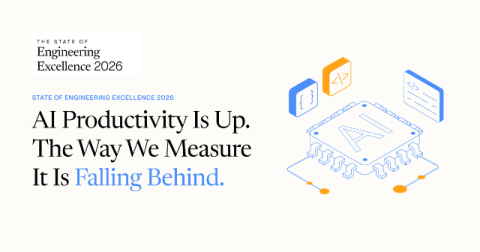
The AI Productivity Paradox: We're Measuring the Gains and Missing the Costs | Harness Blog

For the past year, I've been hearing a version of the same thing from engineering leaders: AI tools are working, productivity is up, the business case is there. And yet, something about the picture still feels incomplete. So we decided to go find out how widespread that feeling actually is. We surveyed 700 engineers and managers across five countries, and published the results in the State of Engineering Excellence 2026.

AI DevOps in 2026: How AI Coding Tools Are Breaking Your CI/CD Pipeline (and How to Fix It)

AI coding tools turned every engineer into a 10x developer. Now your CI/CD pipeline is the bottleneck. Learn how to handle 10x more deploys per engineer with Qovery's dual deployment model. Romaric founded Qovery to make Kubernetes accessible to every engineering team. He writes about platform strategy, developer experience, and the future of cloud infrastructure.

Enhancing Your Search Skills with Liang Chen

What does it take to reinvent network visibility from the ground up? In this episode of Next-Gen Network Heroes, Bob sits down with Liang Chen, Senior Network Architect at Texas Children’s Hospital and creator of a next-generation network traffic analyzer built for real-time, packet-level visibility. Liang shares how he built a platform capable of analyzing traffic at up to 200Gbps with zero packet loss—unlocking deeper network forensics and faster troubleshooting in mission-critical environments.

True Visibility: How Liang Chen is Rethinking Network Monitoring

What happens when deep networking expertise meets low-level programming and a passion for invention? In this episode of Next-Gen Network Heroes, host Bob Slevin sits down with Liang Chen, Senior Network Architect at Texas Children's Hospital and a true innovator in network performance and visibility. With more than 25 years of experience in networking, plus advanced expertise in programming languages like C and Assembly, Liang has built his own next-generation traffic analysis platform from the ground up—designed to provide real-time, packet-level visibility at massive scale.

Total Economic Impact study finds LogicMonitor Edwin AI delivered a 313% ROI and payback in 6 months or less

Forrester Consulting’s Total Economic Impact study found that a composite organization based on interviewed customers achieved 313% ROI and payback in less than 6 months with LogicMonitor Edwin AI. AI for IT operations has a credibility problem. The market is crowded with claims about speed, automation, and intelligence, while buyers are left doing the harder work of separating measurable impact from vendor language.

Innovation Week Day 2: Observability for AI, and Observability With AI

AI is reshaping the SDLC in two directions at once. AI-generated code is shipping faster and with less human supervision than ever before, while agents and LLMs are running directly in production, where they behave very differently from traditional software: non-deterministic, with a wider blast radius than any single function or component, with no stack trace to catch when something goes wrong.

Observability for the Agent Era: Day 2 | Launches

Honeycomb's Innovation Week: Observability for the Agent Era (May 12-14) For Day 2 of Innovation Week, Honeycomb's product and engineering teams will take you inside the new capabilities purpose-built for the agent era. Expect live demos, real scenarios, and a hands-on look at what it means to own observability for the Agentic era, with AI in Honeycomb to observe AI in production. A 3-Day Virtual Event for Teams Building the Future May 12: Get insights on how the best engineering teams are tackling the challenges of the agentic era.

#058 - The Future of AI and Platform Engineering with Blake Sherwood (Smarsh)

In this episode, special guest Blake Sherwood joins the show to discuss his unique career trajectory from tourism and coal mining to leading massive-scale Kubernetes migrations. Blake shares insights from his experience managing petabytes of data in high-compliance environments, delving into the practical realities of integrating AI into enterprise workflows and observability systems.

Claude Code Sandbox: The Complete Guide to Sandboxing AI Agents in Production

How to sandbox Claude Code, Codex, and other AI coding agents for production use. Compare local Docker, Daytona, E2B, and Qovery approaches - with architecture diagrams and real-world examples. Romaric founded Qovery to make Kubernetes accessible to every engineering team. He writes about platform strategy, developer experience, and the future of cloud infrastructure.

Three AI Music Generators For Different Creators

AI music tools are no longer just novelty websites where users type a funny prompt and wait for a strange song. The market now has different kinds of platforms for different creative jobs: full vocal songs, background music, lyric-driven drafts, podcast intros, game atmospheres, and social video soundtracks. That is why an AI Song Generator should be judged less like a toy and more like a workflow choice for creators who need music without starting from professional production software.

The Growing Importance of Audio to Text Converter Tools

In today's digital world, communication happens faster than ever before. Businesses, students, journalists, podcasters, and content creators are constantly searching for efficient ways to manage information. One of the most valuable innovations in recent years is the from audio to text conversion process, which allows spoken words to be transformed into written content quickly and accurately. Audio to text converter tools have become essential for improving productivity, accessibility, and content management across multiple industries.

Beyond code execution: the strategic case for stateful AI sandboxes

While ephemeral sandboxes are effective for isolated code execution, enterprise AI agents require a more robust context to be reliable. Upsun provides production-like preview environments, complete with byte-level clones of apps and services, offering a higher standard of validation for agentic workflows.

Getting Started with XcodeBuildMCP: Let AI Agents Debug Your iOS Apps

XcodeBuildMCP gives AI agents the ability to build, test, and debug native iOS and macOS apps. In this hands-on workshop, we show you how to use the open source MCP server to unlock the full developer loop — build, run, debug, interact, and verify — without leaving your preferred AI coding environment.

Enhancing Mental Health with Artificial Intelligence

Artificial Intelligence is rapidly changing the way people understand, manage and improve mental health. From digital wellbeing apps to workplace analytics, AI is creating new opportunities to identify mental health concerns earlier, provide more personalised support and make guidance more accessible. While AI cannot replace human empathy, professional therapy or meaningful relationships, it can play a valuable supporting role in helping individuals and organisations take mental health more seriously.

AI startup on a budget? How to master GPU computing without overspending

This blog is based on the webinar, “Panel Discussion: Understanding the importance of GPUs for AI success”. You can watch the full recording by clicking here! Cheap GPUs don't kill AI startups. Cheap thinking about GPUs does. In 2026, the teams burning through runway fastest aren't the ones who can't afford compute; they're the ones measuring the wrong thing and scaling the wrong way.

What is AI Agent Orchestration? Concept + How It Works

Have you tried using AI at work and felt it works well for small tasks, but not beyond that? It can handle simple things like creating a summary, writing a draft, or answering a question. This works because the task is clear. But most tasks are not that simple. They involve multiple steps. One step depends on another. Data comes from different systems, and some decisions need checks before moving ahead. This is where a single AI system starts to struggle.

Easily connect any AI assistant (Claude, Codex, ...) to your Oh Dear data

Oh Dear keeps a watchful eye on your websites: uptime, performance, SSL certificates, broken links, DNS, cron jobs. If something can quietly break, we're already checking it for you. Today we're connecting that data to a new place: your AI assistant. We just shipped an MCP integration. If you use Claude, Cursor, or any other client that speaks the Model Context Protocol, you can now ask questions like "any broken links on my site?" or "when does my certificate expire?" in plain language.

LLM API Pricing Comparison In 2026: Every Major Model, Ranked By Cost

Compare LLM API pricing across OpenAI, Anthropic, Google, DeepSeek, and Mistral in 2026. Full pricing tables, hidden cost breakdowns, and proven strategies to cut AI spend. Written for engineering leads, platform teams, and FinOps practitioners evaluating or optimizing production AI costs.

Together AI Pricing In 2026: Models, Costs, And How To Manage Your Bill

Together AI pricing ranges from $0.10 to $9.00 per million tokens. Compare all models, GPU rates, free tier details, and practical cost optimization strategies. Written for engineering leads, platform teams, and FinOps practitioners evaluating open-source inference providers.

Three Architectural Principles for Mythos & GPT-Cyber Readiness

Since Anthropic announced Project Glasswing and the capabilities of Claude Mythos Preview, and OpenAI announced GPT-Cyber – my calendar has looked the same every day: Back-to-back calls with CISOs, AppSec leads, and security architects. And every call starts with the same question.

From vibe code to production-ready: observability for Next.js and Supabase apps

The way we build software has drastically changed over the past few years. What hasn’t changed is that this software ends up in front of real people: you, me, my mom. And when those users inevitably run into something broken, you as the application’s developer need to be equipped with the right tools, context and understanding of what broke, where it broke, and how to fix it as quickly as possible. Every day we’re inching closer to self-healing software.

Why Mandating AI Tools Backfires on Engineering Teams

Responsible AI adoption for engineering teams starts with culture, not compliance. In this GitKon talk, Rizel Scarlett (Tech Lead of Open Source DevRel at Block) shares how Block helped thousands of engineers actually want to use AI tools, including Goose, Cursor, Claude Code, and more, without mandates, vibe coding disasters, or security gaps.

Lorka AI and the Next Phase of Smart Digital Transformation

Digital transformation has moved past the experimentation phase. For most organizations, the question is no longer whether to adopt digital systems, but how effectively those systems can adapt, learn, and scale. Artificial intelligence has become the defining force in this evolution. What was once limited to automation and analytics is now expanding into systems capable of continuous decision-making and operational intelligence. Within this landscape, platforms like Lorka AI are positioning themselves as enablers of a more adaptive, AI-native enterprise model.

Collective IQ Business: meet the artificial intelligence that transforms IT management

The employee digital experience (DEX) is no longer just a concept; it has become a concrete discipline supported by specialized tools. At the center of this transformation is Collective IQ, Almaden’s DEX solution, available in the Essential and Business editions. The Business edition includes AlmaAI a family of generative AI capabilities that take IT management to a new level.

Using Cortex AI Assistant to Clean Flags

Every team ships feature flags. Nobody owns the cleanup. The result is predictable: ownership gaps, environmental drift, complex targeting nobody remembers writing. In this Feature Friday, Cortex VP of Product Kara Gillis walks through how she triaged nearly 100 of our own LaunchDarkly flags using the Cortex AI Assistant in Slack. The Assistant queried our internal Feature Flag Scorecard and returned.

From fragile to resilient: Rethinking security operations in the age of AI

Watch From Fragile to Resilient: Rethinking Security Operations in the Age of AI to hear Nicole Reineke from N-able and Fernando Montenegro from The Futurum Group discuss how AI is reshaping the threat landscape, where current security operations models are starting to break down, and what a more resilient approach looks like in practice. This session explores the rise in AI-driven attacks, the growing pressure on security teams from alert overload and visibility gaps, and practical ways organizations can improve response, recovery, and resilience across the full threat lifecycle.

From noise to knowledge: How GenAI is revolutionizing log management and analytics

Focusing on GenAI and logs for IT efficiency Efficiency is everything for managing today’s digital systems. Technology is constantly transforming and expanding operations are driving an explosion in data. Consequently, data ingest and storage costs have soared. But it’s not just storage data costs that keeps teams behind.The challenge of managing all that observability data forces IT teams to choose between efficiency and the bottom line.

The zero-trust agent: why your AI needs a sandbox, not a blank check

Key takeaway: Granting AI agents unrestricted access to cloud infrastructure is an unacceptable security risk. Upsun provides a "zero-trust" framework by utilizing isolated, production-perfect preview environments that allow AI to be productive without the risk of a hallucinated production outage.

The Journey to Production AI: Five Steps for SRE and Platform Teams

In a recent webinar, The Journey to Production AI, Andre Elizondo walked through what separates a working agent demo from an agent worth trusting on a 2 a.m. page. Live polls during the session put numbers behind a pattern most platform teams already feel. ‍ ‍ Most teams are early. The ones who are further along did not get there by shipping a flashier demo. They got there by treating production AI as a platform problem.

Real-Time Analytics Is Quietly Reshaping Network Operations and Service Assurance for Modern CSPs

For years, telecom operators treated analytics as a reporting layer. Data went into dashboards, engineers reviewed incidents after the fact, and performance reports helped leadership understand what had already gone wrong. That model is starting to break. Modern telecom infrastructure changes too quickly for delayed analysis to be useful. A latency spike inside a cloud-native core can ripple across services in seconds. A software bug in one region can affect thousands of enterprise users before a traditional monitoring workflow even flags the issue.

Why I Give My Engineers $5,000 Per Month Of Claude Code Tokens

A few weeks ago, a group of engineering leaders I trade notes with got into it over a question none... A few weeks ago, a group of engineering leaders I trade notes with got into it over a question none of us has a clean answer to: How much should you let an engineer spend on AI? One SVP at a company of similar size and stage is in calibration mode and capping engineers at $200 per month. Hit the cap, you can self-bump by $100. Hit that, you need your manager. I told the thread our number. $5,000.

AI matched or beat physicians on real-world clinical reasoning

A major new study from Harvard Medical School and Beth Israel Deaconess Medical Center has found that a large language model (LLM) outperformed physicians across a wide range of clinical reasoning tasks, including making emergency-room triage decisions from messy, real-world patient data. The findings, published April 30 in Science, represent one of the largest comparisons yet between AI and physicians on clinical tasks.

How to Improve Your Documentation with AI (CircleCI Chunk Tutorial)

AI coding assistants help you ship features fast, but documentation almost never keeps up. In this Ship Smarter session, we'll show you how CircleCI's Chunk autonomous CI/CD agent automatically analyzes your codebase, identifies documentation gaps, and opens a pull request with improvements. No manual writing required. In this video.

How to Ship AI-Generated Code to Production

AI writes code. But shipping to production? That still takes a software engineer. In this GitKon talk, Chris Kelly from Augment Code breaks down what it actually means to use AI-assisted development to write production-ready code, not vibe code. If you've been using AI coding assistants and wondering why the output doesn't always make it past code review, this is for you. Chris covers: Key takeaway: The engineers who will thrive aren't the ones who let AI do everything. They're the ones who know how to review, direct, and architect around what AI produces.

Observability and Security for the AI Era

Datadog has always been driven by a broader vision of helping teams understand and operate complex systems. In this session, you’ll hear from Michael Whetten, Product SVP, and Abrar Hussain, Senior Director, Product Management, as they share the latest updates across the Datadog product suite and discuss how that vision continues to shape the platform’s evolution and support the next generation of AI-driven applications.

Auvik Aurora and the Future of AI in IT Operations

We built something called Auvik Aurora, and before you scroll any further, I can already hear your thoughts. “Wait a second, Anto. Is this going to be another blog post giving me the hard sell on using AI?” Fair enough, I don’t think anyone would blame you, especially when we’re seeing AI adoption across nearly every industry, tool, hobby, workflow, or even . The blank is intentional, AI is everywhere, and chances are that you already know that it matters.

Founder keynote: Human-AI collaboration at scale | Team '26 | Atlassian

It’s time to reimagine teamwork for the AI era. Join Atlassian leaders to hear how human-AI teams collaborating in one system of work will propel your entire organization forward. About Atlassian: Behind every great human achievement, there is a team. From medicine and space travel to disaster response and pizza deliveries, we help teams all over the planet advance humanity through the power of software. Our mission is to help unleash the potential of every team.

What is sovereign AI, and why does it matter for your business?

With AI reshaping every corner of the modern business, the highest-value workloads are often locked behind complex regulatory frameworks. Yet many organizations are still running them on infrastructure they don't fully control, trusting external platforms to decide where their data lives, where workloads run, and how their AI operates. Civo was built to change that.

Infrastructure for AI Agents: what platform teams need to build now

If an AI agent in your development workflow needed to spin up a test environment tonight, how many manual steps would stand between the request and the environment being ready? By early 2026, AI agents have transitioned from simple code assistants to first-class platform citizens. They are running test suites, analyzing performance, and triggering deployments.

The Agentic Shift: Why the Unified Workspace is the Definitive Business Benchmark for 2026

The technology world moves in cycles of hype and utility. For the last three years, the narrative has been dominated by "Generative AI"-a phase defined by the novelty of chatting with bots or generating blocks of generic text. But as we navigate through 2026, that novelty has worn thin. Organizations have realized that having fifty different AI tools for fifty different functions isn't "innovation"; it is a logistical nightmare.

How AI Is Improving Marketing Cost Efficiency Through Smarter Resource Allocation

The entire marketing dynamic is no longer based on visibility, as it is now about precision. With growing market competition and customer journeys turning more complex, businesses fail to afford inefficient spending or delayed decision-making. At this point, AI plays a pivotal role not as a futuristic add-on but as the key logical engine.

How Custom AI Solutions Are Changing the Way Operations Teams Handle Scale

For businesses earlier, scaling operations has only focused on maximizing outputs. However, today the scenario is entirely different as it aims for enhanced efficiency, coordination, precision, and speed. This is extremely important across the increasing challenges in the entire business dynamics. Operation teams today often struggle with manual processes and an increasing workload. These are the main contributors to growing inefficiencies, performance lags, and decision-making.

How a Marketing Intern Ended Up Running Claude in a Terminal

Before I ever ran Claude in my terminal, I thought I already understood AI tools pretty well. Like most people, I had used ChatGPT, Google Gemini, and Perplexity for everyday tasks. Such as helping with schoolwork, organizing ideas, summarizing information, or getting through something faster when time was tight. They were useful, but they still felt separate from how real work happened.

The state of cloud and AI in 2026

Over the past decade, cloud computing has evolved from an emerging technology into the foundation of modern digital infrastructure. However, the latest industry research shows that the industry has now crossed a critical threshold. The conversation is no longer about whether to adopt cloud, cloud-native technologies, or AI. Instead, it has shifted toward operational efficiency, economic predictability, and infrastructure at scale.

How to Prevent AI Agents From Deleting Production Data

There’s a new question teams are asking. How can we prevent AI agents from deleting production. When Cursor deleted PocketOS’s entire production database in nine seconds, the agent wasn’t malfunctioning. It had full technical capability, but it was inferring operational authority from static code rather than live environment state. That gap between capability and context is the root cause. This article breaks down exactly how that happens, and what runtime visibility does to stop it.

New enhancements to PagerDuty's SRE Agent: triage faster without waking a human

AI promise and AI capabilities often diverge, with developers often reporting much faster code production, but not enough change in how incidents are handled. When the rate of change is faster than ever, but the rate of recovery from incidents isn’t moving, developers wind up stuck in firefighting mode. And, when these systems fail, it’s costly. According to PagerDuty’s State of AI-First Operations, over a third of surveyed companies report losing $500K per hour of downtime.

Powering Autonomous IT with Edwin AI in ServiceNow Now Assist

Edwin AI extends ServiceNow Now Assist with real-time incident intelligence, acting as a context broker between observability data and ServiceNow incidents. Responders get the context they need inside the IT operations workflow they already use. Edwin AI now: The Edwin AI Agent for ServiceNow brings real-time incident intelligence into Now Assist and Workspace, giving ITOps teams root cause, impact, and recommended next steps directly inside the ServiceNow incident record.

Bias Toward Action: Driving AI Innovation Across Global Networks with Greg Freeman

What does it take to lead innovation across one of the world’s largest telecommunications networks? In this episode of Next-Gen Network Heroes, host Bob Slevin sits down with Greg Freeman, Vice President of Network and Customer Transformation at Lumen Technologies, to explore how AI, automation, and curiosity are reshaping the future of network operations.

Rovo makes AI-native teamwork real for the enterprise

AI-native teamwork is here. With your team's context connected via the Teamwork Graph, Rovo moves beyond “answer this” to “take this on” with: Max mode in Rovo Chat that completes complex tasks autonomously (coming soon!) The new, unified builder experience in Rovo Studio is now generally available to put your AI to work. Teamwork Graph-powered agents are now available across your entire stack. New enterprise-grade controls to manage and secure agents at scale.

Atlas: AI-Driven Asset Enrichment For Proactive ITAM

Over the years, InvGate Asset Management has helped organizations build structured, reliable IT inventories, creating the visibility and control required for effective IT Asset Management. That maturity is critical, but visibility alone does not eliminate one of the biggest operational burdens IT teams still face: constant manual work. Atlas was designed to address this gap.

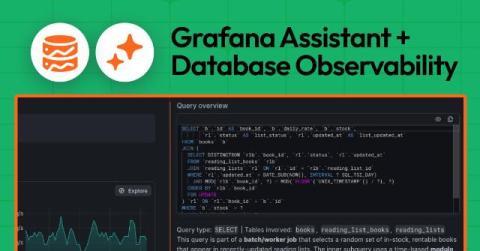
Troubleshoot performance issues faster with the new Grafana Assistant integration for Database Observability

So your database is slow. Now what? Grafana Cloud Database Observability already gives you visibility into your SQL queries with RED metrics, individual execution samples, wait event breakdowns, table schemas, and visual explain plans. But visibility is just the starting point. You can see that a query's P99 latency spiked, but what should you do about it? You can see wait events like wait/synch/mutex/innodb firing, but what does that actually mean?

Elasticsearch 9.4 powers the next phase of the Elastic AI Ecosystem: Dell AI Data Platform with NVIDIA

AI is moving fast. Enterprise adoption needs to move with purpose. Over the past year, one thing has become clear: Organizations are not looking for more AI hype. They are looking for a path to production — one that connects infrastructure, data, and intelligence in a way that delivers real business value. That is exactly what the Elastic AI Ecosystem is built to do. At Elastic, we believe AI is only as powerful as the data foundation behind it. Great models matter.

Navigating the Middleware Maze: How meshIQ 12.1 Redefines Scale and Simplicity with Agentic AI

meshIQ v12.1 transforms middleware management with petabyte-scale data processing and agentic AI. The new intelligent launchpad, simplified onboarding, and context-aware safeguards move teams from reactive monitoring to proactive, AI-driven operations across the enterprise.

Resolve's Agents of IT - S2Ep9 - When AI Personalization Gets too Personal

In this episode of Agents of IT, we dive into one of the biggest conversations shaping enterprise AI right now: personalization. From copilots vs autonomous agents to the “creepiness threshold” of hyper-personalized AI, we explore what organizations are getting right, what they’re getting wrong, and why context matters more than ever in the future of IT operations. Topics covered in this episode: The team also breaks down.

The Role of AI Chatbots in Modern DevOps Incident Response

Modern DevOps environments demand speed, accuracy, and continuous availability, especially when incidents disrupt critical systems. As organizations scale their infrastructure, traditional response methods often struggle to keep pace with the volume and complexity of alerts. This is where intelligent AI chatbots for customer support are becoming essential, as they provide real-time conversational interfaces that connect teams to automated workflows, incident data, and resolution tools, much like the capabilities showcased in advanced enterprise conversational AI platforms.

How AI Video Tools Like Face Swap Are Expanding Creative Workflows

I have spent a lot of time looking at how businesses create content, and one thing has become very clear to me: video is no longer a separate creative format. It has become part of everyday communication. Marketing teams use video for campaigns. HR teams use it for training. Product teams use it for explainers. Founders use it for updates. Even internal documentation is becoming more visual.

Harness Lives Inside Cursor Now - Plus Everything Else That Shipped in April

April was a big month at Harness. AI is changing how code gets written — and the rest of the SDLC is catching up. In this update, Dewan Ahmed walks through Harness product releases across three themes: AI in the developer workflow, security and governance for AI assets, and self-service maturity for developers and platform teams. What's covered (with timestamps): Found this useful? Subscribe for monthly product updates, and drop a comment telling us which release you want a deep dive on next.

Your Enterprise is Running AI. But Who is Governing It?

If you’ve been online in the last fortnight, you’ve probably seen ServiceNow’s “Kevin” memo, the fictional 2028 post-mortem about an enterprise where the AI agents won, the governance team was eliminated, and a single AI governance lead named Kevin spent two years filing risk assessments that were auto-resolved before anyone read them.

SmartAssist and SQL Analytics - AI-powered querying

SQL Analytics has always been one of my favourite SquaredUp features. That's not just because I can use raw SQL to achieve complex data transformations. The fact that I can run SQL queries over data from all sorts of sources — not just relational databases, gives incredible power and flexibility. The great news is that SQL Analytics now ships with our AI-driven SmartAssist technology.

The AI Paradox: Why You Have To Spend More And Can't Explain Where It Goes

AI adoption costs are going parabolic. The companies that can see what they're spending will invest with confidence. Everyone else is flying blind. Every company adopting AI is facing the same problem: the cost of AI adoption in products, in operations, and especially in engineering is accelerating with no alignment between spend and value. The competitive pressure is real. Companies that don’t invest in AI will be displaced by those that do. But the investment itself is becoming inscrutable.

Ep 41: The cost of not thinking: Who's responsible when AI agents get it wrong?

In this episode of Masters of Data, we get into the messier side of AI adoption, tackling questions like who actually owns the output when AI gets it wrong, and whether chasing efficiency is making us forget what it means to be human in the first place. We discuss tech CEOs proudly announcing they no longer think for themselves and debate whether AI is quietly eroding our critical thinking skills. We make the case that purpose-built, narrow AI is genuinely exciting, but that no efficiency gain is worth losing the human touch that makes work, connection, and creativity meaningful.

Apple's AI Challenge: Leadership Change Meets Strategic Pressure

Apple's anniversary year is marked not only by the symbolic results of the Tim Cook era but also by a strategic turnaround addressing the company's primary challenge: its lag in artificial intelligence. On September 1, John Ternus will take over the post of CEO, while Cook moves to the position of Chairman of the Board, focusing on strategic and regulatory issues.

LinkedIn Premium Plans and AI Productivity Tools for Modern Professionals

Digital communication and professional networking have changed significantly over the past few years. Professionals today rely on AI tools, automation platforms, and networking systems to improve productivity, generate leads, and strengthen their online presence. Platforms like ChatGPT and LinkedIn are now widely used across industries ranging from marketing and recruitment to sales and consulting.

AI in Software Delivery: Engineering Excellence or Just Market Hype? | Harness Blog

AWS re:Invent 2025 made one thing very clear: enterprise interest in AI is no longer theoretical. The conversation has moved beyond curiosity. Teams are actively experimenting, leaders are looking for production-ready use cases, and engineering organizations are trying to figure out where AI can create real leverage across software delivery, security, platform engineering, and operations.

Accelerating MTTR with Faster Root Cause Diagnosis: AI Advisor Now Supports On-Demand Connectivity, Config Context, and Device Diagnostics

Knowing something is broken is easy. Figuring out why is hard. Introducing three new, native AI diagnostic capabilities in the Kentik Network Intelligence Platform to accelerate root cause analysis and keep your network running better.

NVIDIA DCGM Collector: Deep GPU Monitoring for Data Center and AI Infrastructure

GPU infrastructure is expensive and increasingly central to production workloads. Whether you’re running ML training jobs, inference serving, video transcoding, or HPC workloads, understanding what your GPUs are actually doing, and what’s going wrong when performance degrades, is not optional.

This Month in Datadog - April 2026

In the latest episode of This Month in Datadog, Jeremy shares how to run autonomous Cloud SIEM investigations, remediate vulnerabilities with auto-generated fixes, and use natural language to explore Datadog. Later, Sumedha Mehta spotlights the Datadog MCP Server, which gives AI agents real-time access to Datadog’s observability data. Then, Chetan Sharma walks through Datadog Experiments, which measures how product changes impact the user journey.

AI Diagnostics in Kentik NMS (Network Monitoring System)

Network problems are easy to spot. Proving root cause is the hard part — and it’s where most of MTTR gets burned. Kentik’s new AI diagnostics in the Network Monitoring System (NMS) close the gap between detection and diagnosis by bringing three capabilities directly into Kentik AI Advisor.

AI Enablement for Dev Teams: The 6-Pillar Flywheel

AI adoption is already happening on your team, whether you have a strategy or not. Tracy Lee (CEO of This Dot Labs, Microsoft MVP, Google Developer Expert) breaks down the AI Enablement Flywheel — a 6-pillar framework used by successful engineering organizations to move from scattered experimentation to scalable, ROI-positive AI workflows.

AI Supply Chain Attacks Are Here. And Most Organizations Aren't Ready

When I read about the Vercel breach tied to a Context AI compromise, I wasn’t surprised. I’ve been talking with customers for a while now about how AI was going to introduce a new kind of supply chain risk. This is exactly what that looks like. What stands out to me is how familiar the pattern is. We saw it with open source, then again with SaaS, and again with cloud.

How AI Is Changing the Way Images Are Created

For most of modern history, creating images required skill, time, and specialized tools. Whether it was photography, illustration, or graphic design, the barrier to entry was clear: you had to learn the craft. AI image generation is changing that dynamic, and the shift is happening faster than many people expected. Today, anyone can describe an idea in plain language and receive a detailed visual in seconds. That alone has reshaped expectations around creativity, productivity, and ownership. But the real impact of AI image generation goes deeper than convenience.

Build with Claude Code, Deploy with Qovery

AI coding tools eliminated the 'writing code' bottleneck. But deploying that code? Still a mess. Here's how Claude Code + Qovery Skill lets you go from idea to production in a single prompt - with enterprise-grade guardrails. Romaric founded Qovery to make Kubernetes accessible to every engineering team. He writes about platform strategy, developer experience, and the future of cloud infrastructure.

Resolve Webinar: Introducing AgentLab: The Foundation of the Autonomous Service Desk

Most service desks still operate across fragmented systems. A single ticket can touch 4–7 tools, often more, slowing resolution and increasing cost. Copilots suggest. Traditional automation executes fixed paths. Neither closes the loop. AgentLab changes that. In this webinar, we introduce a new model built on agentic AI and orchestration. One where AI agents don’t just assist. They act, adapt, and resolve.

Google Cloud Next '26 Recap: AI, Efficiency, and the Rise of Frictionless Delivery | Harness Blog

‍Summary: Google Cloud Next ’26 focused on the future of software delivery, emphasizing that AI, platform consolidation, and an urgent push toward efficiency are reshaping the Software Development Life Cycle (SDLC). The key takeaway from the event was that organizations are moving from AI experimentation to operationalization, actively consolidating fragmented tools onto end-to-end platforms that embed AI for control, intelligence, and speed. ‍

Shadow IT Is Back - And Vibe Coding Made It 10x Worse

AI coding tools are the new Shadow IT - but instead of rogue Trello boards, they have OAuth access to your code repos, cloud accounts, and production databases. Here's what's already gone wrong, and how platform engineering fixes it. Romaric founded Qovery to make Kubernetes accessible to every engineering team. He writes about platform strategy, developer experience, and the future of cloud infrastructure.