Operations | Monitoring | ITSM | DevOps | Cloud

env zero Unveils Enhanced Cloud Governance Platform to Future-Proof Infrastructure Delivery in the AI Era

env zero today announced the next evolution of its Cloud Governance Platform. Designed for the speed, scale, and complexity of the AI era, and marked by a fresh new look and feel, the enhanced env zero platform empowers enterprises to deliver infrastructure 10x faster without losing control of infrastructure governance, security, compliance and cost oversight.
Sponsored Post

Accelerating Software Development: Modern SDLC Practices with AI and Automation

Modern software teams - especially in fast-paced SaaS startups - face constant pressure to deliver features quickly without compromising quality. The Software Development Life Cycle (SDLC) has evolved significantly in recent years, and embracing new AI-powered tools and automated workflows can dramatically increase a team's velocity. In this whitepaper, we'll explore how a small team of developers can work smarter and faster by integrating AI assistants, AI pair programming, modern Git workflows, and automated testing into their SDLC.

The Developer's Guide to Debugging AI-Generated Code

AI coding tools like ChatGPT, GitHub Copilot, and Claude have completely changed how we write software. From humble beginnings where non-AI-enabled code assistants made intelligent code suggestions, like Intellisense, the latest agentic tools can generate entire functions, suggest optimal algorithms, and even scaffold complete applications in minutes. However, as any developer who’s worked with AI-generated code knows, the output isn’t always perfect.

The Unit Economics Of Watering My Lawn: A Lesson On Runaway AI Costs

My wife and I spent hours this summer at home digging in the dirt. We planted new shrubs and perennials and created a small vegetable garden. We spread many square yards of fresh topsoil and grass seed over areas of lawn that needed rejuvenation. It turns out, I should have done all that landscaping with a FinOps leader’s mindset — before my water bill tripled when I wasn’t looking.

AI-powered email automation with CI/CD pipelines

Email automation allows you to send emails automatically based on certain triggers or schedules, so you don’t have to click the Send button every time. This includes things like welcome messages, drip campaigns, and regular newsletters. In this tutorial, you will create a simple system that automatically welcomes new subscribers and sends them updates about technology, all with the help of AI.

AI is writing your code. Who's watching your standards?

As a platform integrator, we get a unique look at the tools our customers adopt every day. Of all the shifts I’ve seen, none has been as rapid as the adoption of coding assistants. The conversation has quickly gone from ‘is this tool really going to drive value?’ to ‘how quickly can we roll this out?’ No one can doubt the immense value these tools provide in shipping code faster.

The AI Velocity Paradox

AI-powered coding alone isn’t enough. True software delivery velocity requires end-to-end automation and intelligent governance across the entire lifecycle. Harness enables organizations to escape the AI Velocity Paradox by unifying speed, safety, and resilience, turning rapid development into a sustainable competitive advantage. The widespread adoption of AI coding assistants is transforming software engineering.

Harness Acquires Qwiet AI to Power Its Application Security for the AI Era

Harness acquires Qwiet AI to power application security in the AI era, embedding reachability analysis to cut noise and prioritize real risks. By Sanjay Nagaraj, SVP Global Engineering, Harness; Co-founder and CTO, Traceable by Harness Today, I am excited to share that Harness has acquired Qwiet AI (formerly ShiftLeft), a leader in agentic AI-powered vulnerability detection and reachability analysis.

What is AI-Native Monitoring? The Complete Guide for Developers

Before we talk about AI-native monitoring, let’s take a quick step back to make sure everyone is on the same page. In software engineering, monitoring is the continuous collection and analysis of data about a system’s health, performance, and behavior. Tools like Scout Monitoring, Datadog, and New Relic traditionally track server uptime, request latency, error rates, and database performance.

The evolution of Integration technology through AI

Join us in this exciting podcast episode where integration pioneer Tom shares his 25+ year journey in tech, from message-oriented middleware in 1998 to leading AI projects at Microsoft. Tom dives into how AI is revolutionizing integration as the "backbone" of modern systems - think generative AI agents automating home damage inspections in minutes, reducing manufacturing downtime, and transforming financial trading.

AI Boom or Bust Session 2: Building Your Winning AI Blueprint

The Session 1 roundtable showed you where the industry’s headed. Now it’s time to chart your own course. In this practical, hands-on session, we’ll take the big-picture insights from Session 1 and translate them into actionable steps for your business. Learn how to build the right foundation across people, process, and product go-to-market so you can move from strategic ideas to tactical impact. 0:00:57 – Position yourself as the AI advisor for clients.

How GenAI Is Empowering Elastic Workforce

With over 10,000 questions answered and a 99% satisfaction rate in just 90 days, ElasticGPT, our internal generative AI assistant built on Elastic’s Search AI Platform, is transforming how our teams find information, make decisions, and complete day-to-day tasks. Matt Minetola, CIO, explains how ElasticGPT helps employees access company knowledge faster using natural language queries. Learn how we’re using retrieval augmented generation (RAG) and a secure, scalable architecture to deliver trusted, real-time AI experiences across the organization.

Resolve + Espressive: Accelerating Zero Ticket IT with Agentic AI and Automation

Traditional IT operations are struggling under the weight of manual processes, growing complexity, and escalating expectations for employee experience. Without agentic AI driven by an intelligent orchestration engine, organizations risk falling behind. That’s why Resolve and Espressive have joined forces. Together, we’ll deliver the industry’s most advanced AI agents for enterprises, combining conversational intelligence with powerful automation to eliminate tickets end-to-end.

Deploying a multimodal RAG application with Gemma 3 and CircleCI on GKE

Retrieval-Augmented Generation (RAG) has transformed how applications interact with Large Language Models (LLMs). RAGs ground LLM responses in external knowledge, improves accuracy, and reduces hallucinations. But traditional RAG systems have a significant limitation: they only process text. Multimodal RAG addresses this limitation by processing and understanding multiple data types (text, images, and potentially audio).

Streamline Software Delivery Right From Your IDE with Amazon Kiro and Harness

The integration of Amazon Kiro and Harness’s MCP server enables developers to manage, troubleshoot, and optimize CI/CD pipelines directly from their IDE using natural language, dramatically reducing manual effort and accelerating software delivery from code generation to production.

Transforming Customer Experience with Smarter AI Tools

Customer expectations for speed, personalization, and accuracy have never been higher. In a digital-first world, companies must deliver support that is both efficient and empathetic. Automation is no longer a luxury but a strategic necessity. Two technologies stand out in this transformation: systems that learn and reason like humans and digital agents that handle front-line interactions.

UnAiMyText: Transform Your AI Content Into Human-Like Text Effortlessly

Artificial intelligence has revolutionized the way we create content. From blog posts and marketing copy to social media updates, AI-generated text is now a go-to tool for writers, marketers, and businesses looking to scale content production. However, while AI can produce content quickly, it often comes across as robotic, repetitive, or lacking in emotional depth. This is where the need to make AI text sound human comes in.

Background Music Remover: The Complete Technical Guide

Audio separation technology has revolutionized content creation by solving one of the most persistent challenges: cleanly separating background music from dialogue and primary audio content. Understanding how these systems work-and when to use them-can transform your production workflow and elevate content quality across every project.

{unscripted} AI for DevOps and DBDevOps

Many software engineers are experts in application code but not in the nuances of creating a production-ready delivery pipeline. Architect Mode acts as a seasoned DevOps expert, engaging the user in a conversation to design a pipeline that incorporates organizational best practices for security, quality, and compliance from the very beginning. It’s like having a personal DevOps architect as a partner.

{unscripted} AI Verification and Rollback

Our first AI/ML capability, Continuous Verification, made Harness the first Continuous Delivery tool to understand observability telemetry and trigger rollbacks when deployments caused trouble. We knew we could do more to eliminate the friction involved in its setup. Deploying with confidence shouldn't require a coordination meeting between DevOps, SREs, and developers just to configure the right health checks. That’s why we’re introducing the next generation: AI Verification and Rollback.

{unscripted} AI in Chaos Engineering

Harness AI enhances your chaos engineering capabilities by leveraging artificial intelligence to automate and optimize reliability testing and analysis. One of the challenges of scaling up the Chaos Engineering practice within the organization is skilling up the users to create or run chaos experiments and to come up with solutions to mitigate the risks that are identified during the chaos experiment execution. The Chaos Engineering module comes with an AI Agent called "AI Reliability Agent" that helps in these aspects.

{Unscripted} Autonomous Code Maintenance

Nothing drains developer productivity like codebase maintenance. The endless cycle of dependency upgrades, bug fixes, refactoring, and paying down technical debt is tedious, error-prone work that pulls engineers away from building new features. Harness Autonomous Code Maintenance (ACM) turns these manual chores into automated, intent-driven workflows. Developers can now state their intent in plain English, with prompts like, "Upgrade the front end from React 15.6 to 16.4". From there, the Harness AI agent drives the workflow.

Grafana Labs Co-founder Woods: Market maturity, OpenTelemetry, and AI are reshaping observability

As organizations navigate increasingly complex tech environments, unified observability practices have become essential. That was one of the main takeaways from Grafana Labs Co-founder Anthony Woods’ recent appearance on “Tech Keys by by Mercari India,” a podcast hosted by Vaibhav Khurana, Head of Platform Engineering at Mercari India.

How To Tag AI Cloud Spend: A Practical Framework For FinOps Teams

The world of cloud costs is always evolving, and AI spend is quickly becoming one of the most unpredictable and confusing cost drivers. As more organizations integrate generative AI into their products, FinOps teams are struggling to account for — and control — these new, often mind-boggling cost streams. In fact, 44% of engineering professionals say improving AI explainability is a top priority in AI budgeting, according to CloudZero’s State Of AI Costs In 2025 report.

AI-Powered Chaos Engineering with Harness MCP Server and Cursor

The Harness MCP Server integration with Cursor transforms chaos engineering from a complex, specialized discipline into an accessible, conversational workflow that any developer can leverage directly within their AI-powered IDE. By combining natural language prompts with comprehensive resilience testing tools, teams can discover, execute, and analyze chaos experiments without vendor-specific expertise, democratizing system reliability across DevOps, QA, and SRE functions.

Streamline Software Delivery Right From Your IDE with Amazon Kiro and Harness

The integration of Amazon Kiro and Harness’s MCP server enables developers to manage, troubleshoot, and optimize CI/CD pipelines directly from their IDE using natural language, dramatically reducing manual effort and accelerating software delivery from code generation to production.

How Nexus BMS Uses Time Series and AI to Power Smarter Buildings

Monitoring equipment isn’t enough for today’s smart buildings; true value comes from being able to predict issues, optimize performance, and take action automatically. Traditional building management systems often fall short, limited to dashboards and alarms that only notify you of an issue after the fact. With the rise of open source hardware, modern databases, and AI-driven diagnostics, facilities can now move from reactive to proactive management.

The Compounding Returns of Blending Agentic Execution with Generative Creativity

— Jensen Huang, NVIDIA GTC 2025 Enterprise AI strategies have rapidly evolved, with substantial investments in Generative AI technologies delivering significant but limited business value. While Generative AI excels at content creation and information synthesis, its fundamentally reactive nature constrains its ability to drive autonomous business outcomes.

PagerDuty Joins Glean's AI Ecosystem: Unlocking More Seamless Incident Management

Today, we announced that PagerDuty is now officially part of the Glean MCP Directory! This partnership brings together two leaders in AI-powered productivity and operations, making it easier than ever for organizations to connect PagerDuty’s incident data directly to any AI tool or agent in their stack through the standardized Model Context Protocol (MCP). PagerDuty is the first (and currently only) incident management partner that is available via Glean’s AI ecosystem.

Securing the Future: Responsible AI on AWS with Sumo Logic -- Customer Brown Bag -- Sept 25th, 2025

This session with Moumita Saha, Sr. Security Partner SA – WW Consulting Partners, AWS, and Adam White, Sr. Dir. Technical Marketer at Sumo Logic explores how AWS and Sumo Logic partner to deliver practical strategies for securing generative AI applications, ensuring they remain safe, compliant, and trustworthy.

Build a versatile query agent with RAG, LlamaIndex, and Google Gemini

As a developer, you often face the challenge of retrieving information from multiple sources with different structures. What if you could create a single interface that automatically routes queries to the right data source? Imagine your application needing to answer both “What’s the population of California?” and “What are popular attractions in Hawaii?”.

Why Organizations Choose Cycle for AI

The race on AI is heating up; the next generation of vibe coders and prompt engineers are entering the job market as we speak, and AI is the hottest line item on most IT budgets this year. Building the next great home automation software or adaptive learning platform with cutting-edge machine learning is great and all, but like all great software, it needs to start with the plumbing.

LLM Observability in the Wild - Why OpenTelemetry should be the Standard

A few days ago I hosted a live conversation with Pranav, co-founder of Chatwoot, about issues his team was running into with LLM observability. The short version: building, debugging, and improving AI agents in production gets messy fast. There's multiple competing standards for default libraries for LLM observability. And many such libraries like OpenInference which claim to be based on OpenTelemetry don't strictly adhere to it's conventions.

Voice Conversational AI and its role in simplifying onboarding for new customers

Businesses are changing rapidly. While success was once measured by the quality of a product, today, the customer experience is what truly comes first. Think about it: you find the perfect service and are ready to use it, but the onboarding process is just a turn-off. Long forms, illogical steps, confusing instructions... Sound familiar? As a result, a huge number of potential users are lost. And this is where technology can really help.

How AI Humanizers Help Content Pass as Genuinely Written by Humans

Artificial intelligence has redefined the way we create content. Tools like ChatGPT, Gemini, and Claude can generate thousands of words in minutes, covering anything from academic essays to marketing copy. Yet, despite their power, AI tools share one major flaw: they often produce writing that feels mechanical.

Top Service Business Ideas for 2025

The service sector continually reinvents itself with each passing year. With more people seeking convenience, expertise, and personalized solutions, service businesses are becoming more relevant than ever. Unlike product-based ventures, service businesses often need fewer resources to get started and can be scaled gradually. For entrepreneurs seeking to make their mark in 2025, selecting the right service model can unlock opportunities for consistent income and growth.

#049 - The AI Translator: Using LLMs & MCP for K8s Operations & Self-Healing Infra with Alexei Le...

In this episode, Itiel Shwartz kicks off a series on MLOps, LLM, and GenAI in Kubernetes. Starting with Alexei Ledenev, who has over two decades in software development and deep experience in cloud architecture and distributed systems. He shares his journey from CoreOS Fleet to his current role on the Platform Team at Doit.

GitKraken MCP: Give Copilot & Cursor the Git Context They're Missing

AI assistants like Cursor and GitHub Copilot are fun to play with. They autocomplete code, refactor functions, and occasionally argue with you about whether you really needed that semicolon. But the moment you ask them to do something grounded in your repo, say, “start work on JIRA-123”… you hit a wall. They don’t know your branching conventions. They don’t know how your team links issues.

How to Responsibly and Effectively Contribute to Open Source Using AI

With the influx of AI tooling, it’s never been easier to contribute to open source communities. These tools are capable of gathering context quickly, “understanding” repositories faster than ever before. They provide instant summaries about repositories that, previously, would have meant reading lines and lines of code. They can fix bugs in programming languages you don’t know, and ultimately allow more contributors to get involved, which (almost) every open source project wants.

AI Browsers and AI Agents: A New Way of Working Online

People still head online for information of every kind. Traditional browsers got us there, but they stayed deliberately passive. You opened a tab, loaded a site, then did it again. The actual work moving content around, logging into accounts, drafting and sending messages-always fell to us. That old setup no longer fits how professionals operate today. Workflows are far more complex, with countless SaaS platforms, globally distributed teams, and nonstop communication streams. The gap isn't about needing yet another tool. It's about having a smarter partner right inside the browser.

AI's Role in Elevating Telecom Customer Experience

Telcos have added apps, chatbots, and new call scripts, yet customers still face long waits and generic offers. The problem isn't effort-it's outdated systems and reactive service models. AI offers a reset. By predicting needs, personalizing journeys, and automating support, it moves telcos from reactive service to proactive partnership. And given that large operators handle millions of daily customer interactions, the opportunity is enormous. AI doesn't just improve customer experience-it redefines it.

Cortex is now available in the Devin Marketplace, keeping your AI within the guardrails of your org wide best practices

We are thrilled to announce that the Cortex Model Context Protocol (MCP) is now available in the Devin marketplace. This integration connects the world’s first AI software engineer with the real-time context of your entire engineering ecosystem, as managed and measured by Cortex. The rise of AI software engineers like Devin fundamentally changes how organizations tackle their biggest technical challenges.

AI Hype vs. IT Reality: What to Expect from an IT Automation Platform That Actually Delivers

Artificial intelligence is everywhere: in keynotes, press releases, product announcements, and quarterly roadmaps. From help desk chatbots to predictive analytics, AI is being positioned as the silver bullet for almost every IT challenge. But under the surface, most IT leaders are asking a much more practical question: What’s actually real?

Sentry AI code review, now in beta: break production less

This could’ve been prevented. This should have been prevented. This too. We all hate getting tagged in PRs. The time, the blame for when you inevitably miss something, and constant “I wouldn’t have written it that way” feeling is just hard to shake. LLMs promised this would get easier. Promised they would do it for us. But as we’ve seen, we’re not there yet. But this is what Sentry does for a living. We catch bugs… in prod.

Agentic AI Becomes Essential: Why Adoption Is Accelerating and What Comes Next

The cautious optimism business leaders held towards AI agents has evolved into more widespread enthusiasm. In our last survey from April 2025, just over half (51%) of companies had deployed AI agents in their organization. Six months later, 75% of companies are deploying more than one agent, according to PagerDuty’s latest research.

Smarter AI Cost Optimization With Guardrails That Scale

AI adoption is reshaping how organizations innovate. It’s also driving cloud costs higher. CloudZero’s State Of AI Costs In 2025 report finds that for mature FinOps and engineering leaders, visibility into AI costs is a critical first step, but it’s not enough. To enable fast, responsible AI and machine learning innovation at scale, teams need pragmatic, flexible guardrails. They don’t need rigid budgets or knee-jerk shutdowns that slow progress or push teams into shadow ML.

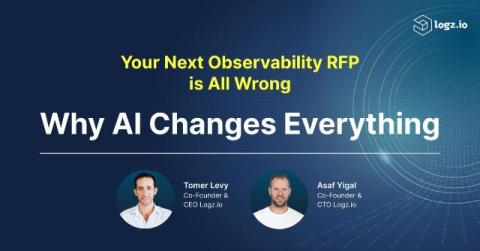
Your Next Observability RFP is All Wrong. Why AI Changes Everything

AI-first observability addresses two of the most pressing troubleshooting challenges: complex IT environments and AI-generated code. But understanding how to implement AI in a way that brings ROI, requires cutting through the hype and maintaining realistic expectations, while keeping a forward-thinking vision. In this blog post, we bring practical tips for including AI in your next observability RFP. The article is based on a webinar held with Logz.io founders, CEO Tomer Levy and CTO Asaf Yigal.

{Unscripted} AI Verification and Rollback

Our first AI/ML capability, Continuous Verification, made Harness the first Continuous Delivery tool to understand observability telemetry and trigger rollbacks when deployments caused trouble. We knew we could do more to eliminate the friction involved in its setup. Deploying with confidence shouldn't require a coordination meeting between DevOps, SREs, and developers just to configure the right health checks. That’s why we’re introducing the next generation: AI Verification and Rollback. We’ve moved beyond just AI-powered analysis to AI-powered setup.

Future-proofing Singapore as an AI-first nation with Search AI

During the 2025 National Day Rally, Singapore’s Prime Minister Lawrence Wong announced a renewed commitment to empower Singaporean workers with AI and transform the nature of jobs as Singapore takes steps to adopt AI in business processes. He referenced an AI-powered orthopantomogram (OPG) scanner that flags dental conditions when analyzing X-rays, reducing the time taken for assessment from 15–20 minutes to 15–20 seconds.

Automate Your Infrastructure Analysis with Scheduled AI Reports

The least exciting part of an operations or SRE role is often the manual, repetitive task of generating reports. It’s the Monday morning scramble to summarize weekly infrastructure health for the team, or the end-of-quarter push to build a capacity planning document. This is boilerplate work that pulls you away from critical engineering tasks. We believe that if a process is repeatable, it should be automated. That’s why we’re introducing Scheduled AI Investigations and Insights.

Introducing Chunk: The agent that validates code at AI speed

The software development landscape has fundamentally shifted. Teams are shipping more value faster than ever, leveraging AI to generate code at unprecedented speed. But with this velocity comes equally dramatic complexity — small teams now face challenges that once belonged only to large organizations, while large organizations grapple with codebases that strain human comprehension. This complexity isn’t a bug — it’s a productivity opportunity to embrace.

Beyond Automation: The Rise of Agentic Networks

Agentic AI is the next evolution in network management, moving beyond simple automation to intelligent systems that can reason, plan, and act autonomously. Justin Ryburn, Kentik Field CTO, highlights how this shift automates expertise, enables proactive problem-solving, and empowers human engineers for strategic innovation.

Meet Rovo Chat in Bitbucket: your AI-powered teammate

We’re excited to announce that we are starting a phased rollout of Rovo Chat in Bitbucket Cloud today! It will be available to 100% of users by September 30th, 2025. To check if it’s available on your account, look for the Rovo Chat button in your top navigation. Rovo is Atlassian’s AI-powered teammate that helps you find what matters, learn faster, and take action right in your workflow.

License Plate Recognition: How AI is Transforming Traffic Management

Traffic today is a mix of chaos and opportunity. With cities growing denser and cars filling up every available lane, managing traffic efficiently is more crucial than ever. That's where License Plate Recognition (LPR) steps in-powered by artificial intelligence, it's changing the way we think about traffic management, parking operations, and public safety.

AI Assistants: Revolutionizing How We Work, Learn, and Live

In today's fast-paced digital world, artificial intelligence (AI) is transforming industries and reshaping the way we interact with technology. Among the most impactful AI innovations are AI assistants, virtual tools designed to help users streamline tasks, improve productivity, and enhance decision-making. These intelligent assistants are no longer just futuristic concepts; they are real, practical, and accessible to individuals and businesses alike.

7 Best AI Voice Tools Every Online Educator Should Try

Online education has grown rapidly in recent years, making it easier for teachers, trainers, and course creators to reach learners across the globe. But with this growth comes a new challenge: how to keep students engaged in a virtual classroom. One of the most effective ways educators are addressing this is by using voice tools. These tools allow teachers to create professional-quality voiceovers, enhance presentations, and make learning more interactive.

Skywork AI: Revolutionize Your PPT with Cutting-Edge Tech

Skywork AI transforms how U.S. professionals build presentations. Start with a concept, and the platform scans millions of documents to produce fast, source-backed summaries and polished slide drafts. This cuts research time and helps teams move from idea to stakeholder-ready decks in hours rather than days. Executives, analysts, and students benefit from a single workflow that creates outlines, slides, and final reports. The models draw on an open-source lineage and 3.2TB of multilingual and code training data, giving breadth for complex topics.

Introducing Cortex MCP in Devin: AI Engineering Guided by Your Best Practices

Cortex is now in the Devin Marketplace keeping your AI within the guardrails of your org wide best practices With this integration, Devin, the world’s first AI software engineer, can use Cortex data & best practices, like Scorecards, to understand your engineering standards and automatically fix issues at scale. Here’s how it works: Watch the demo to see how Eyal, one of the engineers at Cortex, used Cortex & Devin to turn best practices into action.

AI in Server Monitoring: Why Human Context Still Matters in 2025

When Microsoft rolled out Windows Server 2025 last November, it marked a turning point in how IT teams think about monitoring. Suddenly, AI-powered features like anomaly detection, predictive resolution, and even self-healing aren’t ideas on a roadmap — they’re built into the very fabric of enterprise infrastructure.

The real reason your AI initiatives are failing

AI has made it faster and easier to change a codebase than ever before. But in a system as complex and interdependent as modern software delivery, writing code has never been the biggest challenge. For most teams, the real constraint is getting that code safely into production. So while AI assistants and autonomous coding agents have dramatically accelerated the pace of change, for many organizations those changes are piling up against bottlenecks that were already slowing them down.

Modern E2E Testing with Playwright and AI

Pair Playwright with LLMs to plan, generate, refactor, and monitor end-to-end tests, without shipping hallucinations. This webinar showcases practical workflow: ground models with fresh docs, driving the browser via Playwright MCP, auto-fixing failing tests, refactoring to POMs, add API checks, and reusing the same suite for synthetic monitoring in Checkly. Chapters.

Why AIOps Needs Agentic AI

The AIOps and observability market has always been fragmented—and it’s not by accident. Different domain-specific tools, multiple data types, and reliance on supervised learning created complexity and silos. Now, a new approach is emerging. By placing LLMs at the center of decision-making, Agentic AI has the potential to unify this fragmented space and truly transform AIOps. This clip explains the root of fragmentation—and why the agentic approach offers a way forward. For a deeper dive, visit our website to see how the Fabrix.ai platform is architected to solve the real-time data challenge in AIOps.

Azure Integration Services and AI

Join Mick and Sebastian as they dive deep into the world of enterprise integration, exploring the evolution from BizTalk Server to Azure Integration Services and the growing impact of AI on integration projects. Discover how integration is crucial for breaking down data silos to power AI models, the importance of data privacy and compliance especially in the EU and the challenges developers face in keeping up with rapid technological change.

Scaling AI the right way in the enterprise

AI isn’t the future—it’s already here, shaping inboxes, dashboards, and project roadmaps. Yet, despite the hype, most enterprises struggle to scale AI in ways that deliver real impact. In this episode of the ManageEngine Insights Podcast, host Jeremy Spence sits down with Michael Barnes, a trusted advisor to APAC C-level leaders, to uncover why so many AI initiatives stall after the pilot stage.

Automate or Elevate? 5 Steps to Build an AI-Powered Incident Playbook

Modern development tools, CI/CD infrastructure, and AI have accelerated the pace at which companies release software. This speed supports innovation, but it also increases complexity and the chance of something breaking in ways that aren’t immediately obvious. Teams now deal with more operational data, complex failure patterns, and systems where a small configuration change can ripple across dozens of microservices.

How GenAI is Shaping Elastic Customer Support

Discover how GenAI has accelerated Elastic's customer and support efficiency. Built on Elastic’s Search AI Platform, the Support Assistant delivers self-service in-product customer support and capacity gains within our support function. Julie Rudd, VP of Support at Elastic, shares how it speeds up issue resolution by combining generative AI with Elastic’s deep knowledge base. Hear directly from a support engineer how the Support Assistant streamlines case resolution and helps engineers and customers find answers faster.

The Blind Spots That Haunt Legal IT

In a recent survey, Udacity’s team explored the evolving landscape of AI adoption by asking 2000 professionals (including those in the legal sector) if they used AI. Unsurprisingly, over 90% of respondents said they did. More concerning, 72% of managers reported personally paying out of pocket for AI tools to use at work, introducing uncontrolled risk into corporate environments.

How AI Turns Monitoring From "What Now?" Into "What's Next?"

It's 3 AM. Your phone starts buzzing with alerts, and you stumble to your laptop only to be greeted by a dashboard that looks like the control panel of a nuclear reactor in meltdown: Red lights everywhere. Numbers that should be green are decidedly not green. And your brain, still foggy from sleep, is asking the most fundamental question in all of IT operations: "Okay, yes, there's clearly a problem... but, now what?".

How to Read the City Without Leaving Your Screen

Understanding how a city operates has never required full immersion on foot or hours of people-watching from a bench outside a train station. These days, real-time data and digital platforms do most of the legwork. Anyone can read the flow of a city by observing its online signals, which move as rapidly as traffic during rush hour. Location-based apps, social feeds, open data portals, and maps with live overlays create an ongoing narrative of urban behavior. Individuals can use this information to understand how people move, where they gather, and what draws their attention at particular times.

LLM app Observability: Opentelemetry as a standard

LLM observability is broken There are too many new libraries floating around, but they don't follow accurately the OpenTelemetry conventions. OTel isn’t perfect for LLMs yet—but extending a proven standard beats inventing another one. Why not use the same standard (OTel) which works so well for rest of the apps, and just work on top of it? This is what I was ranting with Pranav Raj S, co-founder at Chatwoot and we thought there must be other folks facing similar issues.

From Productivity to Performance: SQL Prompt's Next Chapter with AI

For nearly 20 years, SQL Prompt has been a trusted companion for database professionals, helping them write cleaner code, reduce errors, and save time. From its earliest days, the focus has been on productivity while removing the repetitive, mundane tasks that slow people down. It’s been about building the reliability and performance that developers and DBAs depend on every day and that story doesn’t stop here.

Datadog in the Era of AI

AI is changing everything. At Datadog, our approach is two-fold: empower you with complete observability across your entire stack, including AI as you incorporate it, and harness emergent technologies to make Datadog even more powerful. Join VP of Product Michael Whetten to see how Datadog is accomplishing these two approaches. He'll share the latest feature updates and new products designed to help you thrive in an AI-powered world. Plus, get a look at our long-term vision for the future of AI and its impact on your work.

Your Next Observability RFP Is All Wrong: Why AI Changes Everything

Watch how AI is reshaping observability for the years ahead. In this fireside chat, Logz.io founders Tomer Levy and Asaf Yigal reveal how the most innovative AI-first companies are breaking free from dashboards, avoiding common RFP mistakes, and building future-ready stacks. You’ll see: Watch and learn how autonomous AI eliminates noise, slashes costs, and gives engineering teams back their velocity.
Sponsored Post

Implementing Agentic AI: A Technical Overview of Architecture and Frameworks

As businesses strive for smarter, faster operations, Agentic AI redefines enterprise operations, introducing solutions for autonomous decision-making and tackling complex challenges with precision. Agentic AI introduces an intelligent, enterprise-focused approach to enhancing operational efficiency and adaptability, paving the way for innovation. Its ability to support operational scalability and streamline workflows positions it as a vital tool for modern IT ecosystems.

ManageEngine named in the 2025 Gartner Magic Quadrant for AI Applications in ITSM

We're proud to announce that ManageEngine has been recognized in the 2025 Gartner Magic Quadrant for AI Applications in ITSM. This recognition comes after Gartner's comprehensive evaluation of our Completeness of Vision and Ability to Execute. We believe this recognition reflects our commitment to making AI-driven ITSM cost-effective, easy to implement, and scalable to meet modern enterprises' growing needs.

AI's Impact on Software Devs Productivity & Downsides

AI is boosting flow, job satisfaction, and productivity for devs. But here’s the twist: it’s not actually giving us more time to do valuable work. In his GitKon talk, Nathen Harvey digs into the real impacts of AI adoption in technical teams. Yes, AI reduces toil and improves satisfaction. But it also shifts how we spend our time and sometimes that means less “valuable work” gets done. So the question becomes: how can we use AI not just to work faster, but to work better?

The AI Cost 'Black Box' - And How CloudZero Provides Clarity Into Spend

AI adoption continues to explode, and so do their costs. By mid-2025, enterprise LLM spend had already hit $8.4 billion, more than double the year before. And in a major shift, Anthropic recently overtook OpenAI as the enterprise leader. Their Claude models are now core tools for companies adding generative AI technology into their products and workflows. CloudZero recently announced we are the first cloud cost platform to integrate with Anthropic.

Troubleshooting Microservices with AI

Ever found yourself saying, "But it works on my machine!" when a bug pops up in a microservices environment? It's a common and frustrating problem. Unlike a monolithic application, microservices are a collection of independently deployed services that communicate with each other. This complexity makes it difficult to reproduce real-world issues on your local machine, as you may not have all the necessary services and dependencies running. But what if you could take a snapshot of a running application's behavior and bring it home for debugging?

Starting from Scratch: How Beginners Can Quickly Create High-Quality AI Artworks with arting.ai

With the rapid advancement of artificial intelligence technology,AI art creation has become a significant trend in the digital art world. Many beginners often wonder how to quickly get started and produce high-quality AI artworks. As a user-friendly and powerful AI art generation tool,arting.ai is designed to lower the entry barriers,allowing users with no drawing background to easily create stunning works. This article will walk you through the full process,from registration to generating finished art,complemented by simple tutorials and practical tips to help AI art beginners get up to speed quickly.

AI Advertising Tools Easy for Beginners and Professionals - Practical Guide to Admaker.ai

In today's increasingly complex and competitive digital marketing landscape,creating compelling advertising content is a significant challenge for many marketers. Whether you are a beginner just starting out or an experienced professional,everyone is looking for a tool that simplifies the creative process and boosts efficiency. AI Ad Generator - Admaker.ai is precisely such an intelligent and user-friendly AI advertising platform that helps users instantly generate high-quality ad materials with very low barriers to entry.

Build or Buy AI? Why Homegrown Service Desk Tools Fail (and How Leading Vendors Get It Right)

Service desk AI has become one of the hottest topics in IT. Everyone wants to slash ticket volumes, resolve incidents faster, and give employees the kind of instant, self-service support they expect in the modern workplace. The appeal here is obvious: fewer tickets, happier users, and IT teams finally freed from the grind of repetitive, reactive firefighting.

You Don't Need a Five-Year AI Plan. You Need a Five-Week One.

In my travels, I constantly hear about plans that promise to “unlock the full power of AI” down the road. The usual advice is to start small with a few pilots, then gradually scale up from there. It looks good on paper, but in practice, it becomes a months-long slog of one-off experiments that burn a lot of capital, but usually generate little impact on their own.

AI's False Efficiency Curve: How To Save And Protect Your Margins

The popular narrative around AI economics is changing. At one time, Moore’s Law conditioned us to expect that smarter, faster computing would steadily get cheaper. When it comes to AI, that expectation holds true at the unit level. Per-token costs are indeed declining. But the number of tokens consumed per task is growing exponentially, making total costs spike. The tension here is important: on paper, inference is getting cheaper.

How Smart Technology Is Making Mental Health Care More Personal

Mental health technology is transforming how we access and receive care in a time when it's desperately needed. According to the National Institute of Mental Health, nearly one in five U.S. adults (57.8 million people) live with a mental illness, yet only about 50% receive proper treatment. This treatment gap has prompted innovative solutions that make support more accessible and personalized.

Introducing AI Drive: Closing the AI Value Gap

The enterprise is standing at the edge of a seismic shift: an AI revolution. In the next five years, the way work gets done will be fundamentally reshaped as workflows once handled by humans are increasingly replaced or enhanced by artificial intelligence. But here’s the reality: success won’t come from simply handing out Copilot or GPT licenses and hoping employees figure it out.

LangChain Observability: Monitoring Guide for Production Apps

LangChain applications fail differently than traditional web apps. A single user request can trigger 15+ LLM calls, cost $5 in tokens, and fail silently without throwing errors. One team discovered a $12,000 OpenAI bill caused by a recursive chain with no monitoring. This guide shows how to implement observability for LangChain applications, giving you complete visibility into performance, costs, and errors before they impact your users or budget.

A Leader's Guide to Upskilling Teams for the AI Era

Every week, we hear about new AI breakthroughs. AI models write code, create videos, or analyze data in ways we couldn’t imagine just months ago. But there’s a gap: While most companies have adopted AI tools, the majority of employees still don’t use AI in their everyday work. As a manager, you see AI’s potential to change how your team works. Yet your employees struggle to figure out how AI fits into their daily tasks.

Agentic AI in Customer Support: Is It Ready to Resolve 80% of Issues Autonomously?

Daniel O’Sullivan, Senior Director Analyst at Gartner Customer Service & Support Practice, recently said in an article “Agentic AI has emerged as a game-changer for customer service, paving the way for autonomous and low-effort customer experiences.

Debug, query, and build faster with AI: How we use Grafana Assistant at Grafana Labs

We recently released Grafana Assistant into public preview for Grafana Cloud, and we’ve been excited to see how our customers have already made it part of their daily observability routines. At the same time, Assistant is becoming a go-to companion for developers right here at Grafana Labs, whether they’re debugging on-call issues, helping customers, or trying to remember tricky PromQL syntax.

Meet Canvas: Your AI-guided Workspace Within Honeycomb

Modern systems are wonderfully capable, but relentlessly complex. Debugging across microservices, frontends, and cloud edges often means switching between five or more tools, trying to stitch together “what changed” and “why it broke.” Honeycomb’s wide events model has proven to be a superpower for taming that complexity, by allowing you to easily observe and query end-to-end traces without worrying about how much granular data you attach to your events.

Behind the Dashboard: How to monitor your LLM integrations

Behind the Dashboard is an ongoing series where we look under the hood of a specific Catchpoint feature. Each episode breaks down the technology itself, what’s challenging about using it for monitoring, and how we removed friction and toil to make it a valuable part of the Catchpoint platform. In this episode Leon, Mursi, and Rahul take a look at Catchpoint’s LLM monitoring capabilities, including ensuring your integrated LLMs are up and performing optimally; as well as knowing if you’re using the most effective (accurate) and economical (cheapest per query) option in your suite.

Debugging issues with Sentry's MCP

Turns out, this MCP thing is pretty solid. We've built the MCP server to tap into all the different areas of context within Sentry and make it easy to bring these into your editor client to help debug your application. Want to know the most fixable issues in your environment? Easy. Want to see your query performance for your backend? Just ask it.

AI Reliability Insights: How to Build a Gremlin MCP Server

Gremlin’s Reliability Intelligence helps teams uncover the cause behind failure modes so they can move faster and improve reliability without sacrificing velocity. The new Gremlin MCP Server, part of Reliability Intelligence, gives you new ways to explore your data, giving you access to insights and recommendations to improve reliability and better run your systems using Gremlin. In this webinar, Gremlin CTO Sam Rossoff shows you how to integrate your favorite LLM and use plain language to query data, uncover insights, create dynamic dashboards, and more.

Introducing Honeycomb Intelligence Canvas

Canvas is an AI-guided workspace inside Honeycomb that combines an AI assistant with an interactive notebook for visualizing query results and traces. You can ask a natural language question about your data and Canvas will immediately start exploring your traces, through multiple queries and other tools, to find the right next steps. Instead of having to write each query yourself, Canvas automatically proposes relational queries, comparisons, and visualizations that explain why an SLO fired or what changed after a deploy.

FireHydrant 4-Minute Demo

Get a quick walkthrough of the FireHydrant platform. FireHydrant is the all-in-one incident management platform that helps teams resolve incidents up to 90% faster — and prevent them from happening again. From flexible alerting and powerful automation to retros and AI insights, it brings clarity and control to every step of your response.

Musk Challenges Apple-OpenAI Integration, Raising Questions on AI Competition

Elon Musk - via X Corp. and xAI - recently filed an antitrust suit in Texas. He's going after Apple and OpenAI. The claim? That Apple lets ChatGPT run deep inside iPhones and Macs, which may give Apple a nearmonopoly that hurts his own chatbot Grok and various other rivals. Musk is seeking billions in damages and a court order to stop the practice. The case arises while he still constantly talks about his early days at OpenAI, which he left after its commercial shift.

Finding the Ghost in the Machine

The industry is rapidly moving towards deeper AI integration than ever before. What was once simply focused on chatbots or recommendation engines has pivoted significantly to AI systems communicating with other AI systems. These AI tools are leveraging multi-agent workflows to accomplish complex tasks that traditional systems have struggled with. Innovation without validation is a liability. Any developer worth their salt will know that these systems require ample testability and validation.

AI Wrote Your Bugs, AI Will Fix Your Bugs

There’s a lot of JavaScript developers these days not actually writing code. They whisper sweet prompts to our AI tools and hope for the best. Is it really any worse than copy-pasting from StackOverflow? Welcome to the era of vibe coding, where understanding your code is optional and “it works on my machine” has evolved into “the AI said it would work.”

It broke... lets fix it with Sentry MCP and Seer

Real debugging starts in the editor where you're probably digging through the last commits wondering what random thing changed. Fortunately, you're probably using Sentry and it's going to give you that information. Sentry's MCP is the best way to bring all that context of what broke and how, into your editor so you can fix broken things faster. With Seer, you can bring in the root cause, and solution, and have tools like Cursor or Claude Code go fix it. We'll show you how.

If AI isn't Driving Growth, CX, and Innovation, You're Doing It Wrong

While headlines celebrate each new breakthrough in AI capabilities, businesses are quietly mastering a different art: deploying focused AI solutions that target specific operational challenges. This shift changes everything. We're moving from generic AI that tries to do everything to, as Gartner says, an ROI-driven implementation that does exactly what your business needs. The future of AI's successful adoption lies in smarter applications that solve real enterprise problems.

Resolve's Agents of IT podcast - Ep. 1 - Pat Calhoun at Espressive - AI in IT: A Combined Operation

Welcome to the very first episode of Agents of IT, the podcast for IT leaders accelerating the shift to Zero Ticket IT! For our inaugural episode, Sean Heuer (CEO) and Ari Stowe (COO) sit down with Espressive founder Pat Calhoun to discuss why agentic AI and intelligent orchestration are the superhero duo that teams need to meaningfully transform IT. This is a conversation that tech leaders looking to shake things up won't want to miss.

The End of "Good Code"? AI, Throughput, and Reliability with CircleCI CTO Rob Zuber

Is “good code” still the right measure of engineering success in an AI-driven world? In this episode of *Humans of Reliability*, Rob Zuber, CircleCI CTO, joins Sylvain to explore how coding assistants are reshaping developer workflows and changing what teams value. Rob shares what he’s seeing across CircleCI’s customer base: a clear boost in throughput, new bottlenecks shifting from code creation to code review, and the rise of “vibe coding,” where engineers trust AI-generated code they may not fully understand.

AI Assistant for Self-Service Portal #helpdesk #aiassistant

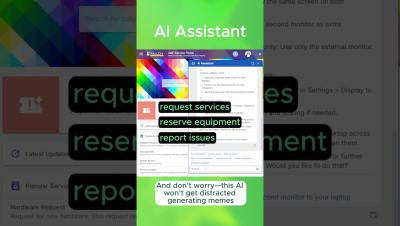
Take a load off your IT team! The new AI Assistant instantly understands user problems and pulls tailored solutions from past tickets and your knowledge base, so customers can resolve standard issues independently. In this video, we used gpt-4.1-mini for completion and text-embedding-3-large for generating embeddings. Perfect for IT teams and help desks looking to reduce repeat requests and give customers faster, more independent support.

AI: The Invisible Hand Now Shaping Blockchain

Although you might not have realized it so far, the time will come, and suddenly, you'll see for yourself that blockchain has disrupted everything people used to know regarding the financial sector, especially with the facets of payment and banking. How? Largely, things have changed with the introduction of concepts like cryptocurrencies and decentralized finance (DeFi), offering better alternatives to traditional financial systems that have long left people frustrated, consumed by rage, and suffocated by heavy, soul-crushing emotions. They were right to do that, for these structures did not fail in isolation.

Agentic AI in Retail is Redefining How Brands Target and Monetize

Retail is no longer defined by the checkout counter or button. What used to end with a purchase has expanded into an always-on ecosystem of engagement, media, and service. Every interaction, from browsing to post-purchase, now carries both experience value and monetization potential. This shift has made Retail Media Networks (RMNs) the fastest-growing profit center for retailers, but their scale and complexity demand more than human-led operations or rule-based automation.

Monitor the Health, Performance, and Security of Your AI Application Stack with AI Agent and AI Infrastructure Monitoring

At this year’s.conf25, we introduced an exciting new chapter in observability at Splunk — one that is unified, AI-powered, and agentic — to ensure ITOps and engineering teams are digitally resilient in the AI era.

Can Your Team Survive the AI Revolution?

AI is transforming how development teams work, but many organizations struggle to adapt effectively. Snowflake Director of Product Jeff Hollan shares four essential principles for building adaptive development teams that thrive in an AI-driven world. Drawing from his experience at Microsoft Azure and Snowflake, Jeff provides practical strategies for embracing change, fostering innovation, and preparing your team for the future of software development.

Introducing Honeycomb Intelligence MCP Server - Now GA!

In the months since we launched our public beta, we’ve been hard at work making Honeycomb MCP more useful and capable for agents and human operators alike. Our goal with this project has been, from the start, to allow AI to engage in the same kind of investigatory loops that we guide users towards. Many of the new features are designed expressly with this in mind, the most exciting of which is BubbleUp, now available in.

Honeycomb MCP Is Now In GA With Support for BubbleUp, Heatmaps, and Histograms

If you’ve been following my public journey with LLMs this year, it probably won’t surprise you to learn that this blog post is an announcement about the general availability of Honeycomb’s hosted MCP server. I want to share a few updates about what’s new in the GA release, discuss some interesting learnings from building it, and share examples of how we’re using MCP internally. First: if you're still in the dark about MCP and AI agents, go read the earlier blogs I linked.

10 Ways an AI Video Translator Improves Viewer Engagement

In the digital era, connecting with audiences globally is more vital than ever. As content creators strive to engage viewers from diverse linguistic backgrounds, AI video translation emerges as an essential tool. These innovative systems enhance the viewing experience, enabling creators to reach wider audiences more effectively. Here's a look at ten ways an AI video translatorcan boost viewer engagement.

AI in Real Estate: Key Insights and Tips Realtors Can Use in 2025

Artificial intelligence is no longer a distant idea. It is now shaping industries, including real estate, where agents face new expectations from clients. The global AI real estate market was valued at approximately US$2.9 billion in 2024 and is projected to reach US$41.5 billion by 2033, with an annual growth rate exceeding 30%.

How to Use AI for Operational Excellence

Organizations are under immense pressure to do more with less – streamline operations, reduce costs, all whilst improving both the outcomes of the business and their employees. For IT and end-user computing (EUC) professionals, this challenge is especially prevalent. Systems are becoming increasingly complex, the digital employee experience is now directly tied to customer satisfaction, and the role of technology teams extends much further than solely keeping the lights on.

Monitoring Claude Code Usage with OpenTelemetry and SigNoz

In this video, we’ll walk you through how to monitor Claude code activity using OpenTelemetry and SigNoz. You’ll learn how to instrument your usage, capture telemetry data, and visualize it with SigNoz to get better insights into your system performance. Whether you’re exploring observability for AI workloads or looking for an open-source solution to monitor your llm activity, this guide will help you get started.

Observability Journey Panel - Dell x TekStream

Join Dell Technologies, TekStream Solutions, and Grafana Labs for a candid panel on scalining observability. Learn how enterprise teams scale observability, balance centralized vs. decentralized models, and accelerate adoption. The panel explores challenges with culture, governance, tool sprawl, and how AI is reshaping monitoring and incident response.

Beyond Wearables: How Remote Patient Monitoring Shapes Care Delivery

The healthcare industry has entered an era where the boundaries between in-person visits and digital health interactions are becoming increasingly blurred. Remote Patient Monitoring (RPM) sits at the forefront of this transformation, enabling physicians to track, analyze, and respond to patient health data in real time. While wearables such as smartwatches laid the groundwork, RPM has moved beyond step counts and heart-rate alerts. It now serves as a critical pillar of value-based care, reshaping how medical professionals manage chronic conditions, enhance patient engagement, and improve clinical outcomes.

Delivering Healthcare from the Cloud: Best Practices & Pitfalls

The healthcare industry is undergoing a rapid digital transformation, with cloud computing at its core. Cloud-based solutions are reshaping how providers manage patient information, streamline operations, and enhance the overall quality of care. From AI EHR systems to medical practice management software and outsourced medical billing services, the cloud offers opportunities for growth, efficiency, and improved patient experiences. However, this shift also presents challenges that healthcare organizations must navigate carefully.

How Teams Are Using AI to Tackle Observability Challenges (2025 Survey Insights) | Grafana Labs

In Grafana’s 3rd annual Observability Survey, over 1,000 engineers and leaders shared their challenges — tool sprawl, complexity, rising costs, and nonstop alerts — and their hopes for how AI can help.

Synthetic Monitoring for Vibe Coded Apps: Why You Need It

Not all software is the product of rigid planning, extensive documentation, and carefully designed test pipelines. Some of it emerges in bursts of intuition, created by small teams or individuals who prioritize momentum over process. This is what many engineers call vibe coding: development driven by flow and creativity, where the goal is to get something working quickly rather than ensuring every edge case is accounted for.

Empowering an MCP server with a telemetry pipeline

This blog was authored by Jason Bloomberg, Managing Director, Intellyx BV ‍ Observability depends upon telemetry – the data streaming from various applications, services, and systems that indicate their internal state in real-time. Various tools consume such telemetry to enable both operational and cybersecurity tasks.

Refine Faces Flawlessly with AI Image Generator Editing

The refinement of the face has become very much necessary in digital images. Polished faces add impact whether it is professional headshot, social profile or artistic art. The classic editing techniques usually seem time consuming and demand professional skills. Some find it difficult to get natural outcomes without bending them. With the emergence of AI technology, this approach is altered. AnAI image generator is able to refine faces quickly, accurately and with a natural finish. This will be the future of non-surgical facial enhancement.

The Next Evolution of AI: Forget Smarter Models - It's All About the Data

It’s been a noisy summer in the AI world. Headlines have been filled with doom and gloom: For example, OpenAI’s ChatGPT-5 landing with a thud, and an MIT report claiming 95% of AI pilots are failing. For the sceptics, this is “proof” that AI is just hype. I don’t buy it. The MIT study looked at just 50 projects, a sample size so small you’d fail a basic stats exam for using it. And as someone who uses AI every single day, I can tell you the benefits are real.

Sharpening My React Hooks Knowledge With ChatGPT

I’m a product engineer at Honeycomb. While my work spans the stack, I’m currently focused on deepening my frontend expertise. To support this, I’ve been using ChatGPT as a study assistant. It’s helped me break down complex topics with clear explanations, real-world examples, and—critically—interactive practice. The most effective formats I’ve found.

Transform your public sector organization with embedded GenAI from Elastic on AWS

Elastic featured in AWS Generative AI Hub for public sector Elastic is proud to be featured in the new AWS Generative AI Content Hub for public sector — a destination showcasing the most impactful ways agencies can securely adopt and scale generative AI (GenAI).

Episode 25: The dark side of GenAI: deepfakes, data and the future of trust ft. Malini Christina Raj

Generative AI is changing the way we work, create, and even trust what we see online. In this episode of Server Room, we sit down with Malini Christina Raj, Head of LATAM AI Research at Zoho Corp, to unpack the realities behind GenAI. From building models and the math that powers them, to data curation, privacy, AI agents, reinforcement learning, and the growing threat of deepfakes, we cover it all. Whether you’re an engineer, policymaker, or just AI-curious, this conversation will help you understand where AI is today and where it’s headed next.

MusicCreator AI Review: Redefining Creativity with AI-Driven Music

What sets MusicCreator AI apart is its philosophy: music creation should be democratized. Instead of limiting access to professionals with years of training, it puts tools into the hands of hobbyists, content creators, and indie producers. The result is a powerful solution that bridges technology and artistry.

Top Use Cases of Generative AI Services for Modern Businesses

Budgets are tight. Timelines are shorter. Customers expect speed and personalization. That is why leaders keep asking for clear, proven generative AI use cases that translate into revenue lift and cost savings. The aim is simple: move from ideas to outcomes without wasting cycles. Many teams begin with pilots, templates, or generative AI services that bundle models, data access, and publishing paths. This lowers setup time and shows impact early.

How AI Is Revolutionizing the Way We Share Written Content

Think about the time and resources you expend when writing content-maybe a blog, newsletter, or landing page. Now, imagine being able to automate how you generate ideas, create drafts, optimize content for SEO, and other demanding aspects of sharing written content. That's precisely what AI is doing in the marketing landscape today.

The New Physics of IT: Service-Centric Observability, AI-Driven Operations, and Intelligent Automation

Why the traditional model of monitoring and manual operations is collapsing–and what enterprises must do to survive The digital universe is expanding at a pace no enterprise can keep up with through traditional methods. Dependencies pull at each other in ways even experts can’t predict. What once could be managed with dashboards and siloed monitoring tools has become too vast, too interdependent, and too fast-moving, a new operating model is needed to master such complexity.

OpenAI Pricing: The Models, Features, And Costs To Know

If your SaaS organization is experimenting with OpenAI, your cloud bill just got a new line item. And unless you know exactly what drives it, that line item can go from manageable to margin-killer, fast. It’s also worth clarifying that OpenAI is not the same as ChatGPT. ChatGPT is the familiar end-user app with a flat monthly subscription. OpenAI, meanwhile, is the platform behind it — a mix of models, features, and usage-based pricing that shifts depending on what you build.

CloudZero Is The First Cloud Cost Platform To Integrate With Anthropic

The most challenging question in AI today isn’t how to build with it. It’s whether you can prove it’s worth what you’re spending on it. Every week, I hear the same thing from engineering and finance leaders: “We know the AI bills are big.

Self-Healing Networks and Sovereign AI: The Future of Global Connectivity

Bridging East and West in today’s digital landscape takes more than connectivity – it requires navigating regulations, geopolitics, and the rise of AI. In this episode of Uplink, Elena Chernykh, Head of Europe Enterprise Sales at CITIC Telecom CPC, joins Michael Reid to discuss how enterprises can thrive in a world where data sovereignty and AI demands are reshaping infrastructure.

Agentic AI: Cutting through the hype to what really matters

The world of agentic AI is evolving fast–but so is the noise surrounding it. As AI agents promise to revolutionize workflows and decision-making, IT and business leaders are left wondering: What's real, what's hype, and what's worth investing in? In this candid and practical session, we'll break down the current landscape of agentic AI and help you navigate it with clarity. Agenda.

The hidden costs of shadow AI: CPU drain, data risk, and network bottlenecks

The risk of headline-grabbing incidents, like Samsung’s ChatGPT data leak, related to AI usage outside of the authorization and control of IT (a.k.a. shadow AI) is clear. Most IT teams recognize that a high-profile incident can have serious repercussions. However, the risk of shadow AI goes well beyond the risk of a single incident. In fact, the recent Komprise IT Survey indicates that 79% of organizations have experienced negative outcomes from sending corporate data to AI.

Bringing Observability to Claude Code: OpenTelemetry in Action

AI coding assistants like Claude Code are becoming core parts of modern development workflows. But as with any powerful tool, the question quickly arises: how do we measure and monitor its usage? Without proper visibility, it’s hard to understand adoption, performance, and the real value Claude brings to engineering teams. For leaders and platform engineers, that lack of observability can mean flying blind when it comes to understanding ROI, productivity gains, or system reliability.

AI's Impact on Developer Experience: GitLens Creator Eric Amodio on the Future of Coding

AI is reshaping how developers work, from enhanced autocomplete to agentic workflows. GitKraken CTO and GitLens creator Eric Amodio breaks down the current state of AI in development, potential risks of over-reliance, and where the industry is heading. Learn about the evolution from simple code completion to sophisticated agents, the challenges facing junior vs senior developers, and practical advice for leveraging AI tools effectively.

Digital Infrastructure Expertise: The Secret Sauce for Scaling AI

The past few years have seen the incredible rise of cloud-native AI start-ups, many of them born during the pandemic. These companies emerged agile, experimental, and ready to scale. But as their ambitions grow and their AI models become more complex, they face a critical crossroads: how to manage infrastructure sustainably while continuing to innovate at speed. In the early days, public cloud services were the obvious choice.

Every AI Agent Needs a Sidekick: An AI Orchestration Platform

Agentic AI has sparked a ton of excitement in IT. These intelligent agents can analyze signals, interpret requests, and recommend actions with surprising accuracy. But left on their own, they struggle to translate those insights into reliable execution. The end result is a fragmented picture of great thinking... but limited doing. This is why orchestration matters.

Netdata AI Troubleshooting is Now Generally Available with On-Demand Credits

Since launching our AI investigations and insights in a research preview, one thing has become clear: automated root cause analysis delivers a significant return on investment. Teams have confirmed that instant insights don’t just save a few minutes; they fundamentally shorten incident response cycles, free up valuable engineering hours, and reduce the business impact of downtime.

Build and deploy a Pinecone question answering RAG application

Vector databases allow you to store, manage, and efficiently query high-dimensional vector data, which are numerical representations of data like text, images, or audio. Pinecone is a fully managed vector database optimized for fast, scalable similarity search—to power a Retrieval-Augmented Generation (RAG) system. This allows you to enhance language model responses by grounding them in relevant context retrieved from your own documents.

What are agentic IT Operations?

The rise of hybrid cloud, CI/CD, agile methodologies, and microservices has dramatically accelerated innovation, but it has also brought corresponding increases in complexity, fragmentation, and chaos. Enterprise IT departments are struggling to keep up. To stay ahead of these complex environments, enterprises have dramatically increased their spending on observability and IT Service Management (ITSM) tools. However, despite a 20% year-over-year increase in spending, incident detection remains poor.

Apple in Talks with Google to Power Next-Gen Siri with Gemini AI

Apple is officially considering several paths to revitalize Siri, its voice assistant introduced in 2011 but now deemed sluggish compared to its rivals. As reported by Bloomberg, the Cupertino-based firm is in early talks with Google to incorporate Gemini, the generative AI model from the Alphabet subsidiary, into the next Siri, which is set to launch in 2026. The aim would be to create a completely reconfigured Siri, that is more "intelligent" and "conversational.".

Building Autonomous Operations with AI Agent Orchestration in ServiceNow

You don’t invest in automation just to shave seconds off a workflow. You do it to reclaim time, reduce overhead, and eliminate waste that eats into margins. For a while, scripted chatbots and tier-1 deflection provided some degree of automation. They could close low-priority tickets or route FAQs, but rarely solved what mattered: zero-touch resolution and outcomes that don’t need follow-ups. Most enterprise automation is surface-level.

Gemini AI Pricing: What You'll Really Pay In 2025

If your team is experimenting with Google’s latest Gemini models, you’ve probably noticed the pricing can get murky. And like any cloud service, usage-based billing means those features can quickly rack up your SaaS costs. Free tiers fade fast. Token usage gets fuzzy. And before long, your GenAI bill feels more like a guessing game than a budget line item.

How to Make AI Your Partner in Content?

Artificial intelligence (AI) is transforming the way we approach content creation. Many mistakenly consider it as technology replacing human creativity. In reality, AI serves as a powerful assistant that many are using for various purposes, such as: Those who are using AI as their collaborative partner rather than a replacement for human insight are unlocking its true potential. In this blog post, we are going to share some effective strategies that smart content creators have adapted for using AI as a partner in their content.

Defining Digital PR in the Age of AI

The landscape of public relations has undergone a dramatic transformation in recent years, with artificial intelligence emerging as both a powerful tool and a fundamental force reshaping how brands communicate with their audiences. As we navigate this new era, understanding what digital PR means in the context of AI-driven marketing becomes essential for businesses seeking to maintain relevance and build meaningful connections with their target markets.

Measuring the Impact of AI Development Tools

You're adopting AI code generation tools to enhance your engineering team's output, but how do you quantify the real return on investment? Without precise measurement, you're navigating in the dark, unable to identify true productivity gains or pinpoint areas for optimization. Justifying these critical AI investments becomes difficult.