Operations | Monitoring | ITSM | DevOps | Cloud

From AIOps to agentic ITOps: Why AI for IT operations has entered a new era

Enterprise IT has reached an inflection point. Your teams are responsible for hybrid cloud infrastructure, microservices, third-party dependencies, and shipping AI-generated code at unprecedented velocity. IT environments are becoming more complex faster than traditional tools and processes can keep pace. Alert volumes keep climbing. Institutional knowledge keeps walking out the door. And the pressure to do more with flat or shrinking budgets isn’t letting up.
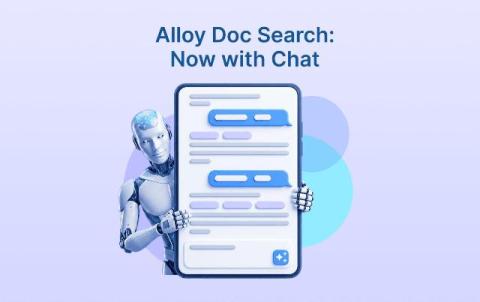
AI-Assisted Documentation Search Goes Conversational

Conversational AI has arrived in Alloy Software documentation, making it easier to find the exact answers you need. Ask a question, follow up naturally, and refine the response until you reach the right instructions or product details, without starting over or digging through pages. The redesigned experience keeps the conversation in context and lets you go as deep as you need.

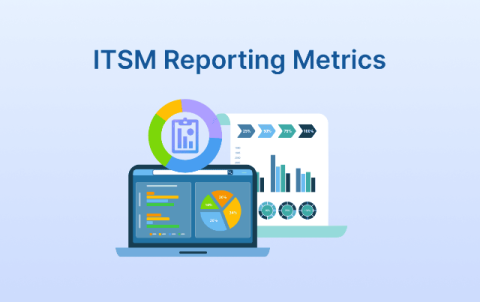
ITSM Reporting Metrics: The KPIs That Matter and How to Report Them

Discover the ITSM metrics that matter most—and how focused, action-oriented reporting can turn service data into better decisions. Effective IT service management depends on visibility, and visibility depends on measurement. Reliable reporting gives IT teams a factual basis for decisions and replaces assumptions with evidence.

Autonomous IT for Travel and Hospitality: Revolutionizing Guest Experiences and Operational Resilience

As the travel and hospitality landscape continues to evolve, Artificial Intelligence (AI) and Autonomous IT have become indispensable for staying competitive. These technologies are fundamentally transforming how enterprises deliver seamless guest experiences while ensuring resilient, efficient operations.

AI's Role in Enhancing Digital Commerce Operations

Artificial intelligence is quickly becoming a must-have for digital businesses, not just a nice-to-have. For companies looking to sharpen their operations, AI offers powerful ways to predict what's next, smooth out customer interactions, and keep transactions safe. It's not about replacing people, but giving them better tools. This lets teams focus on big-picture strategy while AI crunches data and automates tasks. This shift is changing what's possible in terms of how efficient a business can be, how happy its customers are, and how much it can grow.

How Ecommerce Teams Can Scale Local Delivery Without Adding More Dispatch Staff

A store running 20 or 30 local deliveries a day can plan them by hand. Someone pastes the addresses into a maps app, eyeballs a sensible order, screenshots the list to each driver, and the day works out fine. Then the store grows. Ninety orders come in, a third of them carry a two hour window, three are marked urgent, and the two drivers are on different shifts. The same process now eats the whole morning, and the errors it produces cost more than the time it takes.

Adding Routing Intelligence To Your Observability Stack

Observability has a blind spot, and for most teams it sits at the network layer. You instrument your services, scrape metrics into Prometheus, ship logs somewhere searchable, and build dashboards that tell you when something is wrong inside your infrastructure. But the routing that carries traffic to and from that infrastructure often lives entirely outside the stack, watched through separate tools that do not talk to your alerting. This piece looks at why routing belongs in your observability pipeline and what it takes to get it there.

How Ad Blocking Works in 2026: What Still Works After Manifest V3

Ad blocking in 2026 is no longer just about installing a browser extension and forgetting it. The landscape shifted considerably after Google's Manifest V3 rollout reshaped what Chrome extensions can do - and publishers, ad networks, and streaming platforms responded by deploying more aggressive detection and countermeasures. At the same time, users moved beyond browsers into apps, games, and streaming services where browser-based tools never had much reach to begin with.

Why Low-Latency Monitoring Is Mission-Critical for Futures Trading Infrastructure

Futures trading has always been a game of speed, but over the last decade that game has changed entirely. What used to be measured in seconds is now measured in microseconds. Traders, exchanges, and the technology providers who support them are locked in a constant race to shave off every possible delay between an order being placed and it actually executing. In this environment, low-latency monitoring is not a luxury or a technical afterthought. It is a core part of how trading infrastructure stays reliable, competitive, and safe to operate.