Operations | Monitoring | ITSM | DevOps | Cloud

How to move photos to cloud storage easily, securely, and privately

If you have a large collection of photos you don’t know what to do with, and need a fast, efficient way to store and keep your memories protected, then cloud storage may be the option for you. Moving your photos to cloud storage is a simple way to store, back up, and manage your photo library without relying only on your phone, computer, or physical storage devices. But how do you move photos to the cloud, do your photos automatically get backed up, and how much cloud storage do you actually need?
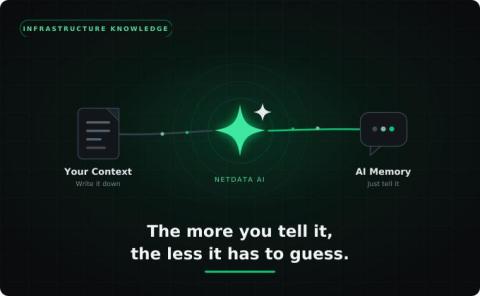
Introducing Infrastructure Knowledge: Teach Netdata AI What Your Metrics Can't Show

Netdata AI sees everything your infrastructure does: every metric, every anomaly, every alert. It does not see what your infrastructure is: which services matter, which host is supposed to run hot, who owns what, what your team considers normal. Without that context, “CPU at 91%” is just a finding. With it, it might be a machine doing exactly its job.

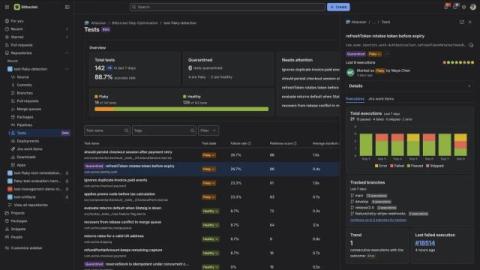
Monitor test health at a glance in Bitbucket Tests

When a team relies on automated tests in CI/CD, knowing that tests ran is only the beginning. Understanding whether the suite is healthy, which tests need attention, and how a specific test has behaved over time — that’s what drives action. Bitbucket Tests is evolving to make those answers easier to find and give you tools to improve your test health.

AI Agents on Kubernetes 101: From Laptop Script to Production Pod

In short, this is a beginner’s guide to deploying an AI agent on Kubernetes. You will containerize an agent, store its API key as a Kubernetes secret, write a deployment with health probes and resource limits, expose it with a service, and lock down its network egress, in that order, with a working manifest at every step. On a local kind cluster the whole walkthrough takes about an hour.

What Is RPO and How Can You Reduce It to Minutes?

Learn what RPO means, how it differs from RTO, and how faster backup storage can help reduce data loss after disruption. When designing a backup and disaster recovery strategy, organizations often simply ask how quickly they can recover. But a more important question to ask is how much data they can afford to lose. Backups are only as useful as the point in time they can return you to. If a payment system fails at 2 p.m.

From Audit Readiness to Continuous Control: Making Compliance Part of IT Operations

Compliance is often treated as a governance responsibility. But many of the conditions that determine whether controls continue to hold are created inside day-to-day IT operations. Operations teams manage the devices, configurations, changes, dependencies, and remediation activities where compliance can either remain aligned or begin to drift. Governance defines the requirements. Operations manages much of the environment where those requirements must remain true.

Why Your Help Desk Knowledge Base Isn't Reducing Tickets

The help desk knowledge base has hundreds of articles. Search traffic looks healthy, and employees are reminded to try self-service first. Yet ticket volume barely moves. That gap appears when a knowledge base is measured as content instead of ticket prevention. Article counts, page views, and searches can rise while the queue remains busy. None proves that an employee received a trustworthy answer before filing a ticket.

Azure Virtual Desktop Monitoring: A Complete Guide

Azure Virtual Desktop (AVD) puts the user’s desktop at the end of a long delivery chain: the Azure control plane, host pools, session hosts, profile storage, the network, and the endpoint on the user’s desk. Any one of them can make a session feel slow, and none of them looks broken from inside the others. That is why performance work on AVD starts with continuous monitoring across the whole chain rather than at either end of it. Azure Virtual Desktop Monitoring is what closes that gap.