Operations | Monitoring | ITSM | DevOps | Cloud

Leveraging Google Business Listings and Reviews to Grow Your MSP

In today’s business environment, much of the success of any MSP relies heavily on their online presence and reputation. This is because the vast majority of business consumers use the internet as their first port of call to discover, research, and select service providers. In this blog, I’m going to look at the pivotal role Google Business Listings can play in this process and how getting reviews for your MSP businesses can help to foster growth and enhance credibility.
How To Perform A Usage Based Intelligent Hardware Refresh With Nexthink

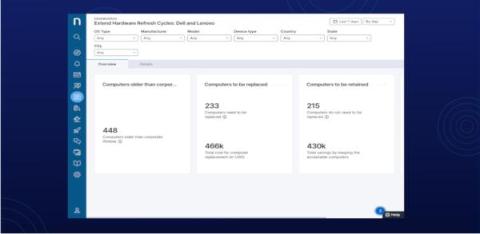
Today’s evolving technology makes it imperative for you to refresh or update organization’s hardware and software. This will decrease downtime, prevent crashes while increasing employee productivity. Nexthink combines employee usage, sentiment and performance data to help you make informed hardware refresh decisions that fit the needs of your employees and the business overall. Let's see how Nexthink performs a usage based intelligent hardware refresh.

Ubuntu Pro for EKS is now generally available

May 14, 2024 – Canonical, the publisher of Ubuntu, is delighted to announce the general availability of Ubuntu Pro for Amazon Elastic Kubernetes Service (Amazon EKS). This expansion brings robust security offerings to AWS’ managed Kubernetes service, including enhanced uptime and security through Kernel Livepatch and unrestricted access to Pro containers to Amazon EKS, a managed Kubernetes services to run Kubernetes on Amazon Web Services (AWS) and on-premises data centers.

Announcing HAProxy ALOHA 16

HAProxy ALOHA 16 is now available, and we’re excited to share that this release includes one of the cornerstone features announced in HAProxy Enterprise 2.9—the next-generation HAProxy Enterprise WAF. Customers of our hardware and virtual load balancer appliances also benefit from four new Layer 4 load balancing algorithms, the upgrade of the Linux kernel to version 6.1, and the ability to bind admin services on a dedicated interface.

GitKraken Acquires CodeSee & Launches New, Ubiquitous DevEx Platform

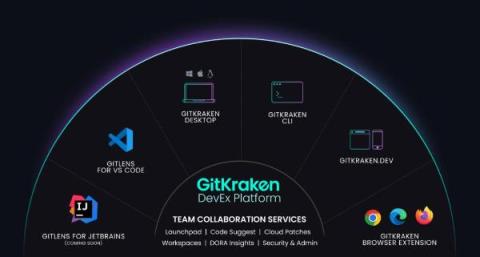
TL;DR: GitKraken acquires CodeSee and launches the unified GitKraken DevEx Platform, enhancing workflows across all major development environments and setting new standards in developer tools. Dive in to discover our powerful new features and how they contribute to simplifying your coding life. Almost a decade ago, we introduced GitKraken Client with a clear mission: make Git simpler for developers.

Comprehensive Guide to Server Uptime Monitoring

This guide offers a deep dive into server uptime monitoring, focusing on the strategies and tools essential for seasoned IT professionals to implement. We’ll explore advanced metrics, fine-tune the deployment of tools like Heartbeat, and dissect integration practices with the ELK stack. Designed for technical leaders who manage complex infrastructures, this guide aims to enhance your methodologies in maintaining high availability and optimizing operational performance across your server ecosystems.

A Guide To GCP Cost Anomaly Detection

Keeping costs under control is crucial to managing projects on the Google Cloud Platform (GCP). Yet, even the most experienced teams can face unexpected increases in their cloud bills. These surprises, known as cost anomalies, can disrupt budgets and plans. But, with the right approach and tools, you can spot these issues early and keep your cloud spending on track.

Finding a Better Way to Work in the Cloud!

With the 4.6 release, Cribl.Cloud Enterprise users now have the opportunity to opt-in to a new cloud experience. As a deeply customer-centric company, we listened to your feedback, and we heard you! We are making our user experience efficient, secure, and flexible. As we work to refine this new experience, we invite you to partner with us and share your input to influence this transformation as it makes its way across the entire Cribl suite!

What to Expect When You're Expecting InfluxDB: A Guide

Well, you’ve done it. You decided to take the plunge with InfluxDB. While vast and diverse possibilities await, you may have more short-term concerns. Namely: now what? Getting started looks different for everyone because no two users are doing the exact same thing. This post is primarily aimed at InfluxDB Cloud Dedicated and InfluxDB Clustered users (or any other products that include support agreements. You can chat with one of our sales folks if you have questions about that).