


|
By Jade Nangah
Every so often we sit down with someone from our support team and turn their week into a blog post. This time, Roberto walks us through four things generating tickets right now: an upcoming Microsoft authentication change, how AI credit pools actually work, multi-account support in Kepler, and a one-line fix for laggy GitKraken on Linux or WSL. Here’s what’s changing and what to do about it.

|
By Chris Griffing
Internal hackathons are a powerful way to let your teams explore ideas and work together on something fun besides the same old stuff for work. Maybe they want to build something brand new, maybe they want to knock out things that are on the backlog that never get prioritized, or maybe they want to work on something fun but completely unrelated to work.

|
By Jade Nangah
Running AI coding agents in parallel across repositories is no longer experimental. It’s how high-performing engineering teams ship faster. But the tools you pick to orchestrate those agents can either multiply your output or introduce new bottlenecks. GitKraken gives your team a purpose-built surface for AI coding agent orchestration through Kepler, its agent-agnostic development environment. Before you commit to any orchestration tool, though, you need to ask the right questions.

|
By Jade Nangah
Pull request queues keep growing, reviewers lose context between rounds of feedback, and merges stall for days. If your team’s code review process has become a bottleneck instead of a quality gate, the tooling around it may be the real issue. GitKraken gives you a unified code review workspace that cuts through noise and surfaces meaningful changes so reviewers focus on what matters.

|
By Jade Nangah
AI coding agents can generate pull requests at a pace your team has never seen. The bottleneck has shifted from writing code to everything that follows: reviewing, iterating, and merging. AI code-to-merge platforms are the category of tools built to manage that entire lifecycle, from the moment an agent starts working to the moment code lands in your main branch. This article walks through ten questions you should ask before committing to a platform.

|
By Jade Nangah
We put a blunt question to developers on a recent live webinar: right now, could you actually prove AI agents are paying off for you or your team? Only 24% said yes. The other 76% were guessing, unsure, or already suspicious that agents are costing more than they’re saving. That gap between adoption and proof is the real story in agentic development right now. Teams aren’t behind on running agents. They’re behind on knowing whether it’s working.

|
By Chris Griffing
The recent mystery around Ox Alpha last week and the week before was a fun slice of what makes social media fun. The hunt for the model provider and how people did that discovery should be studied. But, this post is more about stealth models in general. You might be wondering what the phrase “stealth model” even means and if you already know, you might still be curious about why companies release stealth models.

|
By Jade Nangah
Giordano “Gyo” Piazza, GitKraken’s Director of Engineering, has spent the past month heads down on the next version of Kepler. When he got on a call to talk through it, he skipped the changelog and went straight to the part he actually wanted to talk about: how agents show their work.

|
By Chris Griffing
Perplexity was a big name a few years ago. But, we haven’t heard much out of them lately. There are plenty of posts on social media criticizing Perplexity to that effect. One thing that the posts miss is that Perplexity is still the king of AI search. Google is giving it a run for its money with the AI previews on Google search, but Perplexity still wins out in several measurable ways.

|
By Jade Nangah
Choosing a software engineering intelligence platform is one of those decisions that gets more complicated the longer you wait. The category has grown rapidly, and every vendor claims to track the metrics that matter. GitKraken Insights gives you a full-stack view of engineering performance, from DORA metrics to AI tool ROI, in a platform trusted by over 40 million developers. But it isn’t the only option on the market.
|
By GitKraken
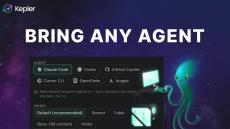
In Kepler ADE by GitKraken, you can connect and use whichever AI coding agents fit your workflow. This video shows how to configure agents, set defaults, manage multiple accounts, and run parallel sessions.
|
By GitKraken
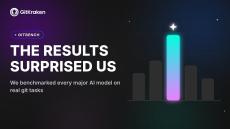
Most AI model benchmarks measure general coding ability or reasoning. GitBench, built by GitKraken developer advocate Chris Griffing, measures something narrower and more practical: how well a given AI model handles specific Git tasks, starting with commit squashing, identifying which commits in a messy history should be combined into one clean commit.

|
By GitKraken
What if you could counterspell an agent action? GitKraken Desktop 12.4 pulls the whole AI agent workflow into one place, so you stay in the flow. Back in 12.0 we shipped Agent Sessions, where you kick off AI coding agents right inside the context of your repo. GitKraken 12.4 builds on that. What's new in 12.4: This release is not about handing more of your work to agents. It's about seeing everything they do, and deciding what actually changes.
|
By GitKraken
Kepler is GitKraken's new agentic development environment (ADE), and it's now in public preview for Windows, Mac, and Linux. If GitKraken Desktop is built to go deep on one repository, Kepler is built to go wide: one task, multiple repositories, multiple AI agents, tracked in a single place instead of a dozen open terminals.
|
By GitKraken
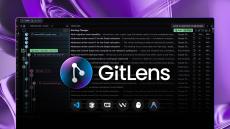
GitLens 19 is here, with a reimagined Commit Graph built to be your workbench for modern parallel development. See what’s happening across branches, worktrees, and supported coding agent sessions, then move the work forward without constantly jumping between views and tools.

|
By GitKraken
Code Flow is what we call the shift happening across every engineering team right now: AI can generate code faster than ever, but that doesn't mean it ships any faster. In this clip from our Code Flow Live stream, our team unpack why adding AI coding agents to a team is a lot like adding lanes to a highway that's already jammed. More lanes, more cars, same traffic.

|
By GitKraken
Everyone's betting on which AI agent wins. Wrong bet. The agent you use will keep changing. The workflow around it is what needs to hold up. That's why Kepler connects to any agent, Claude, Codex, Copilot, instead of locking you into one.

|
By GitKraken
What if you could counterspell an agent action? GitKraken Desktop 12.4 pulls the whole AI agent workflow into one place, so you stay in the flow. Back in 12.0 we shipped Agent Sessions, where you kick off AI coding agents right inside the context of your repo. GitKraken 12.4 builds on that. What's new in 12.4: This release is not about handing more of your work to agents. It's about seeing everything they do, and deciding what actually changes.

|
By GitKraken
Running Claude in one terminal and Cursor in another isn't a workflow. It's a juggling act. We talked to the engineer who got tired of it and built Kepler instead: one place to run agents, review PRs, and stay in control.

|
By GitKraken
AI didn't just change how fast code gets written. It exposed a new bottleneck: everything around the code. Reviews slow down. Context gets lost. Planning drifts from implementation. Teams move fast and still feel stuck. That's the problem GitKraken is built to solve, and this Friday we're going live to walk through what's changed. We'll cover the latest Code Flow Company features we've shipped, how they connect developers, AI agents, and production into one system, and what it actually looks like to go from plan to main without the chaos.
- September 2026 (8)
- August 2026 (28)
- July 2026 (14)
- June 2026 (7)
- May 2026 (20)
- April 2026 (12)
- March 2026 (13)
- February 2026 (10)
- January 2026 (11)
- December 2025 (2)
- November 2025 (11)
- October 2025 (15)
- September 2025 (10)
- August 2025 (10)
- July 2025 (20)
- June 2025 (8)
- May 2025 (5)
- April 2025 (3)
- March 2025 (9)
- February 2025 (6)
- January 2025 (14)
- December 2024 (6)
- November 2024 (18)
- October 2024 (10)
- September 2024 (19)
- August 2024 (6)
- July 2024 (27)
- June 2024 (27)
- May 2024 (26)
- April 2024 (29)
- March 2024 (28)
- February 2024 (27)
- January 2024 (16)
- December 2023 (29)
- November 2023 (22)
- October 2023 (8)
- September 2023 (9)
- August 2023 (7)
- July 2023 (2)
- June 2023 (2)
- May 2023 (4)
- April 2023 (5)
- March 2023 (5)
- February 2023 (6)
- January 2023 (10)
- December 2022 (3)
- November 2022 (2)
- October 2022 (3)
- September 2022 (5)
- August 2022 (3)
- July 2022 (4)
- June 2022 (5)
- May 2022 (5)
- April 2022 (6)
- March 2022 (4)
- February 2022 (4)
- December 2021 (4)
- November 2021 (15)
- October 2021 (2)
- September 2021 (6)
- August 2021 (1)
- July 2021 (4)
- June 2021 (1)
- May 2021 (2)
- January 2021 (3)
- November 2020 (2)
- October 2020 (3)
- September 2020 (2)
- August 2020 (3)
- July 2020 (3)
- June 2020 (3)
- May 2020 (2)
- April 2020 (3)
- March 2020 (4)
- February 2020 (5)
- January 2020 (5)
- December 2019 (2)
- November 2019 (3)
- October 2019 (1)
- September 2019 (2)
- August 2019 (3)
GitKraken is on a mission to make Git easier, safer and more powerful across multiple surfaces and environments that development teams use.
Over 10 million developers from more than 100,000 organizations worldwide rely on GitKraken to get their work done. Since 2014, we've been rapidly developing the legendary cross-platform tools while reimagining an intuitive, visual approach to Git. Our team is dedicated to making tools that help software developers be more productive using Git, it's truly our passion. We develop software that's in use by the world's most elite companies like Apple, Google, Microsoft, Amazon, and thousands of other leading organizations.
We Make Git Tools Devs Love.