Operations | Monitoring | ITSM | DevOps | Cloud

The latest News and Information on IT Service Management, Service Desk and related technologies.

How to Choose the Right Infrastructure Monitoring Tool

A production service degrades, and one question decides the next hour: is it the server, the network, or a cloud dependency? Each layer usually reports into a separate console, so pinning down the answer can absorb an hour the business would rather not lose. The right infrastructure monitoring tool is what turns that hour into minutes. On paper, most monitoring platforms look identical. Each one promises full-stack visibility and shows a polished dashboard.

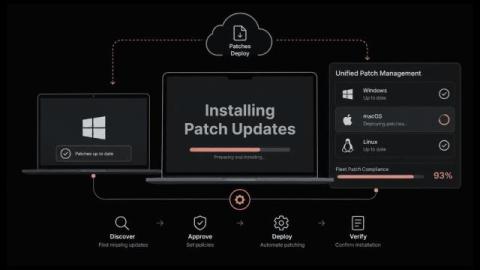
Patching Alone Can't Keep Pace with Mythos. These 6 Nexthink Library Packs Can.

Most vulnerability programs were built around a known list of CVEs, scanned periodically and scored by severity. The Anthropic’s Claude Mythos era breaks that model, because the vulnerabilities that matter most are often undisclosed, unscored, and absent from any feed. The organizations that close the gap will be the ones that treat real-time exposure and remediation velocity as the core capability, not the patch backlog.

How Claude Mythos Changes the Future of Vulnerability Management: Fixing, Not Finding

Anthropic’s Claude Mythos shows how AI is making vulnerability discovery nearly infinite. Endpoint remediation is where IT teams win or lose. In April 2026, Anthropic introduced Claude Mythos Preview, an AI model that autonomously discovered thousands of previously unknown vulnerabilities across every major operating system and web browser. By late May, the running total had passed 23,000 potential findings, and the vast majority were still unpatched.

Why One Process Can Slow an Entire VDI Environment

When users report slow virtual desktops, the first instinct is often to check CPU or memory utilization. But what happens when those metrics look perfectly healthy, yet users across the environment are still complaining about slow application launches, lagging desktops and poor performance? In many cases, the bottleneck lies elsewhere. Storage is often overlooked during initial investigations, but in VDI environments it can have a disproportionate impact on the user experience.

InvGate Service Management Slack Integration: Support Without Leaving Slack

Most of your employees already spend their day in Slack. So when something breaks, when they need access to a tool, or when they just have a quick question for IT, the last thing they want to do is stop, switch context, open a portal, and fill out a form. That friction is exactly why so many issues never get logged, and why the ones that do often arrive late and half-described. The InvGate Service Management Slack integration closes that gap.

Post-Quantum Cryptography and How to Prepare Your Organization

Do you actually know where encryption lives inside your infrastructure? Not the vendor's answer. The full map: every TLS handshake, every signed software update, every VPN tunnel, every certificate your systems trust. That map is where post-quantum cryptography starts to matter. The technology has moved from a research topic into a compliance deadline, and the algorithms protecting your data today were built for a world without quantum computers.

3 Things Leaders Must Know About Scaling AI

AI is moving faster than ever, but is your governance keeping up? In this video, Brooke Johnson, Ivanti’s Chief Legal Counsel and SVP of People and Security, breaks down the critical gap between AI adoption and responsible scaling. While speed is rarely the issue, trust and accountability are becoming major roadblocks for IT teams. We explore why nearly 70% of IT pros have witnessed AI hallucinations and how unclear ownership can stall even the most advanced AI initiatives.

Security Observability: Pillars, Use Cases, and How It Works

When an alert lands, does your team already see the full story, or does the work start with pulling scattered data together from one tool after another? For many organizations it's the second one, where the incident itself takes a backseat while analysts hunt across dashboards. The evidence is right there, scattered across platforms that don't share context. Security observability exists to close that gap.