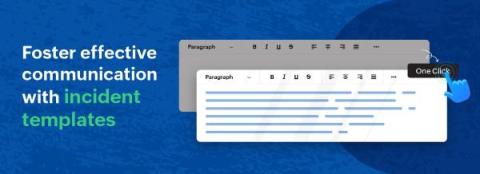
Imagine this scenario: Imagine this scenario: You are a user of an online service, and suddenly you encounter a technical glitch. You head to the status page for updates, expecting clear information about the issue. However, you are met with vague or unstructured updates, leaving you uncertain about the severity and resolution timeline of the problem.
Organizations in the 21st century are growing at a staggering rate, expanding their operations over a global network and dealing with more data than ever before. These widespread operations and processes also mean that there are infinitely more possibilities for businesses to run into problems, have an incident occur, and have to deal with the resulting consequences.
Incidents impacting your customer and user-facing services can be stressful, both for the responders on your team who are working on a resolution, and for the other stakeholders in your business. For teams to solve incidents quickly and effectively, responders need to be able to trust each other and stakeholders have to trust the responders. This level of trust is hard to cultivate if your organization doesn’t have a significant amount of psychological safety.
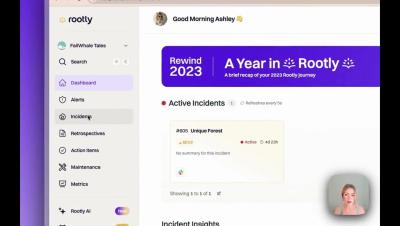
Reaching the top 10 tools in the Incident Management category marks an important milestone for Squadcast. This accomplishment underscores our commitment to actively incorporate customer feedback into our product development process and vision. From the outset, our objective has been to design a platform that streamlines Incident Response workflows by integrating On-Call Management, Incident Response, SRE, AIOps, and Automation into one cohesive system.
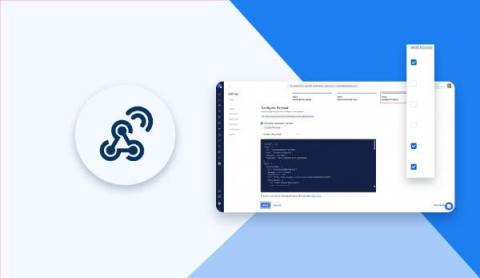
Incident responders often find themselves under pressure to resolve issues quickly and efficiently. Once the alert comes in and the incident resolution starts, the actions taken in the next few minutes can make all the difference. Essential actions involve collaborating with team members and invoking specialized scripts for common issues like disk space shortages or server restarts.
Electronic Health Records (EHRs) have evolved from mere repositories of patient data to indispensable tools at the forefront of patient care. They serve as the single source of truth across the patient care continuum, empowering care teams to make informed clinical decisions. Effective implementation of these systems leads to improved patient outcomes, reflected in lower hospital readmission rates and shorter average length of stays (LOS).
At incident.io, “We care about our customers” isn’t just a talking point. It’s a core part of how we operate. Whether it’s a big feature request or a small bug fix, we’ve been intentional about making sure that customers always feel heard and seen—no matter the ask. But it’s not just that.