What's the difference between Runbook and Playbook?- for once and all we'll end this confusion today. If you find yourself worrying about forgetting the detailed process of the incident your team just resolved, you're not alone. This is where documentations like Runbooks and Playbooks come into play. Runbooks and playbooks serve as the organizational guides, providing essential information and instructions for teams to navigate through tasks and processes effectively. They not only help your team help themselves but also frees up your time for your ever-growing to-do list.
Most software engineers know that they are typically tasked with on-call shifts, but new software engineers entering the field may be asking themselves – What do I even do if I get scheduled for an on-call shift? This is a common question that often doesn’t get answered until that first on-call shift, and unfortunately that can be overwhelming for a young professional who is nervous about their first on-call shift, let alone their first incident.
2023 at incident.io was a year to remember. While it's easy to be cyclical about proclaiming that every year was better than the last, a few things stand out that made 2023 truly a year for the books. TL;DR, a lot happened! Especially when you consider that a lot of things didn't make the list above. So as we turn the page to 2024, we wanted to take a moment to reflect on the transformative year that was 2023, not only for us but our customers as well.
Whenever you're providing a service to businesses or individuals that they rely on, it's important to make sure that it's up and running as much as possible without disruptions. But the reality is that, despite your best efforts, downtime does happen. Regardless of when incidents strike, whether it’s 2 PM in the middle of the working day or 2 AM, it's important to have people available to diagnose and resolve issues as soon as possible.
In the fast-paced realm of incident management and response, the need to stay ahead is more vital than ever. In recognition of this, BigPanda has significantly enhanced the Unified Console, introducing a suite of new features designed to revolutionize incident handling. Let’s explore these transformative updates and how they can redefine your approach to incident management.
As an IT leader, you’re acutely aware of the struggles of juggling multiple cloud environments, from integration headaches to holistic incident management to monitoring multiple clouds at once. Seeking a more efficient multi-cloud management solution is crucial to alleviate these pressures and streamline your cloud operations.
For 83% of companies, a cyber incident is just a matter of time (IBM). And when it does happen, it will cost the organization millions, coming in at a global average of $4.35 million per breach. Add to that stringent data protection laws and the growing frequency and reach of ransomware and other sophisticated attacks.
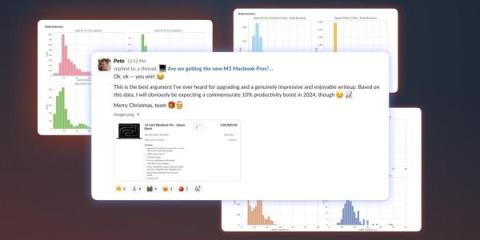
All incident.io developers are given a MacBook which they use for their development work. That meant when Apple released the M3 MacBook Pros in October, people naturally started asking questions like “wow, how much more productive might I be if my laptop looked that good?” and “perhaps we’d be more secure if our machines were Space Black 🤔” Pete’s (our CTO) response to this was “if you can prove it’s worthwhile, we’ll do it”
Gartner’s IT Infrastructure, Operations & Cloud Strategies Conference (IOCS) is an annual event that attracts ITOps, SRE, and DevOps leaders from around the world. As Gartner explains, IOCS “brings the world’s technology leaders together to hear top trends, find objective answers, and explore topic coverage in addition to best practices. Gain the insights and guidance to create an effective pathway to the future and network with your peers.”
Effective monitoring and observability tools are critical for modern enterprises. Daily operations, digital transformation, moving to a cloud-native architecture, and an ever-evolving tech stack all require ITOps, DevOps, and SRE teams to monitor increasingly complex systems. So what happens if your applications suddenly cease to function? Every moment of downtime translates to lost income, decreased customer satisfaction, and harm to your company’s reputation.
Throughout 2023, one thing has become abundantly clear: regardless of an organization’s size or industry, incidents are inevitable. Recently across the APAC region, we’ve seen numerous regulatory bodies clamp down on large companies who are failing to provide acceptable service, with some handing out quite severe penalties. For many, the cost of an incident is no longer just lost revenue and customer trust, but financial penalties and business restrictions.
What a year 2023 was at incident.io! While it's hard to summarize 365 days into just a few sentences, a handful of moments stood out from this transformative year: So as we close the curtain on a momentous 2023, we sat down with the three co-founders of incident.io—Chris, Stephen, and Pete—to do a bit of reflection on the wild ride that was this year.
When declaring and responding to an incident with incident.io, most of your interactions with our product will go via Slack. You might configure your forms in our web dashboard, but the responder using them to declare an incident is most likely doing so from a Slack modal, and the incident announcement will be posted as a Slack message. This means a lot of our product design falls within the constraints of what we can build using Slack’s block kit.
You’re focused on swiftly identifying, analyzing, and resolving disruptions in IT services. And you know all too well that correctly deploying and adopting incident management holds the key to delivering a more reliable and responsive IT environment for your applications and services. That’s why you’re using or are considering using ServiceNow’s incident management to ensure a structured and efficient approach to handling your IT service incidents.
Large Language Models (LLMs) are advanced artificial intelligence models designed to comprehend and generate human-like language. With millions or even billions of [parameters, these models, like GPT-3, excel in natural language processing, understanding context, and generating coherent and contextually relevant text across various applications.
We're pleased to announce incident.io can now be purchased through the AWS Marketplace!
Tech companies face a daunting challenge: a staggering 90% of their IT teams are stuck doing mundane, repetitive tasks, leaving only 10% to focus on strategic innovation. Companies know that automation is the solution to these repetitive, low-level incident response actions; however, many need support to begin automating.
IT incident management aims to swiftly identify, address, and resolve IT disruptions to restore normal service operations. Tracking IT incident management key performance indicators (KPIs) is a vital step toward minimizing disruptions for customers and users. But there are several different KPI and metrics choices, and it’s not easy to identify the right ones that can drive meaningful improvements in incident management.
Before I stumbled into the tech industry (a story for another day), I spent several years in the customer service world as a server and front-of-house manager in restaurants. It was in these jobs that I first honed some critical skills that would later lead me on the path to incident response.
On December 8, 2023, Adobe's extensive customer base was impacted by a series of outages in the Adobe Experience Cloud, starting from 8:00 AM EST and continuing until 1:45 AM EST on December 9. We haven't seen a third-party outage of this magnitude since the DoubleClick outage of 2018.
If you're on a data team, have you ever considered using an incident management tool to respond to pipeline issues? If the answer is no, then you might want to check out this episode. Here, we chat with Jack, Data Analyst at incident.io, to better understand why data teams can—and should—look to incident management tools like incident.io to manage issues. We chat about: Read Jack's blog post about incident management for data teams.
Mean Time to Resolution (MTTR) is a key performance indicator (KPI) that measures the average duration needed to restore normal operation for an application, service or piece of infrastructure component. Your MTTR directly impacts customer satisfaction, so you must have a keen understanding how it influences the reliability and availability of your services and applications to make informed decisions, enable operational efficiency, and ensure a seamless customer experience.
Have you ever wondered about your IT team’s efficiency in detecting incidents? Your Mean Time to Detect (MTTD) is an incident management Key Performance Indicator (KPI) that reveals your productivity during the first stage of incident resolution and enables investigation into opportunities for improvement. ITOps and DevOps teams that can lower their MTTD can more quickly identify issues, minimize potential downtime, and maintain system reliability too.
A wise person once said, “What’s measured is what matters.” This couldn’t be more true than in the high-stakes world of IT operations, where the ability to swiftly measure, analyze, and respond to events is crucial for improving IT operational performance. This blog delves into defining IT event analytics, guiding you on getting started, showcasing real-world examples, and introducing essential methods to transforming your incident response strategy.
Constantly juggling IT incidents can be exhausting as you try to track and resolve them before they escalate into disruptions. With each incident demanding prompt and precise attention, keeping up takes significant work. However, you can manage these challenges more efficiently and with less stress and less risk by optimizing your incident-tracking process.
Although FireHydrant has spent five years focused on what happens after your team (erg, I mean service 🙄) gets paged, the topic of alerting often comes up in discussions with our community. People are tired of paying big bucks for software that’s expensive, bloated, and hasn’t seen much innovation. Clearly, there’s a problem here – and we’re tackling it head on.
It has been lightly revised and reposted with his permission from the original article on Medium. Leading major incident responses can be extremely stressful. You have to quickly gather an ad-hoc team, figure out what went wrong, identify a fix and make sure this doesn't make things worse, all the while with senior leadership breathing down your neck. Are we having fun yet? Many people think having a dedicated incident commander role will solve the problem.
On-call scheduling is tricky. Like, really tricky. It was one of the scariest parts when we decided to build a modern alerting system earlier this year. We knew we couldn't cut any corners on Day One of our release because it needed to be a fully loaded feature for someone to realistically use our product (and replace an incumbent). This meant including windowed restrictions, coverage requests, and simple to complex rotations.
In today's fast-paced digital landscape, incident management is crucial for maintaining operational excellence. During this process, on-call management models play a critical role in promptly addressing and resolving incidents. On-call management involves the organization of teams to ensure prompt response and resolution of incidents and is necessary to streamline incident resolution, ensure 24/7 availability, and allow for fair and transparent on-call rotations.
The ping network test, a core utility since the 80s, plays a crucial role in confirming connectivity between IP-networked devices. In this guide, we'll delve into what the ping command is, how to run a ping network test, common IP addresses to ping, interpreting results, and troubleshooting errors.
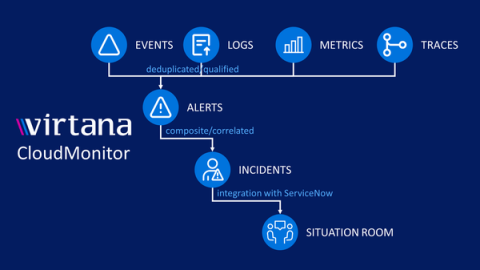
Event. Alert. Incident. These terms are bandied about, often interchangeably, in IT operations management. Broadly speaking, they all refer to situations where something is potentially amiss and needs to be investigated and resolved. Each of these three words does, however, have a distinct definition. Because they are used in scenarios where clear communication and timeliness are critical, it’s important to understand the differences and use them appropriately.