Operations | Monitoring | ITSM | DevOps | Cloud

MCP Servers 1.1.0 Add Flexible HTTP Routing and CLI Connection Management

We are pleased to announce the release of MCP Servers 1.1.0, bringing new configuration options for HTTP-based deployments and expanded command-line capabilities for managing database connections. The new version makes it easier to control how MCP Servers are exposed over HTTP, host multiple MCP Servers under a single hostname, and configure connections directly from the command line.
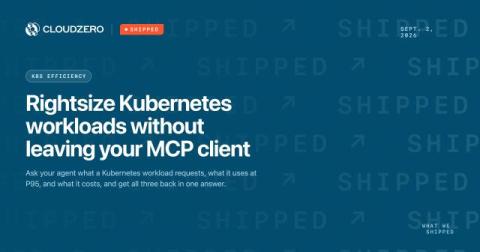
Shipped: Rightsize Kubernetes workloads without leaving your MCP client

Changing a Kubernetes resource request takes two numbers: what the workload requests, and what it uses. The CloudZero MCP server now returns both, by cluster, namespace, or workload. This gives you a number you can defend. Usage comes back as P95 over the date range you query, 30 days by default. When an engineering lead asks whether a service runs on a smaller request, that is the figure that settles it. Over-provisioning and under-provisioning show up on the same query.

LLM token cost: pricing per token explained

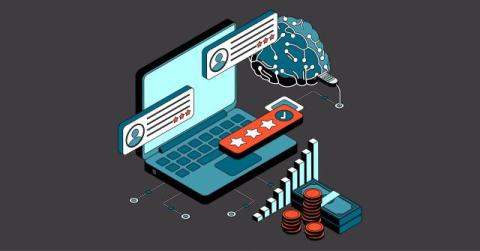
LLM token cost is the price a provider charges per token a model reads or writes, quoted in dollars per million tokens. Input and output bill at separate rates, with output priced at roughly 5x input. As of September 2026, published rates range from under $0.10 to more than $180 per million tokens on top-end reasoning tiers. In late 2025, Hardik Sonetta of Thomson Reuters Labs published a warning about the most common prompt caching mistake in production.

How Is AI Changing IT Operations? Building Production-Ready AI Agents with Alex Zinovy

How is AI changing IT operations, and what does it take to move AI agents from impressive demos to production-ready systems? In this episode of Agents of IT, Resolve’s Zack Austin sits down with Alex Cinovoj, Founder and CTO of TechTide AI, to explore what enterprise AI looks like when it has to work in the real world. Alex brings years of hands-on IT, infrastructure, DevOps, and AI engineering experience to a conversation about the shift from experimenting with AI to building trustworthy systems that deliver measurable outcomes.

Outrun the Threat Window: AI-accelerated Vulnerability and Patch Management

The gap between vulnerability disclosure and active exploitation is shrinking—often from weeks to mere hours. Traditional patching cycles no longer cut it. In this session, discover how AI-accelerated solutions can help you: Identify exposed assets faster Prioritize vulnerabilities by real-world risk Remediate across Windows, macOS, Linux, and hundreds of apps Verify success with a connected workflow Learn how our approach, powered by AI-driven insights and automation, can help you close the gap before attackers strike. Watch now and take control of your patch management.

Can You Prove Your AI Agents Are Paying Off? Most Developers Can't

We put a blunt question to developers on a recent live webinar: right now, could you actually prove AI agents are paying off for you or your team? Only 24% said yes. The other 76% were guessing, unsure, or already suspicious that agents are costing more than they’re saving. That gap between adoption and proof is the real story in agentic development right now. Teams aren’t behind on running agents. They’re behind on knowing whether it’s working.

The Evolution of JFrog AI Catalog: Your AI Control Plane for Agentic Development

In a single morning, a coding agent can pull an open-source model, connect to an unvetted MCP server, and execute a code-optimizing skill from the web. In the rush toward agentic automation, these AI assets quietly bypass traditional security reviews, creating new attack vectors across the software supply chain. Closing this blind spot has been the driving force behind the JFrog AI Catalog since its launch at swampUP 2025.

Our Customer Success AI bill tripled. Here's why we're spending more.

Pop quiz: If you spend $40,000 per month on Anthropic, and you’ve got two customers, what’s your cost per customer? If you bypassed the easy answer of $20,000 and said, “Scott, you old trickster, that’s not enough information to answer that question,” you’ve won today’s prize: a lesson in the perils of average costs. Let’s flesh out the situation: You put an AI feature in your product, a document assistant powered by Claude.