In the first part of our series on Building, Deploying, and Observing SDKs as a Service, we delved into the world of APIs and successfully deployed our own REST APIs by wrapping the existing pet store APIs. Now, it’s time to take our journey further and unlock the true potential of SDKs. In this second part, we’ll explore how to build an SDK for the pet store API using the OpenAPI spec and the OpenAPI Generator project.
In the vast universe of cloud computing, data transfer operations serve as the lifeline of your day-to-day tasks. Whether it’s migrating data to the cloud or distributing data across various storage accounts, data transfer plays a vital role. Microsoft’s Azcopy is a lifeline for those who require a robust, reliable, and efficient tool for their data transfer needs, particularly to and from Azure Storage.
In today’s digital era, the cloud has revolutionized the way we store, process, and transmit data, offering scalability, efficiency, and flexibility. As we continue to transition towards this cloud-first approach, the importance of robust cloud security can’t be overstated. This article will provide ten essential tips for ensuring the safety and security of your data in the cloud.
Are you looking to streamline your development process, boost productivity, and deploy your applications effortlessly? Look no further! We are thrilled to announce the release of our Heroku monitoring cheatsheet, designed to be your go-to resource for monitoring Heroku applications.
“Time is money” couldn’t be truer than in managing cloud costs. By way of proactive anomaly detection, a chance is given to save time that could have been spent on issue recognition and resolution. Anomaly detection for the Cloud can be tricky since there can be changes in prices & data on billing history anytime. Not to mention, seasonality can mess things up as well.
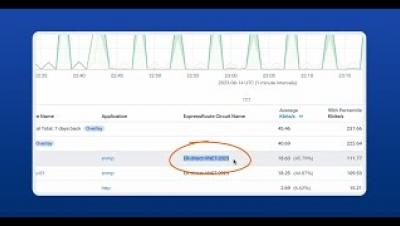
Kentik customers can now map traffic and performance of Microsoft Azure infrastructure with visibility into Azure Firewalls, Express Routes, Load Balancers, VWANs, and more in Kentik Cloud.
Virtualization has become a cornerstone in modern IT infrastructures, allowing businesses to maximize their resources, streamline operations, and improve service delivery. A key player in this domain is VMware, a company that pioneered virtualization technology and continues to drive innovations in this field. One of their most useful offerings is the VMware Tools, an essential software suite for any VMware virtual machine (VM).
Azure is Microsoft’s flagship cloud computing service, providing a host of capabilities and features to enable businesses to operate and thrive in the digital age. One of these offerings, Azure Data Lake, stands as a pivotal resource for organizations that process massive volumes of data. But what exactly is Azure Data Lake?
Deciding what to migrate, what to modernize, and what to retain on-premises is part of enterprise IT infrastructure management. When a refresh cycle is up in your data center, there are two very different types of competing motions you need to evaluate. While they may appear to be independent, they’re also kind of not, so it can be tricky to decide which one to execute—or even to execute both—and to do so smoothly.
Health checks for cloud infrastructure refer to the mechanisms and processes used to monitor the health and availability of the components within a cloud-based system. These checks are essential for ensuring that the infrastructure is functioning correctly and that any issues or failures are detected and addressed promptly. Health checks typically involve monitoring various parameters such as system resources, network connectivity, and application-specific metrics.
Logz.io is honored to have our Cloud SIEM as one of the products available as part of the launch of AWS AppFabric. For customers invested in AWS, this inclusion allows you to use our cloud-based, agile SIEM seamlessly alongside other critical SaaS applications.
June 27, 2023 We were excited to learn last week that GigaOm named Densify as both a Leader and an “Outperformer” in its new report “Radar for Cloud Resource Optimization”. This was particularly meaningful to us for a few reasons.
Amazon Elastic Container Service (ECS) is an extremely scalable and high-performing container orchestration solution that allows for the effortless execution, termination, and administration of Docker containers within a cluster. As more organizations embrace containerization, optimizing the costs of running containerized applications is essential, especially when using managed services like Amazon ECS.
You may be thinking of investing in multiple cloud vendors to increase redundancy and deal with the complexity of your enterprise requirements. You are not alone. Many enterprises are moving in this direction to take advantage of the options offered by competing cloud vendors. Adopting one major cloud vendor is a complex project that can consume a company for months if not years.

The old saying goes, “practice what you preach.” When Ivanti started its "Customer Zero" initiative, Bob Grazioli, Chief Information Officer, saw it as a perfect opportunity to test the products and services consumed by customers. For example, during Ivanti’s move to the cloud, Grazioli and the team experienced the same issues that customers would’ve experienced in their migration process. This first-hand experience allowed them to make improvements along the way.
With the surge in digitization, the concept of cloud migration has become a fundamental reality for many organizations. VMware, a widely accepted leader in server virtualization, has enabled many businesses to take advantage of virtual machines’ benefits. However, as businesses evolve, so do their requirements. This often leads to the need for moving these VMware-based virtual machines to more flexible and scalable platforms like Microsoft Azure.
Connect your metrics to your traces with exemplars to quickly troubleshoot and resolve latency issues.

A variety of factors, such as the pandemic and digital transformation, have moved organizations and all their data online, which has made backing up business data to cloud storage become more of the norm.
While your regular job may allow you to make your snooze button your best friend, what would you say to a job that requires 6-8-hour shifts (probably night shifts too) and demands that you be on call 24/7? Welcome to the life of a NOC engineer.
In the realm of cloud computing, communication and integration form the backbone of any robust architecture. With the exponential rise in distributed systems, the need for a reliable, scalable, and efficient message delivery system is more pertinent than ever. This is where Azure Service Bus, a cloud-based messaging service provided by Microsoft, becomes a game-changer.
Edge computing is defined by bringing compute resources out of remote, centralised facilities and putting them at the source of the data itself. Processing and analysis is done where the data is actually generated. The performance and cost improvements that edge computing delivers are based on this proximity. By situating our data centres close to major populations, we have delivered these benefits to many UK businesses. It is an inherently ‘local’ idea.
The cloud is the hub for data management nowadays. DevOps teams are all about preventing any hiccups that could make customers unhappy. And with more companies moving to cloud databases and services like SnowFlake, Redshift, RDS, and BigQuery, they’re operating on a bigger scale with better quality.
AWS Fargate is a serverless pay-as-you-go engine used for Amazon Elastic Container Service (ECS) to run Docker containers without having to manage servers or clusters. The goal of Fargate is to containerize your application and specify the OS, CPU and memory, networking, and IAM policies needed for launch. Additionally, AWS Fargate can be used with Elastic Kubernetes Service (EKS) in a similar manner.
The adoption of Microsoft Azure Desktop as a Service (DaaS) has significantly improved how businesses access and manage their desktop environments. However, as the number of users relying on DaaS increases, ensuring a seamless and reliable user experience becomes increasingly challenging. This blog post will explore businesses' key challenges in monitoring Microsoft Azure DaaS and how Synthetic Monitoring can help ensure a seamless user experience.
Accelerate your Microsoft SCOM-based monitoring in the cloud with cloud-based Monitoring for Microsoft System Center Operations Manager. Seamlessly integrate Microsoft’s new Azure Monitor SCOM Managed Instance (Azure SCOM MI) to complement your current monitoring capabilities and ensure optimal performance. Azure SCOM MI empowers you to bridge the gap between your on-premise and cloud environments, enabling you to scale your operations while reducing costs.
A foundational component of monitoring Google Cloud environments with Datadog is our Google Cloud Platform integration. This integration continuously collects metrics from all of your Google Cloud services and enriches them with tags, enabling you to scope dashboards and monitors to the relevant resources and seamlessly pivot across logs, metrics, and traces inside the Datadog platform.
Azure is a cloud computing service created by Microsoft to help businesses tackle challenges and build solutions through a comprehensive suite of cloud services. It offers a wide range of integrated cloud services and functionalities such as analytics, computing, database, mobile, networking, storage, and web, allowing developers to pick and choose from these services to develop and scale new applications, or run existing applications, in the public cloud.
In this article, we will see how we can integrate an Azure data source with Graphite and Grafana. This will allow us to monitor metrics from the applications hosted in the Azure cloud on a Grafana dashboard. We will also see how to integrate Azure Active Directory with MetricFire’s Hosted Graphite and Grafana. You don’t need fully functional cloud services running with Azure to understand this article, but it assumes that you have basic familiarity with Azure Cloud.
Welcome to the forefront of virtualization technology, where innovation meets practicality, and the quest for optimal performance is a constant journey. If you’ve been keeping a close eye on developments in this space, you’ll know that Microsoft’s Hyper-V has been making significant strides.
In the realm of virtualization, snapshots play an integral role in managing virtual machines (VMs). Essentially, a snapshot captures the state of a VM at a specific point in time, providing a reference point to which you can revert if necessary. This can be especially handy when implementing changes to your VM or its applications, allowing you to quickly undo the changes if they cause any unforeseen issues.
We recently launched several new Cloud Monitoring features to improve your visualization and troubleshooting experience.
The State of DevOps Report finds a clear link between documentation quality and an organization’s ability to meet its performance goals.
Cybersecurity remains a key concern for any organization. The cost of cybercrime is expected to rise to $8 trillion in 2023 and reach $10.5 trillion by 2025. Various cybersecurity solutions are available, with Firewall as a Service (FWaaS) emerging as one of the most valuable assets when it comes to protecting your interests. We will investigate FWaaS solutions, how they work, how they're different from traditional firewalls, and what benefits they can provide for a range of organizations.
Infrastructure performance management (IPM) is the process and associated tools for ensuring the overall health of your entire IT ecosystem so it operates at optimal levels. Because your infrastructure supports your entire enterprise—from daily operations to strategic initiatives—the stakes are high.
Implementing Azure DevOps can bring numerous benefits to your organization. The impact of Azure DevOps is felt across many aspects of the software development lifecycle, including planning, development, delivery, and operations.
We are delighted to be able to share that eG Innovations has become one of a very small number of partners to have achieved the AWS “Digital Workplace Competency” award following a lengthy and rigorous technical audit process. The designation differentiates eG Innovations, alongside EUC vendors such as Citrix and VMware, as having a solution that meets AWS’s own standards for enterprise software.
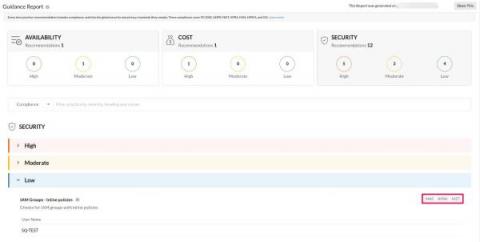
AWS Monitoring-Guidance report compliance checks As a business owner, you may experience lapses in the compliance and security checks in your AWS environment. With Site24x7 AWS guidance reports, businesses can ensure their deployments adhere to standards in cost, performance, and the security of their AWS environment and make informed decisions about how to optimize their cloud infrastructure.
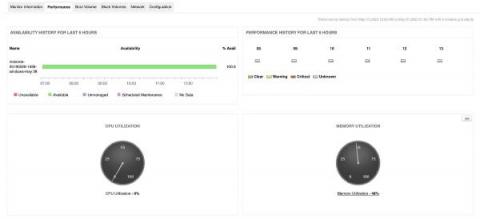
Applications Manager offers Oracle Cloud Compute monitoring that tracks the health, availability, and performance of your Oracle Cloud Infrastructure (OCI) instances. Applications Manager effectively enables DevOps teams to establish a secure and dependable environment for application development and deployment. Without an Oracle Cloud Compute monitor like Applications Manager, administrators would have to manually check each component of an instance to identify performance issues and rectify them.
In the realm of virtualization and cloud computing, VMware has been a leading name for years, offering robust and innovative solutions to businesses of all sizes. Their products have transformed the way organizations manage their IT infrastructure, enabling them to create flexible, scalable, and secure virtual environments. On March 18, 2023, VMware introduced the latest version of their flagship product, VMware vSphere 8.0.
IT, DevOps, and security teams are figuring out the best ways to manage their complex, ever-growing, ever-changing environments. And one contributing factor to all the complexity is the rise of using multiple cloud services. One cloud service to manage is difficult enough, but adding more to the mix — each with its own interface and set of tools — makes everyone’s job significantly more difficult.
The evolution of information technology is governed by how businesses adapt to ever-increasing amounts of data. Those businesses most able to exploit more data, win. Terms such as ‘speed’ and ‘agility’ refer to how a business handles and uses this data. Given the 2.5 quintillion bytes created every day, there is a huge opportunity for businesses to create unassailable leadership.
Cloud tools are becoming indispensable for modern-day FinOps. They can improve efficiency and agility and deliver better client results. But what native cloud tools are right for you, and how can they benefit FinOps? Let’s find out. When managing financial operations in your organization, using native cloud tools is a must. Let’s take a closer look at some key advantages.
In the grand tapestry of software engineering, our journey often winds through labyrinthine layers of application logic. Here, bugs play a compelling game of hide-and-seek, and features dance in an unpredictable ballet. During these instances of fervent exploration, we find ourselves longing for a reliable compass—a secret weapon—to help us decipher the riddles that lie ahead. Cue execution tags, our luminous lighthouse cutting through the dense fog of complexity.
June 13, Vancouver, OpenInfra Summit – Canonical today announced the extension of its commercial OpenStack offering to small-scale cloud environments with a new project Sunbeam. The project is 100% open source and is available free-of-charge. Early adopters can also opt-in for comprehensive security coverage and full commercial support under the Ubuntu Pro + Support subscriptions once they complete the deployment themselves.
Everything you want to know about high cardinality in cloud native environments and how to manage it effectively.
Snapshot quiescing, a technique employed in the world of virtualization, stands as a pivotal concept to grasp for anyone involved in IT operations. In particular, when working with VMware, understanding snapshot quiescing can significantly streamline your backup and restore operations. It’s a crucial process that ensures the data on a Virtual Machine (VM) is in a consistent state when a snapshot is taken.
From applications in telecommunications to edge cloud and industrial digital twins, experimenting with real-time capabilities in cloud technologies is a trend in the industry. Applications for the edge often have an additional requirement as they interact with real-time systems: they need to run deterministically. It means that time constraints their execution and interaction within the system.
The modern factory’s relationship with data is experiencing a major change. Data now shapes the future rather than only telling the story of the past. The language inside the factory sounds like higher Overall Equipment Effectiveness (OEE) as the result of a shift from preventive to predictive maintenance. It could also look like expanding business goals to a new market based on impactful data-driven decisions. A change in purpose requires an update in technology.
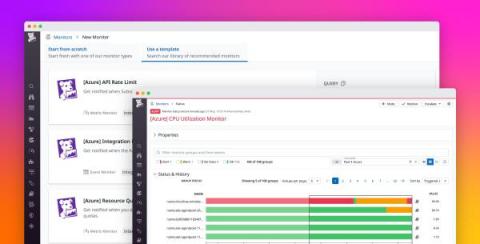
When you first onboard to a monitoring and security platform, it can be difficult to know where to start. Which services should you monitor? What thresholds should you set? How often should you alert your team, and where’s the best starting point for investigations?
As a new Datadog customer, your top priority is figuring out how to maximize the platform’s potential and deliver value to your organization quickly and seamlessly. But with a plethora of options and configurations available at your disposal, it can be overwhelming to determine where to begin. With Datadog, you don’t need to be an expert in observability or monitoring to get up and running efficiently.
What is public, private, and hybrid cloud? How are they the same? How are they different. Here's everything you need to know.
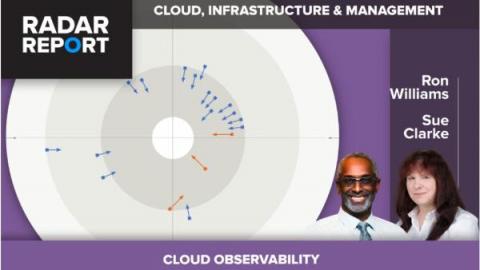
We are excited to share that the AIOps and Observability solution from Broadcom has earned a leader position for platform play and maturity in the GigaOm Radar Report for Cloud Observability, 2023. This report reviewed solutions from 20 vendors on 13 criteria, including across such areas as innovation, understanding of emerging trends, solution capabilities and features, and deployment models.
It’s my pleasure to announce that the newest version of Avantra, 23.2, is now available for download through our customer hub. In this release we’ve focussed on bringing performance enhancements and usability improvements as well as enhancing our platform extensibility experience and bringing new automation templates to remove some of the mundane tasks that we know SAP operations teams get stuck doing rather than spending time on the more important stuff.
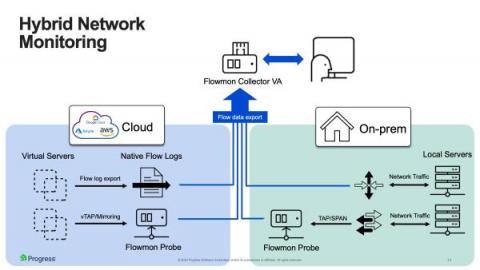
This model has benefits, but at the same time, it introduces complexity for the IT teams tasked with monitoring and securing IT systems. Existing network monitoring technologies that system admins use with on-premise infrastructure are typically not expandable to include infrastructure and services running on public cloud platforms. This is a problem as you cannot manage and secure what you cannot see.
Every data center has a rhythm. When you think about a single application—SAP, for example—it has certain “beats.” First thing Monday morning, you see a steady and fast cadence, while over the weekend, it slows to a light tap. And there may be seasonality that rises to a crescendo.
June 7, 2023 It’s no secret that Kubernetes is one of the fastest-growing technologies in use today for deploying and operating applications of all types in the cloud. It’s also no secret that Kubernetes’ popularity is a significant contributor to fast-growing cloud bills. FinOps teams are constantly looking for ways to lower their cloud spend, in cooperation with the DevOps, Engineering and App owner teams that control this infrastructure.
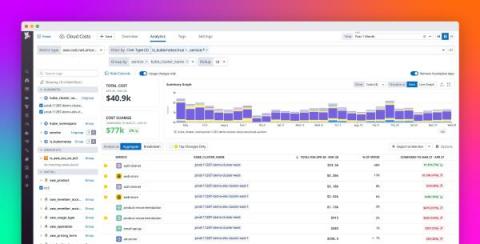
Rising container usage has fueled a growing reliance on container orchestration systems such as Kubernetes, EKS, and ECS. As organizations increasingly opt to run these systems in the cloud, their cloud spend tends not only to grow but also to become more opaque due to the dynamic complexity of these environments. Typically, various services, teams, and products share cluster resources, and as nodes are added and removed, those resources continuously shift.
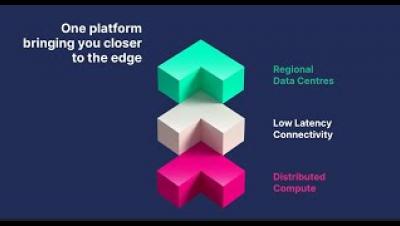
As the UK’s edge infrastructure provider, we’ve launched platformEDGE™ — a next-generation platform that will enable regional businesses across the UK to harness the opportunity of digital transformation. PlatformEDGE is a UK-wide integrated infrastructure that enables scalable, high-performance, low-latency edge application delivery.
We are delighted to share that eG Innovations has become one of a very small number of partners to have achieved AWS’s “Digital Workplace Competency” award following a lengthy and rigorous technical audit process. This designation differentiates eG Innovations from other AWS EUC monitoring vendors as having a solution that meets AWS’s own standards for enterprise software.
Explore our insightful May 2023 report on the uptime of top cloud providers. We've carefully assessed the health of these leading services by monitoring outages and issues throughout the month. Using data from their official status pages, we've normalized the information to create a clear and concise overview of their reliability. Find out how your favorite cloud provider stacks up in this essential report.
ESXi, short for Elastic Sky X Integrated, is a groundbreaking virtualization solution engineered by the tech giant VMware. Functioning as a type-1 hypervisor, ESXi stands out from other solutions due to its ability to run directly on the system hardware without the need for an underlying operating system. By providing a platform where virtual machines can efficiently function and interact, ESXi has emerged as an indispensable component in today’s technology-driven business ecosystem.
AWS Fargate is a powerful tool for running containerized workloads on AWS. It’s a serverless compute engine that allows you to run containers and focus on developing and deploying your applications while AWS controls the cloud infrastructure. This can make a real difference for an organization, saving both time and resources that would otherwise go towards managing servers. This guide will discuss AWS Fargate pricing and provide tips for cost optimization.
Public cloud environments are heavily instrumented and can give you metrics on practically any level of the infrastructure. AWS is no exception. Metrics are not only useful for monitoring and troubleshooting issues in a cloud environment - they can also be tied directly to automated actions. So you can leverage them to remediate issues instantly, as they happen.
Azure Storage is a cloud-based service that provides scalable, secure and highly available data storage solutions for applications running in the cloud. It offers different types of storage options like Blob storage, Queue storage, Table storage and File storage. Blob storage is used to store unstructured data like images, videos, audios and documents while Queue storage helps in building scalable applications with loosely coupled architecture.