Operations | Monitoring | ITSM | DevOps | Cloud

A Guide To Azure Database Pricing (And Reducing Costs)

You spun up Azure SQL for your app backend, added Cosmos DB for global performance, and let your devs explore PostgreSQL freely. Everything worked — until the invoice hit. Your engineers need high availability and performance. Your CFO wants predictability. And you’re stuck trying to untangle what, exactly, is driving your Azure bill. You’re not alone. Between service types, pricing tiers, and throughput models, Azure database pricing can surprise even experienced teams.


Kubernetes Cost Optimization Done Right

Kubernetes was never just about cost savings. It was built to be a robust, scalable, and efficient platform for orchestrating containerized applications. And it was meant to abstract infrastructure away so developers could move quickly and go about their business of developing. But as Kubernetes adoption scaled, so did cloud bills. FinOps tools emerged to rein in spending, but most only scratch the surface.

A Quick Guide To Kubernetes Observability

Many companies are rapidly adopting cloud-native computing services, like containers, microservices, and serverless computing. Unlike monolithic applications, these technologies rely on distributed architectures. Whether you are running them in the cloud, on-premises, or both, distributed systems consist of thousands or millions of processes and components. The challenge now is to make these complex systems’ inner workings visible, controllable, and improvable.

Myth #5 of Kubernetes Resource Optimization: Spark Dynamic Allocation

In this blog series we’re examining the Five Myths of Kubernetes Resource Optimization. The fifth and final myth in this series relates to another common assumption of many Kubernetes users: Dynamic Allocation for Apache Spark applications automatically prevents Spark from overprovisioning resources while improving workload utilization levels.

Pepperdata Resource Optimization for Data Workloads on Kubernetes

Struggling with underutilized Kubernetes resources or rising cloud costs? Learn how Pepperdata Capacity Optimizer delivers real-time, automated resource optimization for Kubernetes and Amazon EMR workloads—helping teams reduce costs and boost performance without manual tuning. In this video, discover how Pepperdata helps DevOps, platform engineers, and FinOps teams.

32 Best FinOps Tools For 2025: Features And Comparison

In recent years, cloud financial management has evolved beyond what many cloud stakeholders anticipated. The overwhelm has led too many companies to struggle to accurately monitor, allocate, and optimize their cloud costs. This issue cost companies about 30% of their cloud budgets in 2022 alone, according to Gartner. With FinOps, you can prevent this bleeding without sacrificing innovation. Yet, taking a manual approach to FinOps can be inefficient and error-prone.

8 GKE Monitoring Best Practices For Peak Performance

Kubernetes (K8s) is the most popular container orchestration platform today. But it can also be quite complex. To overcome this management challenge, you can deploy your Kubernetes containers using the Google Kubernetes Engine, which is a fully managed service. Yet, to get the most from GKE, you still need to follow best practices. The following tips and best practices for monitoring GKE clusters will help you get started.

Unlocking Cost Optimization Through Full-Stack Kubernetes Visibility

In Kubernetes environments, cost is rarely just about spend. It’s about performance, node utilization, workload behavior, and how all of those align with your team’s operational goals. Komodor’s approach to cost optimization has an operational advantage due to its deep visibility into your entire Kubernetes estate. Imagine the potential for cost optimization when you have complete visibility into every aspect of your Kubernetes operations.

A Beginner's Guide To Amazon RDS Pricing

Amazon promotes its RDS as a scalable, high-performing alternative to traditional databases, backed by automation and reliability. It’s popular among teams looking to offload maintenance and improve availability. But while the service is robust, costs can rise quickly depending on how it’s used. This guide explains how Amazon RDS pricing works. In addition, we’ll discuss how to understand, optimize, and view your RDS costs. But first…

AWS FinOps: 15 Tools For Cost Visibility And Control

AWS remains the largest cloud service provider (CSP) of the 21st century. It also provides over 240 cloud-based products and services. In some cases, these services help customers like you collect, analyze, and act on data about cloud usage and related costs. In this post, we explore how AWS services support FinOps’ best practices, including the features they offer. If you are looking for even more robust AWS FinOps tools, we will also include third-party platforms.

Myth #4 of Kubernetes Resource Optimization: Manual Tuning

In this blog series we’ve been examining the Five Myths of Kubernetes Resource Optimization. The fourth myth we’re considering relates to a common misunderstanding held by many Kubernetes practitioners: manual application tuning can increase resource utilization in my applications. Let’s dive into it.

AWS Vs. GCP: Which Platform Offers Better Pricing?

Although Amazon Web Services (AWS) still holds about a third of the cloud services market, Google Cloud Platform (GCP) has grown rapidly in recent years. Among the reasons for GCP’s rapid adoption is its simpler pricing structure compared to Amazon Web Services and Microsoft Azure. Is that really the case? And how do AWS and GCP pricing differ? But first, a quick background.

How SaaS Companies Can Profitably Price AI Agents

AI agents are undoubtedly exciting. What company would turn down the opportunity to use an intelligent bot that can make decisions, perform complex tasks, and take on the tedious work employees would normally have to deal with? On paper, AI agents sound like tremendous time and money-savers. The reality, however, is a bit different from the fantasy.

20 Azure Cost Management Tools For Cloud Savings

Toward the end of Q1 2022, survey findings reported that Microsoft’s Azure cloud computing services had, for the first time, eclipsed Amazon Web Services (AWS) in some enterprise categories. According to the respondents, more enterprises preferred Azure because it integrates well with the many Microsoft products they already use. A second reason is that Azure is suitable for running on-premises and at the edge. Some organizations also use Microsoft Azure to avoid vendor lock-in to AWS.

Cloud Cost Optimization Best Practices, Strategies, and Tools to Reduce Bills

As network engineers, you play a crucial role in managing cloud infrastructure that supports your organization’s applications and services. Cloud platforms offer immense flexibility and scalability, but without careful cost management, expenses can quickly spiral out of control.

2025 Cloud Pricing Comparison: An In-Depth Guide

Over $44.5 billion in cloud spend goes to waste annually, per the FinOps Foundation. No wonder reducing unnecessary costs is critical to protecting your margins. A logical place to start? Cloud service pricing. Providers like AWS, Azure, and Google Cloud continue to evolve their pricing models. They are offering new discounts, regional rates, and shifting commitments. All to win your business. Yet, a cloud pricing comparison alone doesn’t give you a complete picture.

How to reduce Cloud Costs (with Open Source!)

We strongly believe that simple observability should be an innovation everyone can afford to benefit from: which is why Coroot is open source, and includes cost monitoring for Azure, GCP, AWS, or your own custom settings. eBPF automatically tracks how each deployment impacts your cloud costs, so you can easily roll back changes and avoid lovecraftian monthly bill when necessary.

Myth #3 of Kubernetes Resource Optimization: Instance Rightsizing

In this blog series we are examining the Five Myths of Kubernetes Resource Optimization. So far we’ve looked at Myth 1: Observability and Monitoring and Myth 2: Cluster Autoscaling. Stay tuned for the entire series! The third myth addresses another common assumption of many Kubernetes practitioners: Choosing the right instances will eliminate waste in a cluster.

A Simple Guide To GKE Cost Allocation And Cluster Spend

Running workloads on Google Kubernetes Engine (GKE) delivers impressive scalability and flexibility. Yet, it can also introduce a tricky challenge: tracking GKE costs accurately. Remember, GKE costs rarely scale linearly. Overprovisioned nodes, idle autoscalers, and orphaned workloads can quietly balloon your bill in the background. And while GKE’s native tools offer some visibility, they often miss the full picture.

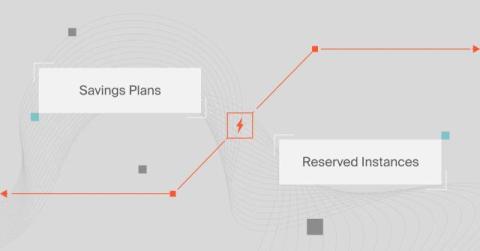
A Roadmap To AWS Savings Plans Vs. Reserved Instances

A decade after launching Reserved Instances (RIs), Amazon Web Services (AWS) introduced Savings Plans as a more flexible alternative to RIs. AWS Savings Plans are not meant to replace Reserved Instances; they are complementary. SPs and RIs have some significant differences that make each better suited to specific uses. For example, while Savings Plans apply to both EC2 and Fargate instances, RIs only apply to EC2 instances. Let’s break down AWS Savings Plans vs.

Azure Budget Planning: Simplify Cost Management and Forecasting

The video introduces the new Turbo 360 feature designed to simplify Azure budget planning for teams. It highlights how team managers can easily manage and project costs, input monthly records, and adjust budgets based on upcoming projects, all while minimizing reliance on technical resources. The focus is on enhancing productivity and making financial management more accessible.

How Successful Teams Master Cloud Resource Management

Cloud computing promised speed, scale, and freedom. And it delivered. Engineers can deploy in seconds. Teams can scale globally overnight. But somewhere between all that freedom and speed, control got blurry. Resources piled up. Budgets ballooned. And suddenly, no one could answer the simple question: What are we paying for and why? Cloud resource management is how we reclaim that control, without slowing down.

Smarter Telemetry Pipelines: The Key to Cutting Datadog Costs and Observability Chaos

Log volume is exploding, costs are rising, and most teams are stuck duct-taping together short-term fixes. During our webinar, "Optimizing Log Management in Datadog: Cut Costs Without Losing Insights," we discuss how DevOps and engineering leaders are navigating the growing pains of observability, especially in environments where tools like Datadog are mission-critical but challenging to manage. Here’s a recap of the key takeaways.

9 Best OpenShift Alternatives For Today's DevOps Teams

OpenShift delivers a lot right out of the box. And for many teams running at enterprise scale, it’s exactly what they need. The platform offers a built-in container registry, observability tools, and service mesh support. You also get integrations for GitOps, serverless, and even ML workflows. OpenShift combines powerful orchestration with developer tooling, CI/CD pipelines, and enterprise-grade security. All under one roof.

Cloud Workload Management: What It Is And How To Do It

The cloud gave us agility, but it also introduced fragmentation. And in most companies, no one’s fully owning the sprawl. One team deploys a new service in a hurry. Another forgets to shut down a dev environment. Meanwhile, batch jobs run 24/7 on oversized instances. And no one quite knows why your bill is $10K higher this month. The result? A growing source of cost overruns, performance headaches, and operational inefficiencies. This is exactly why cloud workload management is so crucial.

How CloudZero's OpenAI Integration Provides Unprecedented AI Unit Economic Insights

AI spending continues to accelerate. In 2025, experts project that companies will collectively spend about $644 billion on generative AI alone — a whopping 76.4% increase from 2024. This puts it a mere $79 billion behind the public cloud as a whole, signaling the most seismic interval of new infrastructure investment since the dawn of the public cloud.

Introducing CloudZero Optimize: Built For Engineers, Backed By Context, Designed For Real Results

We’re entering a new era at CloudZero, and we’re coming in hot. This week, we’re not just launching a new feature. We’re taking a major step forward in our mission to make cloud cost efficiency a seamless, engineer-first, business-aligned reality. My team and I are thrilled to introduce CloudZero Optimize, our smartest, most action-oriented optimization solution yet.

Simple cloud cost management: Grafana Labs integrates open standard FOCUS specification for cloud billing data

At Grafana Labs, we’ve always believed that observability should be open and accessible — that belief extends beyond metrics, logs, and traces to the costs associated with managing observability at scale. That’s why we’re excited to share that we’ve adopted the FinOps Open Cost and Usage Specification ( FOCUS), a community-driven, open standard for cloud billing data.