Operations | Monitoring | ITSM | DevOps | Cloud

Behind the magic of auto-instrumentation (Grafana OpenTelemetry Community Call)

You add the OpenTelemetry Java agent, restart your app - and like magic, observability appears. But is it really magic? What’s actually enabled by default? What telemetry should you expect to see? What’s missing? And what might you want to tweak, tune, or even turn off?
Sponsored Post

SAP Application Performance Monitoring (APM): Beyond Generic Metrics

Your enterprise APM tool shows SAP is using 90% CPU. The dashboard turns red. An alert fires. Now what? You open Dynatrace. You see the Java Virtual Machine metrics for your NetWeaver stack. You see HTTP response times for your Fiori apps. You see a spike in database calls. None of this tells you why VA01 takes 45 seconds to create a sales order. None of this tells you which custom ABAP report is consuming memory. None of this explains the short dump that crashed your pricing routine. This is the gap between generic APM and true SAP application performance monitoring. Your enterprise tools see the symptoms.

Claude Code + OpenTelemetry: Per-Session Cost and Token Tracking

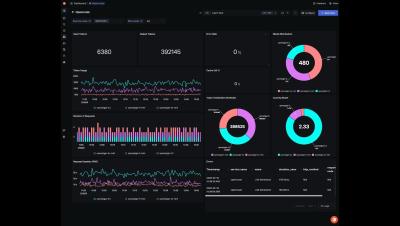
I was looking at our Claude Code spend in the Anthropic console the other day. Aggregate cost, aggregate tokens — no breakdown by developer, no breakdown by session. I knew my Hackathon team had been using it heavily on building out new features for the OpenTelemetry Distro Builder. But heavily how? I had no idea. Turns out Claude Code has been emitting OpenTelemetry signals the whole time. Per-session cost, token counts, every tool call it makes on your codebase.

Release v2.9: OTEL Logs, Database Functions, SNMP Functions and more.

What’s New in Netdata v2.9 In this video, we walk through the biggest updates in Netdata v2.9, including: Top Tab Database Functions to analyze slow queries and performance bottlenecks without logging into your database SNMP Network Interfaces Function for real-time visibility into network interfaces Microsoft SQL Server Collector with richer MSSQL metrics OpenTelemetry Logs Ingestion to correlate logs and metrics in one place.

What is OpenTelemetry and Why Do Organizations Use it?

Mining for information about environments is like trying to find gold. Looking for gold can be sifting through silty waters or blasting through a mine. In some cases, the gold nuggets are so small as to be almost invisible, some things look like gold but aren’t, and others are larger nuggets where the miner strikes it rich. Trying to understand how a distributed system works means sifting through vast amounts of telemetry, looking for patterns.

Turn Raw Data into Reliability by Changing Performance Perspectives

In a global microservices architecture, technical performance initially presents as a chaotic stream of disconnected telemetry. For a Technical Program Manager (TPM), success depends on the ability to move past these disconnected individual data points to identify stable patterns. If they have services entering critical states, looking at individual logs or traces is inefficient. Protecting system reliability requires an engine that can automate pattern recognition at scale.

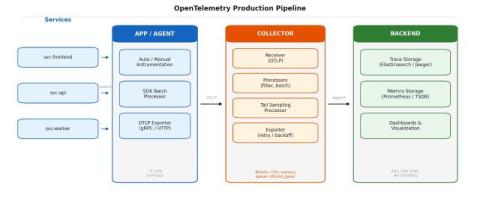
OpenTelemetry Production Monitoring: What Breaks, and How to Prevent It

OpenTelemetry almost always works beautifully in staging, demos, and videos. You enable auto-instrumentation, spans appear, metrics flow, the collector starts, and dashboards light up. Everything looks clean and predictable. However, production has a way of humbling even the most carefully prepared setups. When real traffic hits, and it always spikes sooner or later, you start seeing dropped spans.

OpenTelemetry support for .NET 10: A behind-the-scenes look

At Grafana Labs, we are fully committed to the open source OpenTelemetry project and are actively engaged with the OTel community. Many Grafanistas spend a large proportion of their time contributing directly to OpenTelemetry upstream projects, helping make observability more powerful, reliable, and accessible for everyone as part of our big tent philosophy.

Troubleshooting Microservices with OpenTelemetry Distributed Tracing

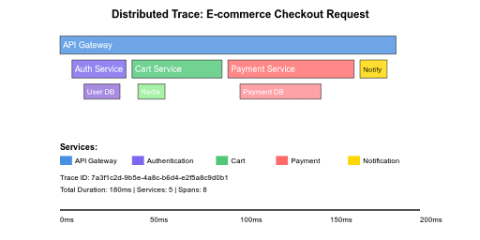
Distributed tracing doesn’t just show you what happened. It shows you why things broke. While logs tell you a service returned a 500 error and metrics show latency spiked, only traces reveal the full chain of causation: the upstream timeout that triggered a retry storm, the N+1 query pattern that saturated your connection pool, or the missing cache hit that turned a 50ms call into a 3-second database roundtrip.

The evolution of OpenTelemetry: A deep dive with co-founder Ted Young

Sometimes the biggest challenges in software aren’t about code — they’re about consensus. What do we call things? What do we standardize? And how do you evolve a system that thousands of companies depend on without breaking everything along the way?

OpenTelemetry Deep Dive: Standards, Tracing, and the Future of Observability | Big Tent S3E6

OpenTelemetry co-founder Ted Young joins Grafana’s Big Tent podcast to explain how observability evolved beyond logs, metrics, and traces. Learn why tracing is just logging with context, how OpenTelemetry became a standard, and what’s next for zero-touch instrumentation and AI-driven observability.

Uptrace Errors & Logs Tutorial: Capture Stacktraces, Context, and Traces in One Place

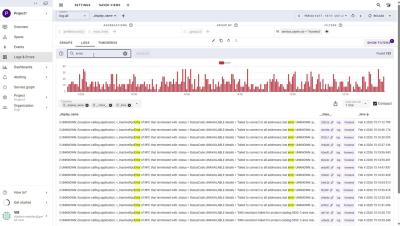
Every error tells a story — and Uptrace helps you see the full picture. In this tutorial, you’ll learn how to use Uptrace to capture errors, logs, stacktraces, and request context in a single observability platform. See how errors automatically link to traces, understand exactly what happened, and debug issues faster with rich attributes, user data, and performance impact. What you’ll learn: Understand not just *what broke*, but *who it affected and why* — and fix problems with confidence using Uptrace.

Uptrace Tutorial: Dashboards, Percentiles, Heatmaps & OpenTelemetry Metrics

Learn how to use *Uptrace* to measure what truly matters in your applications using percentiles, heatmaps, and histograms—then turn that data into dashboards that answer questions before they’re even asked. In this tutorial, you’ll discover how to: Whether you’re setting up observability for the first time or replacing expensive monitoring tools, this guide shows how Uptrace helps you understand performance, reliability, and user experience — all in one place.

End-to-End Tracing with Uptrace: Follow Any Request Across Your Entire System

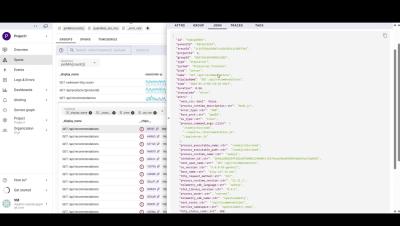
Stop guessing where requests slow down. With Uptrace, you can follow any request across your entire system and instantly see performance bottlenecks, errors, and latency sources. This video covers: Build real observability, not just dashboards.

OpenTelemetry in Production: Design for Order, High Signal, Low Noise, and Survival

A lot of talk around OpenTelemetry has to do with instrumentation, especially auto-instrumentation, about OTel being vendor neutral, being open and a defacto standard. But how you use the final output of OTel is what makes business difference. In other words, how do you use it to make your life as an SRE/DevOps/biz person easier? How do you have to set things up to truly solve production issues faster?

How Honeycomb Supercharges OpenTelemetry for AI

It has become common knowledge that the nature of software development has changed as AI-code generation and agent-based features gain adoption. In perhaps a more subtle shift, the fundamentals of software instrumentation are changing too. As OpenTelemetry becomes the standard instrumentation layer across enterprises, with thousands of developers (many from Honeycomb) actively contributing to it, the nature of the telemetry data captured itself is evolving to meet the growing demand for rich context.

What you missed at OTel Unplugged 2026 in 8 minutes!

OTel Unplugged 2026 was different by design. Held alongside FOSDEM in Brussels, this was an unconference built by the OpenTelemetry community, for the community. No sales pitches. No product demos. Just honest conversations about what’s working, what’s broken, and where OTel needs to go next. In this recap, you’ll hear short interviews and reflections from engineers, maintainers, and practitioners on.

Observability trends for 2026 (Part 2): GenAI and OpenTelemetry reshape the landscape

Over the course of my 20 years as a developer, SRE, and now observability product leader, software has typically progressed at a good pace. But now, the emergence of two transformative technologies are fundamentally reshaping enterprise observability: generative AI (GenAI) and OpenTelemetry (OTel). We surveyed over 500 IT decision-makers for a new report:The Landscape of Observability in 2026: Balancing Cost and Innovation.

OpenTelemetry Instrumentation Best Practices for Microservices Observability

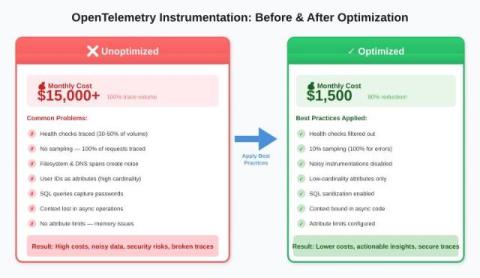
OpenTelemetry instrumentation is the foundation of modern microservices observability, but getting it right in production requires more than just enabling auto-instrumentation. This guide covers production-tested OpenTelemetry best practices that help engineering teams achieve reliable distributed tracing, control observability costs, and extract maximum value from their telemetry data.

How to Implement Distributed Tracing in Microservices with OpenTelemetry Auto-Instrumentation

This guide shows you how to implement OpenTelemetry’s auto-instrumentation for complete distributed tracing across your microservices, from initial setup through production optimization and troubleshooting.